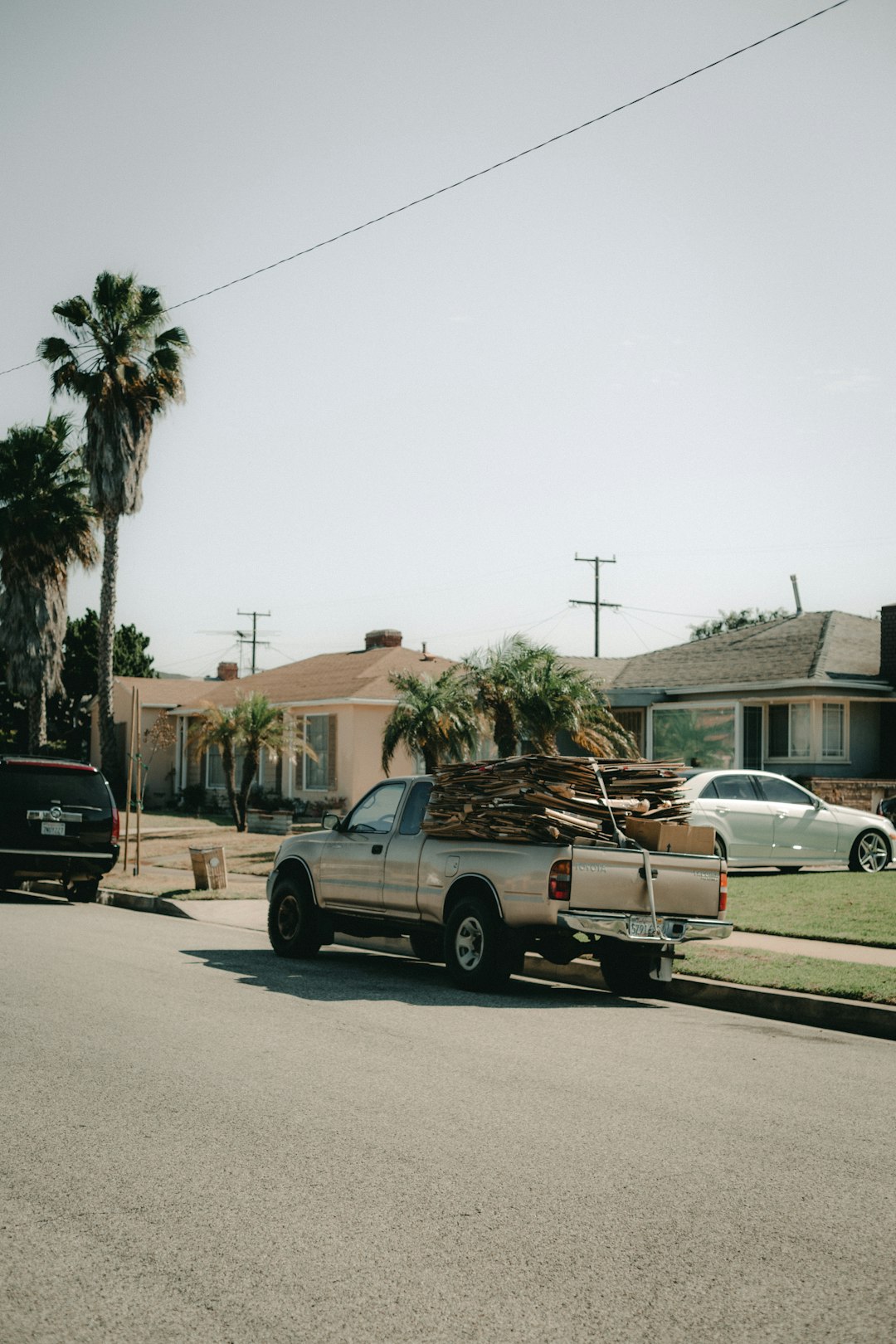
The sun had not yet burned the coolness out of Sunset Boulevard when Marcus felt the truck rumble like a large animal waking up. He could smell coffee and diesel at once, the sharp tang of exhaust braided with the sweet, roasting aroma that seemed to follow the morning in Silver Lake. At the curb, a red roll-off dumpster sat like a temporary monument to the week’s labor—plaster dust clinging to a battered cardboard box, a bicycle frame painted over in peeling turquoise, a stack of drywall that looked like a miniature city skyline.
Setup: Two Neighbors, One Mountain of Debris
Elena had been awake since three, nervous and excited. Her bungalow in Echo Park had spent the last month under the slow, joyful violence of renovation: walls moved, old hardwoods unearthed like bones, a kitchen gutted to its bright intention. “I didn’t know we had so much stuff we could live without,” she told Marcus as he tightened a chain on the dumpster’s lip.
Marcus—an independent hauler who had grown up in Compton and learned the rhythms of construction in Burbank studios and Pasadena remodels—looked at the pile with the practiced eye of someone who could read weight and trouble at a glance. “We got a lot of good things in here,” he said, pointing at a stack of gently used cabinets. “And a few things that’ll cost extra to get rid of.”
Rising Action: Rules, Routes, and Unexpected Finds
They had almost made a mistake. Two days earlier, while moving a piano-shaped island of cabinetry, Elena had called a popular national rental site and ordered the biggest container the site suggested based on an online quiz. It arrived, a metal maw, but the city of Los Angeles required a street-use permit for dumpsters sitting on the curb if they blocked parking or were placed on public property. Santa Monica, Long Beach, Glendale and Torrance each had their own permit systems, too. One call to Marcus—and a quick U.S. map of municipal rules later—saved them hundreds in fines and smoothed out the schedule.
“Every city is its own little government,” Marcus said, laughing. “Culver City will make you schedule it a week in advance. West Hollywood is very particular about the safety cones. Inglewood’s fast but watch your weight.”
As they talked, an elderly man in a Dodgers cap wandered up and peered over the edge of the dumpster. “Used to be a drum kit in there when I was a kid,” he said, pointing at a dented snare. “Found my first set under a pile like that.”
There was a small, human thrill in the find—an old guitar amp that still hummed with a ghost of sound, a painting that might be worth donating. But mixed in with the sentimental were heavier realities: refrigerators with compressors, cans of leftover stain, a stack of asbestos-tainted floor tiles pulled from a kitchen decades ago. Those latter items could not go into a regular roll-off. Hazardous materials, refrigerants, tires, and certain electronics demanded separate disposal, often at household hazardous waste facilities or certified recycling centers.
Key Insights: How Dumpster Removal Works in Greater Los Angeles
The conversation turned practical. Marcus explained, in the kind of detail that can both comfort and confuse, how pricing worked. “Dumpster sizes are your starting point—10, 15, 20, 30, 40 cubic yards—then it’s the weight. Concrete and tile will balloon the bill. In Long Beach you might pay extra for concrete, while in LA City the driver pays a tipping fee based on actual weight at the transfer station.”
He sketched a quick plan in the condensation on a nearby window: measure the pile in pickup-truck loads; call three haulers for quotes; ask about the hauler’s disposal receipts and recycling practices; confirm whether permits are needed and who will obtain them. Elena noted, and Marcus added: “If you want to save money, separate recyclables—metal, clean wood—and call donation centers. Habitat for Humanity ReStore, Goodwill, and local thrift shops take a lot, especially in neighborhoods like Pasadena and Santa Monica where people remodel a lot.”
There was also the question of timing and traffic. “If you schedule a pickup at 6 a.m. in Hollywood, we beat the vans and the boom in downtown LA traffic. But you need a permit for early curb placement in some neighborhoods. In Venice, trucks have to watch for narrow streets and beachgoers. In Torrance, it’s the port-related stuff that sometimes slows us down.”
Marcus stressed the importance of knowing the materials. Construction and demolition (C&D) debris often requires different handling: drywall mixed with lumber is fine in a general roll-off, but masonry, concrete, or compacted soil can push the weight into higher tipping brackets. For appliances, especially those with refrigerants, licensed technicians must remove the coolant before disposal to comply with environmental regulations.
Scene: The Negotiation and the Neighborhood’s Pulse
By midday the sun had climbed, reflecting on the chrome of the truck and warming the skin in a way that made the smell of dried paint more pronounced. A group of builders from Burbank stopped to swap stories—”Had a load once in Glendale that was all tiles, thought I’d go bankrupt,” one said—while a city inspector from downtown LA walked the block checking permit placards. “Looks good,” she told Elena, nodding. “Just make sure the cones stay up and the haul date’s on the permit.”
Elena’s husband, Samuel, came back from a lunch run and hugged a paint-streaked shirt to his chest. “I can’t believe we did this,” he said, eyes glossy in that proud, exhausted way. “Feels like we cleared two years of dust out of our life.”
Marcus climbed up to the edge of the dumpster and reached into a corner where a curl of old wallpaper stuck like a memory. “Sometimes the hardest part isn’t the lifting. It’s deciding what stays. People get sentimental. But also—” He tapped a chunk of broken tile. “—you gotta be practical. That stuff makes bills go up.”
Practical Tips Woven into the Story
As the day unfolded, practical advice arrived naturally like a chorus: lay a plywood pad under the dumpster if you’re worried about driveway damage; never mix paints and solvents in the same container as household trash; check local ordinances—Pasadena, Glendale, and Beverly Hills each have fine points in their permit processes; request a weight ticket at the dump to verify charges; consider smaller, staged deliveries for narrow alleys in Hollywood and Chinatown. Marcus also recommended asking whether a hauler offers same-day swap-outs for ongoing projects—useful for contractors in Long Beach or Torrance.
He had a mental list of red flags he shared with Elena: a hauler that insists on cash-only without paperwork, too-good-to-be-true flat rates that exclude tipping fees, and vans that don’t display DOT numbers. “You want a paper trail,” he said. “When it’s a big job, the client will want to know where the stuff went.”
Rising to Resolve: Community Choices and Environmental Stakes
Late afternoon softened the blocks into gold. Neighbors drifted by, curious, offering coolers of water and home-baked cookies. The guitar amp found a new home with a teenager who swore he’d start a band; the cabinets were promised to a neighbor doing a kitchen redo in Pasadena. Marcus arranged a pickup for the hazardous materials at the county’s next household hazardous waste event, and Elena made calls to local charities to arrange furniture donations in Long Beach and Santa Monica.
“Feels like we’re not just getting rid of stuff,” Elena said, shoulder brushing the dumpster’s heated metal. “We’re passing it along.”
There is a larger story here: Greater Los Angeles produces vast amounts of construction and household waste, and how communities choose to dispose of that material has real consequences for landfills, recycling streams, and the Bay’s and coastline’s health. Cities from Venice to Compton have increasingly pushed for diversion: recycling more wood, recovering metal, and taking hazardous materials out of the general waste stream. The paperwork and permits that once seemed like red tape are, in many ways, municipal attempts to steer waste into safer, reusable channels.
Resolution: A Dumpster, a Receipt, and a New Floor
The truck returned at dusk, the driver’s silhouette cutting a long shape against the sugarloaf hills of Silver Lake. Chains rattled. The dumpster lifted with a controlled groan and clanged into the truck bed. Marcus handed Elena a stack of receipts and a weight ticket that would make good sense to the bank when they reconciled the remodel costs. “Everything went where it should,” he said.
They stood for a moment and watched the empty space where the dumpster had been. The curb was suddenly an invitation rather than a blockade. The house felt different—roomier, as if it had exhaled. Samuel dusted his hands and laughed. “We can actually see the yard again.”
Takeaway: What to Remember and Do
When your own renovation or cleanout day arrives, remember the sensory map Marcus laid out: the smell of exhaust and coffee, the clink of chains, the feel of sunlight on metal. But more importantly, remember the rules and the rhythms—permits for curb placement in LA, Santa Monica, and West Hollywood; weight-based tipping fees; prohibited materials like refrigerants, solvents, tires, and certain electronics; donation and recycling options in Pasadena, Long Beach, and beyond. Get multiple quotes, ask for disposal receipts, separate recyclables, and plan pickup times to avoid peak traffic. If in doubt, call the hauler and the local public works office before the dumpster arrives.
Elena kept one more thing from the pile: a little paint-streaked tin with a label she couldn’t read anymore. She set it on the new windowsill as the sky bled magenta into night, a small, stubborn trophy. Marcus climbed into his truck and, before he turned the key, shouted back, “Call me if you ever need extra hands—I’ve got space on Tuesday.”
The truck pulled away, taillights blinking like a slow, patient Morse code through the palm trees. On the curb, where a heap had once been, the neighborhood exhaled. A new floor waited to be finished inside, but outside, under the wash of streetlight, there was only clean promise and the faint smell of paint. The city around them—Los Angeles, with its boulevards and beaches, its hills and harbors—kept turning, and with every roll-off and every careful disposal, the community found that a small, practical act of cleanup could feel, in the end, like a kind of repair to the world.