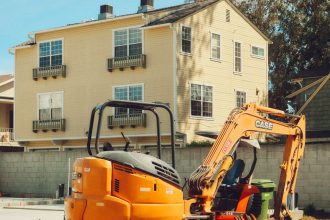
The first morning the dumpster rolled into our block, a gull folded itself against the sky and the smell of coffee drifted from the corner café. It sat there like a big, honest punctuation mark — rusty orange against the soft blue of an Echo Park sunrise, flanked by palm tree shadows and a chorus of car alarms. Neighbors peeked out from behind curtains; someone shouted, “Is that for a remodel?” and the driver shrugged, the diesel engine humming as if it, too, were waiting to hear the plan.
Setup: A House, a Plan, and a Mountain of Stuff
Our house in Silver Lake had been quiet for months. What had started as a leaky faucet and a cracked tile in the entryway became a full-spectrum renovation: a knocked-out wall, a reclaimed-wood feature, a kitchen that would finally breathe. I’d hoped to do it quietly, but the house had other ideas. Every day the envelope of refuse swelled: decades of misplaced receipts, a pair of sunglasses from a prom in Burbank, a stack of moldy picture frames that once held laughter. By the time the contractor called and said, “You’ll want a 20-yard for this,” I could almost hear the house laugh with relief.
“Where do you want it?” the driver asked as he climbed down and stretched, his work gloves creaking. Asphalt and palm fronds, the smell of bakeries from two blocks over, the Mrs. Kim across the street watering her succulents — the scene felt quintessentially Los Angeles. We picked a spot just off the curb, careful to keep the driveway accessible and the street clear for the city bus that rattled by every half hour. Behind us, the skyline of downtown L.A. rose like a distant promise.
Rising Action: Permits, Neighbors, and Hidden Treasures
Almost immediately the small theater of living in Los Angeles made itself apparent. In West Hollywood, the city would have made us apply for a street-use permit two weeks in advance; in Santa Monica, the coastal breeze comes with additional restrictions about dumpster location and tarping to prevent debris from blowing into the sand. We were lucky to be in a neighborhood where driveway placement avoided a permit, but neighbors still gathered to watch the operation like it was a minor festival.
“You gotta cover that thing up when you’re done,” Mrs. Kim counseled. “Seagulls love a good mattress.”
“And a permit will save you a ticket from LADOT if you’re not careful,” the contractor added, a practical tone under his tan. Image and regulation danced together in my head — Beverly Hills’ pristine curb appeal, the industrial heft of Long Beach docks, the historic charm of Pasadena bungalows. Each city in the greater Los Angeles area has its own expectations and rules, and every block feels like its own jurisdiction.
Loading began in earnest. The clack of hammers, the thump of plaster, the gritty whisper of insulation when it surrendered to a five-foot drop. I found myself holding my breath, watching as our life — the literal detritus of years — became something else: debris, recyclable material, potential landfill. There was tension in that, a kind of grief and a sense of release. In the pile, wrapped in a yellowed towel, I discovered an old postcard from a cousin who once lived in Glendale: “Come visit, we’ll show you the arroyo,” it said, in looping script. I almost kept it, but the tide of practicality swept it into the dumpster with a guilty glance.
Key Insights: What I Learned About Dumpster Removal in Greater Los Angeles
By the second day, the facts seeped in like the smell of tar on a hot summer night. These are the lessons I gleaned from neighbors, the driver, and a handful of frantic phone calls to local haulers:
Sizes and Uses: Dumpster companies commonly offer roll-off containers in sizes like 10, 15, 20, 30 and 40 cubic yards. A 10-yard is like a big closet — good for small cleanouts or landscaping debris; 20-yard units are the workhorses for kitchen or bathroom remodels in homes scattered across Los Feliz and Echo Park; 30- and 40-yarders are for major renovations or commercial jobs you might see in Culver City warehouses.
Placement and Permits: Where you place the dumpster matters. Driveway placements often avoid permits, but placing a roll-off on public street space can require permits from local departments — Los Angeles Department of Transportation (LADOT) for the city, or similar agencies in Glendale or Pasadena. Permits can include temporary parking restrictions and fees; in busier corridors like Hollywood Boulevard, the paperwork is stricter.
Weight and Materials: Dumpster pricing isn’t just about size; it’s about weight and the type of debris. Concrete and dirt are heavy and can drive up fees quickly — something to remember if you’re in a home renovation that exposes foundation work in Torrance or Inglewood. Hazardous materials like paint, solvents, batteries, and certain electronics are usually prohibited; Los Angeles County maintains household hazardous waste collection centers for safe disposal.
Recycling and Donation: The city’s green ethos shows up here. Many items can be separated: metals can be recycled, usable furniture can be donated to thrift stores in Pasadena or to local charities in Long Beach, and appliances may need special handling for Freon removal. I was surprised to learn that certain mattress and box spring disposals in L.A. incur extra fees or require special pickups — a leftover of the city’s effort to reduce bulky-item waste in landfills.
Scheduling and Logistics: Weekends have higher demand. If you’re in a renovation surge in Santa Monica or a film crew turnover in Burbank, book early. Drivers can often accommodate same-day drops, but expect higher rates. Tarping requirements and safety regulations — like keeping the dumpster level and avoiding overloading that creates overhang — are real safety issues and local ordinance concerns.
Practical Scene: A Conversation with the Driver
There was a moment when I paused with a broken lamp in hand, looking foolish in the morning light. “You ever find weird stuff?” I asked the driver.
He laughed, the sound like gravel. “All the time. Found a set of keys in Burbank that opened a storage full of old movie posters. Sold them and took my kid to Disneyland. But most folks want a quick, clean sweep. Tell me what’s hazardous — paint, batteries — and I’ll point you to the right drop-off. Don’t put it in here. It’ll cost everyone.”
His practical kindness was one of those small L.A. moments you don’t find in tourist brochures: the combination of savvy and neighborliness that keeps the machine humming. He taught me how to distribute weight — heavy items first, lighter on top — and to ask for an overage rate if the job ran long. He reminded me to check local bulky-item pickup schedules; the City of Los Angeles, like many municipalities, offers curbside pickups for certain items if you register them ahead of time.
Resolution: The Day the Street Breathed
By the fourth day the huset-turned-construction-site had the light it lacked. The walls were clearer, the air smelled less damp and more like possibility. The dumpster, once full to the brim, was mounted back on the truck. The driver tightened straps, the hydraulic lift sang, and as the dumpster rose the pile looked smaller and smaller until it was gone, leaving the street a little neater, a little less burdened.
Neighbors stopped by. “Looks lighter already,” said a man from down the block who had a job in downtown L.A. Mrs. Kim, watering her succulents, nodded like someone who’d watched a miracle unfold slowly over a week. The postcard I’d almost kept — the one from Glendale — had been rescued at the last minute. I tucked it in a drawer, knowing I’d keep some things as reminders of what had been and what we’d become.
In the weeks after, the renovation finished, paint cures glistening under the same Los Angeles sun. We hosted a small barbecue — pulled pork and cold beer — and talked about permits the way people in Pasadena talk about weather: inevitable, sometimes frustrating, but part of life here. Our block felt reclaimed, the gutters clearer, the sidewalks dignified. There was an odd tenderness in watching people pass by and smile, like the street itself appreciated the work done on its bones.
Takeaway: How to Make Your Dumpster Job a Seamless L.A. Story
If you take one thing from this, let it be this: dumpster removal in Greater Los Angeles is part logistics, part civic dance, and part personal rite of passage. When you plan a cleanup or renovation, remember:
– Choose the right size for your project; when in doubt, overestimate slightly. A 20-yard is versatile for many home projects, while larger jobs need 30–40 yards.
– Check local regulations: driveway placement can avoid permits, but street placement often requires permission and fees. Always verify with your city’s public works department or the dumpster provider.
– Separate hazardous materials, electronics, and appliances. Use appropriate L.A. County drop-off centers or scheduled bulky-item pickups.
– Consider donation and recycling first. Thrift stores, donation programs in Long Beach and Pasadena, and metal recyclers can reduce landfill use and sometimes reduce your costs.
– Secure the load with tarps, distribute weight evenly, and keep access clear for emergency vehicles and buses — especially on busy stretches like Sunset Boulevard or near civic corridors in Glendale and Burbank.
– Book early and compare quotes. Ask about overage rates, tipping fees, and how long the haul will stay on site.
In the end, the dumpster was more than a container; it was a threshold. It held our old life for a few days and then, with a rumble and a lift, carried it away. The house, relieved, seemed to breathe out. The postcard of an arroyo lives tucked in my drawer now, a reminder that some things are worth keeping, and others are worth letting go. As the truck vanished down the block and the sun slipped behind the hills, I stepped onto the porch and felt the city exhale with me: clean street, clearer view, and the soft, steady hum of Los Angeles going about its business.