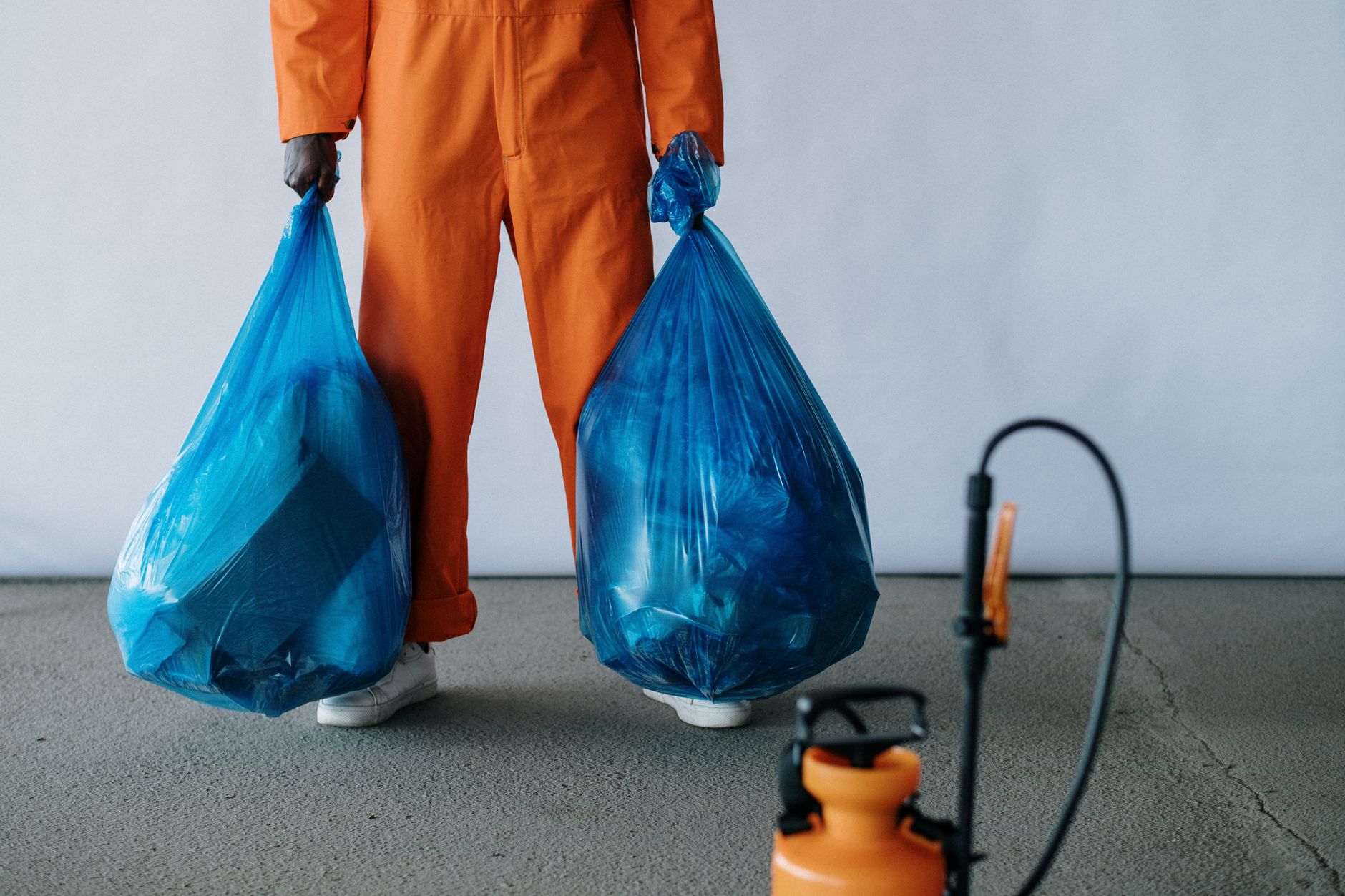
The first time Maria saw the garage, it felt like stepping into a time capsule: boxes stacked to the ceiling, a rusted bicycle with a missing seat, the perfume of old paper and dust. She cupped her hands over her mouth and listened — the quiet was thick, broken only by the distant hiss of traffic on Sunset Boulevard. “How do we even start?” she whispered to her brother, Javier, who stood under a single exposed bulb, rubbing his temples. Somewhere in the city a street sweeper trundled by, and beyond that, the lights of Hollywood winked like a promise. They both knew the answer: a dumpster. But in Los Angeles, even a simple dumpster was the beginning of a small bureaucracy, a handful of logistics, and a road through the city’s many neighborhoods — from Echo Park to Santa Monica, from Burbank to Long Beach.
Setting the Scene: A City of Neighborhoods and Little Rules
The Greater Los Angeles Area is a mosaic: ocean breeze in Venice, hillside homes in Beverly Hills, the industrial hum of Torrance, the quiet streets of Glendale. Each neighborhood carries its own character and, often, its own rules. When Maria called a local roll-off company, she was given a menu of sizes — 10, 15, 20, 30, 40 cubic yards — and a friendly but firm warning: “If it’s going on the street in Los Angeles, you’ll probably need a permit from LADOT.”
Permits are the invisible threads that tie the city together. In places like West Hollywood or Santa Monica, parking and street placement rules can differ from those in the San Fernando Valley or Long Beach. “We once had a client in Culver City who thought their HOA rules trumped the city’s — turned out they needed both a permit and board approval,” Javier said, recounting a past project as he unfolded a paper map of the neighborhood. The map smelled faintly of coffee and the sea air drifting from the open window — a reminder that this job would take them from hilltop vistas to beachfront curbs.
Rising Action: The Permissions, The Phone Calls, The Tight Driveway
They scheduled a 20-yard roll-off for a Saturday morning. The truck would come from a depot in Long Beach, weave through downtown Los Angeles, and navigate the tight streets of Echo Park where old eucalyptus trees leaned over cracked sidewalks. But at 8 a.m., as the sky lightened over the Hollywood Hills, a text arrived. “LADOT says this block needs a temporary no-parking permit and cones for the day. Also, the HOA requires a 72-hour notice.” Maria felt the floor tilt under her. “We didn’t think about that,” she said. “It’s just a garage.”
It is never just a garage. Clearing a family home carries memory and weight. As they waited for permits, Maria found an envelope with polaroids of a younger version of her father at the Santa Monica pier. She traced the white border with her thumb and remembered his laughter. “Maybe start with the photos,” Javier suggested. “Small things, then the heavy stuff.” The waiting room of bureaucracy can be calm if you use it to breathe.
While they handled the paperwork, the crew from a local company in Burbank arrived in a crisp truck: two men in reflective vests, the smell of diesel and coffee, and a roll-off dumpster that echoed like metal thunder when lowered onto the street. “We do residential and construction,” the foreman said, smiling. “We can keep it two weeks, but let us know about hazardous stuff — paint, batteries, asbestos, anything with a sticker that says ‘danger.'”
Key Insights Along the Way: What Maria Learned While Clearing Out a Life
As clothes, books, and furniture were carried out, the practical lessons of dumpster removal unfolded like a city map. First, size matters. A 10-yard container is perfect for small cleanouts, like an apartment or garage; a 20- or 30-yard is for major renovations or full house cleanouts. Second, weight is king. “People think because it fits, it goes,” the foreman advised, tightening his gloves. “But gypsum, soil, and concrete can rack up weight fees fast.” He named the common dumpsters sizes and cautioned about hidden costs: extra tonnage, extended rental days, and return trips for items that shouldn’t go in a landfill.
Third, placement and permits. In Los Angeles proper, placing a dumpster on a public street usually means applying to the Department of Transportation for a temporary no-parking sign and potentially an insurance requirement. In cities like Pasadena or Glendale, the local city hall might have additional forms. Some neighborhoods — especially those with narrow streets in Silver Lake or historical districts in Pasadena — require a permit that takes a bit more time. “If you’re in Beverly Hills, call them early,” the foreman said. “They love their rules. But they also love their clean streets.”
Fourth, disposal alternatives. Not everything needs to be landfill-bound. Maria discovered donation centers: Habitat for Humanity ReStore in Torrance, local Goodwill branches in Hollywood, and thrift stores along Venice. For electronics, Los Angeles County sponsors e-waste drop-offs. For paint, drop-off centers and recycling programs exist. The crew separated metals, reusable furniture, and recyclable cardboard, stacking things like small monuments of possibility on the curb. “It’s like making decisions for someone who’s not here to do it,” Maria said softly, lifting a moth-eaten jacket. Javier wrapped it back into a box labeled ‘keep’ as if returning the memory to its shell.
Dialogue and Details: Conversations That Mapped a City
Neighbors wandered out. Mrs. Liao from next door in Echo Park leaned on the fence. “If you need boxes, I have a stack,” she offered. Down the block, a contractor from Burbank waved a business card. “We can take that vanity to the Habitat ReStore in Torrance,” he said, pointing to a small sink with chipped enamel. “Save them the trip; we’ll drop it off after the route.” Each interaction was a thread: community knowledge about where to recycle, how to get permits fast, and who to call for heavy lifting. The city felt less like a bureaucracy and more like an ecosystem.
At noon, after the sun rode higher and the smell of hot asphalt rose like a ribbon, a police officer made a quick stop. “Everything in order?” she asked. The foreman handed the LADOT permit like a small passport. The officer nodded and smiled, “Good work — keep the sidewalk clear.” Her presence was a reminder that public safety and private grief often intersect on narrow city blocks.
Turning Point: When a Hidden Hazard Appeared
They were halfway through the day when Javier found a sealed metal can with a label bleached by time. The letters were unreadable. He frowned. “This wasn’t on the checklist,” he told the foreman. The crew slowed. The foreman called a hazardous materials line recommended by Los Angeles County. The dispatcher advised isolation, gloves, and a hazmat pickup. For a moment, the rhythm of the day stuttered. Maria felt her chest tighten — the garage had yielded not only memories but potential danger.
Handling hazardous materials requires a different kind of company and permit. As the hazmat team arrived, the family sat on the sidewalk, watching professionals in protective suits move the can into a sealed container. “We see this a lot in older homes,” an operator said gently. “People don’t always know that certain solvents, old pesticides, or asbestos siding can’t go into a roll-off. We’re here to keep everyone safe.” The relief was palpable; the garage breathed easier without a ticking unknown.
Resolution: The Cleanout and the Offer of New Space
By late afternoon, the last of the boxes had been carried past the line of sunlit cars. The dumpster, now half-full of broken furniture, cardboard, and things that had served their purpose, sat like a small black ship against the curb. The crew tightened straps, and the foreman checked his manifest. They had kept metals separate for recycling, taken certain items to the local Long Beach transfer station, and coordinated with a nearby ReStore to pick up the usable vanity.
Maria walked through the emptied space. Sunlight filtered through the garage door slats. The air tasted like possibility. “It looks different,” she said. Javier laughed, a short, incredulous sound. “It looks like it could be a studio again. Or a shop. Or another life.” Across the street, the teenager on his skateboard carved a slow S through the gutter, and a pair of palm trees cast long fingers over the sidewalk. The city around them buzzed on — traffic, the distant horn of a cargo ship near Long Beach, the low murmur of a neighbor’s radio — but there was now an open room waiting for something new.
Takeaway: What to Remember Before You Rent a Dumpster in Greater Los Angeles
Maria’s story is a template for anyone facing a cleanout across Greater Los Angeles. First, pick the right size: estimate carefully and consult with the rental company. Second, ask about weight limits and hidden fees. Third, check local permit requirements — LADOT and city halls can save you a ticket. Fourth, separate recyclables, metals, and donate what you can. Fifth, never put hazardous materials into a dumpster; call a hazmat line for guidance. And finally, lean on your community. Neighbors, contractors, and local nonprofits often have knowledge and resources that make the process smoother and kinder.
When the truck pulled away, the dumpster in its bed looked smaller against the vast Los Angeles skyline. Maria and Javier stood on the curb and watched it disappear down the street, past the old theater marquee and under a stretch of palm trees. “Thanks,” Maria told the crew. The foreman tipped his hat — a gesture that felt almost old-fashioned in a city that never quite stops moving.
The garage, now light and echoing, felt like a room exhaled. Maria placed the polaroids on a workbench and, with steady hands, began sorting what would become a new life in a city that always makes and remakes itself. In Los Angeles, where change is constant and the coast glows at dusk, even small acts — like ordering the right dumpster, filling it with care, and following the rules — can open a space for memory, for grief, and for what comes next. She took one last look at the empty garage, and as the sun slid toward the ocean, she smiled. The city, with its permits and palm trees and patient neighbors, had helped them clean a life and start another.