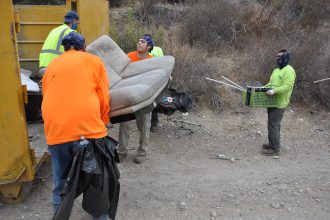
The alley smelled of coffee and fresh sawdust as Maria hoisted the last box into the yawning metal mouth of the roll-off dumpster. Morning light slanted across a backdrop of palm fronds and the distant hum of traffic on the 101. “I thought decluttering would be calmer than this,” she laughed, wiping sweat from her brow. Nearby, a crew member tapped his watch and pointed toward the street—delivery time, and a city truck idling where parking signs blurred into regulations like a legal fog.
Setup: A scattered city of projects
Greater Los Angeles is a mosaic of neighborhoods: the ocean breeze in Santa Monica, Hollywood’s neon pulse, the quiet, manicured lawns of Beverly Hills, the industrial hum of Long Beach. Each place has its own rhythm and, as Maria was discovering, its own rules for moving mountains of unwanted material. She had bought a craftsman in Echo Park, hired a contractor from Culver City, and sold an old storefront in Long Beach. Every site required a dumpster at some point. It should have been simple: pay, place, fill, haul away. But the city had other ideas.
Rising action: The complications everyone overlooks
At 8:00 a.m., the dumpster arrived—an orange rectangle that made the household look suddenly cinematic. Sam, the contractor from Burbank, studied the tight driveway. “We can fit it here, but the truck needs clear access at pickup,” he said. His voice was steady, the kind that comes from a decade of estimating load weights and persuading homeowners that yes, some things are cheaper to recycle than bury.
They hadn’t anticipated the permit. A neighbor had already called the homeowner association in Glendale about the dumpster blocking sightlines. “You need to apply for a curbside permit if it sits on public property,” Sam told Maria. “And in some places—West Hollywood, Santa Monica—you might need a separate city permit for a street placement, not to mention timed restrictions.”
The crew exchanged numbers with a city official and then with a dispatcher who warned that rush-hour pickups might be delayed by as much as two hours on the 405. Los Angeles breathed its traffic into the story: a million small delays that could be the difference between a same-day haul and an extra week paying rental fees by the day.
Key insights woven into the narrative
As they worked, Sam explained the anatomy of dumpster removal to Maria like he was describing the LA weather: practical, unavoidable, and local. “Sizes matter. A 10-yard fits tight jobs—kitchen remodels, small cleanouts. A 20- or 30-yard is for heavy remodels or yard waste. Pricing depends on size, rental days, what’s inside, and how heavy the load is.” He pointed at a stack of old tiles and a blue recycling bin. “Ceramic tile weighs a lot. If you mix too much concrete, you’ll hit the weight limit fast. Separate metals, wood, and cardboard when you can. Some materials—paint, solvents, asbestos—aren’t allowed in the dumpster at all.”
Rosa, the owner of a vintage shop in Long Beach, leaned against the curbstone, cigarette long gone but the ember of memory alive. “When I cleared out the backroom, they told me mattresses had special pickups,” she said. “And my last haul to the transfer station took forever because I’d mixed fluorescent tubes with light fixtures. The hauler had to offload and move it to a hazardous waste facility. Costly, and embarrassing.” The crew nodded—these were the traps of the trade.
They also talked about the environmental side. Sam described a subcontractor in Torrance who separated demolition debris—wood, metal, concrete—then drove it to different recycling centers. “LA has good recycling options if you plan ahead. Wood goes to biomass, concrete gets crushed and reused as base rock, metals get melted down. Keeping recyclables out of landfills can cut fees, too.”
Scenes across the map: rules, rhythms, and people
They drove the conversation with stops in the imagination: a rooftop teardown in Pasadena where the crew had to hoist material into a 15-yard dumpster; a coastal renovation in Malibu where the dumpster had to sit away from the public right-of-way to avoid Coastline Commission complications; a film-set strike in Burbank where removing a prop-laden dumpster required coordination with permit offices. In each vignette, the same motifs surfaced—permits, access, weight, and the moral pull of recycling.
At one point Maria called her neighbor in Beverly Hills. “Do I need a permit if it’s on my driveway?” she asked. “Sometimes, but check the HOA,” came the reply. “And if it blocks the sidewalk, the city’s going to make you move it.” The voice on the phone sounded far away, like a public announcement, but certainly real.
Dialogue: The practical talk
“What’s the worst thing you’ve seen in a dumpster job?” Maria asked, leaning on a pile of carpet. Sam considered it, then smiled sadly. “Once, someone put their whole garage—old electronics, batteries, and half a drum of motor oil—straight into a 30-yard. The driver refused to haul it. We had to call a hazardous materials team. It cost the homeowner more than twice the original dumpster estimate.”
“We learned to educate our clients upfront,” added Rosa. “A clear list: no hazardous materials, separate metals, keep wood dry if possible. It’s a little extra effort, and it pays off.”
Practical takeaways within the story
Sam jotted down a checklist on the back of a receipt as they worked: choose the right size, ask about weight limits, reserve extra days around busy seasons (spring cleaning, post-holiday), catalog prohibited items, and always ask the hauler about recycling and disposal routes. “Ask where they take the waste,” he said. “If they dump everything at a private landfill without recycling, that’s a red flag. Responsible haulers will show you where materials go and provide a weigh ticket or report.”
Maria listened, imagining how the same checklist would have saved her from last month’s fight with a pile of damp drywall that doubled in weight after a rainstorm. “Can we schedule a pickup for Saturday morning?” she asked. Sam made a call and scratched out a plan: pick up at dawn to beat the freeway jitter; place cones and signs to reserve the space; confirm that the driver has an access route that doesn’t require backing a semi down a narrow cul-de-sac in Glendale.
Rising action: the unexpected test
Two days later, a rainstorm moved through the city. The dumpster, half full of damp plaster and sodden cardboard, grew heavier. A nod from Sam to the driver, and they arranged a quick tarp to keep everything from absorbing more moisture. But the real test came when a neighbor’s delivery truck blocked the narrow lane at pickup time. The hauler called: no fun turning a 30-yard in a lane with parked cars—city ticket risk. Maria ran outside, arms full of contractor coffee, and flagged the truck. “We’re clearing it now,” she promised, bargaining with her neighbors like a tiny maestro conducting a brief symphony of courtesy.
Resolution: The sweep and the payoff
By late afternoon the dumpster was gone. The street looked emptier, but lighter—physically and in spirit. Maria stood where the metal rectangle had been and felt a shift. “It’s not just about throwing things out,” she said. “It’s about deciding what to keep of your life and what to let go of, and doing it in a way that doesn’t bury the city in our afterthoughts.” Sam clapped her on the shoulder. Rosa waved from her shop window in Long Beach and raised a hand, the sign of comradeship between people who had learned the rules the hard way.
Takeaway: What to remember and do
Across Greater Los Angeles—from the sun-baked alleys of Inglewood to the manicured streets of Beverly Hills—dumpster removal is a choreography of logistics, law, and local culture. Remember these practical steps before you order a dumpster: pick the right size, ask about weight and prohibited items, check permit needs with your city or HOA (Los Angeles, Santa Monica, Long Beach, Pasadena, Glendale and others each have specific processes), schedule pickups outside peak traffic, and request recycling or diversion documentation from your hauler. When in doubt, ask the company to explain where they take loads and how they handle hazardous materials.
More than mechanics, though, is the ethic you bring to the job. A responsible approach—separating recyclables, protecting materials from rain, and securing the placement with cones and signs—keeps your neighborhood safe, friendly, and compliant. It also reduces the emotional drag of clutter, turning the act of removal into a quiet civic gesture: less waste on our streets, more material getting a second life.
As the sun slid behind palm fronds and the city sirens wound into the evening, Maria carried fewer boxes than she had that morning but much more certainty. The empty space where the dumpster had sat felt like a cleared room in her mind, and she pictured the next project—a garden, maybe, or a small studio in the back where light could reach the floorboards. Sam packed his tools into a truck and checked his phone for the next address in Culver City. Rosa pulled down her shop’s awning and swept the sidewalk, already thinking about the sign she’d hang announcing a weekend sale for reclaimed furniture. In Los Angeles, everyone is building and unbuilding, hauling away yesterday to make room for what comes next. The dumpster was gone, but the change it had brought stayed: quieter streets, clearer plans, and the small satisfaction of work well done—visible in the clean line where yesterday’s clutter once lay.