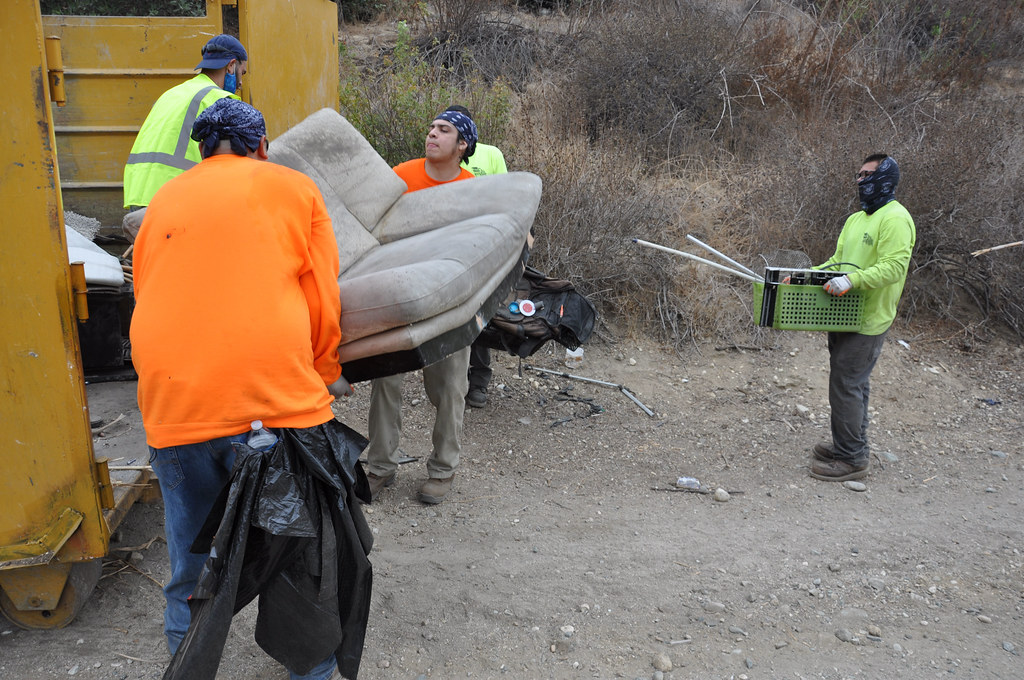
When the alley behind Rosa’s bungalow in Echo Park started to smell like old paint and wet cardboard, she knew she couldn’t pretend the renovation was still a charming ‘work in progress.’ The pile grew like a small, urban mountain, an awkward sculpture of broken tile, kitchen cabinets, and a couch gone sour. ‘We need help,’ Rosa told her neighbor Miguel, cupping her hands to shield his face from a sudden breeze that carried the tang of solvent. Miguel shrugged and pointed to the humming city: ‘Call someone. This is L.A.—we’ve got a junk of every color.’
Setting the scene: Streets that remember
Greater Los Angeles is a tapestry of neighborhoods—Santa Monica’s ocean-bright air, the palm-lined boulevards of Beverly Hills, the compact, bustling alleys of Chinatown, the red-tiled roofs of Pasadena, and the industrial stretches of Carson and Inglewood. Each block has its rhythm, and when a home remodel tips into chaos, it interrupts not only a household but the neighborhood’s cadence. Rosa’s bungalow sat on a narrow street where morning light slips between jacaranda trees, and the alley became a public monument to her renovation’s midlife crisis.
Rising action: A mountain, a deadline, and the rules of the city
The pile had a life of its own. Neighbors started commenting—some with curiosity, some with concern. ‘You can’t just leave that on the alleyway,’ Mrs. Delgado from across the street warned, peering over her fence. ‘You need a permit if it touches the curb.’ Rosa frowned. The thought of tickets and city notices made the mess feel heavier than the weight of the old drywall.
She learned quickly that dumpster removal in Greater Los Angeles isn’t just about hauling things away. Each city—Los Angeles, Burbank, Glendale, Long Beach, Torrance—has its own permitting rules, weight limits, and hours for deliveries. In Santa Monica and Malibu, environmental rules are stricter, and some materials need special handling to avoid polluting coastal waters. In Inglewood or Compton, access constraints and narrow streets can mean a different truck or a smaller roll-off container. The list of variables read like a map of the region: street permits, HOA restrictions in West Hollywood and Beverly Hills, residential placement limits in Culver City.
Key insights woven into the story: How dumpster removal actually works
When Miguel made the call to a local company based in Torrance, he found himself on the phone with Lena, a dispatcher who sounded like she’d navigated half the 405. ‘We can do a 10-yard for the bulky items or a 20-yard if you’re gutting the kitchen,’ she said. ‘But check with your city first—if it’s on the street, you might need a permit and a street-blocking permit for some areas like Hollywood or downtown Los Angeles.’
Lena walked them through what matters: size, contents, placement, and timing. Size determines how much will fit and how heavy the container can be. Standard roll-off dumpsters come in 10, 20, 30, and 40-yard sizes. A single bathroom demo might fit into a 10-yard; whole-house cleanouts often need 20 or 30 yards. Weight matters because trucks and local ordinances put limits on how much a bin can hold; otherwise, overweight fees and fines loom.
Contents are crucial. ‘You can’t throw mattresses, tires, or chemicals in the regular bin,’ Lena advised. Hazardous materials—paint cans with liquid still in them, solvents, asbestos-containing materials—require special handling. Cities like Long Beach and El Segundo have household hazardous waste drop-off schedules and strict rules to stop toxins from seeping into the Los Angeles River or the Pacific.
Placement is the kind of detail that will make or break your pickup. In many affluent pockets like Beverly Hills or parts of Santa Monica, dumpsters can’t block sidewalks, and driveways may not be used without homeowner association permission. On narrow streets in Echo Park or Silver Lake, where Rosa lived, drop-off windows are tight. Trucks need room to back in, and residents must consider whether a dumpster will block access for emergency vehicles.
The logistics that smell of city grease and sunrise
The morning the dumpster arrived felt cinematic. The truck rolled down the street with a soft hydraulic groan at 6:30 a.m., the sky a wash of apricot over the downtown skyline. The driver, a man named Sam from a Long Beach yard, hopped down and placed cones. He smelled of coffee and engine oil. ‘We try to do these early,’ he told Rosa, gesturing to the dumpster as if unveiling a stage prop. ‘Less traffic, cooler temps, easier for everyone.’
Sam explained the staging. If the container stayed in the driveway, they avoided permitting, but sometimes driveways aren’t an option. If it touched the curb or sat in the street, they needed to place a temporary street permit on file. He also spoke about recycling—how LA’s new ordinances continue to push companies toward sorting debris for metal, wood, concrete, and even drywall to reduce landfill loads. ‘We take a lot to processing yards in Carson and Torrance,’ he said. ‘Concrete and green waste get their own lanes.’
Moment of tension: The unexpected item
As workers started loading, Miguel found a sealed box tucked under the old kitchen island. ‘What’s in the box?’ Rosa asked, tone tight. Miguel pried it open. Inside were stacked letters and a faded photograph of Rosa’s grandmother standing outside a market in Boyle Heights. The smell of drywall faded into memory. For a few minutes, the game of sorting trash transformed into sorting family history. They set the box aside like a found relic, and the crew moved around them with respectful silence.
The scene highlighted another reality: dumpster removal often intersects with life stories. People find heirlooms, old bills, tax records, and artifacts they hadn’t seen since they were kids. That’s why some households prefer to sort carefully before calling the truck—it’s not only about logistics but about stewardship of memories.
Practical tips threaded through the narrative
While the crew worked, Lena’s earlier advice came back into focus. They learned to:
- Measure twice. Choose a dumpster size by visualizing the space and estimating volume, not just weight.
- Separate materials. Keep hazardous waste, electronics, and tires out of the general bin and plan for special drop-offs in nearby municipalities like Glendale or Pasadena.
- Check permits. City rules differ; in Los Angeles, the Department of Public Works handles street permits, while cities like Long Beach have their own office.
- Plan access. Think about truck swing, overhead wires (many parts of Burbank and Hollywood have tight clearances), and parking needs.
- Choose local haulers. Companies based in or near the area—Carson, Torrance, Long Beach—understand local disposal yards and recycling centers, which can reduce cost and environmental impact.
The resolution: A cleaner alley and a quieter heart
By noon, the alley was conspicuously emptier. Rosa’s small mountain was now a neat, industrial rectangle on a truck that hummed away toward the skyline. The air felt lighter. Mrs. Delgado popped her head out and offered lemon bars as a peace offering, and Miguel tossed a paper cup of coffee to Sam the driver. ‘You’re a savior,’ Rosa joked, and the driver’s grin creased like a map of the harbor.
What lingered longer than the scent of fresh-cut wood was the photograph they’d found: Rosa’s grandmother, hair pinned under a sunhat, smiling in front of a market stall. They pinned it to the fridge as a reminder that cleanouts often make room for more than renovation—they make room for the next chapter.
Takeaway: What to remember and do
Dumpsters in Greater Los Angeles are more than metal boxes; they’re a service that threads through permits, municipal codes, and environmental concerns. When planning removal in neighborhoods from West Hollywood to Torrance, Beverly Hills to Compton, remember to:
- Call the right company. Local haulers know local rules—this reduces surprises.
- Ask about recycling. Good companies sort and direct materials to appropriate facilities in Carson, Long Beach, or Torrance.
- Check permits early. Street placement and curb use require paperwork in many cities.
- Protect memories. Sort carefully for heirlooms, documents, and sentimental items before tossing everything into the bin.
- Be mindful of hazardous waste. Take paint, solvents, and electronics to designated collection sites in your city.
When the street settled back into its rhythm—children riding scooters, a mail carrier whistling, the glaze of sunset over Santa Monica lounging like a promise—Rosa stood on her porch and breathed in the city. The dumpster had left as quietly as it had arrived, taking with it dust and old tile and leaving a blank canvas. ‘It’s amazing how a thing so ugly can make a place feel new,’ she told Miguel.
He looked down the alley toward the horizon where the palm silhouettes met a bruise of orange-pink. ‘That’s L.A.,’ he said. ‘We throw away the old and somehow make room for the next story.’ In that thin, glowing hour, their neighborhood felt not like an accumulation of things but like a collection of small beginnings. The alley, now tidy and modest, seemed to breathe in the evening and exhale a quiet, patient city.
The truck’s taillights blinked away like a pair of red eyes disappearing into the evening, and the last thing Rosa saw before closing the gate was the photograph tucked on her fridge, sunlight catching the edge like a bookmark. The work had been practical, municipal, and mundane—and in its wake, curiously tender: an ordinary cleanup that cleared space for new memories, new dinners, and new light to fall across a freshly healed bungalow in the heart of Los Angeles.