The dumpster arrived at dawn, rumbling like an ocean freight ship that had somehow found its way into a narrow Echo Park street. Maria stood on her front step wrapped in a sweater against a breeze that smelled faintly of salt and diesel. She watched the driver back the rig into the space between two palm trees, metal scraping the morning air, and felt the strange relief that comes when a noisy, ugly thing finally sits where it belongs.
Setup: A City of Projects and Piles
Los Angeles is a collage of change: new kitchens in Glendale, backyard demolitions in Pasadena, film set cleanups in Hollywood, and beachfront renovations in Santa Monica. Each project brings with it the same unavoidable truth—stuff has to go somewhere. For Maria, the pile in her driveway was the aftermath of a months-long garage conversion. For Jamal, a contractor based in Burbank, dumpsters are the silent partners of every remodel. For Rosa, who runs a thrift shop in Long Beach, a steady stream of donations means weekly pickups and careful sorting.
They all share one challenge: navigating the city maze of permits, size options, recycling rules, and neighborhood etiquette. In a place where streets are narrow and rules change block by block—from Venice to Culver City—the choice of dumpster service can make the difference between a smooth pickup and a neighborly feud or fine from the city.
Rising Action: Complications on Sunset and Beyond
It started with a phone call. “We have an oversized load,” Jamal told Maria. “My truck’s stuck at the yard and the permit office is closed until Tuesday.” Maria pictured the mound of plaster, drywall, and an old clawfoot tub filling the driveway like a parade float with nowhere to march. In Hollywood, a film crew had booked the same block for a shoot the following day. In Santa Monica, street crews had restricted parking for a festival. The dumpster had to move, and quickly.
They learned the hard way that dumpster removal in Greater Los Angeles is never just a matter of ordering a bin. The city has rules that feel like a scavenger hunt: permits for curbside placement in Pasadena, weight limits enforced in Torrance, and noise ordinances in Malibu that can turn a midnight pickup into a neighborly complaint. “Permits are everything,” Jamal said, rubbing his forehead. “I lost two jobs last summer because I thought I could park a roll-off on the street without the right paperwork.”
Then there are the surprises hidden in the debris itself. Someone in Culver City once loaded a dumpster with chemically soaked wood without telling the hauler. The driver refused to take it, and the homeowner faced a hazardous waste fine. In Long Beach, a renovation crew mixed recyclables with landfill trash and ended up paying premium fees when the dumpster had to be sorted at a transfer station.
Key Insights: Choosing the Right Dumpster for Los Angeles
Between Maria’s morning and the late afternoon bustle of Santa Monica’s boardwalk, practical lessons emerged. Size matters. Roll-off dumpsters come in sizes from 10 to 40 cubic yards—10-yard bins are great for small cleanouts in Burbank; 20- to 30-yard bins suit most home renovations in North Hollywood and Pasadena; 40-yarders are for large commercial demolitions in Downtown LA. “You don’t want to order a 40-yard for a kitchen tear-out,” Jamal said. “It looks like overkill and costs more to rent. But underestimating the load leads to multiple hauls, which is worse.”
Permits and placement are non-negotiable. Many neighborhoods—Santa Monica, Pasadena, and parts of West LA—require temporary use permits if the dumpster will sit on public property. Driveway placement often avoids permits but requires care: weight limits on old driveways, proximity to trees and utility boxes, and avoiding blocking sidewalks in Glendale or street sweeps in Long Beach.
Weight and materials affect price and legality. Many haulers impose weight limits; exceeding them triggers overage fees. And not all waste is equal—tiles, concrete, and soil are heavy and can push a dumpster over the limit. Hazardous materials—paint cans, solvents, asbestos—must be handled by licensed contractors and taken to proper disposal sites. The Los Angeles County Department of Public Works and local cities publish lists of household hazardous waste drop-off locations and special collection events.
Recycling and diversion are part of the local culture. LA County has ambitious waste reduction goals. Many reputable haulers will sort and divert materials to recycling centers, donation hubs like Goodwill or Habitat for Humanity ReStore in Anaheim, or green waste facilities for yard debris. In Venice and Malibu, where residents cherish coastal ecology, recycling efforts are often a deciding factor in selecting a company.
Scene: Negotiations on the Curb
By noon, Maria and Jamal were on the phone with three different haulers. A driver in Torrance asked about weight. A dispatcher in Culver City wanted the exact dimensions of the driveway. An online booking said a 20-yard bin could be delivered by 3 pm. Maria watched a cyclist glide by, the ocean light glinting off chrome, and imagined the bin as an ugly but honest ship bearing the spoils of progress.
“Just tell me one thing,” Maria said into the phone, watching the shadow of a palm tree stretch across her pavement. “Can you pick up on Saturday morning? There’s a festival on my block Friday night.” The dispatcher replied with a practiced calm. “We can, but if the dumpster stays on the street you’ll need a permit from the city of Los Angeles. If you put it in the driveway we can grab it anytime Saturday. Also, no hazardous materials.”
That line—no hazardous materials—felt like a moral and practical anchor. It reminded Maria of a conversation she once had in Long Beach with Rosa, who recounted a winter when she and her volunteers sifted through a donated pile and discovered an eerily large quantity of old, leaky paint cans. “We almost had to close for a day,” Rosa said. “It was scary to think how much could go wrong when people don’t sort their stuff.”
Practical Tips Woven into the Story
As Maria and Jamal plotted logistics, a checklist formed naturally, the kind of pragmatic wisdom built from years of juggling municipal rules and neighborhood patience:
– Measure your space and choose an appropriate dumpster size. Think about access for the truck, tree limbs, and overhead wires, especially in parts of Glendale and Pasadena with older street layouts.
– Check local permit requirements at city websites (Los Angeles, Santa Monica, Long Beach, Glendale). If you need a curbside placement on public property, secure a temporary use permit early.
– Know what you can and cannot throw away. No solvents, paints, batteries, or asbestos in a standard dumpster. Use household hazardous waste facilities or scheduled pick-ups in LA County.
– Separate recyclables and donate usable items. Furniture, fixtures, and functional appliances often have second lives. Donations reduce costs and help local organizations in Long Beach and Anaheim.
– Ask about weight limits and hidden fees. Yard debris and construction materials like concrete carry extra charges. Confirm pickup and drop-off windows to avoid fines for overlong placement.
Climax: The Pickup at Sunset
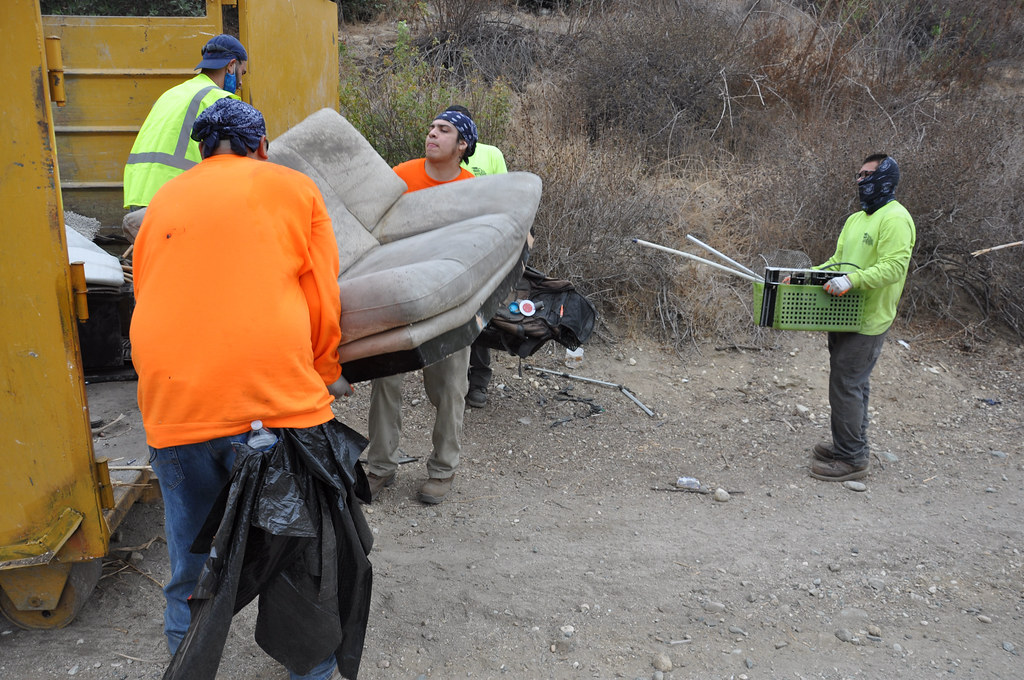
Saturday arrived with a lavender sky typical of late summer over Los Angeles. The dumpster sat like a temporary volcano at the end of Maria’s driveway, full to the brim with the remains of her garage. Neighbors peered from porches. A toddler pointed with wide eyes at the clanging metal. Jamal arrived early, coffee in hand, checking straps and balancing the last piece of drywall on a dolly.
“You did good separating those cabinets,” he said, tapping the wood that would go to a salvage center in Culver City. “Saved us a sort at the transfer station.”
Maria smiled, the muscles in her jaw softening for the first time in weeks. “I started thinking of it as staging for letting go,” she said. “Everything became easier to sort when I imagined the people who might use it next.”
The hauler worked with practiced precision. The hydraulic arms lifted, the dumpster tilted, metal groaned; debris slid soundlessly into the belly of the truck. A neighbor called out, “Thanks for keeping it tidy!” and a breeze pushed the scent of eucalyptus across the block. The driver waved and pulled away, the city flattening back into its usual rhythm.
Resolution: Streets Restored, Lessons Kept
The driveway felt larger and somehow lighter. The empty space where the dumpster had been looked less like absence and more like possibility. Maria imagined a little garden or a place for morning tea. Jamal packed up his tools and called the permit office to confirm his next job in Burbank. He and Maria swapped numbers; she promised to call if she needed a referral for donations in Long Beach or a green waste pickup in Torrance.
Across the city, similar small dramas played out—filmmakers in Hollywood coordinating night pickups between scenes, homeowners in Santa Monica scheduling around street fairs, contractors in Pasadena applying for permits weeks in advance to avoid surprises. Each successful removal was a quiet choreography of planning, local knowledge, and respect for the city and its neighbors.
Takeaway
Dumpster removal in Greater Los Angeles is more than hauling away junk. It is a practice of urban stewardship, a negotiation between convenience and responsibility. When you measure your space, check permits, separate recyclables, and respect weight and hazardous waste rules, you turn a messy moment into a tidy transition. As Jamal put it, “You don’t just clear a space; you make room for whatever comes next.”
Maria stood at her gate as twilight settled, watching the city lights flicker on from Hollywood to Santa Monica. The street smelled faintly of coffee and cooling asphalt. Somewhere down the block, a dog barked at a passing skateboarder. The driveway was empty, a small stage cleared of its props. She inhaled, tasting the salt and the eucalyptus, and felt the steady pulse of a city that reconfigures itself every day—one dumpster, one permit, one careful decision at a time.