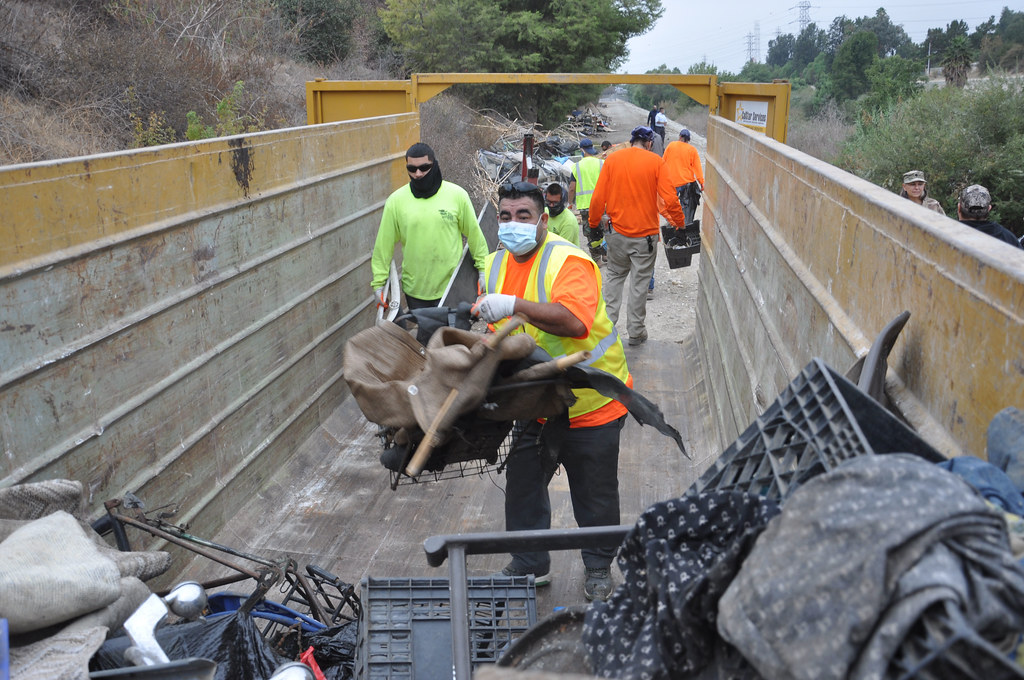
The first time Maria saw the heap of lumber and drywall piled where her garage used to be, she felt a strange swell of both dread and relief. Dread because the remodel had become a mountain of debris in the middle of Silver Lake; relief because at last the old floor, the crooked kitchen cabinets, and the decades of dust were finally gone. She stood on the sidewalk, palm trees waving above like indifferent spectators, and wondered how exactly one tamed a pile that smelled faintly of sawdust, old paint, and the citrus from the neighbor’s tree.
The Setup: A Neighborhood, a Project, and an Unwieldy Pile
Maria had spent months planning the kitchen renovation in her century-old bungalow near Sunset Junction. Contractors came and went, their boots leaving prints on the tarps, their radios murmuring old punk songs on repeat. By midweek, the house looked less like a home and more like a scene from a movie shoot. She could hear the distant hum of traffic from Echo Park Avenue, the clip-clop of a bicycle courier, the nearby chatter of a barista sweeping up near Sunset Boulevard. Then came the dumpster.
She met Luis, the driver, early on a Tuesday morning. He was wearing a faded jacket with a company patch and a cap that had seen too much sun. He introduced himself with a quick nod and a careful, ‘We’ll get it right, Maria.’ The dumpster’s arrival—metallic and square, resting like a patient beast on the curb—was accompanied by the hydraulic hiss of a truck, the metallic clank of chains, and the neighborhood watching from stoops and windows. From Beverly Hills to Long Beach, anyone who has renovated knows that that first metallic thud can feel like a promise.
Rising Action: Rules, Permits, and the City That Never Sleeps
It wasn’t long before the story thickened. A sympathetic neighbor from across the street leaned over the fence and asked, ‘Did you get a permit for that?’ Maria had assumed the hauler would handle everything; after all, the dumpster company’s name was on the truck, and Luis had handed her a short receipt with a smile. But the neighbor’s question opened a stack of paperwork that seemed to multiply like the debris itself.
Luis smiled again and explained, ‘Different streets, different rules. If you put that on the street in front of the house, sometimes you need a permit. Santa Monica and Pasadena have their own rules. For a driveway drop-off, no permit usually. For street placement in Los Angeles, you might need a temporary use permit. It’s the same truck, different paperwork.’ The words landed like pebbles in a bucket of water—rippling outward with implications.
Now imagine the scene: cars passing, a bicyclist pausing to check directions on his phone, a small dog barking at the clanking metal. Maria felt the pressure—will the permit arrive in time? Will the city fine her? Will an inspector show up from West Hollywood or Culver City and demand it be moved? The city of Los Angeles is vast, and the rules behave like neighborhood gossip—consistent in some ways, wildly different in others.
Key Insights Woven into the Story
As the days passed and the dumpster filled, Maria learned more than she expected. Some lessons arrived in conversations, others in the weight of a loaded bin. Here are the insights that transformed anxiety into competence:
‘Size matters,’ Luis said while tapping the side of an industrial 20-yard dumpster. ‘A 10-yard is good for small cleanouts and single-room jobs. A 20-yard fits most kitchen remodels. If you’re gutting a house, you might need a 30- or 40-yard.’ He showed her how a 10-yard sat like a compact suitcase, while a 30-yard looked like a metal canyon swallowing a sofa with room to spare.
Another night, over takeout from a tiny Filipino place in Los Feliz, Maria and her contractor argued about what could and couldn’t go into the bin. ‘No hazardous materials,’ her contractor warned. ‘Paints, solvents, asbestos—those need special handling.’ Luis later handed her a printed list and circled items with a pen: electronics, tires, and certain chemical-laden materials required different disposal methods or extra fees.
Then there was the invisible cost—weight. ‘We don’t care about items so much as total tonnage,’ Luis explained. ‘Wood and drywall weigh less than concrete and tile. A load that’s too heavy triggers extra tipping fees at the transfer station.’ It was an honest, practical language that an urban project demands: measurements, restrictions, and the realities of municipal waste management.
Maria also learned the value of timing. A rental period typically covers a week, but if the contractor’s timeline slipped—because of a delayed permit from Glendale or a storm in Torrance—the fees could pile up like forgotten nails in the floor. Scheduling delivery early in the morning is common because narrow streets and morning rush hour make logistics easier in places like Culver City or Downtown LA.
Educational Interlude in Action
During one particularly tense afternoon, a city inspector walked up the block. She was sharp-eyed and polite, carrying a clipboard. ‘Everything’s fine so far,’ she said, peering into the container. ‘Just check your permit if it’s on the street. Also, consider what you can divert to recycling or donation. Santa Monica is big on diversion programs—if you can donate usable items, it’s both cheaper and greener.’ When Maria later called a donation center, a van from Habitat for Humanity ReStore arrived to take lightly used cabinets and fixtures, and the extra space in the dumpster felt like a small victory for sustainability.
Long Beach’s transfer stations, Luis explained as he revved the truck to reposition the bin, accept different material streams and sometimes offer community rebates or programs for construction debris. ‘If you separate metal, it can even offset some fees,’ he said, and Maria pictured a future where a blue pile of salvageable metal got carted off to be melted down, leaving fewer tones of landfill-bound waste.
Moments of Tension and Human Connection
Not all lessons were bureaucratic. There were human moments that mattered. One afternoon a child from across the street, cheeks smudged with marker, came over and asked if she could climb onto the dumpster. ‘Careful,’ Luis warned, gentle but firm. ‘It can be dangerous.’ Maria invited the child to help place small items into boxes instead, turning a potential hazard into a quick, impromptu lesson in safety and responsibility.
‘It smells like the beach,’ the child announced later, holding a piece of old shelving and sniffing the air. Maria laughed—there was a citrus-and-sawdust scent that reminded her of a trip to Long Beach, where the ocean had a different, briny tang. Scenes like this stitched the project into the neighborhood’s fabric rather than isolating it as a construction site.
Resolution: The Bin Empties, the House Emerges
Weeks passed. The dumpster was filled and hauled away, returned, filled again. Schedules flexed, permits were acquired, an extra plywood sheet protected the driveway from scuffs, and a small sign asked passersby to mind the work. The city inspector nodded at the final pass. The donation van took what could be reused. The recycling center received the metal and the contractor separated the clean wood so it could be chipped.
On the day the final debris was taken, Maria watched as Luis’s truck pulled away for the last time. He gave a wave—a small human punctuation mark—and the street that had once been dominated by a hulking metal box felt open and airy again. The remodeling dust still lingered in corners, but the house looked like a house once more: windows reflecting the first pale blush of sunset, the silhouette of palm fronds etching the sky like ink strokes against the fading light.
Takeaway: What to Remember and Do
Maria’s story is a mosaic of small decisions that add up: choose the right dumpster size, ask about permits if you plan to place a bin on the street, separate recyclables and donations to reduce costs, don’t put hazardous materials in the bin, and protect your property with plywood or placement on the driveway. Schedule deliveries thoughtfully, be aware of weight limits, and work with haulers who communicate clearly. In Los Angeles, what works in Burbank might be different in West Hollywood or Torrance, so a quick call to your city or your hauler can save time and money.
In practical terms, think ahead about access—will the truck make the turn down a narrow alley in Downtown LA? Where will the dumpster sit in a parking-restricted zone in Santa Monica? Is there space in your driveway in Pasadena? These logistical questions are as much a part of the project as choosing cabinets or tile. And when possible, find opportunities to donate or recycle: it feels better and often costs less.
As dusk settled and the neighborhood exhaled, Maria stood on her porch with a cup of coffee cooling in her hand and watched the skyline of Los Angeles ignite with lights. Each window in the distance told a different story—some similar to hers, some entirely different—and the absence of the dumpster felt less like a loss and more like a cleared stage.
‘You did good,’ Luis said, appearing beside the truck one last time with the sun haloing his profile. His words were simple, but they held the rhythm of many days of hauling, the clatter of tools, the quiet family dinners paused and resumed. Maria nodded, feeling the weight of the project’s end: relief, new beginnings, and the gentle awareness that the city around her keeps moving—renovating, renewing, dreaming.
The image that stayed with her was small and vivid: the dumpster’s metal skin catching the last amber of daylight, a line of palm trees bowed against the evening, and a neighbor’s porch light blinking on like a friendly eye. The house had been stripped down and rebuilt, not just in wood and tile but in community and knowledge. In Los Angeles, where streets curve around hills and every neighborhood has its rhythm—from the pier breezes of Santa Monica to the industrial pockets of Long Beach—managing waste well is part of being a good neighbor and a careful city dweller. That evening, the air smelled faintly of citrus and sawdust and possibility, and Maria felt, finally, that she could breathe again.