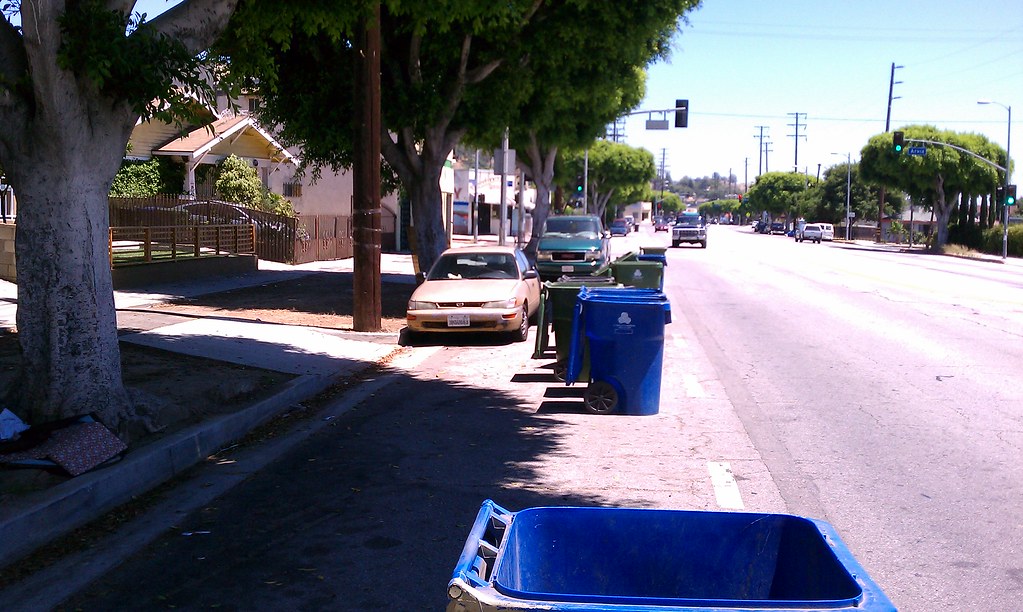
The dumpster arrived at dawn, its metal sides slick with the cool breath of a Los Angeles morning. In the distance, the silhouette of palm trees lined the Santa Monica horizon, and the smell of coffee and sawdust mingled in the air. Maria stood on her driveway in Boyle Heights, coffee cup in hand, watching three men in reflective vests wrestle the rolled metal box into place. “This is going to change everything,” she whispered, more to herself than to anyone else.
Setup: A Neighborhood, a Project, and a Decision
Two weeks earlier, Maria had a plan: turn her cramped, cluttered garage into a home office where she could finally stop working from the kitchen table. The contractor from Culver City had given a quote, the paint samples were taped to a sheet of plywood, and her teenage son had already labeled the boxes he didn’t want to keep. What she didn’t have was an organized way to clear six decades of accumulated life—old baby furniture from their move-in day in Inglewood, a stack of faded magazines from a Pasadena thrift run, landscaping debris from a failed attempt at a drought-tolerant garden.
She called a dumpster removal company recommended by a friend in Glendale. Conversation over the phone was quick, practical. “We can have a 20-yard roll-off at your curb tomorrow. You’ll want a permit if it’s on the street—call the city or we’ll handle it for you,” the dispatcher said, voice warm but efficient. Maria didn’t know what a 20-yard meant. She pictured a giant metal cube crashing through her quiet street. The reality was less cinematic and more comforting: a managed, solid container, wheels beneath it, and a team who knew how to take the chaos and make space.
Rising Action: The Art and Tension of Removing What We Keep
Running a remodel in Southern California is a study in logistics. From the first knock of the contractor’s tools in Burbank to the late-night hum of traffic on the 405, the city asserts itself in strips of light and sound. Maria learned quickly that dumpster removal was woven into that urban pulse. She had to coordinate the timing around street cleaning in Boyle Heights, avoid Glendale’s permit window for oversized curb placement, and plan for a pickup before a forecasted wind event that could scatter insulation and paper across neighboring yards.
On the third day, as the crew emptied the hallway of her home—there, an old recliner smelling faintly of lemon polish; here, a box of cracked ceramics that her back said “donate” but her heart whispered “keep”—Maria found herself choking up. “It’s just stuff,” her son said, sliding a photo album into a box. “But it’s our story,” she answered.
There was tension beyond sentiment. Not everything could go into the dumpster. The delivery foreman, Javier, crouched beside a rusted appliance. “We can’t take refrigerators or paint cans in this load,” he explained, his voice low against the morning traffic noise. “Those are hazardous—state rules, and most transfer stations won’t accept them in a standard roll-off. We’ll separate those and give you options for proper disposal.” He handed Maria a list: local hazardous waste collection days in Long Beach and Huntington Beach, and a phone number for a company that specialized in appliance recycling in Torrance.
Key Insights: What Every Angeleno Needs to Know About Dumpster Removal
As the week unfolded, Maria gathered practical knowledge the way her son collected comic books—carefully, with an eye for what mattered. Here are the lessons that took shape amid the clatter of tools and the creak of the dumpster’s lift.
Size matters. Dumpsters come in common sizes: 10-, 20-, 30-, and 40-yard roll-offs. A 10-yard is often enough for small cleanouts in Beverly Hills or Culver City. A full-home remodel in Pasadena or Glendale might need a 30- or 40-yard container. Pricing typically reflects size and weight—bigger bins cost more, and many companies set a weight limit with fees for overage.
Permits and placement. If you want the dumpster on public property—like a curb on Sunset Boulevard in Hollywood or a residential street in Inglewood—you often need a permit from the city. Permit rules vary from Anaheim to Compton. Your waste provider can usually secure the permit, or your local public works department will point you to the right process. Plan at least a week if your street has strict parking enforcement or scheduled street sweeping.
Know the exclusions. Hazardous materials—paint, solvents, used motor oil, fluorescent bulbs, certain electronics—require special handling. Many municipalities, including Los Angeles and Long Beach, offer household hazardous waste drop-off events. Appliances with refrigerants and batteries may need certified recycling. Dumpsters are for construction debris, household junk, yard waste, and other non-hazardous materials.
Reuse and recycling are possible. California encourages diversion from landfills. Many dumpster services separate loads at transfer stations, salvaging metal, concrete, and wood. If you’re in Santa Monica or Pasadena and want to maximize recycling, ask for a company that sorts materials or check for local donation centers—old cabinets, light fixtures, and gently used furniture often find new homes when listed with a pickup service across the South Bay or the San Gabriel Valley.
Timing and traffic. Greater Los Angeles moves at its own tempo. Schedule early drop-offs if you want crews to avoid rush-hour traffic on the 101 or the 110. If your project is near LAX or along Wilshire Boulevard, factor in increased noise and tighter parking enforcement when planning a quick swap of dumpsters.
On the Ground: Voices from the Job Site
“We see everything across the city,” Javier told Maria as they walked the pile at the end of the day. “From luxury remodels in Beverly Hills where the homeowners want everything separated and recycled, to urgent debris removal after storms in Torrance. Each job has a rhythm.” His hands were rough from lifting; his eyes were bright with the familiarity of someone who had watched neighborhoods change over a decade.
Across town in Long Beach, a homeowner named Dominic had scheduled a green-waste pickup for his drought-resistant front yard. “I tried to compost, but there were branches and dirt clods—too much for my bin,” he said. He and Maria traded tips: where to find affordable mulch, how to break down pallets, which companies offered same-day service for emergency clearances in Compton after a tenant move-out.
At one point, a neighbor from Pasadena drove over, squinted, and shouted, “Do you mind if we toss these tiles here?” The contractor shrugged, then said, “We can take them—but we need to weigh the load, and concrete takes up a lot of space. It might be cheaper to order a specialized aggregate removal service for just tiles.” Small decisions kept ballooning into larger logistical puzzles, and each answer felt like a local secret: who to call, what to avoid, when to act.
Resolution: Clearing Space, Clearing Headspace
By the time the dumpster was hauled away, the house felt different. The garage, once a museum of past lives, looked like a blank page. Maria ran her hand along a newly cleared shelf—smooth, cool, ready. Contractors returned, the sound of drills and laughter replacing the antiseptic hush of boxes. Her son moved his gaming rig into the reclaimed space. Neighbors stopped by to comment on the neatness of the curb, and someone from the homeowners association from a nearby street in Glendale asked if they’d recommend the dumpster service.
More than the physical transformation was the emotional work Maria had done. Each object she had chosen to let go of carved out space not only in her garage but in the pattern of her days. “We kept the things we use,” she told Javier as he rolled up the straps. “And we’re making room for what comes next.” He nodded, eyes crinkling. “That’s the best part of this job,” he said. “You do a little cleanup, and people breathe easier. Sometimes that’s worth more than the dollars you make.”
Takeaway: What to Remember and Do
If you’re planning dumpster removal anywhere in the Greater Los Angeles area—from North Hollywood to Huntington Beach—here are the practical steps that will make the process smooth and sustainably responsible:
– Choose the right size: Estimate the volume of debris and consult your provider. A 10-yard bin fits small renovations; 20-30 yards suits most home remodels; 40 yards is for large construction projects.
– Check permits: If the dumpster sits on public property, call your city’s public works or ask your hauler to secure permits for you. Regulations differ in Los Angeles, Pasadena, Long Beach, and Anaheim.
– Separate hazards: Remove paint, chemicals, batteries, and refrigerant-containing appliances. Use local hazardous waste programs or specialized recyclers.
– Recycle and donate: Divert usable items to salvage centers, thrift stores, or building-material exchanges to reduce landfill loads and help others.
– Schedule smart: Avoid peak traffic windows and check weather forecasts. Book ahead for busy seasons or same-day needs if you anticipate emergency cleanouts.
– Communicate: Tell your neighbors if a pickup affects parking. Clear access paths for trucks to reduce labor and time costs.
As Maria closed her last box, she looked out toward the distant stripe of sea by Santa Monica, a ribbon of blue under a pale sky. The city was waking up—delivery trucks humming, a dog barking in Echo Park, a skateboard clacking against the curbs near Culver City’s art spaces. In her driveway, the faint ghost of the dumpster’s shadow remained, a dark rectangle that only recently had been full of the things that defined a life. Now, it was gone, and the space it left behind felt less like an absence and more like a beginning.
Javier climbed into the truck, started the engine, and with a practiced maneuver, the dumpster slid away toward the transfer station in Sylmar. Maria watched until the truck rounded the corner, then closed the garage door. Inside, the air smelled of fresh paint and new possibilities. She walked past her son’s room, past the hallway that had seen the yoke of furniture and memories, and into the room that would soon be her office. She opened the window and let the Los Angeles light come in—warm, forgiving, and full of the sound of a city that was always, quietly, remaking itself.