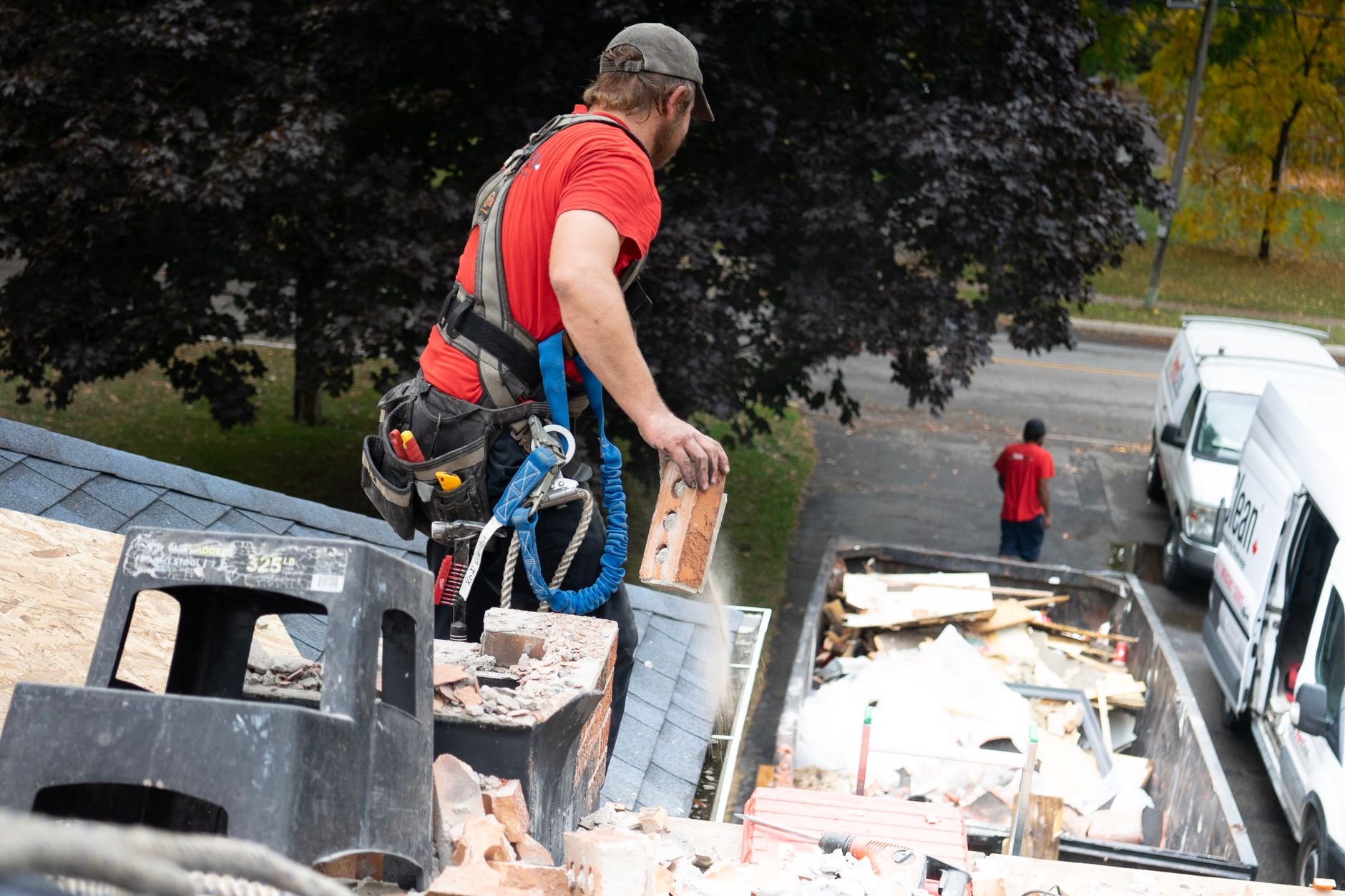
When Elena first tore down the plaster wall in her Highland Park bungalow, she expected dust, a few nails, and the slow, comforting ritual of renovation. What she didn’t expect was the way the living room seemed to multiply its debris overnight, as if every splinter and forgotten tile wanted its own corner of the house. By the third day, a mountain of lumber, drywall, and old picture frames pressed against the doorway like an impatient guest. She stepped back, inhaled the dry, sawdust-sweet air, and asked herself the question many Angelenos learn to ask at one time or another: who do I call to move all of this?
Setup: The Patchwork City and a Simple Problem
Greater Los Angeles is a mosaic of neighborhoods — Santa Monica’s ocean-salty breeze, the palm-lined glamour of Hollywood, the historic facades of Pasadena, and the working docks of Long Beach. Each corner offers a different rhythm, and each rhythm carries its own rules about dumpsters, permits, and curbside etiquette. Elena’s project skirted these edges: a mid-century bungalow in Highland Park near the hills of Pasadena, a contractor who shuttled between jobs in Echo Park and Burbank, and neighbors who kept a close eye on street activity.
She reached out to Marco, a contractor she’d met at a walk-through in Silver Lake. ‘We can get you a 20-yard for a week,’ he said, palms dark with sawdust. ‘But we need to think about curb permits if you want it on the street. Or we can tuck it in the driveway, if the truck can get close.’ His voice carried the practical cadence of someone who’d learned to read LA like a map of hidden alleys and parking signs.
Rising Action: The Truck, the Permit, and the Heat
The first challenge came the afternoon the hot wind rolled in from the valley, making the sunlight ricochet off tumbled bricks and fresh plaster. Elena watched from the threshold as a white, branded truck with a blue logo swung into the block. The crew of three wore neon vests and weathered gloves. ‘Morning,’ their foreman Luis called, his voice melding with the mechanical hum of the truck. ‘We got the 20-yard lined up.’ He climbed down, and his eyes assessed the house with a contractor’s familiarity: the driveway gate barely wide enough for the bin, a parked sedan at the curb, and that stubborn city sign forbidding obstructions between 8 a.m. and 6 p.m.
‘You have a street permit?’ Elena asked, because she had spent the better part of two nights reading municipal pages — a tangle of regulations that shifted from Downtown LA to Santa Monica to Pasadena.
‘We do most of our work across the valley and we keep permits on file,’ he said, folding a clipboard. ‘But for this block we’ll need a local permit if you want it on the curb. Driveway will be fine, but the crew needs room for the truck to back up.’ He pointed to the alley, where a soft breeze carried the distant rumble of the 110 freeway. ‘We can place it there and empty it in two trips if needed. Or if you want it on the street, we’ll apply for a temporary placement with the city’s parking enforcement.’
Permit paperwork turned the day into a patient lesson. Los Angeles, Santa Monica, and Pasadena all have slightly different applications, fees, and lead times. Elena learned that some neighborhoods, like West Hollywood and Beverly Hills, often require extra layers of approval for curb placements because of narrow streets and high pedestrian traffic. Long Beach and Torrance, with their industrial stretches, had more flexible timelines but added rules for hazardous waste separation. Marco explained the invisible ecology of it: city crews, private haulers, and local ordinances all woven together like a tapestry that could snag at any thread.
Key Insights: What Dumpster Removal Looks Like in Greater Los Angeles
As Elena moved through the logistics, she began to see the system in motion. The crew worked with an economy of experience that turned into teachable moments for her. ‘A few things to remember,’ Luis said as they wrapped a doorframe in padding. ‘First: size matters. For a small kitchen remodel, a 10-yard is usually enough. For whole-house demo, people pick 20 or 30 yards. Second: weight beats volume. Concrete, dirt, and tile add a lot of weight. We watch for overage fees.’ He tapped the clipboard where a neat checklist tracked expected weights and prohibited items.
He showed Elena the yellow sticker for green waste separation, the blue bags for recyclables, and the small orange tag denoting hazardous materials that would never touch a municipal landfill. Paint cans, solvents, batteries, fluorescent bulbs, and asbestos must follow special chains of custody. ‘We divert as much as we can to recycling centers, donation hubs in Echo Park and Long Beach, and specialty processors for electronics,’ Luis added. ‘It’s better for the planet and it’s cheaper on your invoice — sometimes significantly.’
She learned about dumpster types, too: roll-off dumpsters for construction debris; enclosed bins for household junk; small mini-dumpsters for tight Pasadena alleys; and track-mounted dumpsters when access was limited by stairs or heritage sidewalks in older neighborhoods. The crew described the choreography: place, load, cover, haul, and weigh. A final scale ticket at the transfer station fixed the balance between what went in the bin and what it would cost to dispose of it.
Scene: A Night of Noise and a Neighbor’s Outburst
One night, under a harvest moon, the block found an unexpected drumbeat. A neighboring renovation in El Sereno had arranged for a same-night pickup, and the second truck’s diesel growl and the crew’s radio chatter cut through Elena’s quiet. Mrs. Alvarez from across the street appeared on her stoop, an indignant silhouette framed by geraniums.
‘They’re making noise,’ she called. ‘It’s past nine!’
Marco stepped out, hands up in a placating gesture. ‘We’re finishing tonight so they can avoid the daytime traffic. We checked the permit. We’ll be off the street by ten.’ There was an awkward silence — the kind that makes everyone aware of the tightness between productivity and civility in dense city neighborhoods. Slowly, Mrs. Alvarez nodded and retreated, muttering about youth and machines. The crew worked with the efficiency of people who understood that patience and precision were two sides of the same coin in urban work.
Key Insights Continued: Cost, Timing, and Sustainability
Elena’s invoice taught her more than economics; it mapped decisions. Dumpster rental costs in Greater LA vary by size, duration, and content: a short-term 10-yard might run a few hundred dollars, while a 20- to 30-yard for a multi-week demo could approach the upper hundreds, depending on weight allowances and city fees. Same-day or next-day services cost more. Add permit fees if you want curb-side placement — in some places that meant an extra $50 to $200 depending on the city and the needed signage.
But there were smarter choices that saved money and soothed the conscience. The crew recommended segregating metal, wood, and concrete before loading. A salvage-minded approach saw the good in discarded cabinets and intact appliances: donation to local organizations in Glendale and Long Beach, or a salvage yard in Burbank that could take fixtures. Electronic waste went to certified e-waste processors. ‘We tried to keep landfill diversion high,’ Marco said, wiping his hands on a rag. ‘It’s part stewardship, part saving you money.’
Elena found herself selecting recyclers by the same instinct she used to choose architects; she wanted the team that knew the city and respected its rules. The choice to pre-sort drywall and put clean lumber into the right pile saved her a noticeable amount on the final tally.
Resolution: The Last Trip and a Neighborhood Morning
On the final day, as the crew made their last sweep, the neighborhood held a kind of soft exhale. The sun tilted low, burning the paint on the truck with a golden glaze. Luis placed the final strap, and the dumpster’s lid clicked into place like the last page of a book. ‘That should be it,’ he said, and for a moment everything frayed into relief: a clean driveway, neighbors stepping into their yards, the smell of coffee from a bakery two blocks over.
Mrs. Alvarez waved from her stoop with a half-smile. ‘You fixed it up nice,’ she called to Elena. ‘And the noise wasn’t so bad after all.’ Elena laughed and felt the embarrassment of someone who’d worried too much about getting things right. She had crossed municipal boundaries in a week — from permit forms that tied her to the bureaucracy of Los Angeles, to a donation drop-off in Long Beach that smelled like oiled metal and possibility — and had come back with a house that finally felt like her own.
Takeaway: What to Remember When You Need Dumpster Removal
The weeks after the project became a handbook of practicalities turned human. If you face the same mountain of junk in Pasadena, Glendale, Santa Monica, or the Valley, a few things matter: pick the right dumpster size for your volume; understand the difference between weight and space; check local permit rules for curb placement; sort materials when possible to reduce cost and environmental impact; and use licensed haulers for hazardous items. And remember the small courtesies that keep city life livable: notify neighbors, limit noisy work to acceptable hours, and secure dumpsters so they don’t become neighborhood hazards.
Above all, Elena realized that dumpster removal in Greater Los Angeles is not just a logistical step in renovation — it’s an urban ritual. It involves negotiating the narrowness of streets in West Hollywood, the wide angles of industrial lots near Long Beach, the narrow alleys of Pasadena’s historic districts, and the picky parking regimes of Beverly Hills. It’s about the people who show up in dusty vests and expert hands, the municipal clerks who stamp permits, the salvage yards that give old things a second life, and the neighbor who finally says ‘It looks good.’ Her job had been to tangle the threads together, and in doing so she found that the city’s messy edges could become a kind of neatness: bins closed, streets cleared, a renovated home breathing again.
On the final evening as the sun dipped behind the San Gabriel foothills, Elena sat on the empty stoop, the house behind her a silent promise. A faint airplane contrail traced a ribbon across the sky. Across the way, a small lemon tree shimmered in the breeze, as if applauding the quiet. The dumpster was gone, the truck folded into memory, and the city resumed its unhurried hum. Marco clapped his hands, gathered his crew, and said, ‘Another block, another story.’ They drove off, leaving a clean driveway and a neighborhood that felt, just for that moment, a little more like community.