The sun had not yet fully warmed the asphalt when Maria stepped out onto her Echo Park balcony and looked down at the gray rectangle taking up two parking spots on the street below. It was full—teetering with plaster dust, old kitchen cabinets, a collapsed futon, and the ghosts of a decade of lives lived inside a rent-stabilized bungalow. The city smelled of coffee, exhaust, and the faint salt of the ocean carried in from Santa Monica. A neighbor yelled from a distance: ‘Is that ours or the renovation?’ Maria smiled despite the stack of logistical nightmares in her head. She had one week to clear the mess before her tenant returned, and the clock in Los Angeles never moved slowly.
Setting the Scene: Streets, Sunlight, and the Weight of Waste
In the Greater Los Angeles Area, dumpsters are as much a part of the urban landscape as palm trees and freeways. From the narrow alleys of Venice to the broad boulevards of Long Beach, every neighborhood tells a different story through what it discards. Maria had hired a local company based in Burbank, but the real work began when she realized how many invisible rules governed a metal box parked on a curb: permits, weight limits, what could and couldn’t be tossed, and the best times to schedule a pickup to avoid rush-hour traffic pumping diesel into the morning air.
‘You’d think putting junk in a bin is the easy part,’ her friend David had said over a late-night call. ‘But in Culver City and West Hollywood they watch street placements like hawks.’ He was right. A misplaced dumpster can mean a ticket, a tow, or a conversation with the Bureau of Street Services in downtown Los Angeles. Maria’s crew leader, Raul, promised to handle the permits, but his voice on the phone had the same calm edge of someone who’d learned to navigate permits, parking, and picky inspectors.
Rising Action: Narrow Alleys, Tight Deadlines
On Tuesday morning a white roll-off truck from a Torrance depot rumbled into her block. The driver, Maya, hopped down, the smell of diesel and fresh tar on her jacket. ‘Small order,’ she said, eyeing the alley behind the bungalow. ‘But we can do it. How’s the access?’ Maria led her through a gate that squealed in protest and down a strip of packed dirt where old paint cans left colored fingerprints on the ground.
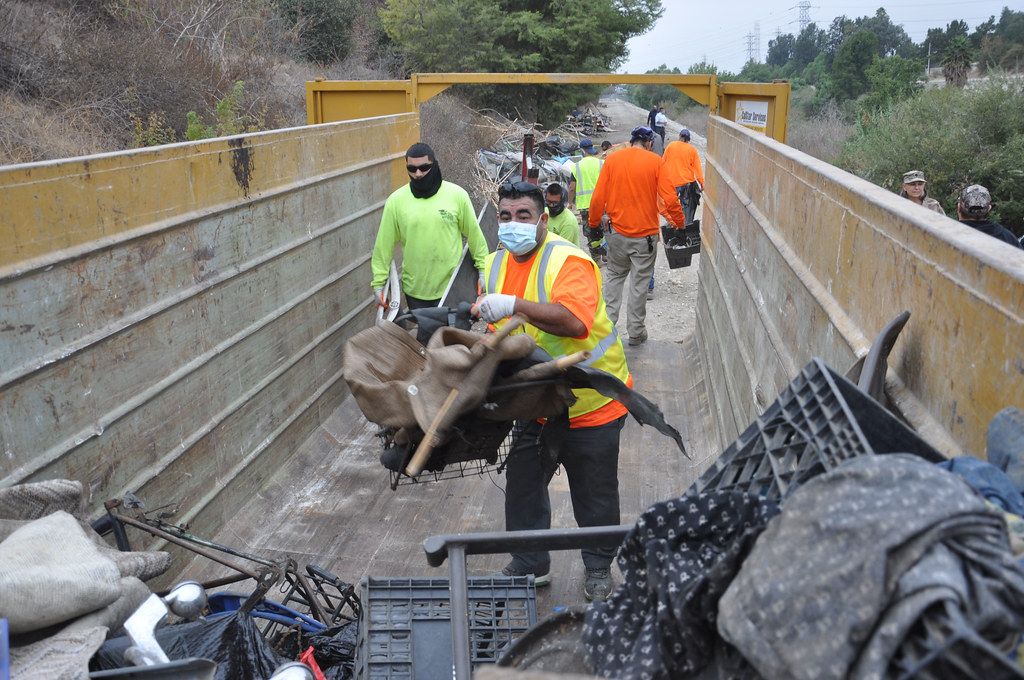
They began loading. The first thing that hits you is the sound: the hollow clunk of cabinetry, the metallic rattle of bent nails, the soft thud of padding from an old mattress. Raul directed two men, Jorge and Lila, like a conductor guiding a four-part harmony. ‘Left shoulder, lift with your legs,’ he reminded them, echoing a safety lesson they repeated all week. The work was practical choreography—slide, heave, toss—until the dumpster reached a dangerous lip near its rim.
‘Careful,’ Maya said. ‘We’re close to a block limit.’ That was when Maria learned about the yard sizes. Rolling dumpsters come in 10, 20, 30, even 40 cubic yards, and each feels different in a neighborhood like Hollywood versus Malibu. In the canyon houses of Malibu, getting a 40-yard behemoth up a winding drive is a choreography unto itself. In a Venice bungalow with narrow streets and parking permits, a 10 or 15-yard bin is the practical choice. Maria had chosen a 20-yard to balance cost and capacity, but every load has its surprises.
Key Insights Woven Through Work
As dust settled and sweat cooled, Raul shared practical wisdom between lifts. ‘Weight is the hidden tax,’ he said, wiping his brow. ‘You can fill a 20-yard bin with light stuff and save money, or you can load it with concrete and pay the landfill’s weight fee.’ He explained how Los Angeles-area haulers calculate charges not just on the dumpster size but on weight, travel time, and disposal fees at local transfer stations. He mentioned Sunshine Canyon in Sylmar, Athens transfer stations, and private facilities in Long Beach—names that sound like destinations on a road trip but are actually where decisions are tallied into invoices.
Maria asked about hazardous materials. Raul’s expression became serious. ‘Paints, solvents, certain batteries, and some electronics are restricted. You can’t just toss them in the truck. Many cities like Pasadena and Anaheim run household hazardous waste drop-offs. We separate recyclables, donate usable fixtures to places like the Habitat ReStore, and take mattresses to specialty recyclers if possible.’ He pointed to an old countertop that still had a good slab of butcher block. ‘If it’s in decent shape, donate. You’ll save on weight and feel better about it.’ His final tip landed like a stray nail tucked safely under a boot: ‘Plan your placement. If you need it on the street, see if you’ll need a permit. Some cities require it; others want it at certain hours.’
Scene: A Permit, A Policeman, and A Lesson
Halfway through the day, a city enforcement officer in a neon vest strolled up. Maria braced for an argument. Instead, he leaned against the fence and asked about the permit. Raul produced it from a pocket like a small, folded map. The officer scanned it and nodded. ‘Just keep it off the hydrant and make sure you don’t block the bus stop,’ he said. A neighbor from across the street held a cup of coffee and commented, ‘You all got lucky. Last month they gave a ticket for inappropriate placement on Sunset.’ The officer smiled. ‘We’d rather people do the right thing. Call the number if you need help.’ It felt like a handshake across the city’s many rules.
These encounters are common in Los Angeles neighborhoods such as Inglewood, Glendale, and Burbank, where municipal codes vary block by block. If you’re placing a dumpster on a public street in LA, Culver City, or Santa Monica, calling the local public works department beforehand can save you money and worry. In tight spaces like Chinatown or the Arts District, ask the hauler about protective plywood beneath the dumpster to prevent scraped curbs and angry HOA meetings.
Emotional Peak: The Moment of Overwhelm
Two hours before sunset, a heavy beam wedged itself between two other pieces of debris. Jorge and Lila strained, and Maria felt a familiar pull of panic. ‘We can’t overfill. The crew chief said no overhang,’ Raul reminded them. Overfilled dumpsters risk fines and safety hazards, especially when crossing city lines into places like Anaheim or Norwalk where regulations differ. Suddenly the practical became intimate: this was a space once filled with life, and each removed object was a small unpicking of memory.
‘It smells like old paint and rain,’ Lila said, holding a broken lamp. The words seemed ridiculous in the dry Los Angeles air, but Maria understood. In neighborhoods near the ocean—Santa Monica, Venice, Malibu—the air carries different memories. In the industrial pockets of Vernon or the warehouses of Downtown LA, the scent is different, metallic, sharp with diesel. Each district imprints its own texture on a job.
Practical Tips Between the Lines
Between hooks and handles, Raul offered bite-sized advice that could save someone time and money. Choose the right size: 10- to 15-yard bins for small remodels, 20- to 30-yard for whole-kitchen or garage cleanouts, and 40-yard for major construction. Separate heavy materials like concrete into their own bin or arrange for a flatbed to haul them; they can quickly hit weight caps. Schedule pickups for weekdays early in the morning to avoid LA traffic and extra fees. Ask about recycling options—many haulers partner with local recyclers in Long Beach and Torrance—and keep hazardous materials out of the main load; check for local HHW programs in Glendale, Burbank, and Pasadena.
Another hidden cost is drive time. If your property is in a canyon or remote hillside—Malibu, Pacific Palisades, or the hills above Pasadena—expect a travel surcharge. Also, confirm whether the crew will leave the dumpster overnight on your street or if you’ll need a temporary street-closure permit. It sounds bureaucratic, but Maria learned that these steps prevent surprise towing and tickets.
Resolution: The Last Load and a City That Breathes Easier
By dusk, the dumpster was a hollow mountain. The crew brushed sawdust off their hands, and Maria stood on the sidewalk, palms dusty, watching as Maya backed the truck and lifted the bin with a hydraulic sigh. It rose, then held, a breath over the skyline where downtown shadows reached out like ink across a map of the city. Neighbors came out to watch—an elderly man from two doors down, a young couple from across the street with a baby asleep in a stroller. ‘Looks better already,’ the woman whispered.
As the truck rolled away, the air felt lighter. The apartment inside suddenly spread out, ready to be cleaned, painted, and imagined anew. Maria felt an odd gratitude for the strangers who had lifted, sorted, and navigated the municipal maze with a professionalism that felt almost like art. Raul handed her a business card. ‘If you need anything else—recycling, donation pickups—call us. We know the best routes through the city.’ He grinned, the kind of grin earned by mornings spent in L.A. traffic and afternoons of heavy lifting.
Takeaway: What to Remember When You Need a Dumpster in Greater Los Angeles
Los Angeles is big enough to require a small strategy. If you find yourself staring at a looming pile of debris in Hollywood, San Fernando Valley, or Long Beach, remember these touchstones: pick the right size for your project, separate heavy and hazardous materials, check local permit requirements, schedule pickups to avoid peak traffic, and ask about recycling and donation options. Most importantly, choose a trusted local hauler—someone who knows that parking on Highland versus parking in the Marina has different rules, someone who can tell you whether Sunshine Canyon, a Long Beach transfer station, or a private facility is the best final stop for your load.
As the last echo of the truck faded into the evening, Maria walked back inside, opened a window, and let the breeze from the west cut through the lingering dust. The bungalow felt like a small island of possibility. Outside, somewhere between the glint of the ocean and the soft orange glow of streetlights in Burbank, another dumpster would soon arrive, carrying its own small plot of someone else’s life. In Los Angeles, endings and beginnings sit side by side, and sometimes all it takes is a metal box on wheels and a crew that knows the city to turn clutter into space and chaos into order.
On her way to lock the gate, Maria paused and watched the skyline—Hollywood’s lights, the faint sparkle near Santa Monica Pier, and the silhouette of the San Gabriel foothills. She imagined the crew on their next job, the trucks pulling into a different neighborhood, carrying away yesterday and making room for tomorrow. It was a simple, human exchange: things go out, rooms open up, and the city breathes a little easier.