The first time Maya watched the dumpster arrive, she thought it was an invading metal whale easing into the narrow canyon of her Highland Park street. It rolled like an old city bus, hydraulic sighs punctuating the morning, and when it settled against the curb the air filled with the hot, metallic tang of fresh paint and the distant salt of the Pacific. “Perfect placement,” said Luis, the driver, wiping his hands on his jeans. Maya felt a small, stubborn pride: dust would become order, chaos would be hauled away, and her little bungalow would breathe again.
Setting the scene
Greater Los Angeles is a patchwork of neighborhoods stitched with freeways, palm trees, and wildly different temperaments. From the polished avenues of Beverly Hills and the boardwalk crowds of Venice to the industrial ports of Long Beach and the oak-lined hills of Pasadena, each block has its own rules about space, noise, and who can park what in front of their home.
Maya’s project was modest: a kitchen gut in Highland Park, cabinets going to donate, tile headed to the recycling center, and a heap of plaster and old drywall destined for the landfill. She’d called a few companies—some quoted by phone, others came out and walked the site. Luis, who’d worked routes from Burbank to Torrance for fifteen years, explained things like someone telling a map: “If where you want it is under a tree or there’s an HOA sign, that’s a different conversation. And if you’re near the beach, say Santa Monica or Malibu, we have to watch for sand and permit rules.”
Rising action: a delivery, a dilemma, a deadline
Delivery day started with a soundtrack of jackhammers and birdcalls. Maya measured twice and still felt nervous as the truck backed down the block. The driver asked for a half-inch of clearance on either side, a luxury on streets where cars were parked in double rows. “We can’t drag it up a staircase,” Luis murmured, checking the width against a low brick wall. “But we can place it where it won’t block the alley permit or the city sweeper.”
Problems arrived as they always do: a neighbor’s van left overnight, a utility pole sat where space was needed, and an HOA demanded a copy of the rental agreement. “Why do you need a permit?” Maya asked. Luis pointed to his clipboard. “In Los Angeles, if we take up parking on the street for more than a few hours, LADOT wants to know. Pasadena and Glendale have their own rules; in some places—I’m looking at you, Culver City—you need a residential permit or a temporary parking meter.”
Time and money became visible quantities. Rental periods, tonnage allowances, and overage fees were not abstract; they were the ticks of the renovation clock. Maya recalled a horror story from a friend in Santa Monica who had a surprise overage charge because the crew miscalculated the weight of old concrete countertops. “We always ask, is there tile? Is there concrete?” Luis said. “Those eat the scales.”
Key insights woven into the story
As the project pushed forward, Maya learned the vocabulary of responsible hauling. Roll-off dumpsters come in sizes—10, 15, 20, 30, and 40 yards are common—and choosing the right one is part logistics, part clairvoyance. “Too small, and you’re paying to add another trip; too big, and you’re taking up a valuable spot and paying for unused space,” Luis told her, balancing the choice against the street’s rhythm.
Placement matters. On narrow streets in Echo Park or Silver Lake, the truck needs room to swing; in Malibu or parts of Pacific Palisades, long driveways and steep grades change how a dumpster is dropped. For those living near the ports—Long Beach or Wilmington—big rigs have restricted hours and routes. Maya learned to request delivery windows early, and to check whether her landlord or HOA had restrictions.
Permits are part of the local choreography. Los Angeles, Culver City, Santa Monica, and many other municipalities require permits for street placement. The process can be as simple as an online application or as finicky as a mailed form with specific dimensions and proof of insurance. Luis laughed as he described a day chasing a missing permit for a Venice shoot house: “We almost lost a job over a typo in a phone number.”
Waste segregation became a moral and practical lesson. Wood and metal can be reclaimed; appliances and electronic waste often have designated drop-off points; hazardous materials like paints, solvents, and asbestos require special handling and cannot go into a standard roll-off. “We have a list on the back of our contracts,” said Luis. “If it’s hazardous, we won’t touch it. We’ll tell you where to take it—say, the LA Sanitation Household Hazardous Waste facility.”
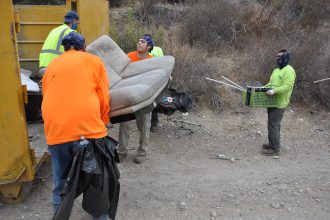
Maya and her contractor started sorting early, pulling out items for donation to Goodwill in Glendale, setting aside reusable tiles for a community art project in Echo Park, and bagging nails separately so the metal recycler in Burbank would accept them. The process cut her disposal costs and fed a sense of neighborhood responsibility she hadn’t expected to feel.
Scene: the city’s palette—sights, sounds, and smells
On a hot Thursday the dumpster transformed the curb into a stage. Dust rose in thin curtains when old plaster came loose; the scent of pine cabinet glue mingled with the sweet tang of citrus-scented cleaning products as neighbors walked by, curious. A man from down the block—Mr. Alvarez—paused with his small dog and offered a story about how he’d once stored furniture in a similar bin during a remodel in Burbank. “You learn who shows up when things get heavy,” he said, patting the dumpster’s steel. “People slow down to help.”
The truck’s diesel note receded as the city unfolded: a plane’s distant rumble, gulls near the coast, the clack of a passing bike. Later, when Maya drove to Long Beach with a miscued load of metal brackets, the port’s scale felt like a real ledger: weight, fee, signature. Each trip was part of a chain that led from her small kitchen to a larger system of landfills, recycling centers, and charitable organizations.
Conflict and resolution
Three days before the contractor’s deadline, a storm threatened to wash out schedules. In Venice, street closures meant some haulers couldn’t navigate to Maya’s neighborhood. The company she’d chosen offered to swap in a smaller container and make two runs. Maya considered: double the runs, more traffic and noise, or risk overflow and fines. She called Luis late at night. “We can make it work,” he said, voice steady. “We’ll coordinate with the city. We’ll tarp the load and come early.”
They did. The night before delivery, they covered the dumpster with tarps weighted down with sandbags to stop runoff. At dawn, the truck came, the workers moved like choreographed shadows, and by noon the trash was gone. Maya stood in the cleaned yard, feeling the project breathe differently: empty, silent, full of possibility.
Practical takeaways hidden in the story
From Maya’s experience, certain practical rules emerge like guiding lights. Measure your site and call for a site visit if your street is tight. Ask about permit requirements early and confirm who applies—some companies include permit handling in the quote. Choose a dumpster size with a bit of breathing room. Be explicit about materials: concrete and tile cost more to dispose of, and hazardous materials are prohibited. Ask about weight limits and overage fees and get the company’s insurance and license numbers.
Eco-minded actions matter: donate usable items, separate recyclables, and locate household hazardous waste drop-off options (many cities in the LA area run free or low-cost programs). For large items like appliances or e-waste, use designated routes—some haulers specialize in appliance pickup and can schedule a separate collection so you don’t compromise the roll-off load.
Resolution: a cleaned street and a new rhythm
The final pick-up felt ceremonious. Maya walked out as the truck’s engine hummed to life and watched as the dumpster was winched onto the bed, doors closing like a briefcase sealing a deal. Children on the block pointed; Mr. Alvarez nodded; a neighbor brought over a tray of cold lemonade in a simple, grateful gesture. Luis waved and called, “Keep those cabinets—someone will give them a good life.”
In the weeks that followed, the renovated kitchen started to host breakfasts again. The tile backsplash, partially reclaimed and partially new, caught sunlight in a way that made the entire room shine. Absent the heap that once scarred the curb, the street felt broader, quieter—small urban miracles born of logistics and labor.
Final image—the thing to remember
When the last nail came down and the truck pulled away, the sunset hit the LA skyline in a copper sweep. Maya leaned on her new counter, smelling the faint citrus of cleaner and the clean, crisp air the city trades for hard work. The dumpster’s departure left more than an empty space: it left a tangible reminder that in a city built of reinvention, the right team and a little planning turn tearing down into building better. Luis’ parting words stayed with her: “It’s not just trash. It’s transition.” The metal whale was gone, but the neighborhood felt lighter, a small victory against clutter and a quiet promise that things could be made anew.
Keep a photo of what you plan to remove, call a reputable hauler, ask about permits and prohibited items, and remember to separate donations and recyclables—those simple steps make the difference between chaos and a clean, calm finish. As the sun set on Maya’s renovated kitchen, the city exhaled, and a hummingbird darted across the yard, bright as a punctuation mark.