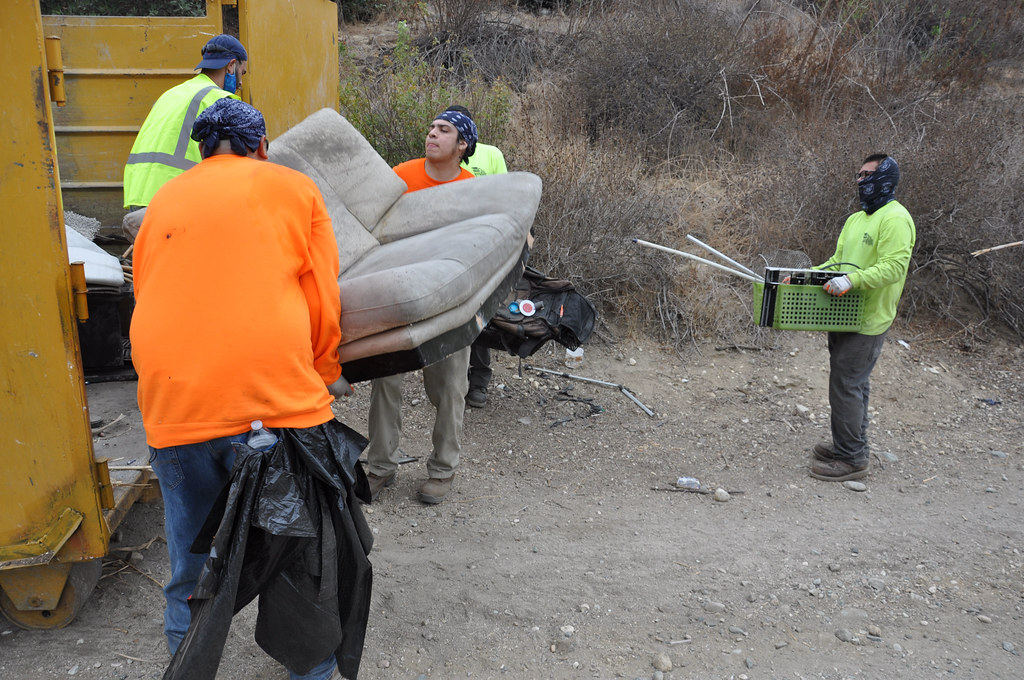
On a scorched June morning, the air tasted faintly of sawdust and sea salt. I stepped onto the front porch of a Craftsman bungalow in Pasadena and watched a hulking metal box—the kind you see at remodels and storefront revamps—lower onto the driveway with a hydraulic groan. The dumpster smelled of damp cardboard and old paint, and the afternoon light made the chipped blue paint on its side shimmer. For a moment it felt like a stage prop, not the practical answer to three weeks of demolition debris and regret.
A Morning in Pasadena
The house belonged to Ana, a woman in her seventies who had spent a lifetime collecting memories and pack-rat treasures. Now she was letting go. “We kept it because it might be useful,” she said, fingering a box of brittle recipes. Her voice was steady but soft. “It turns out ‘useful’ is heavier than I thought.” Around the corner, a contractor named Luis had a clipboard full of scribbles: tile counts, old pipes, a list of what had to go. He muttered about how Los Angeles projects always find one more surprise—rot behind a wall, an extra layer of asbestos tile under the kitchen floor.
From Santa Monica to Long Beach, and in neighborhoods like Burbank, Glendale, and Culver City, this scene repeats in miniature. The city hums with renovations: kitchens pulled apart in Echo Park, backyards reshaped in Torrance, terraces rebuilt in Beverly Hills. And whenever something is torn down, someone needs a place to put the pieces. Dumpster removal, the unglamorous cousin of city planning and construction, quietly keeps Los Angeles moving.
Meeting the Hauler
Enter Marco, a hauler who knows the city like a cab driver knows traffic. He arrived in a battered pickup, a coffee thermos steaming beside the driver’s seat, and a smile that suggested he’d seen every kind of junk imaginable. “We drop it, you load it, we haul it away—that’s the short version,” he said, unfolding a brochure. He was patient when Ana asked about permits and when Luis asked about the dumpster’s weight limit. “If you put granite counter tops in there, call us. If you’re tossing paint cans? Separate those. If you put a mattress on its side, we’ll make a sad face, but we can do it,” he joked.
His candor made the logistics less intimidating. He explained that in Los Angeles, a dumpster sitting on the street often needs a permit from LADOT. On private driveways it does not—but the weight can damage asphalt or pavers, so they bring protective plywood. “We’ll cover the driveway with sheets if needed,” Marco said, tapping a plan into his phone. “We don’t want to leave a memory of our work behind.”
The Problem Grows
Two days into the remodel, the project’s scale revealed itself. A previously small renovation ballooned into a full kitchen gut and a roofline adjustment—meaning more waste, more trips, and more decisions. The dumpster filled faster than anyone expected. The crew’s rhythm changed; strides became hurried, and the steady clack of hammers turned to a percussion of urgency.
On a sticky evening in Inglewood, another call came in from a friend renovating a storefront near Hollywood Boulevard. He had filled a 20-yard bin in three days and faced a weekend without garbage pickup. “I didn’t know they capped that much per bin,” he told me. “Then someone told me about the per-ton fees and suddenly my budget got nervous.”
Dumpsters in Greater Los Angeles come in sizes—10, 20, 30, 40 yards—and what you choose changes everything: permit needs, placement, cost. A 10-yard bin can be enough for a small declutter in West Hollywood, but a full-scale remodel in Malibu or Torrance may need a 30- or 40-yard roll-off. Weight matters: concrete, dirt, tile, and brick bring per-ton charges. That stack of old pavers can spike the bill faster than a pile of old clothing.
What I Learned About Dumpster Removal in LA
As the sun slid toward the Pacific, the narrative of a project revealed its hidden rules. Marco walked me through the essentials, drawing diagrams in the dirt with a screwdriver.
“First,” he said, “choose the right size. Think of it like booking a room. A little room for a tiny job, a ballroom for demolition.” He emphasized that oversizing avoids the cost of an extra drop, but overspending on an enormous bin for small debris is wasteful.
“Second, mind the permit.” On-street placement in Los Angeles often requires a permit from the Department of Transportation—those orange signs and traffic cones aren’t decorations. Some neighborhoods, like parts of Hollywood and downtown, have stricter rules because of busy curb space. In cities such as Pasadena and Beverly Hills, historical districts sometimes add red tape.
“Third, separate hazardous materials,” Marco continued. “Paints, solvents, batteries, and certain appliances—those can’t just go. We point folks to transfer stations or hazardous waste drop-off events in Long Beach or at County facilities.” The distinction matters: dumping restricted items risks fines, environmental harm, and complicates recycling streams.
“Fourth, protect surfaces and neighbors.” Ana’s driveway needed plywood because the dumpster’s feet might sink into hot asphalt. Noise restrictions in residential neighborhoods also mean scheduling pickups at considerate hours—no midnight clanks in sleepy neighborhoods like Sherman Oaks.
“Finally, ask about recycling and diversion,” he finished. “LA has places that salvage metal, wood, and appliances. You can save money and feel better about the planet.”
Decisions and Small Mercy
Back on Ana’s porch, there was a small rebellion against waste: a box of mismatched teacups she insisted be kept for a niece, a stack of vintage postcards. “People always say ‘dispose,’ as if memory is trash,” she murmured. Luis nodded and suggested donating salvageable items to a local thrift drop in Glendale. Marco promised to separate metals and appliances before the load hit the transfer station.
We learned about hidden fees when the crew revealed that a mattress and a fridge sometimes trigger extra charges, and that glass and windows, if broken down improperly, cause handling delays. The team improvised: they created a staging area by the alley in Culver City, neatly stacking materials to be donated, recycled, or hauled as waste. The rhythm of sorting became almost meditative—sifting through pieces of other people’s lives, deciding what would be reborn and what would be gone.
The Turnaround
On a clear Saturday, the final pick-up arrived with a different kind of syntax—the low, efficient rhythm of a well-practiced crew. The dumpster’s walls had been scrawled with chalk from the kids next door, forgotten lists, and a faded movie stub from a trip years ago. When the truck’s winch tightened and the bin rose, there was a brief, communal silence. Tools clinked as the crew cleared the last scraps. Ana stood with a cup of tea, watching like someone who had just closed a long chapter.
“You did good,” Marco told her, leaning on the truck. “You made room.” She smiled, and for the first time she seemed relieved rather than bereft.
Down the street a little, the ocean breeze carried a salt-and-garbage-lifted scent from Santa Monica, and somewhere a radio crackled a late-afternoon song. The driveway looked different—swept, new in its emptiness. The physical work of clearing had turned into an emotional clearing, too: Ana could see the new countertop, the space where sunlight would pool, the place where she might invite someone for tea again.
What to Remember
If you live or renovate in Greater Los Angeles—be it Glendale, Anaheim, Inglewood, or Hollywood—here are the core practices that can save time, money, and headaches, woven through the story of that bungalow:
– Choose the right dumpster size for the job to avoid extra drops. 10-40 yards are common; heavier materials require attention to weight limits.
– Check local permit requirements if the dumpster will sit on the street. Busy corridors and historic districts often have special rules.
– Separate hazardous or regulated materials: paints, solvents, certain appliances, and electronic waste need special handling and often go to dedicated facilities or scheduled collection events.
– Protect surfaces with plywood or pads when placing dumpsters on driveways or private asphalt.
– Ask about recycling and diversion options; many haulers will drop off metal or wood at recycling centers or coordinate donations to local charities in places like Long Beach or Pasadena.
– Communicate clearly with your hauler about timelines, overfill policies, and per-ton fees. It keeps budgets sane and schedules predictable.
There’s a rhythm to responsible removal: choose wisely, sort deliberately, and work with people who know the city’s veins. Marco’s truck rolled out of Ana’s street with the dryer hum of an engine and a tail of dust that glittered in the late light. He waved, and she waved back, a small, private exchange that felt like an old-fashioned courtesy.
That evening, as I walked toward the busier streets of downtown Los Angeles, I passed murals and palm trees, the smell of a taco stand, and a row of small shops whose back alleys were full of lives being remade. Dumpster removal is not merely hauling junk away—it’s a necessary pause in the story of change. It makes room for the new, returns salvage to a life that needs it, and respects the thin, fragile membranes of our neighborhoods.
Back at the bungalow, Ana opened the windows wide. The house inhaled; sunlight flooded the once-cluttered kitchen. From the sidewalk the empty driveway looked like a promise. The dumpster was gone, but the story it left behind—of careful choices, of neighbors and haulers and the small arithmetic of what can be kept—lingered like the faint imprint of tires on warm pavement. And somewhere between the clatter and the clearing, a new afternoon began.