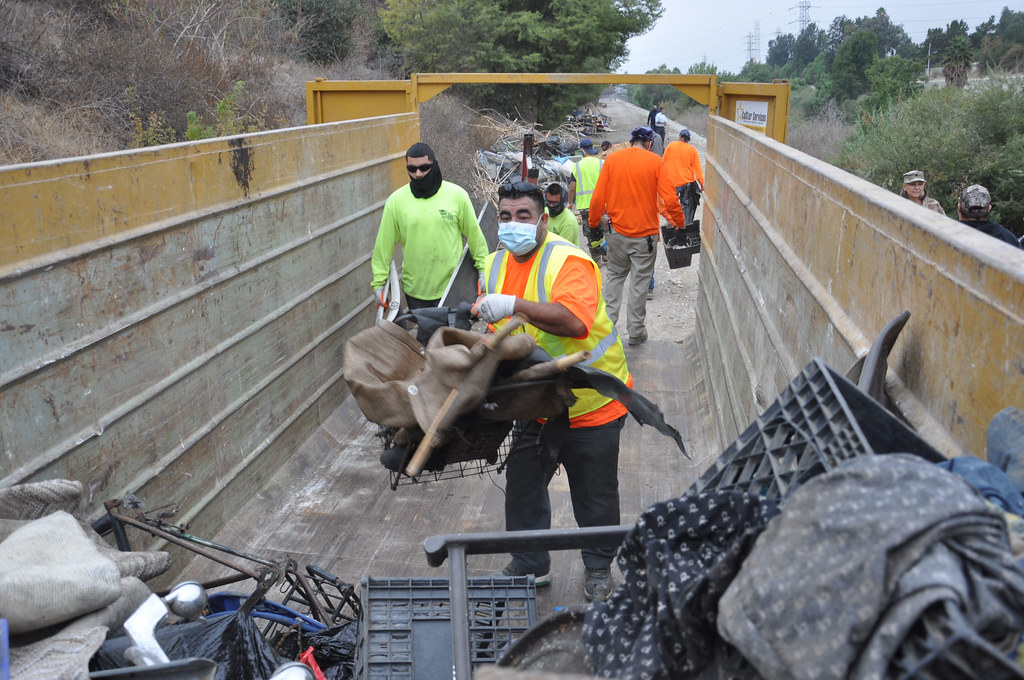
When Rosa saw the ceiling collapse in her 1930s Craftsman in Highland Park, she didn’t imagine she’d be standing in her own driveway, watching a team of men maneuver a green metal rectangle into place beneath the late afternoon sun, the Hollywood Hills glinting like a promise beyond the rooftops. The crash of old plaster and the smell of dust woke up memories—of mornings drinking coffee on the porch, of the house where her father had taught her how to hang a picture. It was messy, it was loud, and it smelled like plaster and possibility.
Setting the Scene
Los Angeles is a city of reinvention. From the ocean-salt air in Santa Monica to the oil-slick skyline of downtown, houses and businesses retool, rebuild, and refresh constantly. Rosa hired a contractor to fix the roof, but the real question was what to do with the aftermath: heaps of old wood, plaster, roof tiles, and a mattress that smelled of old summers. A neighbor mentioned a local company in Silver Lake that handled dumpster removal. Suddenly, this practical detail became the hinge of the project—an unsung logistical hero in a city that values both curb appeal and quick turnaround.
The Driveway as Stage
The dumpster arrived early, trailed by a rumbling truck that sounded like a distant thunder. The driver parked in the shadow of an avocado tree, lifted the container with a hydraulic clank, and eased it into the driveway. Neighbors paused, coffee cups in hand. A cat slunk into the rosebush. Rosa ran her hand along the metal’s cool rim and imagined the pile it would hold—a raw, honest inventory of a house’s life: decades of paint chips, a broken banister, the timbers that once supported a balcony.
‘We try to time the dropoffs for low traffic,’ the driver said, wiping his palms on his jeans. ‘Today’s clear—no film shoots in the alley.’ He smiled like someone who knew LA’s quirks: film vans, parking permits, and sun that never really set. His voice carried the kind of confidence that comes from hauling other people’s histories away and knowing you’d be trusted not to lose the story in the process.
Rising Action: The Complications
Not everything went smoothly. A week into the job, the project’s scope exploded. The contractor found rot in the floor joists, and a neighbor in Pasadena called the city about a dumpster blocking the sidewalk. Suddenly there were permit forms, calls to the city, and an urgent search for a larger roll-off to handle unexpectedly heavy debris from a chimney tear-out. The dumpster company’s dispatcher coordinated a swap—a 20-yard for a 30-yard—while a city inspector reminded Rosa that if the container sat on public property, a temporary street use permit was required.
‘I didn’t know I needed a permit,’ Rosa confessed, standing barefoot on the warm driveway, the scent of sawdust in the air. ‘I thought this was just about dumping.’ The contractor shook his head. ‘In LA it’s about timing and paperwork. You can’t just show up and park on the curb—especially in Venice or Beverly Hills.’ The tension wasn’t malicious; it was an economy of rules layered on a city that moves fast and looks good doing it.
Key Insights: How Dumpster Removal Works in Greater Los Angeles
As the story unfolded, Rosa learned the practical anatomy of dumpster removal in the Greater Los Angeles Area—what to expect, what to ask, and how to save money and time. Below are the lessons that unfolded between broken plaster and the sound of the crew’s radio:
Dumpster sizes and uses: Roll-off dumpsters typically come in 10, 20, 30, and 40 cubic-yard sizes. A 10-yard unit is good for small cleanouts in Culver City apartments; a 20-yard often works for kitchen remodels in Echo Park; 30 and 40 yards are reserved for major renovations in Burbank or large construction projects in Torrance.
Permits and placement: In Los Angeles, Santa Monica, and West Hollywood, placing a dumpster on the street often requires a temporary street use or encroachment permit. Driveway placements usually avoid permits but check with local municipalities—Pasadena and Long Beach have their own rules and sometimes require proof of permit to avoid fines. If your property is in a historic district or a homeowner’s association in Beverly Hills, extra approvals might be needed.
Weight limits and material restrictions: Dumpsters have weight limits. Heavier loads like concrete, dirt, or tile can reach those limits quickly, raising fees. Hazardous materials—paint cans, asbestos-laden materials, fluorescent bulbs—can’t go into standard dumpsters and often require special handling. The city’s transfer stations and recycling centers in the LA basin have regulations for electronic waste and tires.
Timing and traffic: Dumpster delivery windows can be tight. Delivery trucks need space to maneuver, especially in narrow streets of Silver Lake or affluent parts of Malibu where driveways slope sharply. Plan deliveries for early morning when traffic is lighter, and communicate with your hauler about film permits or street closures common in downtown or Hollywood.
Education Through Story: A Neighborhood Mosaic
Each day the dumpster served as a small community stage. On one morning, a retiree from Glendale walked by and said, ‘That’s where I learned to lay tile. Keep the old stuff—it’s a map.’ In another exchange, a young couple from Culver City asked if they could toss their garage sale rejects into the container for a small fee. Rosa found herself explaining the difference between municipal bulky-item pickup in Inglewood and private roll-off service; the neighbors swapped tips about the best recycling facilities in Long Beach and where to find free mulch from city yard waste programs.
These conversations were practical, but they were also human. People told stories about what it felt like to let go of the old—an armchair, a galley kitchen that had once been the heart of a family’s evenings—and about the relief of seeing a clean space ready for new life. ‘It’s like breathing after being underwater,’ said Miguel, the contractor, when he tossed another load into the dumpster and shut the heavy tailgate. His hands were rough and precise, like someone who’d seen enough renovations to understand the cadence of progress: demo, removal, reveal.
Environmental Notes Woven Into Action
Rosa’s dumpster didn’t just disappear into the back of a landfill. The company sent some loads to transfer stations in the South Bay where materials were sorted: metals salvaged, mattresses dismantled for components, and a surprising amount of wood reclaimed for reuse. The choir of hydraulic lifts and the mechanical clank of sorting conveyors became a new rhythm, one that felt less like disposal and more like circulation.
Recycling is critical in LA County. Many dumpster companies partner with recycling centers in Long Beach, Carson, and near the Port of Los Angeles to divert materials. For that old ceramic sink or broken tiles from the Beverly Hills bathroom, crushing and reuse can lower landfill impact. Hazardous materials were taken to scheduled collection events or handled through licensed abatement services—especially important when Rosa’s contractor discovered old lead paint beneath layers of primer.
Costs, Estimates, and a Few Rules of Thumb
Like any service in Los Angeles, dumpster pricing varied by neighborhood, size, and materials. Basic ranges became clear: smaller 10- to 20-yard bins might run between $300 and $600 for a few days in neighborhoods like Glendale or Pasadena, whereas 30- to 40-yard units for major demolition projects in Santa Monica or Malibu often pushed $800 to $1,500, especially when permits, weight overages, and extended rental periods were included. The hauling company in Downtown LA advised Rosa to request a written estimate, to ask about weight limits, and to be explicit about prohibited items.
Tips emerged as practical actions: consolidate waste on-site to maximize space; avoid mixing heavy materials with light trash to prevent costly weight overages; schedule exchanges during non-peak hours to minimize feuds over curb space in dense pockets like Echo Park; and always confirm who handles permits—many haulers will obtain street permits for an additional fee.
Resolution: The Last Load
Weeks later, when the final contractor’s truck rolled away and the dumpster stood half-empty in the driveway, Rosa felt the house breathe. She’d learned which neighborhood transfer stations favored recycling, how a 30-yard roll-off sounds when it’s full, and why a street-use permit in West Hollywood is more than a bureaucratic gripe—it’s a city asking you to be mindful about public space. The last items were small: a child’s painting, an old toolbox, a broken step ladder. Miguel closed the tailgate and the men climbed into the cab.
‘Take care of this place,’ Rosa told them, surprising herself with the firmness in her voice. ‘It needs to look like the way it feels.’ They nodded and gave her a sideways look—contractors have a way of being both hardened and sentimental. From the truck, one of the crew waved. ‘We’ll haul it right, ma’am. We sort, we recycle—we know the routes.’ The truck backed out, turned up the block, and was gone, its taillights leaving a pair of red commas against the twilight.
Takeaway
When the dumpster left, the driveway looked different—not because it was empty, but because the story inside the house had a new rhythm. Rosa kept a scrap of old banister wood in her shed, the grain a reminder of hands that had once stained it. She kept the sound of the truck as well: that soft, diesel lullaby of a city that makes and remakes itself daily.
If you’re planning a renovation, a cleanout, or a big move in Greater Los Angeles—whether you’re in Burbank, Compton, or Malibu—remember these essentials: choose the right dumpster size, check for local permits, understand weight and material restrictions, and ask where the hauler will take the waste. And when the container’s wheels turn away from your curb, take a moment to look at the space left behind. There is a kind of beauty in cleared ground, and in LA, that cleared ground is often where the next story starts.
The last image you might carry with you is not the metal box at all but the light that filtered through the avocado tree as the dumpster left—the warm, forgiving light of a city that keeps building, refusing to be static, making spaces ready for the next conversation, the next dinner, the next life.