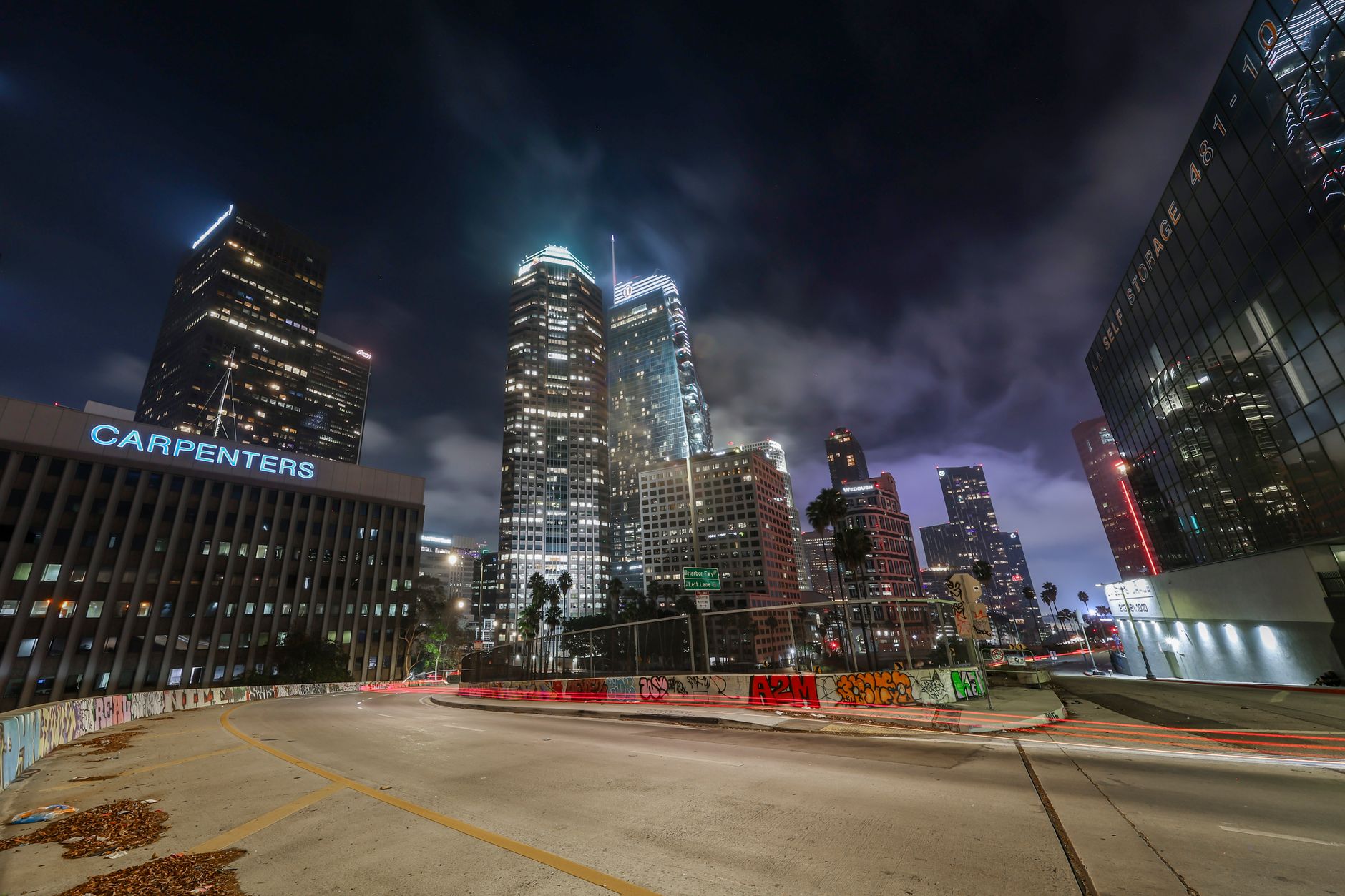
They rolled the dumpster into the alley behind Marta’s Crafts & Coffee before the sun touched the palm tops, and for a beat the whole block held its breath. In the misty blue of early morning, the metal bin looked more like a stage prop than a municipal receptacle — painted chipped red, stamped with a phone number, smelling faintly of old espresso and sawdust. “You’re certain about this placement?” her neighbor Luis called from his second-story balcony in Echo Park, coffee mug halfway to his lips. Marta smiled, feeling the city hum: the rumble of a garbage truck on Sunset, a distant gull from Santa Monica, the thump of a subway train below Wilshire. The dumpster was the hinge on which the next chapter of her life would swing.
Setup: A Renovation, a Deadline, and a City of Many Rules
Marta had bought the little storefront in Highland Park six months earlier. Part gallery, part workshop, it needed more than paint — decades of clutter, rotting floorboards, and a back room that smelled like damp paper needed a full gut. She could have made trips to the transfer station herself, van piled high with broken chairs and plaster, but with a wedding in the family and a pop-up market scheduled in six weeks, she chose the simpler, louder route: a roll-off dumpster parked in front of the shop.
That choice introduced her to an ecosystem of people she hadn’t expected: a punctual driver named Raul from a family-run hauler in Burbank, a city inspector whose clipboard could determine whether the dumpster stayed on the curb or had to be shuffled into Marta’s narrow driveway, and a neighborhood of curious Angelenos — from a film crew loading gear in Hollywood to a retiree in Long Beach who liked to watch “a little controlled chaos.” Each person carried a piece of local knowledge about permits, tipping fees, recycling, and the small courtesies that keep dense neighborhoods — from Glendale to Torrance — functioning.
Rising Action: A Permit, a Parking Dispute, and a Rainstorm
On Tuesday, Raul texted a photo: the dumpster positioned neatly where her old A-frame sandwich board used to be. Two hours later, a neighboring contractor called to say the city had left a yellow sticker on the bin. Marta blinked at the photo of the sticker and read: “Permit required for street placement.” She had thought permission was only for oversized construction dumpsters. She had not reckoned with Los Angeles’ particular love of regulations.
“You need a street-use permit for any bin on the public right-of-way,” the inspector had told her when Marta phoned the municipal office. “You can apply through MyLA311 — it’s usually processed in 24 to 48 hours, but it depends on the block plan and whether there are street-cleaning or cable-work schedules.” That line alone alone sent Marta into a mini-odyssey: shuffling her paperwork, scanning ID into an app, and navigating a municipal website while a rain squall turned her storefront’s awning into a small waterfall.
Rain complicates debris. Mud turns cardboard into a heavy, slurry cling. Raul, who had placed a tarp over the pile, called to say, “We can move it into your driveway if you have the room, but your neighbor’s Prius might complain.” Marta pictured a Prius mid-2010s squeezed by a metal bin and decided to fight the bureaucratic tide. She applied for the permit, paid the small fee, and posted the printed approval where it could be seen from the street.
Key Insights Woven into the Story
As Marta learned, dumpster removal in Greater Los Angeles is as much about logistics as it is about trash. Here are the facts she picked up along the way, told through the small conversations that kept her project moving.
“Sizes matter,” Raul said, speaking as he wedged a tile-covered bathroom vanity into the dumpster. “Ten-yard for small clean-outs, twenty for heavy home remodels, thirty to forty for full demolition. You want to pick one that fits the job, not just the alley.” In LA parlance, a 10-yard bin is for debris from a garage or attic clean, a 20-yard fits most kitchen remodels, and 30–40 yards are reserved for whole-house or construction-site work.
“Check the weight,” the inspector reminded her. “Most quotes include a weight allowance; anything over can trigger per-ton overage fees.” Marta watched him tap his pen. Overage fees often range from $40–80 per ton, depending on local transfer station rates — a detail that turned the decision to toss a brick-laden concrete slab into a financial mathematic problem. “Separate concrete, dirt, and metal when you can,” he advised. “They have different rates, and some recycling centers pay for metal.”
Hours of placement, too, are city-specific. In Santa Monica and Malibu, for instance, residential street restrictions and HOA covenants often limit where and when dumpsters can sit. In the City of Los Angeles, a DOT permit for curb placement is common; in Long Beach and Pasadena, public works departments regulate placement and time limits. Many companies will help you secure the permit, but responsibility ultimately rests with the property owner.
There was an environmental lesson, too. Marta had inherited a stash of old paint cans. “Those can’t go in there,” Raul said gently, lifting a rusted lid to reveal a thick, gummy blue. “Hazardous waste — paint, solvents, batteries, asbestos — need special handling. The city runs collection events, and there are household-hazardous waste centers in the county.” Marta boxed the paints and set them aside for a scheduled drop-off.
Recycling was another thread. “Wood, metal, and clean concrete can often be diverted,” Raul explained. “Some haulers send loads to facilities that sort and salvage. It helps the planet and can shave fees.” Marta found herself arranging for a separate pickup of copper piping — one less load, one less ton on her invoice.
Resolution: A Grand Opening, a Clean Street, and a Lesson in Community
By the Saturday of the pop-up, the dumpster was half full of plaster dust, broken cabinets, and a stack of original hardwood Marta decided to repurpose. Luis had come by to help sweep the alley and ended up painting the dumpster’s rust spots a cheerful teal. “It looks like art now,” he said, and a passerby from Silver Lake snapped a photo that later trended on a local neighborhood feed.
They had stayed within the permit’s time window, paid the quoted price with one small adjustment for a heavy slab removed from a forgotten hearth, and Raul’s crew hauled the bin away under a sky that smelled faintly of salt from the direction of Malibu. Marta’s storefront opened to neighbors and tourists, and the little shop felt new in a way that had nothing to do with paint: it had been cleared, curated, and set back into the city’s circulation.
Along the way she had learned small, practical things that would stick: measure twice before ordering a bin, stack heavy things flat and low, tarp materials in rainy season, separate hazardous items, and talk to your neighbors. “A little notice goes a long way,” Luis said, as their block’s rhythm resumed. “We need to know if a dumpster is coming. We can move our cars, sweep our stoops, and nobody calls the city.”
Takeaway: What to Remember and Do
If you are planning a cleanup or renovation in Los Angeles, Glendale, Pasadena, Burbank, Inglewood, Long Beach, Torrance, or anywhere in the sprawling Greater Los Angeles Area, keep these practical points in your back pocket, learned through Marta’s trial and small triumphs:
– Choose the right size: 10–20 yards for small-to-medium renovations, 30–40 yards for larger demolitions. Talk to the hauler about volume versus weight.
– Permits matter: If the bin sits on the street or public right-of-way, verify local permitting requirements (MyLA311 for Los Angeles, local public works for other cities). Companies often assist with permits, but always confirm.
– Know weight and material rules: Separate heavy materials when possible. Ask about per-ton overage fees. Check recycling options for metal, wood, and concrete.
– Avoid hazardous items: Paints, solvents, batteries, and asbestos require special disposal through hazardous-waste programs.
– Location and access: Measure your driveway or curb space. Consider how placement affects neighbors and traffic. Post permit paperwork visibly if required.
– Timing and weather: Schedule around potential rain. Use tarps and secure lids to prevent runoff and wind scatter.
– Communication: Inform neighbors and homeowners associations in Glendale, Venice, or Pacific Palisades ahead of time—courtesy reduces conflict.
– Shop local: Many local haulers in the LA basin offer same-day or next-day service and understand city nuances — from Los Feliz to Long Beach to Anaheim — and can guide you through paperwork and disposal options.
At the end of the day, the dumpster was more than a receptacle for detritus. It was a marked moment of transformation in Marta’s life — loud, messy, and oddly ceremonial. Raul waved as he backed his truck into the lane, clouds thinning over San Fernando Valley’s hills. Marta closed the shop for a minute and inhaled: new wood, coffee, the faint sea in the air. The alley looked different — cleaner, yes, but also like the beginning of something that would, in time, become ordinary.
“You learn a little about your city when you throw things away,” Marta said to Luis as they swept the last granules of plaster into a dustpan. He laughed. “Only in LA would your garbage need its own set of documents. But you did it right — and it looks good. Now go make art.”
They left the teal dumpster’s ghost in the memory of the block: a bright, practical relic that had been part tool and part neighborhood project. As Marta flipped the shop sign to “Open,” the morning light caught a smudge of teal on her palm — a small, accidental reminder that even the messiest processes can leave something unexpected and beautiful behind.