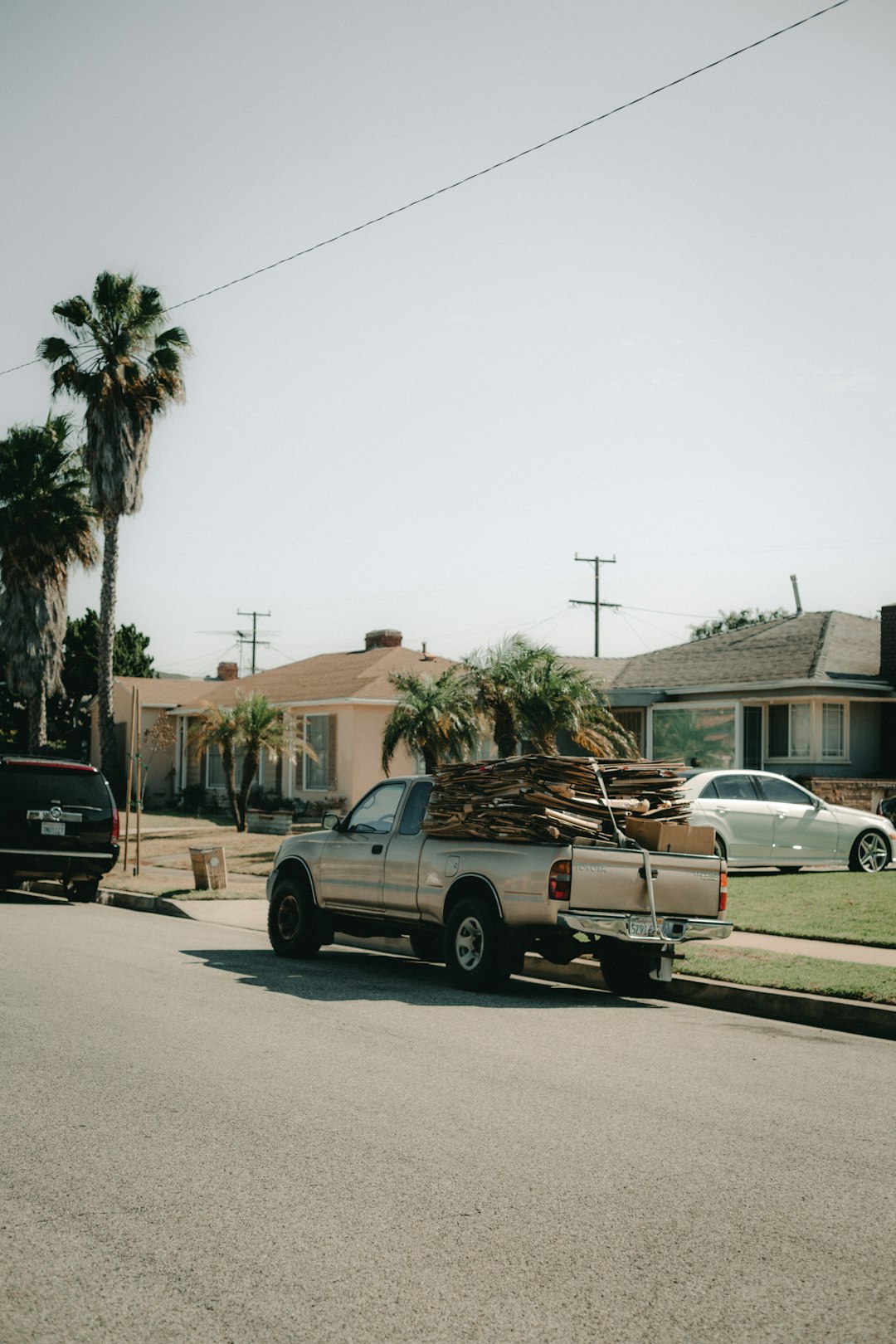
Have you ever watched a dumpster arrive like a small, clattering ship at the edge of a neighborhood? It rumbled up the block the way a band might, metal flanks glinting in the sun, and for a moment every kid on the street stopped to stare. In the space of an hour my Highland Park bungalow transformed from a cozy, slightly overwhelmed home into a controlled construction zone — and I learned that dumpster removal in the Greater Los Angeles Area is part logistics, part etiquette, and entirely theatrical.
The Morning the Truck Rolled In
It was the first blistering Thursday of June. The air felt like a warm hand as I stood on the porch, watching a roll-off truck creak to a stop. Palm leaves whispered in the heat, the smell of sawdust mixed with the faint salt of those far-away ocean breezes. Javier, the driver from a local company that called itself Pacific Roll-Offs, hopped down and gave me a quick wave.
‘Morning,’ he said, wiping his palms on his jeans. ‘We got you a 20-yard. Perfect for that kitchen gut and the patio demo you told me about.’ His voice had the easy cadence of someone who had made this delivery hundreds of times in Los Angeles neighborhoods — from the narrow streets of Echo Park to wide Catalina-adjacent drives in Long Beach.
As the truck backed up, neighbors peered from porches and a dog barked twice, as if to announce the new arrival. There was a small, theatrical clank as the dumpster settled and metal met asphalt. Suddenly the front yard had a box big enough to swallow a sofa, a stack of cabinetry, and our family’s nervousness about the upcoming renovation.
Setting the Scene: Why Dumpster Removal Feels Unique in LA
Greater Los Angeles is a mosaic of micro-climates and micro-laws. On one block you might smell fish tacos from a truck in Boyle Heights; two avenues over, you could be under the strictest parking and permit regulations in Santa Monica. That means the simple act of placing a roll-off dumpster can ripple into a dozen small complications. Permits are often required if the dumpster sits on public property — the curb or street — and each city handles that little paper chase differently. The City of Los Angeles Department of Transportation has rules; Santa Monica Public Works has its own forms; Long Beach will ask whether it’s a residential cleanout or construction debris destined for recycling.
‘We try to make it painless,’ Javier said, unfolding a permit form and pointing to the bolded lines. ‘But you can’t just drop a bin in West Hollywood without a permit. They’ll tow it before sunset.’ He smiled like he was joking. He wasn’t.
The Rising Tension: Deadlines, Neighbors, and the Weight Limit
Deadlines hovered over the project like a helicopter hovering over downtown when film crews are out. My mother was arriving for a visit in two weeks, and the contractor, Lina, wanted the demolition cleared by Wednesday. Pressure builds quickly when there are people and money at stake.
On Tuesday evening a neighbor from the next house, an earnest man named Harold who had lived on the block for twenty years, knocked on the door. ‘You know these things stink if you leave them too long,’ he said, eyeing the bin as if it might spontaneously sprout a bad smell. ‘Plus, the street sweepers come every Thursday.’ His voice carried a small, practical accusation. In LA, where street sweeping schedules are religiously observed, a misplaced dumpster can mean tickets or towed cars.
Weight limits were another worry. A common scene in LA construction is contractors surprised by the scale of what they’ve pulled out — dense materials like concrete and tile add weight quickly. Many roll-off services set a weight cap; anything over triggers per-ton overage fees. Javier advised stacking wood and light materials evenly to avoid concentrating weight on one side, which could tear municipal asphalt or, worse, tip the load during transit.
Key Insights: Choosing the Right Dumpster for Your Los Angeles Project
There are practicalities you won’t love reading but will be glad you know. Dumpsters range from 10-yard bins for small cleanouts in Culver City to 40-yard behemoths for large commercial demolitions in Burbank or Torrance. For most residential remodeling jobs — a kitchen gut, roof tear-off, or garage clean-out — 15-, 20-, or 30-yard bins are the sweet spot.
Here are a few rules of thumb we learned, illustrated by our own missteps and those of neighbors across the valley:
- Measure twice: Check driveway dimensions and curb cuts in cities like Glendale and Pasadena where streets can be narrow.
- Ask about permits: In Santa Monica, West Hollywood, and some parts of Los Angeles you must apply in advance if the bin will sit on the street.
- Know the material types: Concrete, dirt, and shingles often have separate disposal channels and higher fees. Asphalt and concrete sometimes require an engineered form or special landfill handling.
- Plan for recycling: Cities like Long Beach have strong diversion goals; many installers separate metal, wood, and clean concrete for recycling or reuse.
- Schedule with buffer time: Book at least two days earlier than your planned demo; LA traffic and film production schedules can delay deliveries.
Loading Day: Sound, Smell, and the Rhythm of Work
When the crew started, the bungalow became a stage. Hammers tapped out a staccato, the saw hissed like an angry sea, and the dumpster took a growing chorus of materials. Lina hummed to herself as she worked, a metronome to the pace of demolition. I learned to stand back and let the rhythm dictate what could and couldn’t be stored in the bin: painted drywall, cabinetry, and old appliances went in; hazardous materials like aerosol cans, paint cans, and certain electronics had to be separated.
‘Remember the hazardous waste drop-off at the county facility,’ Javier called. ‘LA Sanitation takes bulky items on scheduled days too. Don’t toss paint with the plaster.’ His voice was practical and kind, the way someone who has watched people learn the hard way would speak.
The smell of sawdust got sweeter as the afternoon slowed down. At one point, a gust brought the faint scent of the ocean from Santa Monica — or maybe Venice — and a street musician’s guitar threaded through the noise like a reminder that this city is a collage of scenes, all happening at once.
Unexpected Hiccups and Creative Solutions
Midway through, a hiccup: neighbors across the street received a notice about obstructed parking. It turned out that a film crew had reserved parking two blocks over and the city’s permit officer assumed our bin was related. Suddenly there was an official knock, and I felt my stomach drop. Javier politely explained the paperwork while I produced receipts and permit confirmations. The officer, a woman with a clipboard and a small, bemused smile, nodded and said, ‘Next time, try to get the permit for a little longer. Film schedules confuse everyone.’
Then there was the surprise of an old mattress that, while ostensibly trash, could still be salvaged. Lina called a local charity and arranged for a pickup of furniture still in good condition. That mattress, once accepted, would have been diverted from a landfill and given a second life in a shelter in Carson or Compton. It felt like a small moral victory — a reminder that disposal can be a story about salvage as much as it is about removal.
Lessons from LA: Green Disposal and Local Services
Los Angeles County has a strong recycling infrastructure if you know where to look. Our dumpster company separated metals and wood; scrap metal was sent to recycling in San Pedro, while clean concrete and brick were taken to a processing facility in Gardena. For electronics and hazardous waste, the county holds scheduled household hazardous waste events, and many cities provide free bulky item pickups — an option some neighbors in Inglewood used for old refrigerators and mattresses.
‘Plan for diversion early,’ Lina said. ‘If you can set aside a few piles — metal, wood, salvageable furniture — you save money and help the city meet its recycling goals. It’s worth the ten minutes of sorting.’ It was practical advice that felt bigger: a small community learning to be intentional about what it leaves behind.
Resolution: The Quiet After the Rumble
By Friday morning, the dumpster looked like it had already eaten a small city. The majority of demolition debris was gone, and the house had a fresh skeleton beneath the sun. The truck came at dawn, wheels whispering over the asphalt, and the bin was lifted like an empty theater set piece returning to the wings. The street looked the same and different: the same houses, the same sycamores, but with a little less weight in the air — literal and figurative.
Mrs. Alvarez from two doors down waved as the truck pulled away. ‘Nice and clean,’ she said, smiling. ‘No mess, no fuss.’ I felt relieved in a way I didn’t expect, like the city had given me a small permission slip to move forward with the renovation.
What to Remember — The Takeaway
There are practical things to carry with you from this: choose the right size bin, know your city’s permit rules, separate hazards, plan for recycling and donations, and book your dumpster early. But there’s something else: dumpster removal in LA is a choreography of people, rules, and environments. It involves understanding your neighborhood, from the beachside ordinances of Santa Monica to the industrial passages of Torrance and the historic streets of Pasadena.
When you hire a company, look for clear pricing, licensed operators, and local experience. Ask about weight limits, recycling practices, and whether they handle permits — especially if your project sits on a curb in West Hollywood or near a narrow lane in Echo Park. And be ready for small surprises: a neighbor’s complaint, an unexpected weight, or a mattress that can find a new life elsewhere.
Watching the dumpster leave, I realized that what had felt like chaos was simply a series of small, manageable steps. The city hummed on: a jogger passed, a film truck idled two streets over, and the sun slid toward the hills. Our house was quieter, newly hollowed out and ready for the careful construction that follows any demolition. There was dust on the porch, a leftover ribbon of orange plastic mesh, and the faint scent of sawdust in the air — a familiar, hopeful tang. I thought of the mattress, of Harold’s stern caution, of Javier’s steady pragmatism. Each had been part of the story, tiny gears in a larger machine that keeps a city of millions moving, renovating, and dreaming.
As the skyline softened, the last image that stayed with me was simple: an empty driveway, sun slanting through the sycamore leaves, and the faint imprint on the asphalt where the dumpster had rested — a temporary mark in a city of constant change.