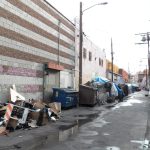
The dumpster had been promised at dawn, but by noon the battered orange container sat like a stubborn island in front of Maya’s Silver Lake bungalow, its steel sides sweating in the sun and a smell of sawdust and old paint drifting across the porch. A neighbor jogged by, flipping their headphones off to ask, “Is that ours?” A city parking enforcement truck idled two blocks away. Somewhere over the hills, the Pacific glittered like a silver coin. This was no ordinary cleanup—this was the moment a neighborhood learned how small decisions about junk could ripple across the city, from Santa Monica’s beachfront lanes to the warehouses of Long Beach.
Setup: Morning Light, Old Wood, and a Tight Schedule
Maya had spent months renovating the 1920s bungalow she and her partner bought in Echo Park. They had stripped plaster, uncovered original hardwood, and built a little studio in the backyard. The idea of a dumpster was practical: a single belly-size roll-off to swallow the demolition—doors, lathe, shingles, the blue-rusted water heater. They booked a hauler with a weekend slot and a price that felt fair in a city where everything comes with a premium—especially curb appeal.
Her contractor, Luis, who lives in Burbank, arrived early. “We get it out by Monday, right?” he said, coffee cooling in his hand. His voice had the calm cadence of someone who’d seen paint fumes and permits but still believed projects should have a tidy ending. “You called the city about a permit?”
“I thought the company would handle it,” Maya answered. In Los Angeles, some firms include curb placement permits for drop-offs; others expect the homeowner to handle municipal red tape. That ambiguity hung between them like dust motes in the sunlight.
Rising Action: A Blocked Driveway and a City That Won’t Wait
By noon the hauler’s truck roared up the hill from Glendale, the driver a steady-eyed woman named Rosa. She maneuvered the container into place with practiced ease, the metallic scrape and hydraulic hiss filling the street. Street parking signs flashed away to indicate alternate side restrictions; a small crowd gathered—curiosity is nearly mandatory in a city stitched together by alleyways and shared walls.
That afternoon, a rainstorm announced its approach with a low, distant drum. Dark clouds gathered over the San Gabriel foothills while the sea breeze from Marina del Rey crept inland, sweetening the air with salt. The dumpster blocked part of the driveway. The crew tried to balance convenience with caution: the house had no alley access like some older Pasadena homes, and the narrow street rules out double parking. As the first fat drops fell, a neighbor leaned over the fence and said, “You might get a ticket if it’s on the curb too long—West Hollywood is strict about that.”
The pressure mounted. Maya’s contractor needed clear access on Monday to haul out a built-in bookcase. The city’s parking enforcement car turned the corner. Someone else in a silver Civic reversed slowly and then beeped, waiting for the team to shuffle the dumpster an extra four feet. Across town, a friend in Torrance called to say a similar renovation stalled because the hauler couldn’t get a permit for street placement in time. The city is a patchwork: Culver City has one set of rules, Beverly Hills another; Malibu’s coastal ordinances are a different beast altogether. The dumpster, it seemed, needed a passport.
Key Insights: What a Dumpster Can Teach You about Los Angeles Logistics
As Maya negotiated with Rosa and Luis under the rumble of the coming storm, practical lessons emerged. “Measure the curb, know your size, and read the fine print,” Rosa said as she tightened her gloves. “We do 10-, 20-, and 30-yard roll-offs here. For demo like yours, you’ll probably want a 20. But if you’re in Venice with narrow streets, that 20 can become a nightmare.” She pointed to the house across the street in Santa Monica where a morning delivery had scraped a stucco wall—”always check overhead lines and trees,” she added.
Here are the kernels of local wisdom woven into their conversation and the neighborhood choreography that followed:
– Dumpster sizes matter. 10-yard bins fit small cleanouts; 20-yard is the go-to for most home remodels; 30-yard works for large commercial or full-home demo. Most LA haulers list sizes in cubic yards and provide illustrations—use them.
– Placement permits: If a container sits in a public right-of-way—on a curb or in a street—you often need a temporary use permit or parking obstruction permit. City rules vary. Los Angeles Department of Transportation, Santa Monica Public Works, and Long Beach Development Services have different applications and lead times.
– Weight limits and tipping fees: Haulers price by size and weight. Concrete, dirt, and tile are heavy; old drywall and lumber are lighter. An overweight load can trigger surprise fees when the container hits the transfer station or landfill, and those facilities are spread across the county with different tipping structures.
– Prohibited items: Hazardous materials—paint cans, solvents, pesticides, fluorescent bulbs, batteries—cannot go in standard roll-offs. The County of Los Angeles runs household hazardous waste collection events; cities like Pasadena and Burbank also host drop-off days. Many haulers will advise or separate these items for proper disposal.
– Diversion and recycling: California law and local policies push for reuse and recycling. Metals, certain plastics, and treated wood can sometimes be recovered. A good hauler will give you a breakdown of diversion options and partner with recycling centers from Long Beach to the San Fernando Valley.
Resolution: A Dance of Permits, Patience, and a Little Neighborhood Generosity
They called the city. Rosa slipped into the role of advocate, speaking the municipal dialect of permit numbers and lane closures. Luis moved stuff from the driveway into the backyard under a tarp, the smell of damp lumber rising with steam as rain began to fall harder. A neighbor—Mrs. Goldberg from two houses down, who used to run a thrift shop in Glendale—offered sandwiches for the crew and a ladder when the hauler needed to lift saplings out of the way. “In Los Angeles, you trade favors a lot,” she said, handing Rosa a wrapped sandwich. “Today it’s sandwiches. Next time it might be babysitting a box of ferns.”
By late afternoon, a temporary parking permit flashed on Rosa’s phone, emailed from a downtown office after she explained the schedule. The enforcement officer who strolled by gave a nod, the kind that implies the paperwork now exists and the world can keep spinning. At dusk, the rain stopped. The city signlights blinked on, palm silhouettes leaned into the light, and the dumpster, precisely where it needed to be, stopped smelling like fresh-cut wood and started to smell faintly of rain and oil.
On Monday, the crew moved with purpose. Luis and his team loaded the container with practiced choreography, treating each piece like a puzzle. They stacked beams to create a strong base, laid old tiles flat to avoid piercing the liner, and set aside a pile of metal fixtures destined for a recycler in Long Beach. By midafternoon, the container was closed, the crew swept sawdust, and Rosa’s truck hooked up, hydraulics powering a smooth, efficient lift. The bin lifted, leapt back onto the chassis, and was gone—rumble fading into the city’s patchwork soundscape of sirens, distant trains, and a radio playing old Motown down the block.
Takeaway: What to Remember When You Need a Dumpster in Greater Los Angeles
If the dumpster’s departure felt like the end of a small drama, it was also a lesson. In a sprawling metropolitan patchwork that includes neighborhoods from West Hollywood to Torrance and beyond, the differences between cities matter. Call the city for permits if the container will sit on a public street. Choose the right size and discuss weight with your hauler. Separate hazardous materials and learn where local collection events or recycling centers are located—many are run by LA County or a neighboring city’s services. Ask your hauler for diversion rates or receipts from transfer stations; a trustworthy company will be transparent about where your debris goes.
And perhaps most importantly: plan for neighbors, weather, and the unexpected. Leave a little room for the truck, talk to the people on either side of your house, and have a small kit ready—tarp, rope, gloves—so a rainstorm or an access problem doesn’t balloon into a weekend crisis. The city is alive with regulations and resources; using both will save you time, money, and a headache under the Los Angeles sun.
As the sun slid behind the hills, painting the Skyway in Pasadena and the cliffs near Malibu in a wash of gold, Maya stood on her porch with a cup of tea and watched the street settle. The dumpster was gone. The house smelled of fresh-cut pine and spackling compound. From the top of the hill she could see the city’s sweep—the glint of glass in downtown Los Angeles, the tiny twinkle of headlights on the 10, the silhouette of cranes down in Long Beach, and in the far west, a sliver of ocean between Santa Monica and Venice. The neighborhood felt a little lighter, the project a little closer to home. Rosa winked and drove off toward a new pickup in Culver City, the taillights disappearing like punctuation. In a city that never stops changing, they had stopped, for one day, and made something better out of what they removed—one responsibly-taken dumpster at a time.
Photorealistic Image Prompt
A photorealistic scene of a residential Los Angeles neighborhood during golden hour, showing a roll-off dumpster being loaded onto a truck by a small crew. The setting is a tree-lined street with a 1920s Spanish bungalow in the foreground, palm trees, and the distant Los Angeles skyline and hills visible under warm orange light. Include city-specific details: street signage, a parking permit sign, a license plate hinting at California, and neighborhood texture like stucco walls and tiled roofs. Workers wear high-visibility vests and gloves, one handing a piece of old wood to another, tools and tarps scattered, sawdust in the air catching the light. The dumpster is mid-sized, orange with scuffed paint; a utility truck has company logo and phone number blurred out. Add realistic elements: wet pavement from a recent rain, breadcrumb puddles reflecting palm silhouettes, a friendly neighbor with a sandwich leaning on a fence, and a dog watching from a porch. Use 50mm lens, shallow depth of field to keep the crew in sharp focus and the skyline softly defocused; warm color grading, high dynamic range, crisp textures, 8K resolution, cinematic photorealism.