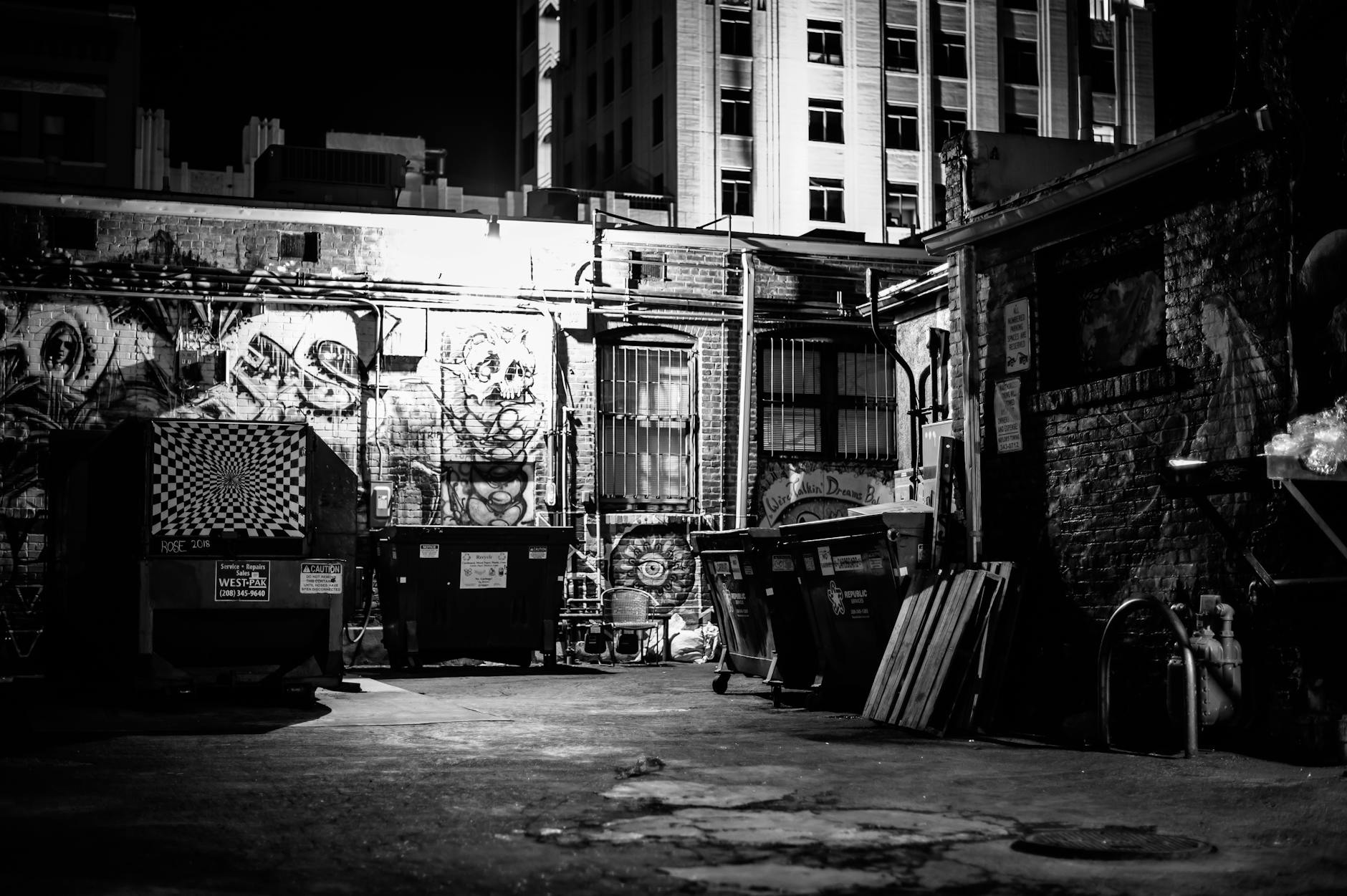
The rumble woke Maya before her alarm. It wasn’t thunder—just the low, purposeful growl of a diesel engine and the clatter of chains against metal. She pushed open her window in the narrow Silver Lake bungalow and peered down into the alley where a bright orange roll-off had been dropped overnight. The smell of oil and old cardboard drifted up, mingling with the faint citrus of someone pruning a lemon tree two houses down. ‘We need that gone by Saturday,’ she told herself, picturing a renovation timeline, a stack of discarded cabinets, and a neighbor’s stern glare if it lingered into the week.
Setup: Plans, Neighbors, and the Decision to Clear Out
Maya had spent months planning the remodel: new floors, an open kitchen, and plants that could survive the fickle LA sun. She’d scoured forums in Echo Park and watched DIY videos filmed in Burbank apartments where space was a different kind of currency. The contractor had said a 20-yard dumpster would do. Jorge, the crew foreman who’d grown up in Boyle Heights and now navigated traffic from Downtown to Pasadena with the patience of a saint, recommended a roll-off for speed. Mrs. Alvarez from next door had offered coffee and, worriedly, the veterans’ perspective: ‘Make sure you have the permit, mija. I got a ticket for a ladder once.’ The characters were set—an eager homeowner, a seasoned crew, a watchful neighborhood—and the city around them hummed with possibility.
The Alley Decision: Size, Placement, and the Little Print
Choosing a dumpster isn’t glamorous. It begins like a shopping list: size, duration, and price. A 10-yard container is roughly the size of a small pickup bed; a 20-yard is often the sweet spot for kitchen remodels in West Hollywood and Pasadena; 30- and 40-yard dumpsters are used for substantial gut jobs or cleanouts in San Pedro and Torrance. Jorge explained, ‘Weight matters as much as size. You can fill a small dumpster and be over the weight limit if it’s all concrete.’ The numbers and jargon grew into a map of the city—who had narrow streets like Hollywood Hills where the truck could barely turn, who had strict beachfront rules like Santa Monica and Long Beach with extra permits, and which HOAs in Beverly Hills might require an advance notice or a tarp to hide the view.
Then there was the permit. On this block, the alley was technically city property. Los Angeles Department of Transportation permits, street parking clearances, and neighborhood notification sometimes felt like an art of diplomacy. Maya learned that a temporary parking permit could be acquired online for a modest fee, but Santa Monica often required a different application, and Glendale had its own hours when a drop-off could legally occur without risking a citation or tow. ‘You’d be surprised how many people think they can park a dumpster anywhere and it’s fine,’ Jorge said. ‘We don’t want to lose time to a ticket.’
Rising Action: Surprises and Complications
The crew started loading. The dumpster took on the cadence of a small theatre: the thud of cabinets hitting metal, the scrape of an old sofa, the hollow clack of picture frames. The alley filled with the soundtrack of the city—distant freeway, a dog barking in Echo Park Lake, someone practicing sax on a porch. Then the unexpected turned up: a refrigerator with frosted coils and a stubborn old mattress that left a trail of dust and a rash of tiny black specks on the pavement. There were paint cans with dried lips of color and a carton of batteries leaking a faint chemical scent. Jorge halted the loading and looked at Maya. ‘We need to separate this. Appliances with CFCs, hazardous liquids—those have rules. And that mattress? We can’t just throw it in most landfills; some spots recycle them, and others charge extra.’
It was a lesson in the municipal mosaic of Los Angeles County. The crew called a hazardous-waste technician who serviced the city and nearby Long Beach. They planned to take the mattress to a certified recycling center in Glendale the next morning, and the fridge would require an appliance technician to evacuate its refrigerant before discharge. For electronic waste—old speakers, a microwave with a broken door—there was the county’s household hazardous waste drop-off at a transfer station, and for donations, a nearby nonprofit in Pasadena agreed to take gently used fixtures and doors that might find a second life in another home.
Key Insights: The Practicalities Hidden in the Story
Amid the clatter and the neighborly coffee, practical knowledge seeped into the narrative. Here are the essentials Maya and Jorge discovered, woven into their day:
‘Dumpster sizes aren’t just about how much you have; they’re about access,’ Jorge said, pointing to a map showing a narrow lane in Hollywood and a cul-de-sac in Torrance. ‘If the truck can’t get close, you pay extra labor or need a smaller unit.’
‘Weight limits are real,’ said Maya, thinking of the pile of broken tile. ‘Concrete, soil, and brick add cost quickly.’ Indeed, many local haulers charge per ton, and tipping fees at transfer stations vary across LA County. Construction and demolition debris often has to be sorted or recycled to meet local ordinances. Los Angeles, with its recycling goals, often incentivizes separating wood, metal, and inert materials.
They learned that hazardous household items—paints, solvents, certain batteries, and appliances with refrigerants—require special handling. The County’s household hazardous waste facilities exist for a reason; they accept these items safely and, in many cases, free of charge for residents. For businesses or contractors, a certified hazardous materials handler is often required.
Finally, the difference between junk removal and dumpster rental mattered. In places like Beverly Hills and Santa Monica, door-to-door junk removal might be more convenient but costlier than a rented dumpster and can provide labor to load heavy items. Dumpster rental gives control and time; junk removal gives convenience.
The Day of Removal: Muscle, Patience, and a Little Poetry
On removal day, the temperature was forgiving: a Pacific breeze swept in from the west, carrying a faint tang of salt from the ocean as if Long Beach were whispering across the freeways. The crew arrived early, uniforms dusty, reflective vests bright against the soft light. Jorge barked quick, kind orders. ‘Watch the back left—it’s tight. Tie the load when we roll. Stay clear of the tailgate.’
Neighbors watched. Mrs. Alvarez stepped out with a thermos and a bag of empanadas, and a teenager from down the block filmed the operation for a class project, capturing the metallic rhythm of hoisting and heaving. At the curb, a city inspector arrived, paperwork in hand. Maya felt the beat of her heart, a drumming echo of the alley’s earlier wake-up call. ‘Everything’s in order,’ the inspector said after a careful glance at the permit and the tarp. The truck pulled away with a groan and a measured revolution of tires, heading toward the transfer station near Compton, then onward to a recycling facility in Anaheim for sorted metal and wood. The load would be measured at the scalehouse; Maya would get a final bill that reflected both volume and weight.
Aftermath and Lessons: What the City Left Behind
The alley was quieter. The smell of old cardboard gave way to the lemon tree and a neighbor’s barbecue. Maya walked the block, noticing details she hadn’t before: a mural on a garage door, a flowering jacaranda, a small sign nailed by a previous tenant that read ‘Please don’t leave paint.’ In the days after, she took inventory of the costs and choices—what had been recycled, what had been donated, what had required special handling—and realized the waste story had an environmental and civic dimension.
She called a local nonprofit to arrange pickup of a usable sink and a stack of secondhand tiles. She scheduled an appointment at a community e-waste drop-off in Pasadena for the old stereo. She kept receipts from the hauler and the transfer station, proud to show how much had been diverted from landfill. Jorge joked, ‘You did your part, Maya—you made our job harder with good sorting.’ But she knew better: the sorting made it easier for the city and the planet.
Takeaway: What to Remember When You Need a Dumpster in Greater Los Angeles
If you take anything away from Maya’s story, let it be practical and a little human: plan ahead, know the rules, and treat what you discard as a resource, not just refuse. Here are bite-sized reminders inspired by the day:
- Choose dumpster size by access and material type, not just volume. A 20-yard is versatile for many remodels; 10-yard suits small cleanouts.
- Check permits and parking rules— what works in Glendale may not fly in Santa Monica. Apply for street permits early when you need to block parking.
- Separate hazardous and electronic waste. Use county HHW centers and certified technicians for appliances with refrigerants.
- Consider donation and recycling options before you throw things away. Many reusable fixtures find new homes in Pasadena, Long Beach, or through regional nonprofits.
- Get an upfront estimate that factors in weight limits and possible surcharges for bulky or heavy materials like concrete.
As the sun slid down and lit the hills in a cosseting orange, Maya stood in her cleared alley and felt an odd satisfaction. The dumpster had been a transient mountain of the old—old cabinets, broken tiles, memories of a different kitchen—and now the space was empty, ready for new work. The city around her went on: sirens, the distant rumble of a plane leaving LAX, the high laugh of someone walking past with a dog.
Jorge waved from his truck, a silhouette against the Palms and the shimmering skyline. ‘See you at the reveal,’ he called. Maya smiled, imagining new tile and new light. The alley closed its brief chapter of noise and returned to its everyday quiet, but it felt different—cleaner, hopeful. Under the glow of a streetlamp, a single piece of blue painter’s tape fluttered like a small flag of possibility, sticking to the curb where the dumpster had rested. It was a simple image: a city, its people, and a little civic choreography, all adding up to a cleaner street and a place for the next story to begin.