It began with a single misplaced 2×4 and a deadline that had teeth. On a warm March morning in Echo Park, the kind where sunlight slants through eucalyptus and the city hum settles into a steady, confident rhythm, Mara stood barefoot on her garage floor and watched debris accumulate like bad weather. She had imagined a clean sweep by noon — instead she faced a mountain of drywall, cabinet carcasses, and an old bathtub that had lost its dignity somewhere between Highland Park and Silver Lake.
Hook: A Small Choice, Big Consequences
How did a narrow renovation turn into a neighborhood event? The answer was as LA as a traffic jam: timing, logistics, and the invisible rules that govern our streets. If you’re in Los Angeles, Santa Monica, Long Beach, Pasadena, Burbank or anywhere in between, you know it’s never just about hauling things away. It’s about permits, alley access, sustainability goals, and, occasionally, a stern voicemail from the city.
Setup: Characters on a Tight Timeline
Mara, a mid-century homeowner in Echo Park, had hired a small contractor out of Glendale to open up a wall and reclaim some light. The contractor, Luis, had a crew of three and a battered pickup truck. Then there was Nina from the dumpster company — calm, efficient, and unflappable. Together they represented the choreography required to make a renovation feel like anything but chaos.
“We can get an 8-yard to your driveway by this afternoon,” Nina said into her headset, the voice steady despite the roll of traffic in the background. “But if you’re on a narrow street like yours, Echo Park, we’ll need the curb permit. It’s LA — the truck won’t fit without one and you’ll risk a citation.”
And so a plan was born: call the city, reserve curb space, choose the right dumpster size for the waste mix, and schedule a pickup that would not clash with the Thursday farmer’s market on Glendale Boulevard.
Rising Action: Complications Across the Map
The complications came like little earthquakes. First, the contractor underestimated the volume of plaster lathe hidden within the walls — the kind of ancient, dusty material that makes lungs remember their mortality. Then a neighbor in Silver Lake complained that a similar dumpster had blocked their driveway for two days. The city dispatcher in downtown Los Angeles called to ask whether the dumpster would contain hazardous materials; if it did, it had to be handled differently and could not go to a general landfill.
“We have to be careful about paints, solvents, asbestos — even fluorescent bulbs,” the dispatcher said. “If you’re near Hollywood or West Hollywood, the neighborhood councils are very responsive. They’ll flag anything blocking the public right-of-way.”
Sweat collected at Mara’s hairline. The project that was supposed to be a spring weekend chore had become a tangle of rules and logistics stretching from Torrance to Pasadena. But Nina had a map of the city in her head: which neighborhoods accept mixed load roll-offs, where the recycling centers favored construction debris, and which haulers had the right permits for narrow alleys in Culver City and Venice.
Key Insights: What LA Teaches About Dumpster Removal
As the day unfolded, Mara learned a curriculum in urban waste management: the sizes and types of dumpsters, permit windows, recycling options, and how to avoid fines. Here are the insights threaded into her experience.
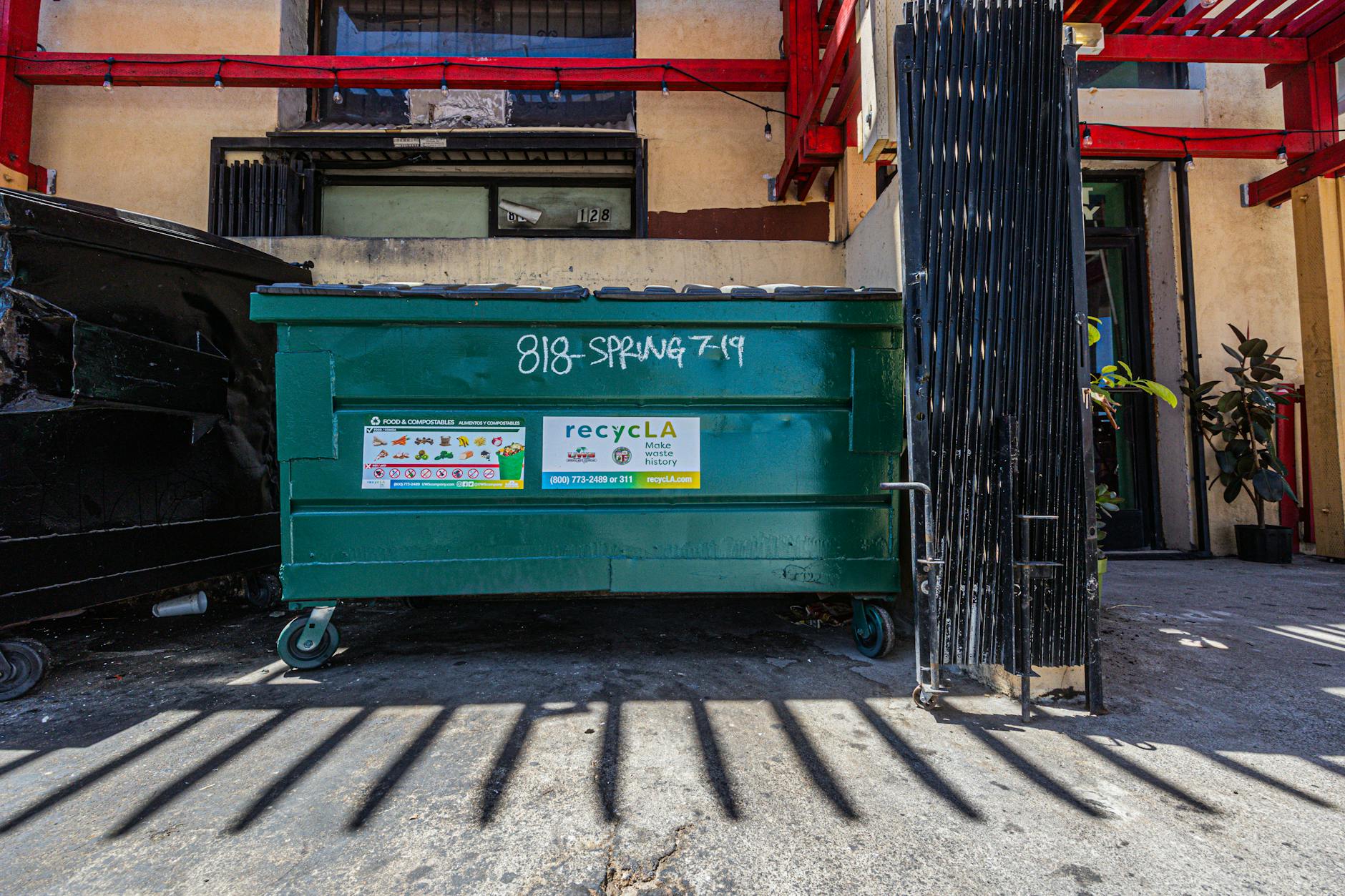
Size matters: A 10-yard roll-off is often enough for a kitchen teardown in Burbank, but for a whole-house demo in Long Beach you might need a 20-yard or 30-yard dumpster. Nina advised, ‘When in doubt, go one size up. You don’t want to be overpacking or making multiple trips across the 405.’ The crew’s rhythm changes drastically if they’re balancing around an overflowing bin.
Permits and parking: In Los Angeles proper, anything that extends into the public right-of-way usually needs a permit from the Bureau of Street Services. Santa Monica and Long Beach have their own rules and often require a temporary no-parking sign setup 72 hours in advance. Fines can stack quickly; a single citation for an unpermitted dumpster can exceed the cost of an additional day’s rental.
Know your materials: Recycling and proper disposal save money and the planet. Concrete, metal, clean wood, and certain plastics are often sorted out at transfer stations in Inglewood or Torrance for recycling. Items like mercury-containing bulbs, asbestos-containing materials, and certain solvents must be handled by licensed abatement crews and cannot go into a standard roll-off.
Local partnerships: Donation centers are part of the LA ecosystem. Habitat for Humanity ReStore locations in Pasadena and corporate Goodwill branches in the South Bay will accept reuseable cabinets, fixtures, and appliances. Donating reduces landfill fees and keeps the neighborhood feeling more like community than detritus.
Scene: The Alley, the Truck, the Sound of Work
By late afternoon the roll-off truck rumbled down the block. The smell of diesel mingled with the sweet smoke from an artisan coffee cart two doors down — a quintessential Los Angeles juxtaposition. The driver, a second-generation hauler from San Pedro, positioned the truck with practiced precision; palm fronds brushed the cab as he reversed into a narrow Echo Park driveway.
The sound of metal against metal as pieces were tossed into the dumpster was rhythmic, almost musical. Dust rose in lazy motes. A child on a nearby stoop watched as if a pirate chest had appeared overnight. “Is it going to stay there forever?” she asked Mara, eyes wide.
“Nope,” Mara said, wiping sawdust from her cheek. “Just for a few days. It’s making room for something better.”
Tension: Permit Problems and a Last-Minute Storm
Just when it seemed the choreography had been mastered, the sky over Silver Lake bruised and a warning flashed on Nina’s phone: the city had denied a permit extension because a previous application had been flagged in that block for an hours violation. The possibility of a citation loomed. To make matters worse, a sudden drizzle turned the fine dust into a gritty paste, and the dumpster begun to smell faintly of damp wood and mildew.
“We can’t get cited for parking the roll-off in the lane,” Luis muttered. He paced the driveway and called the city clerk. The stakes were practical and personal: a municipal fine would eat into the last of Mara’s renovation budget; continued delays threatened to push the family out of the house for a week.
Neighbors popped out, some annoyed, others sympathetic. An elderly woman from two houses down — a Pasadena transplant who had lived through many more chaotic projects than Mara — offered, ‘When my husband and I remodeled in the 80s, we paid a bit extra for a crew that handled permits. Learned the hard way.’ Her tone was gentle, the kind you hear at a block party when secrets are traded like recipes.
Turning Point: Problem Solved with Local Knowledge
Nina stepped in, making two calls in quick succession — one to the city permitting office and one to a nearby hauler with street-level permit experience in West Hollywood. Within an hour, a temporary permit was e-filed, a neighbor agreed to shift their car for a day, and the crew covered the nearby storm drains to prevent runoff. Meanwhile, a volunteer from a local reuse group arrived and took two dozen cabinet doors headed for donation. The small acts added up.
“We keep a list of reuse partners in every neighborhood,” Nina explained while the crew hustled. “From Venice to Burbank, there are people who will take materials off your hands. It reduces fees and keeps things out of the landfill. That’s how you really do sustainable removal in LA — it’s local, not theoretical.”
Resolution: The Dumpster Leaves, the House Breathes
Three days later, the dumpster was full, the permits tidy, and the crew had routed the final load to a sorting facility in Torrance where metals and concrete would be recycled. The truck’s hydraulic arms lifted the container, teeth clattering, and the roll-off slowly settled onto the bed. As it backed out, the neighborhood exhaled: children returned to their stoops, the artisan coffee smell resumed its place in the air, and sunlight spilled across the vacant driveway.
Mara walked the edge of the driveway and touched the smooth, clean lip left behind. The renovation would continue, but the worst of the chaos had passed. The house, briefly a loud, sawdust-strewn thing, felt again like a quiet possibility.
Takeaway: What to Remember and Do
If you live anywhere between the beaches of Santa Monica, the hills of Hollywood, and the canyons of Burbank, dumpster removal is as much about planning as it is about hauling. Here are practical actions to remember if you face your own mountain of renovation waste:
- Plan early for the right dumpster size; overestimate rather than underestimate.
- Check local permit rules — LA, Pasadena, Long Beach, and Santa Monica each have distinct requirements and timelines.
- Sort on-site when possible: separate recyclables, metals, and reusable items to reduce costs and environmental impact.
- Use local donation channels: ReStore, Goodwill, shelters, and neighborhood swap groups will often accept usable items.
- Hire experienced haulers who understand narrow streets, alley pickups, and the nuances of each LA neighborhood.
In the end, dumpster removal is a small civic contract: it asks you to respect public space, local rules, and the environment. Do it right, and the messy business of change becomes part of a city’s rhythm rather than an imposition on it.
Final Image: The Truck Drives Toward Sunset
The last image stayed with Mara: a roll-off truck gliding down Sunset Boulevard, bumper stickers softened by a warm sky, the outline of Griffith Park on the horizon. As the truck turned toward the freeway, the dumpster rode on its bed, a temporary island against the spreading, golden light. Palms framed the scene like sentries. For Mara, the sight was quietly ceremonial — a closing note on a small, necessary upheaval. The house would be quieter, the rooms brighter, and the neighborhood would remember the day the dumpster saved more than a renovation: it saved patience, made space for new beginnings, and reminded everyone of the careful choreography that keeps a sprawling city moving forward.
Somewhere between the ocean breeze off Santa Monica and the canyon drafts of Echo Park, the clatter had settled into memory. The truck’s taillights shrank into traffic and then into night. A neighbor swept the last sawdust from the curb. The city hum returned to its steady pitch. Mara stood on her porch and watched until the silhouette of the truck was gone, then closed her door with the quiet satisfaction of a small crisis handled well.