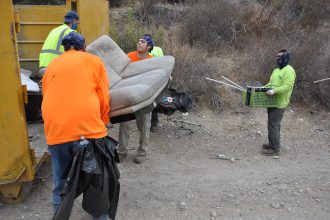
Elena stood on the cracked concrete of her Silver Lake driveway, palms damp with sweat, watching a small mountain of drywall, broken cabinets and decades of accumulated clutter heave under the California sun. A gull cawed somewhere over Echo Park Lake, a distant reminder that she was still in the city, but right now the world smelled of sawdust and old paint. “If we don’t get that thing out by Monday,” she told Juan, the hauler, “the whole renovation will stall—and my neighbors will start grumbling about the mess.”
The Setup: A Neighborhood and a Need
The house belonged to Elena and her partner, Marco, who had bought the 1920s bungalow in Silver Lake to restore its original charm. Their contractor, Dave from Long Beach, had already ripped the kitchen down to studs and found a dozen surprises—layers of linoleum, a sink that had been patched in three different decades, and a nest of old pipes that needed replacing. What they hadn’t expected was how quickly debris would pile up. “One minute there’s an empty room, the next there’s a small landfill in the yard,” Marco joked, but the laugh ended in worry. The dumpster had to go somewhere, and in Los Angeles that meant navigating an urban maze of parking rules, neighbors, and environmental regulations.
They called Juan, who ran a local roll-off company based in Burbank. He arrived in a rumbling truck that smelled faintly of diesel and coffee, his reflective vest bright against the afternoon light. “We can drop a 20-yard right here on the driveway,” he said, measuring with a practiced eye. “But you’ll need a street permit if it goes on the curb, and the city won’t let you put it in front of the fire hydrant.”
Rising Action: The Clock, The Permit, The Truck
In the days that followed, the project became a choreography of timing and permits. Silver Lake is forgiving in spirit but strict on logistics; Los Angeles Department of Transportation rules, the municipal code, and homeowners’ associations all had a say. Elena learned quickly. “I called the city clerk,” she said, recalling the hold music, “and they told me Staples can deliver to a parking spot faster than the street permit gets processed some weeks.”
Meanwhile, Dave pushed the schedule. “We need that dumpster onsite this weekend,” he told them. “The drywall’s wet and the plaster’s coming down Monday. If we miss our slot, the subcontractors have to move to another job.” The pressure built. On Friday afternoon, Juan returned with a larger truck and a 30-yard dumpster, its steel sides shining, chains clinking like a small bell. The neighbors smelled the salt air of San Pedro or the faint perfume of jacaranda trees in nearby Glendale, depending on whose window they looked through. Someone offered coffee. Someone else asked if the crew could keep the street clean. Community eyes were watching.
Placement posed another puzzle. Driveways in Beverly Hills and Manhattan Beach are often pristine and wide; in Venice or Echo Park they can be steep and narrow. Juan inspected the curb and the asphalt, tested the slope and the wheel clearance. “We have to watch for tree roots and sprinkler heads,” he muttered, leaning over the truck’s control panel. He threaded the remote and the dumpster lowered with a mechanical sigh into the driveway, an angular metal presence against the soft blue of the bungalow. A neighbor popped her head out. “Looks like progress,” she said. “Hope it doesn’t smell.”
Key Insights: What to Know About Dumpster Removal in Greater Los Angeles
As the crew worked, conversation turned practical. Juan shared hard-won knowledge about dumpster removal in the Greater Los Angeles Area, the kind of information that will save time, money and headache.
Sizes and Uses: Dumpsters come in several common roll-off sizes: 10, 15, 20, 30 and 40 cubic yards. A 10-yard works for small cleanouts in West Hollywood apartments; 20 to 30 yards suit most home renovations—like Elena’s kitchen demo in Silver Lake—while 40-yard bins are typical for large commercial jobs in Downtown LA or industrial cleanouts near Vernon.
Permits and Placement: City rules vary. In Los Angeles, you generally need a permit to place a dumpster on the street; in Santa Monica and Long Beach, enforcement can be stricter and permits more expensive. If the dumpster sits in a driveway, permits may not be necessary, but you must protect the surface—wooden boards under steel wheels, protection of sprinkler systems, and clearances to avoid garage doors. “We always check municipal websites and sometimes call the street services,” Juan explained. “One wrong placement and a fine can wipe out your budget for the week.”
Weight and Material Restrictions: Roll-offs have weight limits—usually priced per ton—so heavy materials like concrete, dirt, roofing tiles and bricks can drive up the cost. Prohibited items often include batteries, certain chemicals, asbestos, and electronic waste. In Los Angeles County, construction and demolition debris must be handled with attention to recycling laws; many haulers have contracts with transfer stations or recycling facilities in the San Gabriel Valley and the South Bay to divert materials from landfills.
Scheduling and Traffic: Weekend drop-offs are popular, but they also compete with film crews in Burbank and Hollywood, farmers markets in Culver City, and beach events in Venice. Juan recommended booking dumpsters at least a week in advance for big jobs and asking about same-day delivery options if a surprise complication arises.
Green Waste and Donation: One of the city’s quiet revolutions is the focus on diversion. Wood, brick, metal and some fixtures can go to recycling streams. Usable appliances, doors, and cabinets often find new life at Habitat for Humanity ReStore in Long Beach or donation centers in Torrance and Pasadena. “We separate stuff on site when clients want it,” Juan said, scooping up a battered but salvageable farmhouse sink. “A lot comes out of jobs like this that doesn’t need to meet the landfill.”
Rising Action Continued: Surprises and Small Crises
Elena’s project also revealed the small, human complications of waste removal. Midway through the tear-out, they found a box of old photographs wedged behind a beam—sepia smiles from a family that had lived in the house for generations. Marco insisted on carefully bagging them for scanning. A contractor accidentally dropped a noisy refrigerator into the bin and then had to explain to the crew why the city didn’t want appliances mixed with hazardous fluids. On the third day a neighbor’s car was blocked by the bin for two hours while a technician swapped out a flat tire, and Elena spent the afternoon handing out apology notes and iced lemonade.
There were also regulatory surprises. Because part of the job touched protected trees in a Glendale backyard, a forestry inspector asked to see the city’s authorization. Elena scrambled through emails on her phone, Juan on the phone with his dispatcher, and Dave on the ladder, all trying to smooth the paperwork before a fine materialized. It was a small drama, but one that underscored the multiplicity of rules across the Greater Los Angeles Area: what is acceptable in Compton might differ from a beachfront lot in Malibu.
Resolution: The Weekend That Changed the House
By Sunday evening the last of the debris was in the dumpster, the workers had swept the driveway until it gleamed and the sun slid low behind the Santa Monica Mountains, turning the bungalow into a silhouette edged with gold. The dumpster—now heavy and bruised from its labor—was ready to be hauled away. Juan radioed the office, engaged the winch, and the bin hissed up onto the truck like a sleeping beast. As the crew backed away, a flock of pigeons took wing and the neighborhood exhaled. “Feels like we can breathe again,” Elena said, leaning against the porch rail.
Juan mentioned the endgame: the load would be taken to a transfer station in the San Fernando Valley where recyclables would be separated, wood downcycled into mulch, and metals reclaimed. Appliances that still worked would be dropped at a donation center in Long Beach, and the rest—carefully segregated—would go to approved landfills. He handed Elena a receipt that itemized the charge: rental, tonnage fee, permit handling, and disposal fees. No surprises. No hidden charges. Elena felt the relief of a plan executed well.
Takeaway: What to Remember and Do
By the time the last truck disappeared down the block, a pattern had emerged from the chaos: good planning, local knowledge and clear communication are everything in dumpster removal across Greater Los Angeles.
Here are the practical steps Elena and Marco learned—and what you should remember:
1) Choose the right size. Think in terms of the amount of bulky material, not just days of work. Ask your hauler for examples: “A 20-yard fits a kitchen demo with cabinets and drywall for most bungalows in Silver Lake.”
2) Check municipal rules early. If you need a curb placement, apply for a street permit from the specific city—LA, Santa Monica, Long Beach and others have different processes and fees. If on private property, protect driveways and irrigation systems.
3) Separate and salvage. Remove anything you want to donate or recycle before the dumpster arrives. Schedule pickups for working appliances, paint, and electronics with the appropriate agencies.
4) Ask about weight limits and hidden fees. Know what counts per ton and what counts as hazardous. Get the estimate in writing and read the fine print about extra days or overage charges.
5) Communicate with neighbors. A simple note or a friendly wave goes a long way to keep tempers cool in a tight Los Angeles street.
6) Choose a hauler who knows the area. Local companies that navigate Burbank film permits, Torrance industrial rules, and Malibu coastal constraints will save you time and stress. “Knowledge of the neighborhood matters more than the price sometimes,” Juan said. “We know where to go and where not to—what to expect at 7 a.m. on a Saturday in Venice, or how to get around a Dodgers game in East LA.”
As twilight settled and the last traces of dust washed away with a quick rain that night, Elena stood on her porch and imagined the kitchen that would soon take shape: reclaimed wood counters, light spilling in from a new skylight, a sink that would no longer carry the weight of the past. For the neighborhood, the turned page was small but felt like a promise: that even in a sprawling, crowded city like Los Angeles, order can arise out of rubble, and that a well-placed dumpster—handled with care and local know-how—can be the unlikely hero in the remaking of a home.
When the truck finally disappeared around the corner, the sound of its engine faded into the city hum—an acoustic punctuation mark under the distant chime of a church bell and the low roar of the 101. Elena closed the door, the house smelling faintly of lemon from the cleaner she had used to wipe the porch rail. The work ahead was still real and necessary, but for the first time in weeks, she felt the project shifting from salvage to creation. The dumpster had done its job; now the real renovation could begin.