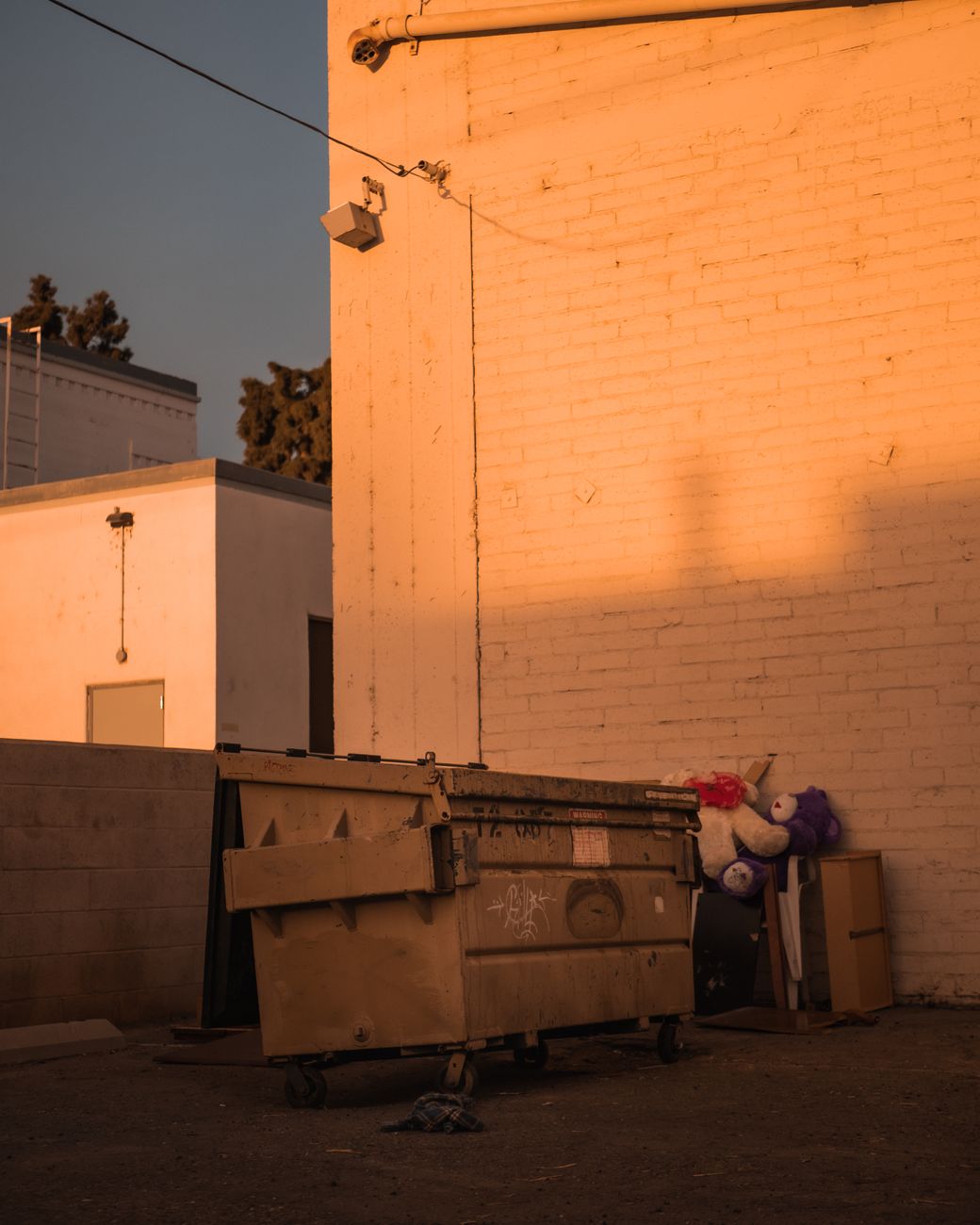
By dawn, a hulking steel rectangle had claimed the curb outside Maria’s bungalow—an unexpected newcomer that smelled faintly of oil and old rain and seemed, for a moment, almost patriotic against the soft blue of a Pasadena morning. Neighbors poked their heads out of doorways like curious seabirds. A dog barked twice, then gave up. “Is that ours?” her husband Javier asked, rubbing sleep from his eyes as if waking to a ship anchored in the street was the most normal thing in the world.
Setup: A Renovation, a Deadline, and the Neighborhood
They were three weeks from an open-house; the hardwood floors had been sanded but not finished, the bathroom tiles sat in boxes, and a rainstorm in late April had bulldozed through a half-assembled pergola in the backyard. Maria had called her contractor, Ramon, who had promised a miracle or at least a very efficient dumpster. “We’ll make it disappear,” Ramon said, smiling, handing her a wrinkled business card from his truck in Burbank. “But you’ll need a permit if it sits on the street overnight—losing that is a headache you don’t want.”
The Greater Los Angeles Area is a collection of communities stitched together by freeways and shared problems. Inglewood has its game-day surges of traffic; Santa Monica gets an influx of beach cleanups; Long Beach and Torrance hum with industrial pickups. What felt intimate—this one dumpster on this quiet Pasadena block—was really a small thread in the city’s larger system of waste, permits, and hauling logistics. Maria and Javier were suddenly participants in a municipal ballet: phone calls, pick-up times, recycling rules, and the quiet arbitration of neighborhood expectations.
Rising Action: Choosing the Right Box and Navigating Rules
“We need something that fits the tight driveway and won’t block the blue curb,” Maria said to Ramon, as he knelt to measure the sloped approach with a carpenter’s tape that snapped back with a sound like a small pistol. He listed sizes—10, 15, 20, 30-yard—and where each would likely end up in the house’s lifecycle. “The 20 will swallow the old cabinets and that bathtub,” he said. “But if you’re doing demolition, maybe two trips with a 15 works better so you don’t pay overage.”
Over the next day the couple called three local companies and sketched mental maps of where the metal box could live: snug in the driveway under the jacaranda, half on the street with a city permit, or at the side yard with a small crane lift from a Long Beach hauler. One company promised a weekend drop-off in West Hollywood; another from Glendale quoted a faster turnaround but warned of additional fees for hazardous items.
There was a lesson in every quote. “Anything with batteries, with chemical residue, or tires—that’s a special haul,” Ramon said, leaning against the rusted rim of a dumpster while the morning sun carved his shadow long across the pavement. “Your e-waste needs to go to a certified recycler. Paint cans? Those are household hazardous waste. LA County events take them, or you call a disposal company.” He drove this point home with a story about a Santa Monica renovation that was fined when an old can of solvent leaked onto the street—an avoidable horror costing hundreds and a few nights of bad publicity.
Key Insights: What I Learned While Watching My Curb
As the dumpster became a fixture, the education unfolded in small, practical classes between sips of coffee and the rumble of city buses. Here are the rules and tips threaded into Maria’s story, practical and often learned the hard way:
Size and timing matter. Smaller dumpsters (10–15 yards) are ideal for tight residential jobs and remodeling debris; larger containers (20–40 yards) suit construction and large cleanouts. Rentals often cover a standard period—typically a week—after which daily extension fees can kick in. If you’re juggling contractors across Burbank, Glendale and Hollywood, schedule your drop and pick-up to accommodate stage work rather than guesswork.
Permits are common. “Don’t assume placement on the street is free,” Ramon reminded her. In Los Angeles and many surrounding cities, a street or roadway permit is required to keep a container on public property. The process varies by city—some permits are issued online in Culver City or Inglewood, others require a visit to city hall—but the constant was the need to display permit documents visibly and to respect curb rules for parking and access.
Weight limits and overage fees change the math. Renters are quoted by container size and an included tonnage or flat fee; excess weight triggers per-ton surcharges. Separating demo debris—wood, metal, concrete—before it hits the bin can reduce tipping fees at transfer stations and material recovery facilities.
There are prohibited items. Batteries, paints, pesticides, electronics, and tires rarely belong in a standard dumpster. They need specialized disposal to avoid environmental harm and fines. Find local household hazardous waste drop-offs or certified e-waste recyclers in LA County and nearby cities like Santa Monica and Long Beach.
Recycling and reuse save money and soul. Ramon encouraged donating fixtures and gently used doors to local charities or ReStore outlets; wood and metal could be reclaimed. “You’d be surprised what a Habitat or a salvage yard will take,” he said, pointing to a salvaged door he’d found in a Venice alley once. My neighbor, a retired designer from West Hollywood, arrived one morning with a list and left with a treasure trove of usable tiles for her patio.
The Human Side: Conversations at the Curb
The dumpster was a meeting place. A UPS driver stopped to comment on the size, Mrs. Alvarez from down the block brought over muffins and poetic advice about keeping the noise down, and Luis—the driver who arrived to pick up the box—discussed his grandkids in Torrance and the best taco spot near Glendale.
“We try to be quick and tidy,” Luis said, wiping his hands on a rag. “People remember how you leave a place more than how you pick it up.” He moved with practiced care, the hydraulic arm of the truck hissing and groaning, a choreography repeated across LA alleys. Maria watched as the dumpster was lifted, the city breathed a little easier, and the driveway opened up like a stage for the next act of renovation.
Resolution: The House Clears Out, The City Keeps Turning
By the time sunset poured a golden smear across the Los Angeles skyline, the dumpster was gone. The open-house went smoothly; the floors glowed, the tiles fit flawlessly, and neighbors complimented the curb appeal. Maria’s relief was visceral—an almost physical lightening that was both financial and emotional. Javier leaned against the kitchen counter, elbows smattered with dust, and said, “It’s like the house finally breathed out.”
There was also a quieter resolution. The wood that could be salvaged went to a small reclamation yard in Long Beach. Old fixtures found a new life through a donation pickup in Culver City. Hazardous leftovers were rerouted to a county collection event. The hauler’s invoice listed what had been taken, the tonnage, and a small surcharge for a mattress disposal; it read like a map of choices made cleanly and intentionally.
Takeaway: What to Remember When You Need Dumpster Removal in Greater Los Angeles
If there’s one image to hold onto from this neighborhood tale, it’s not the box itself but the care inside the box: the planning, the permits, the choices about what to toss and what to save. For anyone facing a project from Santa Monica to Pasadena and from Torrance to Burbank, remember these practical steps:
– Choose the right size for your job; smaller often equals cheaper and easier to place. – Check municipal rules and get a street permit if the container will sit on public property. – Ask about included tonnage and overage fees; separate materials to reduce tipping charges. – Don’t put hazardous items or batteries in a general dumpster—find local hazardous waste options. – Consider donation and salvage options before throwing things away to save money and reduce landfill impact. – Book early and confirm pickup windows; traffic and events across LA can shift schedules quickly.
Ramon’s business card is still tucked in Maria’s kitchen drawer. It’s frayed and grease-stained and has a phone number written in thick black ink. When I asked her what she would tell someone starting a renovation, she smiled and said, “Call Ramon, but listen to Luis. The drivers see everything—and they know the city better than we do.” She laughed, then turned serious. “And don’t forget the neighbors.”
Outside, the street was ordinary: a lamppost, a parked hybrid, a palm tree leaning like a question toward the sun. Inside, the house was quiet and newly finished, smelling faintly of lemon cleaner and fresh paint. The curb had returned to its ordinary duties—mailboxes, morning deliveries, bikes chained to stanchions—yet it held the memory of the dumpster like a footprint in sand. The city had consumed a week’s worth of demolition and given back a refreshed beginning; in the distance, across a ribbon of rooftops and palm silhouettes, the downtown towers kept their patient watch as the neighborhood settled into evening like an old hand folding back a sheet.