When Maya first opened the front door of her grandmother’s Craftsman in Highland Park, a wave hit her—dusty light, the smell of old wood and lemon oil, and a stairwell littered with boxes that had not been touched in thirty years. She stood for a long moment on the threshold, the city breathing around her: distant traffic from the 110, a neighbor’s radio from Eagle Rock, a gull’s high cry from somewhere toward downtown. ‘We need a plan,’ she said to herself, and then out loud, because sometimes plans arrive best as spoken promises.
Setup: The Call Across Neighborhoods
Maya was used to small projects—a kitchen backsplash in Echo Park, a balcony repaint in Silver Lake—but clearing out her grandmother’s house felt like organizing the history of a life. Her brother, Luis, flew in from Long Beach. Their friend Jenna, who ran a rental service in Venice, brought practical calm: ‘Call a dumpster. Don’t make this harder than it has to be.’
They mapped the job over coffee on the porch: the house sat within meters of an old jacaranda tree, the street narrow like many older Los Angeles neighborhoods. In Pasadena they had once placed a dumpster easily in a wide driveway; here in Highland Park the curb was a prized commodity. ‘If we put the container on the street we’ll need a permit,’ Luis said, thumbs hovering over his phone. ‘The city can ticket or tow it if we don’t.’
That evening, Maya drove through the neighborhoods she knew—Glendale and Burbank with their tidy front lawns, a quick pass through Downtown LA where skyscrapers jutted like punctuation, and finally up to Hollywood Boulevard where tourists lingered near a dumpster tucked behind a construction fence. Each place whispered a different rule: some allowed free bulky-item pickups, others required roll-off permits or had strict noise ordinances.
Rising Action: Choosing the Right Dumpster
‘Size matters,’ Jenna said when she arrived with a catalog of roll-off options spread across her car seat. ‘And not just for volume. Weight, placement, the kind of debris—old lumber, porcelain sinks, appliances—each affects cost and legality.’ She pointed to examples on her laptop: a 10-yard for a bathroom gut job, 20-yard for most home renovations, and 30-yard for full-house clearouts. The image of the dumpster in Maya’s mind shifted from abstract to lumber-scented reality.
The first tension came when they considered curb placement. Highland Park’s narrow streets meant parking disruptions were inevitable. Luis dialed the city office and listened, then reported back. ‘We need a Temporary Right-of-Way Permit if it’s on the street for more than 24 hours. And we have to post a notice to the neighbors.’ He sounded resigned but practical: city rules were part of living in LA the way smog and sunshine were. In Santa Monica or Malibu, the rules would be different—smaller trucks, perhaps more environmental scrutiny. In Inglewood or Compton, they might rely on municipal bulk pickup programs or partner with local haulers who knew the shortcuts through tight alleys.
Then there was the question of disposal. Jenna warned them: ‘Los Angeles County has strict recycling rules. Concrete and asphalt often have separate drop-off fees. Electronics must go to certified e-waste centers. And don’t even think about dumping paint or chemicals.’ Maya pictured the fat, orange bags of old paint cans and felt a flush of guilt. She pictured her grandmother’s jewelry box—harmless, priceless. The job was not just logistics; it was stewardship.
Key Insights Woven Through Action
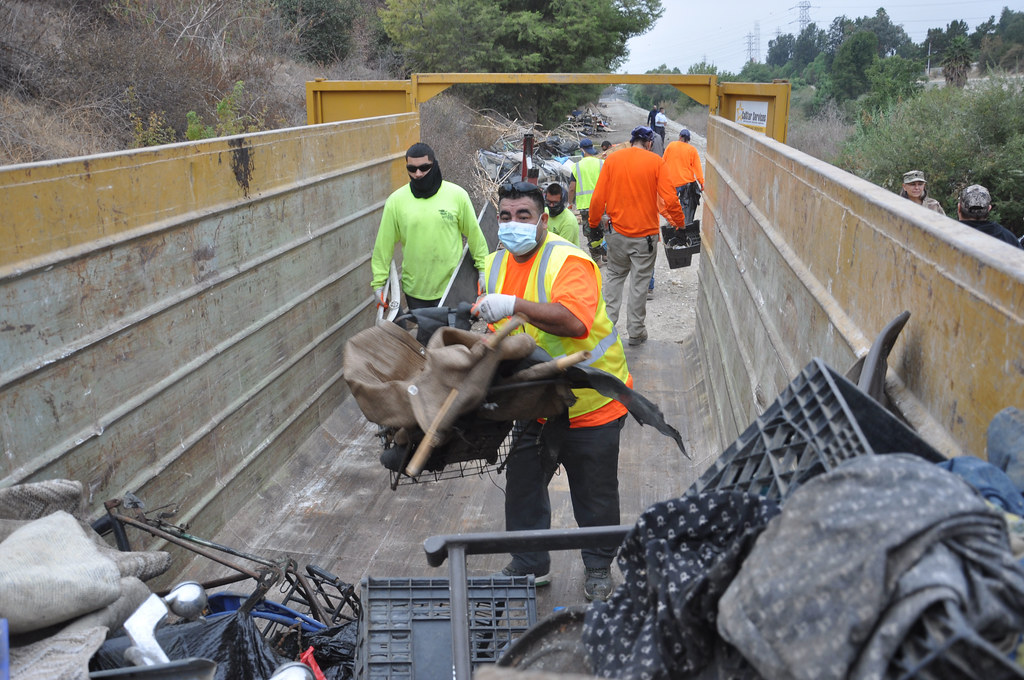
On day two, as the crew from a local roll-off company in Torrance backed the truck onto the street, the crew leader, Manuel, explained the practicalities in a way that made the family relax. ‘We bring the dumpster, set the chocks, and take a photo of the placement,’ he said, running his hand along the metal lip of the container. ‘If the city asks, we can show them the permit. You should plan loads by weight class—wood and drywall are lighter per cubic yard than concrete or dirt.’
He taught them the basics as they worked: distribute heavy items evenly, break down framed furniture, remove doors from cabinets to fit things flat, and never, ever put hazardous materials in a roll-off. ‘It’s a safety issue for our crew, and for the planet,’ he said. ‘We sort at the site when we can. Metals, for example, we pull out for recycling—there’s money back sometimes. But if it’s all mixed into a ton, that’s lost value and more landfill.’ His voice carried the kind of authority that came from years of doing this in places from Northridge to Torrance.
Maya asked about permits and parking. Manuel nodded: ‘In Koreatown you may be fine with a quick drop in a driveway. In Santa Monica, they’ll ask you to show proof of recycling plans. In West Hollywood, nighttime deliveries might be restricted. Check the city’s public works site or call before you book.’ This practical, neighborhood-aware approach saved them a potential fine and gave them a timeline: a three-day window with pickups scheduled for midweek to avoid street-cleaning conflicts in Echo Park.
They learned the vocabulary—roll-off, front-load, transfer station, tipping fee. They understood that tipping fees weren’t some arbitrary tax but a real cost reflecting landfill or recycling processing. LA’s transfer stations were hubs where material was weighed, sorted, and routed: metal to recyclers, wood sometimes to biomass processors, inert demolition debris to specific facilities. Knowing this changed Maya’s view; this was not merely hauling away trash but negotiating a complex urban metabolism.
Small Scenes, Big Details
On the third morning, the sound of the dumpster doors clanging open became part of the soundtrack of the week. Neighbors watched with curiosity. Mrs. Alvarez from across the street brought over lemonade and a story about the house’s original owner, a tailor who used to lay fabric on the porch. ‘You kids are doing good work,’ she said, looking at a pile of family photos left carefully to one side.
One moment crystallized everything. Luis lifted a heavy portrait wrapped in brittle cellophane. ‘Look,’ he said, and inside was the grandmother, at seventeen, laughing at a dance in Burbank. The photo was fragile and suddenly more valuable than all the benign junk in the attic. They reserved a box of keepsakes and made a pact: if something felt like history, they wouldn’t toss it into the maw of a dumpster without first asking, calling relatives, or scanning it.
Manuel and his crew navigated more than debris; they navigated emotion. ‘We move carefully with people’s memories,’ he said once, pausing between hauling a battered piano leg and an old window sash. They found a local charity in Culver City that took gently used furniture, and a nonprofit in Downtown LA that accepted working appliances for refurbishment. Suddenly the dumpster wasn’t only about removal; it became a sorting point for reuse and recovery across the region.
Resolution: The Last Load
By the final day the sun slanting through the jacaranda painted everything purple-blue. The last load was a quiet affair: small boxes, a stack of books, the old rocking chair that had survived a hundred afternoons. As the truck drove away down the street toward a transfer facility somewhere between Long Beach and the Port of Los Angeles, Maya felt the house breathe again—the rooms were cleaner and quieter, the air lighter.
‘You did great,’ Jenna said, handing Maya the last cup of coffee. Luis hugged their grandmother’s favorite armchair to the porch, then set it gently in the corner as if placing her back into the room. Neighbors nodded and waved as the crew tucked away their cones and signs. The permit was closed, the city notified, and the last metal piece had been pulled for recycling. They had navigated permits in Highland Park, arranged for a special pickup in Santa Monica for electronic waste, and coordinated with a Torrance hauler experienced with narrow Los Angeles streets.
At the end, Maya walked through the house and touched the banister where her grandmother’s hand had smoothed dust for decades. The cutter’s hum had stopped; in its place, a sense of order—not empty but curated. ‘We honored her,’ she whispered to the room, and it felt true.
Takeaway: What to Remember and Do
If you find yourself facing a cleanout in any part of the Greater Los Angeles Area—be it Venice, Malibu, Burbank, or the San Fernando Valley—remember a few simple, practical things woven through Maya’s story:
– Assess the volume and type of debris: Choose the dumpster size that fits the project—10, 20, or 30-yard containers are common. Keep in mind weight: concrete or dirt will hit weight limits quickly.
– Check local rules: Many LA cities require permits for curb placement. Call 311 or your city’s public works department, or speak with your hauler who often helps secure permits.
– Separate recyclables and hazardous items: Electronics, paint, tires, and chemicals need special handling. Donate usable furniture and appliances to local charities in Culver City, Downtown LA, or Long Beach.
– Plan placement and timing: Narrow streets like those in Highland Park or parts of Echo Park need thought about access. Schedule drop-offs midweek to avoid street-cleaning conflicts and parking fines.
– Work with reputable local haulers: Choose companies with experience in Los Angeles neighborhoods—those who understand everything from Sunset Strip restrictions to the quirks of Torrance alleys. Ask about tipping fees and transfer stations they use.
– Protect memories: Before you load, sort for keepsakes. Make a box of photos, letters, and anything with family ties; involve relatives if possible.
When the dumpster left and the sound of the truck faded into the afternoon, Maya stood on the porch and watched the jacaranda leaves fall like confetti onto the pavement. The street smelled like cut grass and gasoline and something older—a scent stitched through the city from Venice to the Verdugos. In the end, a roll-off dumpster had done more than remove debris: it had helped a family make choices, protect memories, and redistribute useful things back into a community that stretches from Malibu’s cliffs to the busy ports of Long Beach.
As the sun dipped behind the skyline of downtown, a garbage truck hummed in the distance, and Maya felt the small, satisfying close of a chapter: the house quiet, the neighbors restored to their rhythm, and the city—vast, messy, and full of rules—nudging on with its thousand little transactions of discard and renewal.