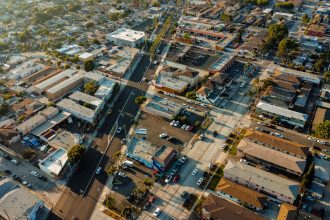
The first time I smelled sawdust and gasoline together on a late August afternoon in Echo Park, I thought a carpenter had set up shop on the corner. It was actually a roll-off dumpster, yawning open like a metal mouth, parked against Maria’s cracked stucco house while a crew in neon vests stacked old cabinets, drywall, and a tangled heap of what used to be her grandmother’s pantry. By sunset the pile had grown; by midnight a raccoon poked its head through packing foam. By morning, the alley was a river of traffic and neighborhood gossip—because in Los Angeles, a dumpster is never just a dumpster.
Setup: The Call, the Plan, and the Heat
Maria called me on a Monday with the soft urgency of someone who has measured out a week of evenings and decided it was time. “We have to get this out before my parents visit,” she said, voice tight with equal parts excitement and dread. Her house in Echo Park, with its sun-faded turquoise trim and a front porch cluttered with succulents, had been a slow-motion renovation for months. She had taken down a wall, discovered a nest of rotted beams, and unearthed a stack of moldy books. The contractor shrugged and said two words that made her stomach flip: “Dumpster rental.”
We made a plan. There would be a 20-yard roll-off to fit a combination of heavy wood and bulky items, a morning delivery to avoid the worst of Sunset Boulevard traffic, and a two-week rental window. But Los Angeles is a tapestry of rules: on-street placement might need a permit from the City of Los Angeles; the driveway slope meant we needed to think twice about concrete staining; and this was Echo Park—parking is a form of currency. Not to mention the subtle, but persistent, neighborly choreography where a big truck can mean compliments or complaints.
Rising Action: The Truck, the Neighbor, and the Permit
On the day of delivery the air felt like a hot oven, a shimmering heat that made the palm trees wobble. The truck arrived with a rumble that felt like a small earthquake. Ramon, the driver, had sun-thickened skin and a laugh that cracked like a whip. He jogged up the sidewalk, boots clanking. “Morning! Where do you want it?” he asked, scanning for low-hanging wires and the perfect patch of flat ground.
Maria pointed to the driveway, but Mr. Alvarez from next door waved his newspaper and implored, “Not on the street, mija, or the city will fine you!” Echo Park’s narrow streets are notoriously unforgiving; a misplaced dumpster can block access and prompt a call to 311. Ramon radioed back to dispatch, and we learned the first of many local truths: in Los Angeles neighborhoods—from Glendale to Pasadena, from Culver City to Inglewood—placement matters. The driver knew which blocks would accept a temporary curbside placement and which required a permit, where to avoid historical districts, and how to read a homeowner’s association (HOA) mood.
“We always check before we drop,” Ramon said, wiping grease from his hands. “Santa Monica and Beverly Hills are different beasts than Long Beach or North Hollywood. Sometimes it’s a permit, sometimes it’s a conversation. And sometimes, you just gotta be lucky with the meter cops.” His smile faded when he added, “And hauling out tile and concrete? That adds weight. Watch those scales or you’ll pay up.”
Key Insights: What the Dumpster Tells You
As Maria’s crew fed material into the bin, the practical lessons arrived like a steady drumbeat. Dumpster removal in Greater Los Angeles isn’t only about hauling junk; it’s an exercise in logistics, law, and a little environmental conscience. Here are the insights we learned through sweat and elbow grease:
– Choose the right size: Roll-off dumpsters usually come in sizes like 10, 20, 30, and 40 yards. A kitchen gut typically fits a 10 or 20-yard bin; whole-home cleanouts often require a 30 or 40-yard. In Silver Lake I’d seen a 10-yard for a patio remodel; in Long Beach they once needed a 40-yard for a commercial demolition.
– Permits and parking rules: Many parts of Los Angeles, including Venice, West Hollywood, and parts of Downtown LA, require permits if the dumpster is placed on the street. Without a permit you can accrue fines or have the bin impounded—an expensive delay for a time-sensitive project.
– Weight limits and pricing: Concrete, dirt, and tile are heavy. A seemingly filled 20-yard bin packed with rubble can exceed weight limits quickly. Drivers and companies often price by both size and weight. Ramon’s shrug—”You can fit a lot of bad decisions into a small bin”—was part humor, part hard-earned truth.
– Recycling and disposal rules: The County of Los Angeles encourages sorting. Many companies will separate wood, metal, green waste, and electronics for recycling. Mattresses, TVs, paint, and hazardous household chemicals require special handling. We learned that transferring e-waste to certified centers in Burbank or Pasadena is better for the planet and your wallet in the long run.
– Neighborhood etiquette: Communication matters. Letting neighbors in Culver City or Brentwood know about your plan can prevent complaints. Ramon recommended placing cones and a small sign with rental dates and a contact number—small touches that turn friction into collaboration.
Rising Action Continued: A Curveball from the City
Midway through the second week, just as Maria had scheduled the bin for pickup, a city inspector knocked on the door. “We received a complaint about a dumpster blocking pedestrian access,” she said, polite but firm. The complaint had come from a renter two blocks over in Echo Park who relied on a wheelchair ramp. Suddenly our timeline sputtered.
Ramon, who’d become part of the household rhythm, negotiated with the inspector and with Maria. He suggested moving the dumpster to the alley (narrow but accessible), and the company offered an extra day to make up for the delay. “We move people’s messes, sure,” he said later, pausing to catch his breath, “but we also move with the city. You can’t fight the system—so work with it.”
During those tense hours, neighbors offered unexpected help: Mrs. Kline from down the block brought iced lemonade; a contractor from Pasadena offered to help load a heavy marble tabletop. The dumpster, which had been a scar on the street, became a site of community exchange. Someone left a folding chair nearby; someone else left a hand-written sign: “Thank you for your patience. Maria’s renovating her home. Garbage can be heavy—please forgive the noise.”
Resolution: The Last Load
On the morning of removal the sky was clear, the light sharp enough to make even the spent paint blinding. Ramon and his crew arrived early, engines humming, the city still waking. We watched as they winched chains and the hydraulic arms began their slow ballet—the dumpster rose, tilted, and was hauled away with a noise that felt like a relieved exhale. For a moment the alley looked empty in the way of a stage after the cast has left.
Maria stood on the porch, palms smudged with drywall dust, eyes shining. “I kept this house for Grandma,” she said quietly, the kind of sentence that fills the space between facts with meaning. “Getting rid of those cabinets felt like letting go.” The removal was practical—but emotionally significant. The dumpster had been the vessel for not just debris, but for decisions, memories, and the logistics of rebuilding a life.
Takeaway: What to Remember and Do
So what should someone in Greater Los Angeles remember when they face their own pile of renovation remnants? Here are the practical steps, drawn from Maria’s story and Ramon’s hard-earned wisdom:
– Assess volume and type of debris before booking. Match the dumpster size to your project (10–40 yards commonly) and be honest about heavy materials like concrete.
– Check local regulations and permits early. Whether you’re in Santa Monica, Burbank, Inglewood, or Huntington Park, rulebooks and permit offices can differ. Permit processing can take days—plan accordingly.
– Communicate with neighbors and HOA. A quick note, cones, and a contact number reduce complaints and the chance of a citation.
– Sort hazardous and recyclable items. Paint, electronics, mattresses, and tires often need special handling—ask your hauler or drop them at certified centers in the county.
– Consider timing: avoid rush hour in the Valley or narrow weekend streets in West Hollywood. Early morning pickups can make for smoother removals.
– Get clarity on pricing: ask about weight limits, overage fees, extra days, and potential fines if the dumpster blocks access.
As the sun slid behind the palms that evening, Maria lit a citronella candle on her porch. The street smelled faintly of lemon and asphalt. Children on bicycles traced loops around the block. The driveway, after a hasty sweep, looked almost new. People wandered by and offered congratulations as if a small civic victory had been won. Ramon drove off with a wave, the city’s soundtrack returning—sirens, distant freeway hum, a dog barking in Burbank.
There was a hum of completion in the air, a quietness that felt like a blank page waiting to be written on. For Maria, the empty driveway was more than a cleared space; it was permission. For the neighborhood, it was the reminder that even in a city of millions, the small practicalities—permits, trucks, neighborly notes—are the threads that hold community together.
And for anyone facing the clamor of renovation or the weight of accumulated things, Ramon had one last piece of advice as he climbed into his cab: “Plan for the mess, respect the rules, and make sure there’s a place to put your trash that doesn’t become someone else’s trouble. You’ll sleep better—and so will everyone else on your street.” The truck pulled away, and in the rearview the empty metal rectangle of the emptied dumpster looked like a promise: whatever you tear down, you can rebuild, and sometimes a little labor and foresight turns a chaotic heap into a clean beginning.
That night, as the city lights blinked on from downtown to the Palos Verdes hills, Maria opened her front door and breathed in the cooling air of a neighborhood ready to move forward. The last image, burned into memory, was simple and perfect: a clean driveway lined with succulents, a small pile of lumber stacked neatly for donation, and the skyline beyond—still messy, always changing, somehow steady. The dumpster was gone; the story, quietly completed.