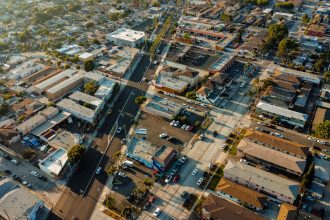
When Rosa opened the garage door in Echo Park and the stale smell of old paint and damp cardboard hit her like a memory, she didn’t expect the afternoon to become a neighborhood lesson in dumpster diplomacy. A pile of broken shelves, a mattress stained with sun and time, and a stack of cardboard that had outlived its usefulness stared back at her. ‘We could just toss it,’ she joked to her husband, but the look on his face said he heard a different plan—one that involved a metal box the length of a small car and a driver who knew the back alleys of Los Angeles better than most GPS systems.
Setup: A Neighborhood, a Project, and a Problem
Rosa and Miguel had bought a bungalow in Echo Park with the kind of optimism that comes with fresh paint and the faint scent of jasmine from the neighbor’s vine. The house needed work—kitchen cabinets with swollen bottoms from a leaky sink, a yard overrun by tumbleweeds of plastic pots and dead rosemary. They called their friend Jamal, a contractor who worked between Hollywood and Burbank, and together they sketched a plan on a napkin: demo the old cabinets, clean the yard, patch the driveway, and use a dumpster removal service to clear three decades of accumulated things.
‘You don’t want to mix the wrong stuff in there,’ Jamal warned, rolling a cigarette and squinting into the afternoon sun. ‘Paint, batteries, old oil—they go somewhere else. A roll-off dumpster is heavy enough without surprise fees.’ That line stuck with them. It was the first taste of the tension that would pull a simple weekend task into a week-long logistical dance involving permits, neighbors, and the peculiarities of Greater Los Angeles streets.
Rising Action: Permits, Parking, and the Art of Timing
The next morning, a bright orange dumpster arrived in the narrow lane of Echo Park, a gleaming rectangle of possibility. Its sides reflected the late-morning sun and the palms that lined Glendale Boulevard. Roberto, the driver, set down cones and a small orange sign that read ‘Temporary Dumpster Permit Pending.’ He had the kind of hands that made you trust a wrench and the quiet patience to answer questions nobody else wanted to ask.
‘Hold on to that permit,’ Miguel said, reading the print on the little clipboard that Roberto passed over. ‘City will want it if the truck ever blocked a lane.’ The permit was a short-form approval from LADOT for a temporary use of public curb space. In neighborhoods like Santa Monica and Venice, the rules bent toward beach-town aesthetics, while in industrial pockets of South LA and Long Beach the conversation focused on load limits and pickup schedules.
Still, the dumpster brought friction. Neighbors in Silver Lake worried about sight lines, a neighbor in West Hollywood complained about the smell, and a cyclist nearly clipped a cone on the uphill turn toward Sunset Boulevard. Jamal had to negotiate with a delivery truck that needed the same curb space; the two drivers ended up using walkie-talkies to orchestrate synchronized maneuvers worthy of a dance. That choreography is part of what professional dumpster services sell: more than metal and manpower, they sell a way to navigate permit requirements, overhang clearance, and the sting of city fines.
Key Insights: What Dumpster Removal Really Entails
As the team filled the dumpster, Rosa learned the language of disposal. Dumpsters come in sizes—10, 15, 20, 30, and 40 cubic yards—and each size has an optimal use. A 10-yard roll-off is perfect for tight residential jobs in Pasadena or Culver City, while a 30- or 40-yard container is the workhorse for construction sites in Downtown LA or major remodels in Torrance.
‘You gotta know your volume and your weight,’ Roberto explained, lifting a wet plank and resting it on the rim. ‘Wood and drywall add up fast. Dirt and concrete kill your weight allowance.’ Most companies quote flat rates for the container plus a per-ton fee. If you overload a dumpster—either by exceeding weight limits or putting in prohibited materials like tires, asbestos-containing materials, or hazardous liquids—you’ll face overage fees or the company may refuse the load altogether.
Environmental considerations threaded through every conversation. Los Angeles has aggressive recycling and diversion goals. Construction and demolition (C&D) debris can often be separated: metal goes to metal recyclers in the Vernon industrial area, clean wood can be mulched or repurposed, and salvageable fixtures find second life at donation centers in Burbank or at Habitat for Humanity ReStores across the county. Jamal stopped at Goodwill with a stack of salvageable cabinets; a family in Highland Park later picked them up for a fraction of retail cost.
There are regulatory wrinkles too. For a dumpster that sits on a public right-of-way, you generally need a street-use permit from LADOT in Los Angeles proper or from the specific municipality if you’re in Glendale, Pasadena, or Long Beach. Fees vary by city and by the length of time the dumpster sits. In areas of heavy tourism or dense pedestrian traffic—think Venice Boardwalk or Santa Monica Pier—permits can be stricter, demanding extra signage, lighting, or even temporary fencing.
Logistics also mean being sensitive to timing. Weekends are high-demand in residential areas like Echo Park and Silver Lake, while commercial zones in Burbank and Culver City need nighttime delivery windows to avoid daytime congestion. ‘We schedule pickups when the traffic light turns green at three in the morning if we have to,’ Roberto said, smiling. ‘We know how to move in the city.’ A professional company factors in street cleaning days, farmers’ market schedules, and movie shoots—yes, film crews have priority sometimes, and that can shift an entire day’s plan.
Rising Action Continued: Stories of Mistakes and Small Triumphs
Every project had its near-miss. A homeowner in Malibu once tossed a oil-soaked tarp into a roll-off intended for yard waste; the spill required a special hazardous waste pickup and a stern lecture from the hauler. Another resident in Inglewood learned the hard way that mattresses need to be wrapped in plastic under county regulations to prevent bed-bug spread. In Long Beach, a renovation crew left a dumpster unchained on a sloped driveway; the box slid two feet in the night and nudged a mailbox, a tiny calamity that required insurance calls and a neighborly apology.
But there were small triumphs too. A community cleanup in Hollywood transformed an abandoned lot of junk into a pop-up garden. Volunteers sorted scrap metal that turned into a small profit for a local nonprofit. In Santa Monica, a careful separation of recyclables prevented thousands of pounds of material from reaching a landfill. Each success was part logistics, part communication, part a willingness to separate the useful from the worthless.
Resolution: Clearing Space, Creating Calm
Back in Echo Park, the last box slid into the dumpster with a hollow thud. The metal sides were dented with evidence of a week’s worth of work. The street smelled faintly of gasoline and cut wood, and a breeze rustled through the palms on the boulevard. Miguel and Rosa stood on the porch, hands on the rail, looking at the emptied house with a new kind of eye—space visible where clutter had been.
‘I didn’t know half the things we had,’ Rosa said, smiling at the empty corners like a person who had found a lost room. A neighbor walked by and complimented the color of the dumpster—that ordinary orange somehow looked practical and hopeful at once. Roberto called the office, scheduled the pickup, and made a note about the debris that needed special handling. The city permit was closed out online, and a neighbor who had been skeptical knocked on the door to apologize for the earlier complaint. The small human dramas resolved as neatly as the last piece of furniture being tipped in.
Takeaway: Practical Steps and Lasting Images
If you’re planning a cleanup or renovation in Greater Los Angeles, remember the lessons from Echo Park and its neighboring cities. Size your dumpster carefully: think cubic yards and weight. Ask about what can’t go in the container—hazardous materials, certain electronics, and regulated items have separate paths. Check whether you need a curb or street-use permit and factor in time for that paperwork. Look for companies that emphasize recycling and diversion; Los Angeles favors reuse, and your project can too.
Communicate with neighbors before the dumpster arrives. A short note on a door or a friendly knock can prevent complaints. Schedule deliveries at times that will minimize traffic conflict, and use a hauler that knows municipal rules from Santa Monica to San Pedro. Donate what you can, recycle what you can’t reuse, and be mindful of weight. Finally, treat the dumpster not as a dumpster but as a temporary container for possibility—an organized, regulated bridge between mess and order.
Roberto rolled away in a cloud of diesel and sunlight, the orange box smaller in his rearview than it had looked at delivery. As the neighborhood settled back into its ordinary rhythm—kids on scooters, a dog barking on a porch, the city hum rising and falling—Rosa stood in her newly cleaned yard, inhaled, and felt the strange, quiet luxury of empty space. The garage door closed on a room that smelled of lemon oil and bare wood; the street glinted with the promise of a sunset over the hills. In a city of movement, a small, metal container had created stillness long enough for a new beginning to take root.
Final Image
On the corner, under the last gold of daylight, the empty dumpster’s twin—now gone—left behind a clean street, two satisfied homeowners, and a city that had made room for something better.