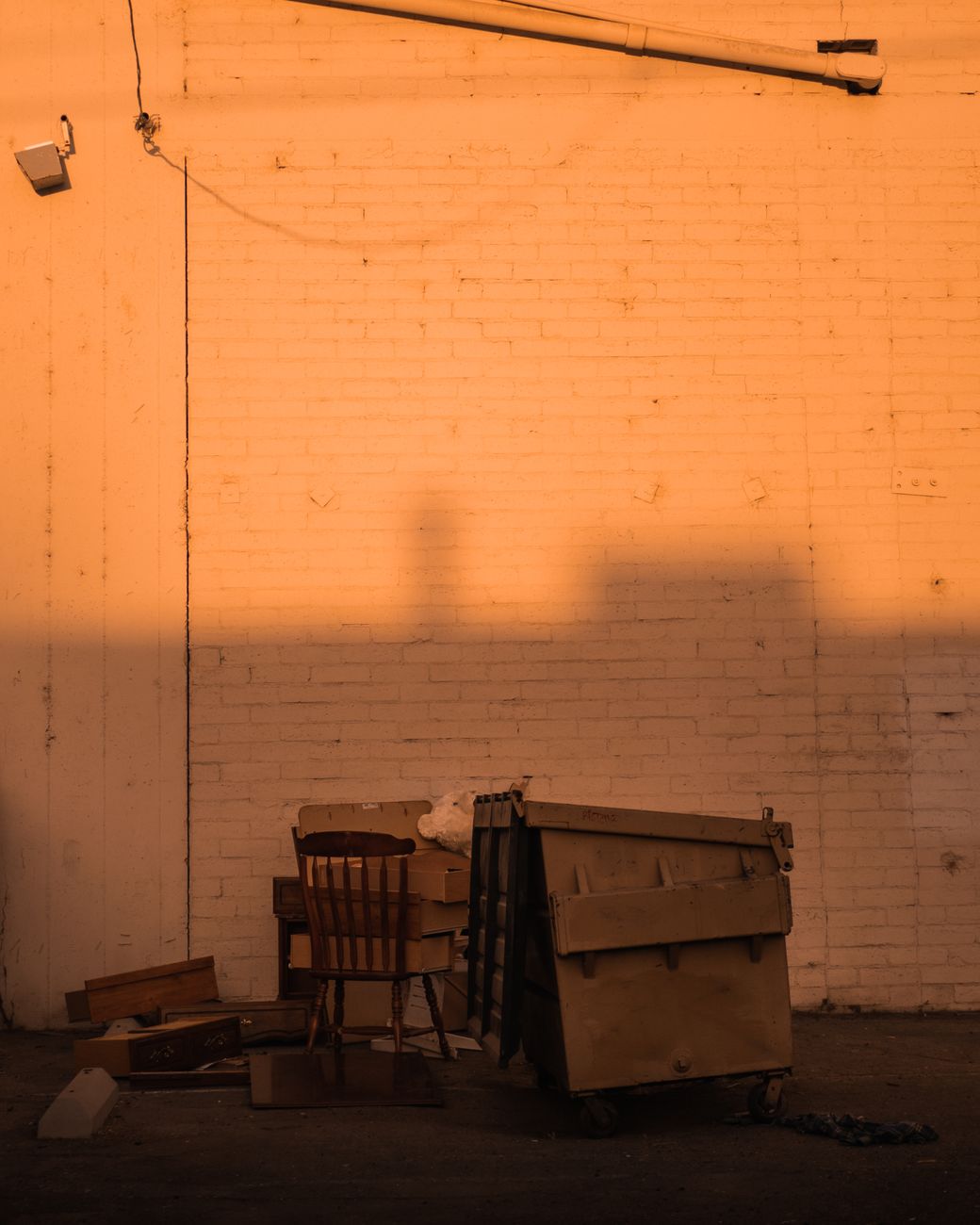
The first morning I learned how Los Angeles moves its trash, the alley behind my friend Rosa’s Craftsman house felt like a movie set: a chorus of hydraulic hisses, the metallic clank of a dumpster lid, and the warm smell of coffee mingling with the distant salt breeze from Santa Monica. A driver in a neon vest called down, ‘Park your car, we need room,’ and for a moment the city’s rhythms — freeways, palm trees, and all — rearranged themselves around a single, squat metal box.
The Morning the Alley Roared
We had promised Rosa’s teenage son that a remodel would mean a new bedroom and, for the adults, a purge of 25 years of accumulated projects: half-finished lamps, cracked tile, and a leaning bookshelf that had survived three moves. I expected boxes and nostalgia; instead we started the day with a truck backing down the alley, the whole block watching. Mr. Delgado from two doors down brought out his folding chair; Mrs. Kim from the corner peered over her fence. There was a civic theater to it, a choreography between neighborhood, machine, and city rules. When the dumpster thudded onto its blocks, Rosa breathed out as if she’d set down a sack of worries.
Setting the Stage: Who Needs a Dumpster and Why
Call it spring cleaning or renovation logistics: dumpsters arrive when ordinary trash can’t handle the scale of the job. In Los Angeles County, homeowners and contractors rely on roll-off dumpsters for remodeling, landscaping, and cleanouts. They come in sizes that are measured in cubic yards — 10, 20, 30, 40 — and choosing the right one can feel like picking a caravan for an expedition across the city. At Rosa’s, the 20-yard box was the Goldilocks fit: big enough for tile and cabinets but small enough for the alley’s narrow turn.
‘You don’t want one too big,’ Rosa said as we filled the first day. ‘The truck can’t turn into this alley, and if they have to crane it in, the price goes up.’ That practical aside became our first lesson: in places like Echo Park, Silver Lake, or the narrower streets of Pasadena and Glendale, logistics shape every choice.
The Tension: Permits, Parking, and the Rules of the Road
As the week unfolded, tension grew in unexpected places. In Beverly Hills and Santa Monica, I learned, the rules feel almost like a script for a play. If a dumpster sits on a public street — even partially — a permit is usually required. The Los Angeles Department of Transportation, municipal parking authorities in Long Beach, and town clerks in Culver City all have their variations. You might need to post temporary ‘no parking’ signs 72 hours ahead; in other areas, special barricades and reflective cones are mandatory.
One afternoon Rosa dialed the rental company. ‘They told me the permit took two days in Inglewood but ten in West Hollywood,’ she complained. The voice on the other end of the line replied, ‘Permits are city-specific; we’ve seen turnaround times change depending on film shoots and festivals.’ That was the second rule: timing is negotiable and often unpredictable in Greater Los Angeles.
The Dance of Trucks and Timetables
Dumpsters bring their own choreography. A roll-off truck arrives early to avoid traffic on the 405 or the 101. Drivers look like urban mariners, steering massive steel boxes into tight berths between stucco walls, palm trees, and parked Subarus. They listen for the hum — the hydraulics warming up — and then they drop metal onto concrete with a familiarity that made me realize how practiced the ritual is.
‘You learn to read the alley,’ the driver told us, wiping his hands on a rag. ‘Is there a low branch? A transformer? Where’s the nearest hydrant? Where do you even drop the truck without blocking the emergency lane?’ He nodded toward the row of houses and added, ‘And you always leave room. For neighbors. For civility.’
That civility shows up in small but important ways: communicating with neighbors in places like Torrance or Carson to avoid blocking recycling day, scheduling pickups to avoid rush-hour delivery windows in Hollywood, and coordinating with property managers in downtown Los Angeles high-rises. The logistics are both practical and social; a misplaced dumpster can create more than inconvenience — it can fray neighborhood relationships.
What I Learned About Sizes, Pricing, and Practical Choices
By day three, Rosa had learned to talk dumpster fluently. She could estimate how many pounds of debris a 20-yard bin would take and wagged a finger at the notion of using a 40-yard box when a 30 would do. Pricing in Greater Los Angeles is as varied as the neighborhoods: a small 10-yard container might run a few hundred dollars for a week, while larger 30-to-40-yard containers climb into the higher hundreds or cross into four-digit territory once disposal fees are included.
There are a few practical tips we picked up that saved us money and time. First, separate materials at the source: wood, metal, concrete, green waste. Many haulers charge less when debris is sorted because recycling facilities accept separated loads and recycling reduces landfill tipping fees. Second, be aware of prohibited items: batteries, fluorescent bulbs, solvents, paints, and electronics often require special handling under California’s hazardous waste and universal waste regulations. Dumping them into a regular roll-off can trigger fines and environmental harm. Third, ask about weight limits. Some companies advertise ‘unlimited’ fills but have strict tonnage caps, after which overage fees kick in.
Recycling and Disposal: What Happens After the Drop?
One afternoon we followed a driver to the San Pedro area to watch the dumpster get emptied. The roar of the port was replaced by the steady hum of conveyor belts and the smell of turned earth. He tipped our load into a sorting area where workers separated metal, concrete, and wood. A pile of old drywall was crushed and carted off, destined either for recycling or a permitted landfill depending on contamination and load type.
‘Los Angeles recycles a lot,’ the supervisor told us. ‘But it’s also complicated. You can’t mix painted wood with clean wood if the paint is lead-based. You can’t dump asbestos — that needs licensed abatement.’ This was the environmental beat: disposing responsibly matters in a county facing landfill capacity challenges and persistent air-quality concerns.
Stories from the Boulevard: From Malibu to Compton
The dumpster became a neighborhood mirror. In Malibu, I watched a landscaper fill a 10-yard box with coastal brush after a small home retrofit, taking care to keep native plants separate. In Long Beach, a contractor working on a coffee shop on 4th Street discussed the need for a 30-yard box due to heavy tile and engineered stone. In Compton, a community cleanup brought volunteers together, and the city coordinated multiple pickups to avoid illegal dumping, which is still an ongoing challenge in parts of the region.
Each scenario taught a different lesson about scale, cost, and community responsibility. The harbor-side operations needed heavy equipment and permits for large, weighty loads. Residential jobs in places like Westchester or San Fernando Valley required sensitivity to parking and noise. In Venice and Hollywood, where construction meets boutique retail, timing around deliveries and film shoots could shift schedules overnight.
Unexpected Moments: Human Stories Around Metal Boxes
The dumpster also became a place for human interaction. One evening, while we were loading a battered dresser, Mrs. Kim offered us iced tea and told us about the chest her father had built in Oaxaca. ‘We keep one or two things,’ she said, ‘and everything else has to go, but it’s never easy.’ Another neighbor, a young contractor in Burbank, stopped by to give advice on reusing old cabinets. ‘Some guys toss everything,’ he said, ‘but we can rehab that wood and sell it. You’d be surprised what people want.’ There was tenderness in throwing things away, a sense of permission to let go after laboring over life for years.
The Final Drop and the Quiet After
On the last day, the truck returned and lifted the dumpster with a ritual clank. The alley, which had hosted a week of activity, settled back into its usual sounds: a dog barking, a jogger calling out ‘Morning!’ and the distant rumble of the 101. Rosa stood on her porch, arms folded as if embracing the new space. ‘It feels like we got a little more air,’ she said, and there was laughter in it — relief and the readiness to begin the next phase of life.
As the container vanished around the corner, the neighborhood felt different, not because the dumpster had been there, but because something communal had taken place. The project had moved from potential chaos to a new order. A battered bookshelf had been replaced; the son’s bedroom would be repainted. The city’s systems, for all their complexity, had worked — permits, pickups, recycling, and local cooperation — and we had learned how to navigate them.
Remember Before You Call: Practical Takeaways
If you’re planning a dumpster in the Greater Los Angeles area, remember these practical steps we learned the hard way and with neighborly help: pick a size that matches the job and the access to your street; check local permit requirements and post no-parking notices if necessary; separate recyclables and hazardous materials; ask about weight limits and overage fees; and coordinate timing with neighbors to avoid blocking emergency access or disrupting local events. And when in doubt, talk to the hauler: experienced drivers often know the quirks of specific neighborhoods, from alley turns in Echo Park to parking restrictions in Santa Monica.
Above all, remember that a dumpster is more than metal and tipping fees. It’s a tool for transition. It helps make room for small beginnings — a repaint, a new bed, a clearer corner of a life rebuilt one nail and tile at a time. When the truck left, it wasn’t just hauling debris; it was carrying away accumulated hesitations and leaving an open space where something new could grow.
On our last night, Rosa stood beneath the string lights she’d rehung and raised a glass. ‘To new rooms,’ she said, and the words echoed between houses that had watched and helped. The alley, now quiet, seemed to hold the glow of that small celebration. The city hummed around us, large and complicated, but in that snapshot it felt like a neighborhood coming together around one strict but generous thing: the ability to make room.