The first time I saw a dumpster make a difference, it wasnu2019t on a construction site or behind a grocery store. It was at a narrow bungalow in Echo Park where a woman named Rosa had decided to turn grief into action. Sheu2019d lost her father and the house still held decades of accumulationu2014old paint cans, a rusted bicycle, yellowed newspapers. A blue dumpster sat in the driveway like a sudden, practical altar, and for three days people from the neighborhood came by, loading memories into a metal mouth and walking away lighter.
Setting the Scene: Streets, Salt Air, and Rumbling Trucks
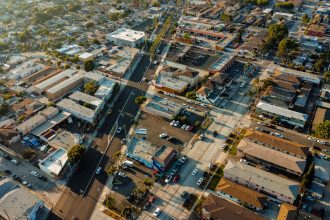
Greater Los Angeles is a city of contrasts: the burnished glass of downtown towers, the cool salt breeze of Santa Monica, the tidy lawns of Beverly Hills, the industrial hum of Long Beach. Somewhere between the palms and the oil rigs, dumpsters rumble through canyons of freeway, down tree-lined Burbank streets, and along alleys in Koreatown. They arrive with a soundtracku2014diesel engines, the clank of chains, men and women calling to each other over the dinu2014and a smell that shifts from ocean-spray to sawdust to the metallic tang of a construction site.
The People Behind the Doors
Rosau2019s story is one of many. Thereu2019s also Marco, a small contractor in Torrance who knows the back routes to every demolition permit office from Culver City to Pasadena. Thereu2019s Dana, who runs a boutique in Silver Lake and rented a 10-yard dumpster when she reoriented her shopu2019s front window display. And then thereu2019s Amir, a waste-hauler who grew up in San Pedro and can tell you the best transfer station for reclaimed lumber and the cheapest window of time to avoid rush hour on the 110.u00a0
On a hot June morning in Inglewood, I watched Amir park a truck behind a block of apartments. He opened the back, and the hydraulic arms sighed like someone stretching awake. “People think we just take things away,” he said, wiping sweat from his brow. “They donu2019t see the sorting. They donu2019t see the surprises inside.” He pulled out a stack of picture frames with foggy photos and a government-issued container of ceramic tiles. “Once you start, you learn the cityu2019s storiesu2014one drive at a time.”
Rising Action: When Things Get Complicated
Not every job is simple. A renovation in West Hollywood meant negotiating narrow streets, limited parking, and a homeowner association that required specific placement and permits. At a Burbank film studio, production set pieces and chemically treated props required special handling. In Long Beach, a beachfront condo renovation needed to be scheduled around peak tourist hours and the smell of salt and sunscreen.u00a0
One autumn afternoon in Pasadena, a tree-trimming job turned tense when the crew discovered an old, oil-stained refrigerator behind a stucco wall. “Thatu2019s hazardous,” warned Dana, the site manager. “We need a different bin and a special haul.” She called the company, then the city line, then the transfer facility. By nightfall, the old fridge had been logged, tagged, and taken to a certified facility where its coolant and components would be disposed of properly.
“People get frustrated,” Amir admitted. “They want the bin, they want it yesterday, and they donu2019t always understand the paperwork. But thereu2019s a reason: safety, neighborhood rules, and the environment. In Los Angeles, whatu2019s in the dumpster often becomes someone elseu2019s problem, so we have to be careful.”
Key Insights Woven into the Story
As the dumpster filled in Echo Park, Rosa and her neighbors began to talk strategy. They learned a few basics on the fly that saved time and moneyu2014and kept the neighborhood clean.
First, size matters. A 10-yard dumpster fits small cleanouts and garage projects; 20-yard and 30-yard bins are better for full-home renovations or larger construction debris. Rosau2019s bungalow needed a 15-yard to handle the merged categories of household items and light construction. Marco prefers to explain sizes with images: “Imagine the bed and the couch; two couches is about a 20-yard, and a whole kitchen demo is a 30.”
Second, permits and placement differ by city. “If youu2019re going to put a dumpster on the curb in Los Angeles, you usually need a permit,” Marco said as he sketched a quick map showing the Bureau of Street Services office. In Santa Monica and Beverly Hills, enforcement can be strict and might require cones or signage for safety. In smaller towns like El Segundo or Torrance, you may need to coordinate with local maintenance departments or HOA boards.
Third, thereu2019s a hierarchy of what stays and what goes. Hazardous materialsu2014paint solvents, batteries, asbestos-containing materials, certain electronicsu2014are often prohibited from regular dumpster loads and require specialized disposal. Many companies will provide a list; others will refuse to pick up a bin contaminated with prohibited items. When Marco found a chemical drum in a Silver Lake renovation, his crew shut down the site until a hazmat team arrived.
Fourth, think weight as much as volume. Riverside bricks or concrete may fill a small bin quickly and push you into an overweight fee. “A lot of people forget that a junked hot tub or a pile of tile works differently than a pile of cardboard,” Amir said, loading the last of a demolitionu2019s rebar into the bin.
Finally, reuse and donation are part of the modern story. At a Hollywood townhouse clear-out, someone noticed an intact lamp and a set of unbroken chairs. “Donu2019t throw that away,” a neighbor called. The chairs went to a local thrift shop in Glendale; the lamp found a new life in a Culver City apartment. Many LA dumpster services coordinate with donation centers or recycling facilities to divert items from the landfill.
Practicalities Amid the Narrative
Scheduling in Los Angeles is an art. If your project sits near Sunset Boulevard, aim for early mornings to avoid the evening crush. For Santa Monica or Manhattan Beach jobs, consider tides and weekend traffic. Ask for a delivery window and whether the company can provide drop-off or just curb placement. If you need placement on city property, confirm who handles the permitu2014your contractor or the renter? These small logistics decide whether your day is spent hauling or waiting.
Loading matters, too. Distribute weight evenly. Break down furniture when possible. Keep walkways clear for neighbors. Cover loose material in coastal zones when wind is expected; a sudden gust can turn a pile of insulation into an airborne nuisance that will draw angry calls from a nearby condominium.
The Turning Point: Community, Responsibility, and Unexpected Gifts
The dumpster at Rosau2019s bungalow became more than a receptacle; it became a gathering point. People swapped stories of the items theyu2019d contributedu2014a piano bench, a stack of war-era letters, a kidu2019s skateboardu2014and in doing so they created a communal ritual of letting go. “Youu2019d be surprised how healing it is,” Rosa told me. “Itu2019s not just trash. Itu2019s the end of a chapter.”
At a community cleanup in Inglewood, volunteers and a local dumpster company coordinated to remove illegal dumping from a block behind a market. Kids from the neighborhood came with gloves and bagged old mattresses and tires. “When people see wheels on a dumpster rolling in, they know someone cares,” said the market owner, Elisa, smiling as she handed a volunteer a bottle of water.
Resolution: When the Last Piece Is Lifted
On the final day in Echo Park, the sun slanted through the eucalyptus and a man in a blue uniform hooked the dumpster to his truck. The neighbors gathered for a moment: some with coffee, some with dust still on their hands. Amir checked the manifest, then the hydraulic arms lifted. With a mechanical groan and the smell of hot metal, the dumpster tilted and, for a second, it looked like the whole block was breathing out.
Rosa hugged a neighbor and offered everyone leftover lemonade. “Thanks,” she said, voice thick. “We got more than furniture out of here.” The street felt wider. The bungalowu2019s porch was suddenly visible again. Across the city, from the pier at Santa Monica to the industrial docks in San Pedro, similar small resolutions were happeningu2014a garage cleared for a new baby, a storefront readied for a grand reopening, a film set stripped for its next scene.
Takeaway: What to Remember and Do
If youu2019re arranging dumpster removal in Greater Los Angeles, remember a few essentials that will save time, money, and headaches: choose the right size; check for permits and placement rules in your city (Los Angeles, Santa Monica, Beverly Hills, Torrance, Burbank, Glendale and others each have nuances); separate hazardous materials and arrange proper disposal; think about weight as well as volume; and consider donation or recycling first.p>
Beyond logistics, remember the human side. A dumpster is not merely a container; itu2019s a tool for transitionu2014for renovation, recovery, and neighborhood care. When you hire a hauler, youu2019re bringing a crew into a story: your homeu2019s next chapter, your streetu2019s clean-up, your businessu2019s fresh start. Listen to them, ask questions, and treat the process as part of the work itself.
As the truck pulled away from Rosau2019s house, the street stayed quiet for the first time in days. The scent of lemon-scented cleaner met the distant salt of the ocean. Somewhere down the line, an old lamp would brighten a kitchen in Glendale; a set of chairs would anchor a conversation in Culver City. In Los Angeles, where everything moves fast and nothing lasts forever, even the small ritual of a dumpster pickup can make a neighborhood feel like itu2019s turning a page. The metal mouth closed, the hydraulics sighed, and the city kept movingu2014one load, one story, one emptied space at a time.