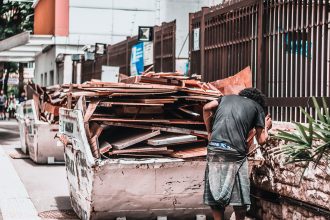
By dawn the Echo Park street felt like a stage set: string lights still winked between the palms, the smell of roasted coffee threaded the cool air, and a battered blue roll-off truck idled with a patient hum. Maria stood on her curb, rubbing the sleep from her eyes, staring at the mountain of old tile, broken cabinets, and a lifetime of clutter that had pooled in the garage. ‘It feels ridiculous to have all this history in my driveway,’ she said, watching Luis — the crew foreman — step down with a measuring tape and a smile that had learned to solve logistics in Southern California.
Setup: Characters and Context
Maria had bought her craftsman in Echo Park to turn the upstairs into a small apartment. The permits were filed, the plumbers were scheduled, and the only remaining obstacle was removing the detritus of 60 years of life. Luis ran a local dumpster removal company that serviced neighborhoods from Hollywood to Torrance, from Glendale to Santa Monica. His truck’s faded logo read ‘Pacific Roll-Offs,’ and it had a reputation for showing up when the city, the homeowner, or the contractor needed muscle and know-how.
Across Greater Los Angeles, dumpster removal isn’t just hauling junk. It is a choreography of permits and delivery windows in narrow Venice alleys, a negotiation with parking enforcement in West Hollywood, and an exercise in environmental law at transfer stations like Sunshine Canyon and Scholl Canyon. For Maria and Luis, that morning would be a lesson in how a simple cleanout in L.A. can touch neighborhoods and rules that feel like different countries.
Rising Action: A Route Through Neighborhoods and Rules
Luis backed the truck into Maria’s drive, tires crunching on gravel. The crew unloaded the ramp with a clank that echoed off the row houses. ‘We can start with a 20-yard and upgrade if we need,’ he said, squinting at the pile. A 20-yard roll-off is a common choice for remodels around downtown Los Angeles and Glendale — big enough for cabinets, drywall, and mid-size appliances but small enough to fit most driveways and narrow streets.
By late morning, the crew had filled half the container. Then Maria remembered the stack of old paint cans in the garage corner. ‘Ah,’ she said, suddenly aware. ‘There are some old enamel cans from my grandfather’s workshop.’ Luis’s expression tightened with the kind of professionalism that comes from one too many costly mistakes. ‘We can’t put those in a regular dumpster,’ he explained. ‘Household paints, solvents, batteries, and some electronics have to be handled separately — hazardous waste laws are strict here.’
As the truck rolled away for a scheduled lift in Burbank, Luis called the Los Angeles Bureau of Sanitation’s website on his phone to confirm disposal options. Meanwhile, Maria drove the old paint to a scheduled hazardous waste drop-off in Pasadena — a 20-minute detour past orange groves and eucalyptus-scented air that made the mundane errand feel unexpectedly cinematic.
Days later, the crew had to navigate a tricky delivery in Santa Monica. The client wanted a dumpster on Ocean Avenue itself while their beachfront condo underwent renovation. The municipal rules were clear: when placing a container on public property, a temporary street use or parking permit is required. Luis picked up a Temporary Street Use Permit from Santa Monica Public Works, paid the fee, and carefully placed cones and signage as the city required. The ocean breeze carried the faint tang of salt, and passersby paused, curious about the sudden industrial punctuation on a pedestrian-friendly promenade.
In Inglewood, where a backyard demo included concrete pavers and heavy rubble, weight limits became the antagonist. Roll-off dumpsters are often quoted by volume (yards), but cities and haulers charge by weight beyond a certain point — typically measured in tons. Concrete can turn a perfectly sized dumpster into an overage nightmare. Luis suggested breaking up the stone and scheduling a separate concrete-only drop so they could avoid a surprise overweight fee that would have doubled the project’s cost.
Key Insights: Practical Knowledge Woven into the Story
Throughout the week, Maria learned the practicalities of dumpster removal in Los Angeles County — not as dry rules, but as survival tools. Here are the insights Luis imparted, delivered in the cadence of someone who’d hauled a thousand loads through city alleyways:
‘Pick the right size first,’ he said, pointing at three open dumpsters: 10-yard, 20-yard, and 30-yard. ’10-yard is for small cleanouts and yard debris. 20-yard is for mid-sized remodels — kitchens, bathrooms. 30-yard is for major renovations or whole-house cleanouts.’ He advised measuring the driveway and mapping where a container could sit without blocking a neighbor’s sightline or the access for emergency vehicles.
‘Permits matter,’ Luis continued. ‘If it stays on private property — your driveway — you usually won’t need a city permit. If it sits on the street or sidewalk, you’ll almost always need a street use or parking permit. The exact department varies: Los Angeles Bureau of Street Services, Santa Monica Public Works, or Long Beach Public Works, for instance. Call your city before scheduling.’ He named each department with the ease of someone who’d dialed them for every borough of L.A.
‘Watch the weight,’ he reminded Maria as they surveyed the day’s haul. ‘Most rentals include a set tonnage. Concrete, soil, and bricks are heavy; wood and general household junk are lighter. We’ll let you know if we think you need a heavier allowance — it’s cheaper to plan up front than pay overage.’ He suggested stacking items efficiently, breaking furniture flat, and loading heavy items toward the bottom.
‘Know what’s banned,’ Luis said, ticking items off like a grocery list: ‘Asbestos, medical waste, compressed gas tanks, tires, and most household hazardous wastes. For those, call your city household hazardous waste program or find a specialized hauler.’ Maria made a mental note — and a real one on her phone — to route old fluorescent bulbs and car batteries to the right facilities.
‘Recycling saves money and the planet,’ he added. ‘Metals, some scrap lumber, and clean concrete often have separate streams. If you can separate a pallet of usable lumber or a pile of copper pipes, you might recoup hauling costs or reduce your landfill fees.’ Luis told the story of a Pasadena client who saved hundreds by segregating metal and donating furniture to a local nonprofit instead of throwing it all away.
Resolution: The Clean Driveway and the City That Keeps Turning
By the time the last load left Maria’s property, the driveway looked almost ceremonial — a clean rectangle of concrete framed by the craftsman’s manicured boxwood and an orange tree heavy with fruit. The crew toasted the end of the job with bottled water and a round of quick jokes; Maria handed them leftover tamales, and everyone lingered a beat under the late-afternoon heat, listening to the distant hum of traffic on the 101 and the occasional gull that made its odd pilgrimage inland.
Across town, Luis’s truck fed materials into different streams: metal to a recycler in Long Beach, clean concrete to a crushing facility in Torrance, and mixed demolition to a transfer station bound for Sunshine Canyon. The company logged weight tickets, sorted invoices by city permit numbers, and filed receipts with the sort of care that keeps neighborhood relationships intact.
Maria walked into her empty garage and ran her hand along the bare studs. The air smelled like citrus and dust — a reminder of a project completed and a neighborhood that keeps reinventing itself. She realized that removing a dumpster is not only about hauling junk away; it’s about making space for life that can begin again in the reclaimed quiet of a clean home.
Takeaway: Remember These Practical Steps
If you find yourself facing a garage full of memories or a contractor who needs a roll-off for a remodel, remember what Maria and Luis learned on the streets from Glendale to Venice:
– Choose the right dumpster size: 10-, 20-, and 30-yard units are common. Measure your space before you book.
– Check permits: If the container sits on public property, secure a temporary street use or parking permit from your city. Contact the local public works or transportation department (Los Angeles Bureau of Street Services, Santa Monica Public Works, Long Beach Public Works) to confirm rules and fees.
– Plan for weight: Ask about included tonnage and overage fees; concrete and soil are heavy.
– Separate hazardous items: Paints, solvents, batteries, tires, and asbestos need special handling and often must go to designated drop-off centers.
– Recycle and donate: Divert metal, wood, and reusable items. Donation options and separate recycling streams can reduce costs.
– Get multiple quotes: Compare pricing, what’s included, lift schedules, and permit assistance.
– Communicate with neighbors: Placement, noise, and access impact the block; a note or quick chat goes a long way.
At twilight, Maria sat on her front steps, watching the city flick between neon and starlight. In the distance, the Santa Monica Pier lights glanced off the ocean like sequins, and the hum of a different roll-off truck — perhaps on its way to another home in Burbank or Inglewood — threaded the air. She felt a small, steady satisfaction: a chaotic chapter cleared, a driveway made neat, and a city that, despite its complexity, provided the routes to make things right again.
Every pile cleared on a Los Angeles street is a little act of transformation, folding the old into the city’s next chapter. And if you listen closely at dusk, you can almost hear the quiet applause of a neighborhood ready for what comes next.