The dumpster arrived at dawn, a dark rectangle against the orange-pink spill of sunrise over the Silver Lake reservoir, and for a moment the street felt like the spine of a small, private city holding its breath. Neighbors stepped out in slippers and coffee cups. A child on a bicycle paused. Maria, who had been staring at the gutted kitchen for weeks, walked up the drive with her hands in her pockets and said, “I never imagined so much would come out of one house.”
Setup: The Characters and the City
Maria lived in a narrow Craftsman in Echo Park with creaky stairs and a backyard fig tree that smelled like summer when it warmed. She’d hired a contractor to take down a wall and rebuild a kitchen that could finally hold a proper table. Antonio was the driver — a soft-spoken man from Burbank who had been loading roll-off dumpsters for a decade. Mr. Chen, who lived across the alley, was the sort who knew when the city sent a notice before anyone else. Together they were about to navigate something that every Angeleno eventually faces: how to remove the old to make room for the new without getting fined, overwhelming the street, or wasting valuable materials.
Rising Action: Permits, Problems, and the Pulse of the Neighborhood
At first it was simple. The contractor estimated a 20-yard dumpster would do. Maria called a local company with a smiling voice on the other end, scheduled the drop-off for Tuesday, and pictured the debris gone like a bad dream. But the universe — and Los Angeles’ tangled web of streets and rules — had other plans.
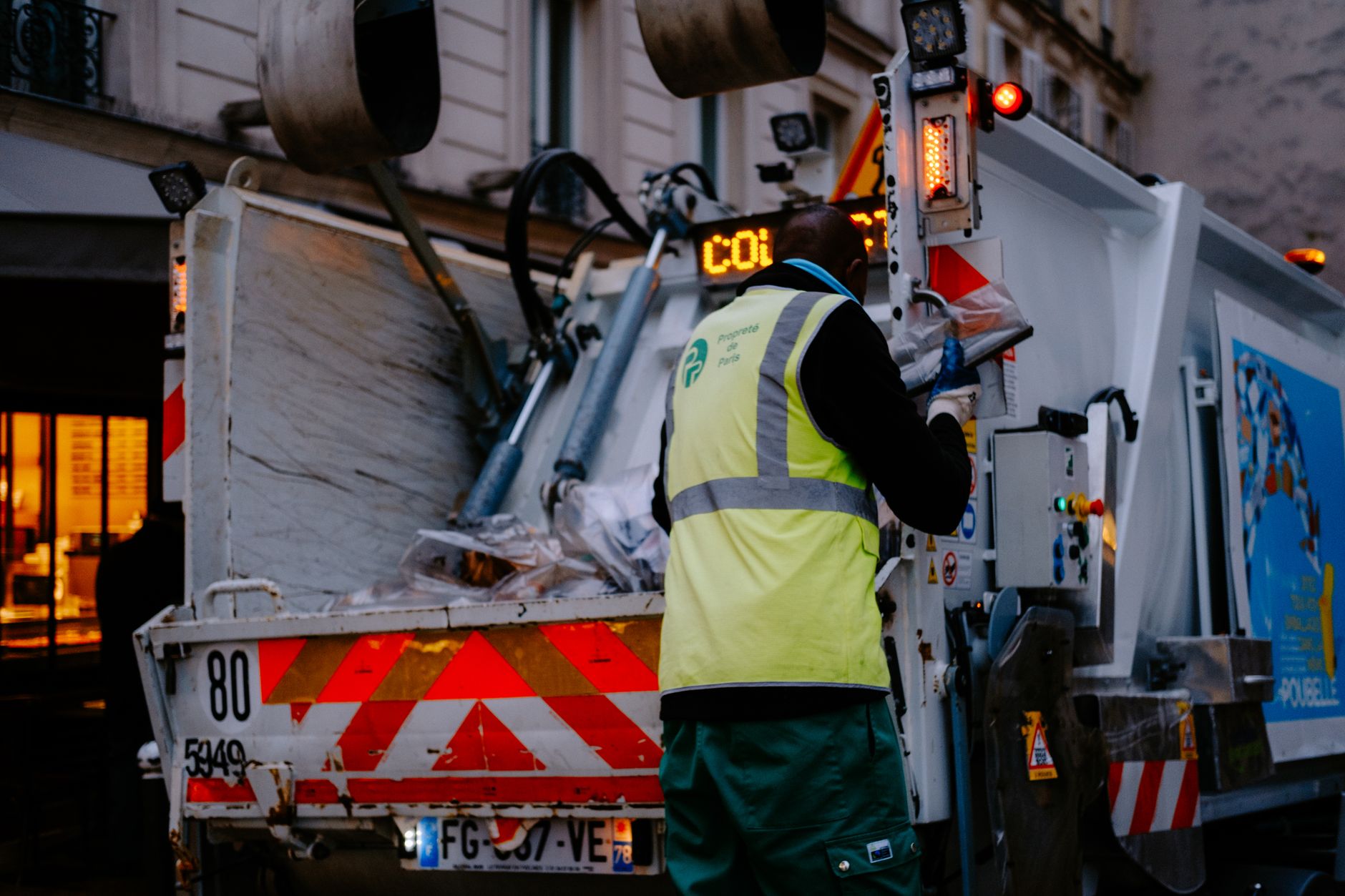
“You know you’ll need a permit if it sits on the street,” Antonio said as he guided the hydraulic arms. “Bureaus change the rules every other season. If you put it in the driveway, protect the concrete. If on the curb, the city wants a temporary parking restriction. And if you get bulky metal or paint cans, that goes different places.”
Maria learned that the Bureau of Street Services (BSS) handles the street permit for temporary parking restrictions and that the Los Angeles Department of Building and Safety might also want to look at the project’s scope. The neighbor’s cat had already investigated the dumpster’s cavern and declared it an unsatisfactory nap spot.
Two days into the job, a heavy rainstorm pushed through from the coast, and the wet weight of soaked drywall made the container feel like a small island. The contractor called: the crew had uncovered a thin strip of plaster behind the wall that looked suspicious — dark flecks like pepper. “Could be asbestos in the compound,” he said on the phone. The word tightened Maria’s chest.
Suddenly the removal wasn’t just about hauling away old cabinets. It was about permits and inspections, about special handling, about finding the right licensed abatement crew to separate hazardous material from recyclable wood and metal. The dumpster, which had at first been a promise of simplicity, became a focal point for safety, compliance, and community tension: Mr. Chen worried about the smell; a parking enforcement officer eyed the temporary signs; a neighbor asked whether useful things could be salvaged.
Key Insights Woven into the Story
As the week unfurled, Antonio turned each decision into a miniature lesson. “Most customers don’t realize there are different sizes: 10, 20, 30, and 40-yard bins are common. For a kitchen gut in a bungalow, 20 yards usually works, but if you’re taking out a roof or large landscape dirt, you’ll need a 30 or 40. And weight matters — concrete and soil hit weight limits fast. If you overload, they’ll charge per ton when it goes to the transfer station.”
He pointed to the city’s skyline: “In places like Santa Monica or Pasadena you can run into stricter coastal or historic-district rules. In Long Beach or Torrance, haulers sometimes have different disposal partners. And if you dump regulated stuff — paint, solvents, electronics, tires — it’s illegal and expensive. For hazardous materials we take them to licensed facilities, and sometimes we call a hauler who specializes in hazardous waste.”
Antonio taught Maria how to read the dumpster like a map. Wood and plaster go in one corner, metals stacked neatly to the side for recycling, doors leaned upright if they’re still salvageable. He wrapped old paint cans with tape so they couldn’t leak and kept an eye out for anything with a PCB sticker or an asbestos warning. He mentioned local options: Goodwill and Habitat for Humanity ReStore accept kitchen fixtures in good condition; the Los Angeles Sanitation Transfer Stations and Sunshine Canyon Landfill handle municipal solid waste subject to weight and material rules.
There was also the human side. “If you can donate or recycle, do it,” Antonio said. “I see stuff people throw that could be someone else’s treasure. It keeps weight down and sometimes the hauler will give you a break. In Hollywood they sometimes have salvage crews. In Venice, folks are very particular about recycling. Every city in the county has a little flavor.”
Maria learned practical tips the way she learned a recipe — by watching and doing. Lay down plywood to protect the driveway from the dumpster’s teeth. Call the city early for a street permit if you expect the bin to occupy parking. Schedule the pick-up for a day when the contractor is done; leaving it longer invites fines and neighborhood grumbling. Photograph the placement and the contents; some municipalities require documentation for permits or disputes.
Scene: A Neighborly Dispute and a Middle-of-the-Night Fix
Midway through, there was a confrontation. A compact car couldn’t get past the dumpster on the narrow street and its driver, late for a shift at a restaurant in Koreatown, knocked on doors. “You guys need to move that or I’ll call it in,” the driver said, breath visible in the cool morning air. Mr. Chen, who’d come over with a thermos of tea, offered a solution: shift the dumpster half a car-space over to a previously empty driveway, a move that required Antonio’s hands to roll the container like a reluctant boulder.
That night, the contractor called again — the tests confirmed trace asbestos in the old plaster compound. A licensed abatement firm from Glendale came at dawn with white suits and respirators. They sealed the work area, placed materials in labeled bags, and coordinated with Antonio to keep those bags separate from general debris. The legal compliance was costly, but the act had a moral rhythm: respect for people’s health, for neighborhoods, and for the city’s long-suffering infrastructure.
Resolution: What We Did with the Leftovers
On the final morning, with the sun low over the hills, the dumpster looked smaller than it had on day one. Maria and the contractor walked the driveway, checking for nails and stray screws. Antonio’s team had sorted metal for the recycler in Long Beach, bundled lumber for a community wood reuse program in South Gate, and sent hazardous bags to a licensed facility. The city inspector came by, nodded at the paperwork and permits, and stamped a little check that felt like permission to breathe.
“You’d be surprised how often people don’t know about donation routes,” Antonio said as he secured the tarp. “In Pasadena there’s a ReStore that’s always happy to take usable fixtures. In Santa Monica the rules about curb placement are tighter, but they also have robust recycling programs. The more you separate, the better it is for everyone — and sometimes cheaper.”
Neighbors who’d been skeptical came over, offering pizza and an understanding that felt more valuable than any permit. Maria gave away a gently used island countertop to a young couple moving into a small bungalow in Highland Park. A set of old but functional cabinet doors found a second life on a Craigslist post and ended up in Venice, where an artist intended to upcycle them into a coffee bar.
Takeaway: Practical Reminders Woven with the Morning Light
When the truck pulled away, leaving the street clear and the contractor’s crew beginning the final framing, Maria stood under the fig tree and realized the house felt different already. It wasn’t just that there was more space; it was the ritual of clearing. The removal had been a choreography of city rules, neighborhood negotiation, technical decisions, and small acts of civic kindness.
Remember the practical bits: choose the right dumpster size for your project (10-40 yards), understand weight limits and tipping fees, protect driveways with plywood, secure the right permits from the Bureau of Street Services for any curb placement, separate hazardous materials and contact licensed abatement when needed, and consider donation or recycling first. Call your hauler early, schedule pick-up promptly, and document placements and permits. If in doubt, ask — from Long Beach to Pasadena, different municipalities have slightly different rules and partner facilities.
More than practicalities, though, the story leaves a small, bright image: neighbors exchanging slices of pizza while the fig tree dropped a few sticky fruit onto the sidewalk, the contractor laughing at a memory, Antonio wiping his hands and saying, “You did good here,” and Maria turning the key to the gutted kitchen like a small, final bow. The dumpster, the permit papers, the plastic bags of special waste — they were all part of the city’s long, complicated conversation about how we make space for new things without forgetting what we owe our streets and each other.
As the sunset poured down Sunset Boulevard, the emptied curb felt like a stage cleared for the next act. In a city where every square foot matters and every neighbor is part of a shared, porous life, the act of removal had become an act of belonging — messy, regulated, and ultimately, quietly hopeful.