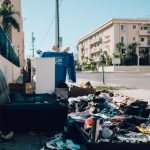
At 6:15 a.m., before the city fully woke and the freeway hum turned into its usual roar, a rumble rolled down Maple Avenue in Pasadena—a low, mechanical heartbeat followed by the glint of steel. Maria opened her curtains and watched a bright orange roll-off dumpster settle into the driveway like an oversized, impatient guest. The air smelled faintly of eucalyptus and coffee; somewhere down the street, a radio sputtered a morning show. She felt a pinch of panic and an odd surge of relief all at once.
Setup: Who’s Moving What and Why
Maria’s house—an old craftsman with creaky stairs and a garden that had outlived three homeowners—had finally stopped pretending it could survive without a new kitchen. For months she had stacked boxes of tiles in the garage, held pots of paint and piles of old cabinets like talismans against decay. The contractor, a lean man named Luis from Torrance with a sun-weathered baseball cap and a laugh that made clients relax, had told her: “Bring in a twenty-yard dumpster, and we’ll clear it out in two weeks.”
Across town in Venice, Jasmine, head of a small nonprofit that organizes beach cleanups, was arranging a crew to haul away driftwood, broken umbrellas, and the occasional abandoned cooler. In Inglewood, a landlord negotiated a tight alley with a delivery driver while thinking about permits. In Santa Monica, a young filmmaker scheduled a one-day drop to clear an old set. The cast of characters was as varied as Greater Los Angeles itself—homeowners, contractors, city inspectors, volunteers—each with a story wrapped around the simple act of removing what’s no longer wanted.
Rising Action: Trucks, Permits, and the Small Dramas of Disposal
The first day of demo felt like a small revolution. Luis’s crew started by stripping the sink: water sputtered, pipes clattered, ceramic fragments pinged into the dumpster. “Careful with the ceramic!” Luis called, voice muffled beneath the afternoon heat. The clatter turned to rhythm—saws, hammers, the thud of plywood—and the dumpster filled in layers of color and history: faded linoleum, a box of mismatched cabinet knobs, a stack of catalogs from the 90s.
But not every scene played out smoothly. On a Tuesday morning, Maria received a crisp email from the City of Los Angeles: if the dumpster was going to sit on the street rather than entirely on her property, a permit would be required. She felt a cold little spike of frustration. “Didn’t Luis say he’d handle the permit?” she asked, flipping through the contract. Luis, who had made a career of navigating driveways and alleys from Burbank to Carson, sat back and rubbed his temples. “I usually do,” he said, “but the city’s rules change depending on the block—Santa Monica and Malibu might be more strict about beachfront access, and some neighborhoods like Hollywood have extra HOA rules. I’ll call it in.”
Conversations about access and timing became a choreography. Trucks needed space to back up; crews needed room to work; neighbors needed parking. There were afternoons when a driver in Long Beach would call from the alley, grudgingly telling the crew there was a low power line snagging their path, or when a narrow Calle in Glendale forced a smaller roll-off unit. The city inspector who stopped by near sunset in Pasadena made a quick, friendly note about curbside placement and weight limits. “We just want to keep the street moving,” she said, writing with a biro that clicked like a metronome.
Key Insights Woven into the Story
Between the clatter of demo and the soft hum of the compressor, there were lessons that Maria, Luis, and Jasmine learned the hard way—and then shared with neighbors over lemonade. Practical rules, revealed in ordinary conversation, often mattered more than the fine print.
Size matters: “You don’t want to order a forty-yard if you’re just gutting a bathroom,” Luis told Maria as he traced the air with his hands. “Sizes run from ten to forty yards. Ten-yard is great for small remodels, twenty for kitchens, and thirty to forty for whole-house cleanouts.” He mimed the footprint with exaggerated gestures, making Maria laugh and relax.
Placement and permits: In Los Angeles, placement determines paperwork. If a dumpster sits on private property—driveway, side yard—no city permit is usually needed. But if it touches the public right-of-way, whether the curb or the street, many cities across the Greater LA area often require a permit: Los Angeles, Santa Monica, Long Beach, and Pasadena all have variations on this rule. Permit fees, temporary parking signs, and time limits can vary block by block. The city inspector’s list read like a short poem: “Permit, reflectors, no overnight blocking of bus stops, keep sidewalk clear.”
Weight and cost: The smell of exhaust and the whisper of contracts accompanied discussions about pricing. “It’s not just the size,” Luis explained while wiping his hands on a grease-streaked rag. “It’s also how heavy the stuff is—concrete, tiles, dirt—those hit the scales and add to the bill.” Companies quote rental duration, size, and a weight allowance; exceeding that allowance can trigger additional weight charges.
What you can and cannot toss: Maria learned to separate recyclable metal and appliances, set aside drywall in a stack, and make a pile for anything that might belong to a hazardous category—old paint cans, fluorescent bulbs, solvents. Ramirez, a recycler in the East LA transfer station, was blunt in his advice: “Separate the metals, the e-waste, and the wood. It saves you money, and we can recycle more.” Many Los Angeles transfer stations and facilities accept items differently: some take appliances for a small fee, others require appointments for large loads.
Donation and reuse: When Luis pulled a perfectly good sink from under the rubble, Maria thought of its potential second life. “Call ReStore,” Luis suggested. “Habitat for Humanity’s ReStore in Pasadena or good ol’ Salvation Army in Long Beach will pick up donations sometimes for free.” Donating rather than dumping transformed the emotional landscape of the cleanup: what was once trash became the seed of someone else’s project.
Resolution: A House Cleared, A Street Settled
Two weeks later, the dumpster was nearly brimming. A final push at dawn featured more laughter than sweat; the crew moved like a well-oiled machine. Maria stood on her porch, hands tucked into her pocket, and watched the men lift the last slab of counter and slide it into the bin. The clanging faded. The driver climbed into the cab of a truck, a machine whose size seemed to compress the day into a single mechanical sigh.
When the roll-off left, the driveway looked larger somehow—a stage uncluttered, a garden relieved of shadow. Neighbors wandered by, complimenting the new porch light, commenting on the smell of fresh paint. Jasmine’s volunteers drove down from Venice, picked up a stray set of folding chairs that had been abandoned on the curb, and made them a donation to a shelter in Culver City.
For Maria, the final payoff wasn’t just a cleaner property; it was the echo of community. Luis handed her a small, handwritten invoice and shrugged. “Make sure to call about donation pickups next time,” he said. “You’d be surprised what people take.” She watched him drive away, the truck’s tail lights dotting the street like a slow-moving constellation.
Takeaway
If there’s one thing Greater Los Angeles taught Maria, it’s this: dumpster removal is as much logistics and local rules as it is muscle and trucks. Know the sizes and order appropriately; check whether you need a permit from the city—Los Angeles, Santa Monica, Long Beach, Pasadena, Glendale, and others all have their own nuances; separate recyclables and hazardous items; consider donation or salvage before you toss; and book a reliable company that understands alleyways, narrow West Hollywood streets, beachfront restrictions in Malibu, and the idiosyncrasies of the San Fernando Valley.
Practical steps to remember: choose the correct dumpster size, ask about weight limits and what counts as additional weight, confirm whether the unit will be placed on private property or the street (and obtain necessary permits), separate recyclables and hazardous waste, and schedule pickups to avoid prolonged curbside blocking. Don’t forget to ask your provider about same-day or expedited services—many local haulers in Torrance, Gardena, Carson, and Downey offer them—and to call transfer stations or donation centers like ReStore for potential pickups.
Most of all, remember the human layer: the sanitation worker who waves as they pass; the neighbor who shares a shared driveway; the nonprofit volunteer turning debris into opportunity; and the small crews who navigate LA’s streets with practiced care. The dumpster is not just a container—it’s an axis around which small, ordinary communities pivot, making room for the next act.
When Maria turned the key in her new kitchen that first night, the lights glowed clean and warm. Outside, the stars above Los Angeles seemed slightly brighter, as if the city itself had exhaled. Somewhere down the block, a palm tree silhouette shivered in the breeze. The day had moved from old to new in the ordinary, gritty, sun-streaked way that only Los Angeles knows—one dumpster, one permit, and a handful of generous hands at a time.