The first morning the dumpster arrived on Sunset Boulevard, the whole block smelled like a mix of sawdust, citrus from a neighbor’s overflowing potted orange tree, and the faint diesel tang that seems to follow anything with wheels in Greater Los Angeles. Maria stood on her front stoop in Pasadena, coffee cooling in hand, watching two burly men in bright vests navigate a 20-yard roll-off between a vintage Chevy Impala and a cluster of palm trees. It looked messy, loud, and strangely final — like a punctuation mark for months of decisions, sweat, and dust.
Setup: Renovations, Rules, and a Neighborhood of Characters
Maria had lived in Pasadena for a decade, and this was the year she finally gutted the upstairs to make room for a sunlit studio. Her contractor, Jamal from Glendale, had promised efficiency; her neighbor, Mrs. Ortega, had promised complaints about noise. Somewhere in the middle was Tony, a dispatcher from a small roll-off company that served Burbank, Culver City, and large swathes of Los Angeles. Tony had called the day before: ‘I can get you a dumpster tomorrow, but I need to know if you’ll put it on private driveway or the street. If it’s the street, you’ll probably need a permit in the City of Los Angeles. Pasadena’s a different beast.’ He sounded practical, the kind of man who had seen every kind of driveway and every kind of DIY disaster.
Across the city in Santa Monica, a different dumpster story was unfolding. A volunteer crew was filling a smaller bin with driftwood, old beach chairs, and soggy surfboard foam after a community cleanup. In Long Beach, a commercial contractor was juggling multiple permits to stage a 40-yard container near the Port for a hotel remodel. The scale changed from neighborhood to harbor, but the bones of the story were the same: debris, decisions, and deadlines.
Rising Action: Narrow Streets and Bigger Problems
On day two, the tension rose. A delivery truck couldn’t get past the dumpster early in the morning. Mrs. Ortega banged on Maria’s door at 7 a.m. ‘You can’t block the street,’ she said. ‘People are late for work.’ Jamal explained, ‘We ordered the biggest bin to keep costs down by hauling once, but the alley is too tight. We need a different solution.’ They were racing against the clock: the drywallers were coming, the upstairs would be gutted, and the pile of waste was stacking up like a small mountain.
Maria remembered a tip she had read on a neighborhood forum about front-load containers and tandem pickups for narrow LA lanes like in Echo Park or Silver Lake. She called Tony. ‘Can you switch it to two 10-yard rolls that fit in my driveway?’ she asked. He paused, then said, ‘Yes, but you’ll pay a little more for two drops. I can also pull the permit for you in West Hollywood or handle the delivery in Koreatown if it gets tight. And watch out for hazardous stuff — no paint cans or batteries in those bins.’ The word hazardous felt heavy in Maria’s mouth. She pictured the old cans of paint she had stashed in the garage since 2009.
Key Insights Woven Through the Story
As the crews worked, little lessons emerged like markers along a trail. Dust from drywall had a way of finding everything — the laundry in the dryer, the kids’ toys under the couch, even the lemon-scented dish soap under the sink. Jamal taught Maria to keep a wet tarp and a broom handy to minimize dust. Tony explained the different dumpster types: ’10 and 15 yarders fit most small renovations and yard cleanups; 20 and 30 are the workhorses for full house remodels; 40-yarders are for commercial jobs or major demolition,’ he said. ‘Roll-offs are ideal for construction debris — wood, drywall, metal, concrete. But we can’t take hazardous materials, electronics with batteries, or tires in the same bin. Those have to go to proper recycling or hazmat drop-offs.’ His voice was calm, methodical — the sound of someone who knew municipal schedules and landfill hours better than the back of his own hand.
They started keeping two piles: one for construction and demolition (C&D) debris, and one for items that could be reused. Maria took an old dresser to a donation center in Torrance and arranged with a Santa Monica thrift to pick up some gently used chairs. ‘Save what you can,’ Jamal said, ‘The City of Los Angeles, Long Beach, and many surrounding cities offer recycling programs. You might save on disposal fees and feel better about it.’ Another insight was weight: concrete and dirt can balloon the load weight and trigger overweight fees. The crew measured and estimated, showing Maria how a seemingly small pile of tile could cost more to haul than a ton of nails.
Scene: The Alley, the Smell, and a Neighbor’s Reconciliation
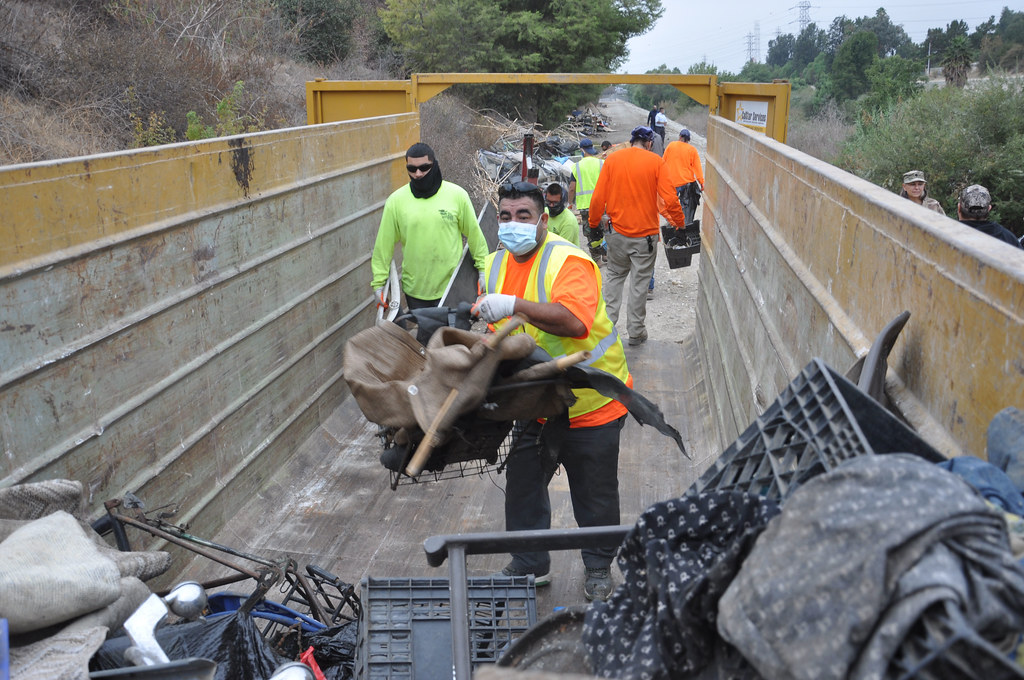
One afternoon, the sun slanted low and cast long shadows across the alley. The dumpster sat like an island; the sound of metal clanking and a radio playing classic rock mixed with distant freeway hum. Mrs. Ortega, who had been the most vocal about the street, walked over with two iced teas. ‘I’m sorry I jumped the gun,’ she said. ‘Your crew’s been respectful. And that tarp idea — good thinking.’ Maria handed her a cold tea. They stood on the cracked sidewalk, watching a pair of workers lift a battered armchair into the bin.
‘It’s funny,’ Mrs. Ortega said, ‘when I was young in Boyle Heights, we’d toss stuff and no one thought about where it went. Now it’s different. We want our kids to have clean beaches in Santa Monica and parks in Glendale.’ The observation surfaced a connection between the messy present and the cleaner future, folding personal nostalgia into civic responsibility.
Logistics: Permits, Pricing, and Hidden Costs
Throughout the project Maria learned how local rules could feel like a maze. Los Angeles requires different permits based on placement and duration, while cities like Burbank or Inglewood have their own rules. If the dumpster sits on the street, a street-use permit is often necessary; if it’s on private driveways, usually no permit is needed. Tony advised, ‘Always ask if taxes, overage fees, and permits are included. And check if the company handles permit applications — that’ll save you a headache.’ He suggested getting estimates by the cubic yard and by weight. Typical rental durations ranged from three days to two weeks, with extensions costing extra. For large jobs, arranging a roll-off company that recycles — especially for wood and metal — cut both disposal costs and environmental impact.
They discovered another angle: timing. Deliveries before 9 a.m. often avoid traffic on Sunset and Lincoln Boulevard. Weekends could be cheaper, but in Venice and Malibu, beachfront cleanups often clogged streets, so timing mattered down to the hour. The crew in Long Beach coordinated around Port Authority schedules, where security and lane closures could add hours to any job.
Resolution: The Dumpster Leaves, Leaving Something Behind
By the last day, the dumpster was half-empty, the remainder hauled off in two neat trips to a transfer station in Torrance that specialized in separating recyclables. Maria watched as the truck lifted the bin, the metal clinking, the sun glinting off the cab like a coin. It was an ordinary motion, but felt monumental. Jamal slapped the truck’s bumper and said, ‘Alright, another job done right.’ Maria felt tired and elated in the same breath. Her house looked more like a blank canvas than a war zone.
Across the region, the Santa Monica cleanup bin had already been sorted: a school took some of the salvaged wood for a project, and volunteers recycled the metal. In Long Beach and Torrance, crews had diverted major volumes from landfills by partnering with recycling facilities. The sound of the dumpster rolling away was not an ending so much as a step toward transformation.
Takeaway: What to Remember Before You Rent
Renting a dumpster in the Greater Los Angeles Area is a small logistical opera: permits, placement, size, schedules, and the constant California sunlight casting everything in high contrast. Remember these practical notes tucked into Maria’s story:
- Choose the right size: 10-15 yards for small remodels and yard waste; 20-30 for whole house projects; 40 yards for larger demolitions.
- Check permits early: street placement often requires city permits; driveway placement usually does not.
- Know prohibited items: paint, solvents, batteries, tires, and certain electronics usually need special disposal.
- Separate recyclables and donations: reduce landfill fees and help local charities in Inglewood, Torrance, or Malibu.
- Watch weight limits: heavy materials like concrete can increase costs quickly.
- Plan around traffic and access: schedule deliveries early in the day for busy corridors like Sunset, Lincoln, and Pacific Coast Highway.
- Ask your provider about recycling partnerships and permit handling to save time and money.
When the sun finally dropped behind the hills and the skyline lit with the pink-forged glow that only a Los Angeles evening can produce, Maria stood on her porch with the last piece of trash tied and ready for the next pick-up. The neighborhood hummed — a mix of distant sirens, the rumble of a bus on Colorado Boulevard, the faint thump of bass from a car in Hollywood. The dumpster had taken the old and left the future: a clean frame, new studs, and the unmistakable feeling of making space. She imagined visitors in years to come sitting on the deck, looking out toward the San Gabriel foothills and talking about lazy afternoons, not the dust and headaches of renovation.
Somewhere between Glendale’s garages and Santa Monica’s sands, the city kept moving: dumpsters came and went, but thoughtful removal—where items are sorted, reused, and recycled—left a quieter, gentler imprint on the neighborhoods. Tony drove back to the depot, Jamal went to pick up new drywall, and Mrs. Ortega watered her orange tree. The street smelled faintly of citrus and the last of the sawdust, and Maria closed the door with a small, satisfied smile. The dumpster was gone, but the work of rebuilding had only just begun.
In the end, the story of that container on Sunset Boulevard wasn’t about garbage; it was about choices: where to place a bin, how to sort a pile, whom to call, and what to save. It was a local, tangible way to shape the city we live in, block by block, sunset by sunset.