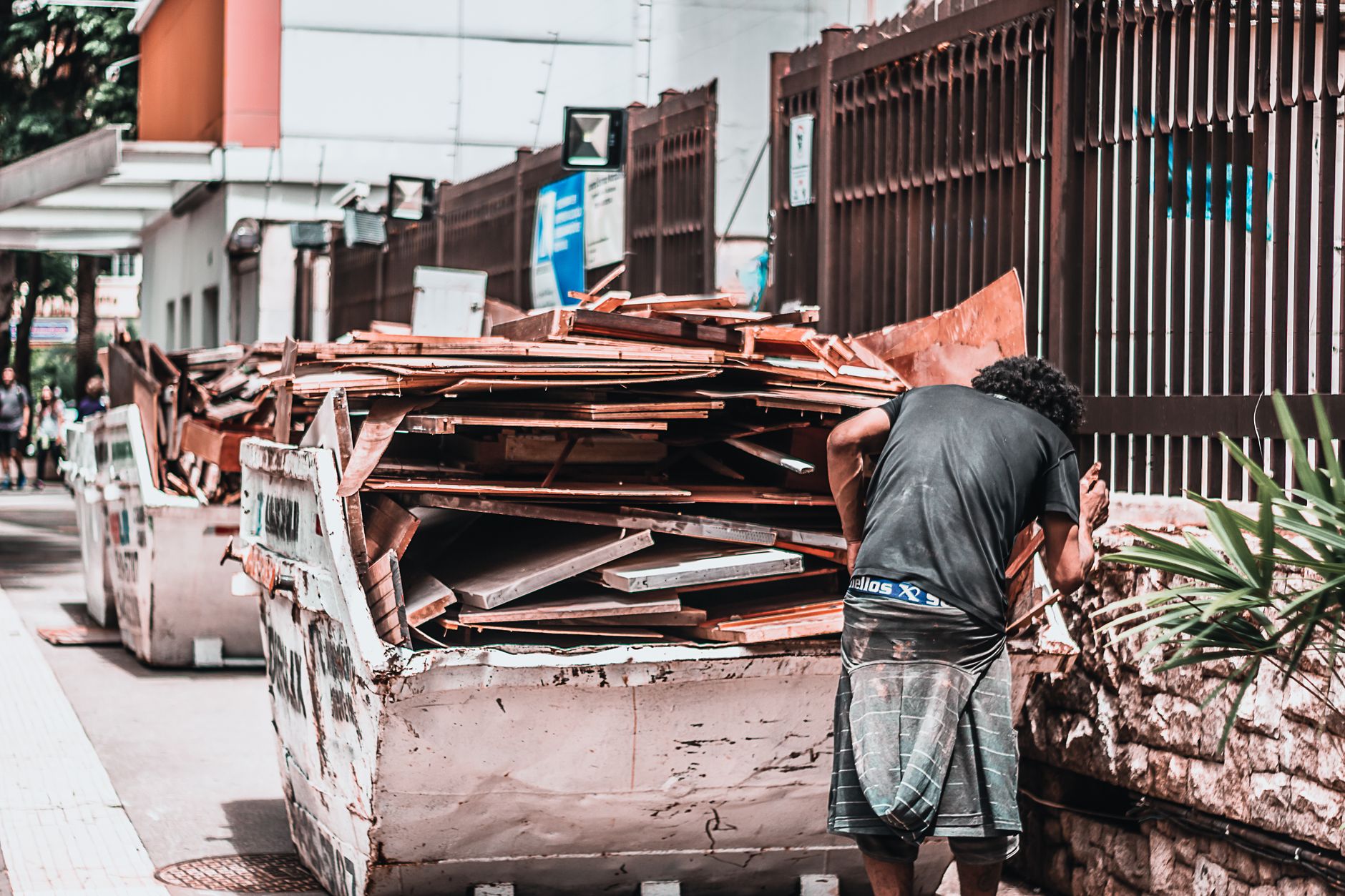
The first time Maria saw the heap in her Echo Park backyard, she thought a small earthquake had decided to swallow half her garage. Old plywood leaned like sunburned ribs; a tangle of rusted fencing and a collapsed bookshelf lay in a mound that smelled faintly of sawdust, damp soil, and yesterday’s rain. She stood at the gate, hands on her hips, and asked aloud, ‘How do you even begin to get rid of this?’ That question set a week of small adventures into motion — phone calls, permits, the rumble of diesel, and the slow, satisfying clank of order returning to a corner of Los Angeles.
Setting the Scene: The City, the House, the Problem
Echo Park in late spring felt like a film set: jacaranda blooms dusting sidewalks, the LA River glinting a few blocks away, and the hum of distant freeway traffic. Maria had bought the old Craftsman with a vision — light, plants, a studio — but repairs and deferred cleanouts from previous owners had left her with layers of stuff and an emptiness that wasn’t just physical. She called Jamal, a contractor friend in Silver Lake, who listened on the phone and said, ‘Bring me a photo. We’ll be in Culver by noon.’
Jamal was pragmatic. ‘You need a roll-off,’ he said when he saw the pile: ‘a 20-yard will do, unless there’s a lot of concrete or dirt — then you might need bigger or more trips.’ His voice had the rhythm of someone who’s navigated Los Angeles alleys, city codes, and the calculus of moving lumps of waste without paying too much.
The Call: Learning the Rules of the Road
‘Do I need a permit?’ Maria asked over coffee. The question meant more than a stack of forms — in LA, it meant time, fees, parking standoffs, and occasionally a polite talk with a Code Enforcement officer. Jamal explained the dance: city permit for a dumpster on the street, insurance and hauling licenses for the company, special handling for hazardous items. ‘In Pasadena, they can be strict about where you put a container. Santa Monica has its own recycling rules,’ he said. ‘Long Beach will be different again if you’re near a commercial zone.’
They made a list: lumber, drywall, old shingles, a few rusting tools, a mattress, boxes of attic detritus — and one heavy, suspiciously stained bucket. ‘That might be hazardous,’ Jamal said, squinting. ‘Call the hauler and ask. Better yet, email a photo.’ And so they did what Angelenos do: they texted, photographed, and scheduled.
The Arrival: A Truck, Two Men, and a City Symphony
On a bright Wednesday, a roll-off truck from a local hauler in Inglewood rumbled into Maria’s street like a ship docking. The driver, Luis, stepped down with a weathered cap and a grin. He wore a neon vest that caught the sun, and dust clung to the cuffs of his gloves. ‘Morning, Maria. Jamal called. You ready?’ His voice had the calm inevitability of someone used to turning chaos into cargo.
The machine exhaled hydraulics and metal. Neighbors craned over fences. A kid on a skateboard paused; a dog barked. Luis and a colleague named Rosa unfolded a ramp, checked the permit — the green LADOT sticker flapped slightly in the breeze — and began the choreography of loading. Wood thudded, boxes sighed as they collapsed, and the metallic ring of a reclaimed faucet punctuated the air. It smelled of diesel and fresh-cut wood, a scent that would come to mean ‘progress’ for Maria.
‘Keep the drywall separate if you can,’ Rosa instructed, patting a stack thoughtfully. ‘If it’s clean, we can recycle. Wet or moldy and it becomes a disposal nightmare.’ Her hands moved with the economy of someone who had loaded hundreds of drives. Jamal helped, bending, hoisting. Maria handed over things she hadn’t touched in years. Each item seemed to weigh less as it became part of the load.
Rising Action: Complications in Concrete and Code
Just as they were nearing the end, Luis held up the stained bucket. ‘This could be oil-based paint or something worse,’ he said. ‘We don’t take hazardous.’ Jamal frowned. ‘I thought it was just roofing tar.’ Maria’s stomach tightened; there was the real possibility of a stop sign — the discovery of hazardous material can delay everything, trigger extra fees, or require a specialist who hates traffic as much as the rest of Los Angeles does.
‘We have to call it in,’ Rosa said, pulling out her phone. ‘If it’s hazardous, you can’t mix it with regular debris. It’s a liability.’ She dialed a number, and the voice on the line — an environmental specialist in Burbank — asked a few pointed questions, then scheduled a pick-up for the item. ‘That’s two days extra,’ he told them, ‘but better than a fine.’ The tension eased like steam lifting from a skillet.
Traffic from the 101 whined in the distance. A neighbor from Silver Lake wandered over with a folding chair, watching. ‘You know, my landlord in Westwood had problems when they overloaded a street container and the city ticketed them for obstructing the sidewalk,’ he said. Maria realized this was more than a clean-out; it was navigating a municipal choreography that required permits, knowledge, and timing.
Key Insights: What a Dumpster Taught Us About Waste in LA
As they worked, Luis and Rosa narrated lessons: the city is strict about what goes into roll-offs, and different neighborhoods have different expectations and hazards. ‘Construction debris is one thing,’ Luis said, wiping his hands on his jeans. ‘Green waste goes to a different yard. Mattresses — most haulers charge extra, but some take them for recycling. Electronics need e-waste processing. And never mix asbestos or lead-based paint without a certified abatement crew.’ He spoke with the authority of someone who’s seen an LA alleyway of mistakes.
They explained weight limits — a 20-yard roll-off might carry 2–3 tons, but that changes with concrete, soil, or heavy tile. The city charges by weight on disposal in many cases, and haul companies factor this into quotes. ‘Expect surge pricing during construction booms or when a neighborhood is flushing out post-sale,’ Rosa said. ‘If you’re in Hollywood during a filming season, forget about cheap rates — there’s demand everywhere.’
Jamal added practical details: schedule during weekday mornings to avoid rush-hour delays, clear a path for the truck (measure your driveway and curb cut), and photograph anything suspicious before loading. They talked about donating salvageable items: Habitat for Humanity ReStore in Burbank, Goodwill branches across the Valley, and local groups in Long Beach that accept furniture. ‘If it’s in decent shape, don’t throw it away,’ Jamal said. ‘Call donation pickups first. You’ll sleep better and get a tax receipt.’ Maria felt a small pulse of pride at the thought of old doors getting new life in another home.
Practical How-Tos Woven Into the Story
Between lifts, Rosa scribbled a list on a scrap of cardboard cooperatively with Maria: permits (LADOT for on-street placement), what not to toss (batteries, tires, oils, solvents, propane tanks, medical waste), the need for a hazardous materials pickup, and the tip to separate yard waste from construction debris. ‘If you’re in Inglewood near a busy corner, you’ll also want to tarp the load,’ she said, pointing to a threadbare blue canvas. ‘City cops love to cite unsecured loads that spill onto streets.’ Their voices were matter-of-fact, but the advice felt like a map through a city that seemed friendly and bureaucratic in equal measure.
They also discussed costs candidly. ‘A 10-yard might cost a few hundred dollars for a short rental, but with heavy materials and distance to the landfill, it can climb quick. Ask about weight overages and extra fees for mattress or appliance pickups,’ Jamal advised. Everything had layers — flat rates, variable fees, city tickets. The only predictable thing was Murphy.
The Resolution: Order Restored, Lessons Learned
By late afternoon, the dumpster sat half-full under a sky that burned like spilled orange paint. The big pieces were gone; the bucket was scheduled for separate handling. Maria walked the property with Jamal and Luis, hands in her pockets, feeling the small relief of a room reclaimed. ‘It already looks like a different house,’ Jamal said, and his smile was worth the entire day’s bustle. Her neighbor clapped from over the fence; a child rode past on a scooter, staring at the big metal box like a new playground prop.
‘Thanks,’ Maria told Luis as he clipped the tarp and checked his manifest. ‘You saved me a lot of headache.’ He shrugged. ‘We just move what needs moving. You did the hard part by deciding to do it.’ It felt like a small ceremony — the kind that closes one chapter of a house and opens another.
What to Remember (and Do) After the Truck Leaves
As dusk fell and maria lit a candle in the cleared studio, she reviewed the list Rosa had left: follow up on hazardous pickup, call donation centers about a usable door and a pair of vintage chairs, measure the space for a new workbench, and store the permit in her files in case she needed it for resale. The sound of the freeway softened into the background; her home smelled of lemon cleaner and possibility.
The takeaway was simple and practical: in Greater Los Angeles, dumpster removal is as much about navigating city rules, neighborhood quirks, and recycling streams as it is about lifting heavy objects. Call reputable haulers, ask about licenses and insurance, photograph items of concern, separate recyclable materials, and plan for extra time and cost when there is hazardous waste or unusual bulk. Use donation channels when possible; they reduce landfill load and help neighbors. And when in doubt, ask — for a permit, for a specialist, for advice. The city is full of resources if you know where to look.
Maria stood by the window that night and watched the street light blink on. The dumpster’s silhouette was now a dark rectangle at the curb, waiting for morning and the next trip. It looked less like an object and more like a symbol: the messy middle of making a home, the necessary work between buying and building the life she imagined. She poured herself a small glass of wine and imagined the studio filled with light. Nearby, across the city in places like Westwood, Burbank, and Long Beach, other households were having similar reckonings — cleaning out, renovating, choosing to let go.
In the end, the lesson the day taught Maria was not just logistical. It was human. There is a tenderness in clearing space — an act that can bring neighbors together, involve a dozen small decisions, and transform a place not only physically but emotionally. As she closed her eyes that night, the final image that lingered was simple and powerful: a worker folding a tarp over a roll-off, the skyline of downtown Los Angeles smudged in twilight, and the soft, certain sound of things being set right.