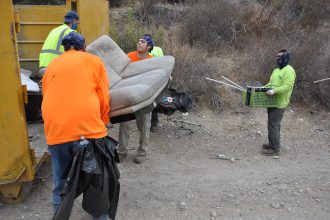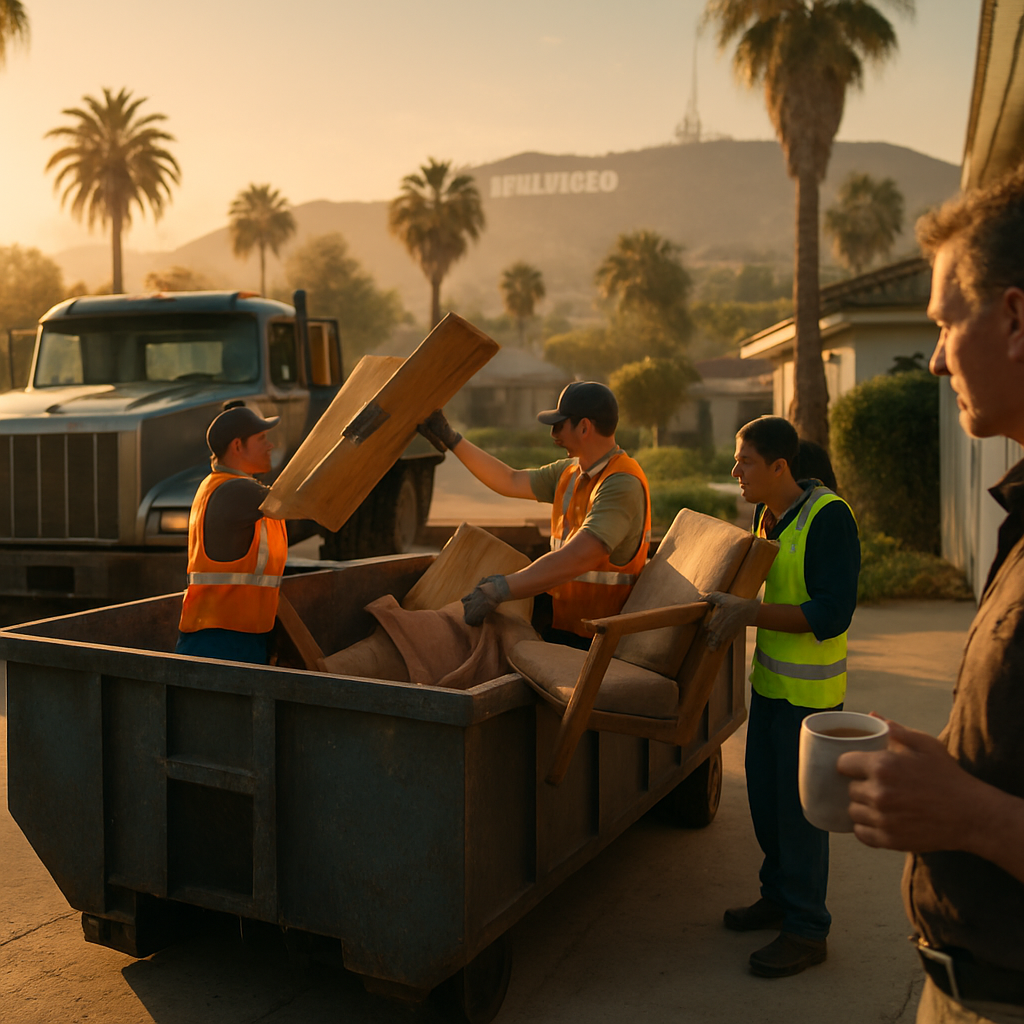
The dumpster rolled up at 7:15 a.m., the engine a low thrum beneath the distant hum of the 101. Maria stood barefoot on her cracked Glendale driveway, coffee in one hand, a list of materials in the other, as the sun threw long, golden slashes across the palm trees. This was not the glamorous part of Los Angeles—no red carpets, no film crews—just the honest, loud work of clearing two decades of accumulated stuff: broken tiles, old lumber, a couch that had seen better lives in Echo Park and two ancient water heaters.
Setting the Scene
She had hired Javier, a wiry contractor from Burbank, who smelled faintly of diesel and orange-scented hand cleaner. “We’ll put a 20-yard roll-off near the curb, get a permit from the city if we need one, and have this cleared in two days,” he said, tapping his phone. Around them, the neighborhood woke: a bus hissed past on San Fernando Road, a woman wheeled a stroller toward a bus stop, and beyond the rooflines, the Hollywood sign leaned into the sky like a distant promise.
Rising Action: A Permit, a Problem, and a Plan
By mid-morning, a figure in a crisp uniform arrived—Sophia, a city inspector from the Los Angeles Department of Public Works. She squinted at the truck, at the curb, then at Maria’s HOA rules printed out on a sheet of paper. “You need a curb permit if you’re blocking parking, and certain items—paint, batteries, chemicals—can’t go in this dumpster,” she said. Her voice was patient but firm. “Also, weight limits. Concrete and dirt will eat your tonnage allowance fast.”
Maria remembered a horror story from Santa Monica: a weekend demolition that turned into a $1,000 fine because the crew had placed a dumpster without a permit in a residential area. The memory tightened her hands around the list. “Okay,” she said. “So what size? And what about recycling?”
Key Insights Woven into the Story
Javier crouched and traced circles on the pavement with his finger as if drawing a map. “For a kitchen remodel and yard cleanout, 20 yards is usually enough in Long Beach and the LA basin. If you’re doing a whole-house demo in Torrance, you might need 30. For smaller jobs in Culver City or Pasadena, a 10-yard will do.” He counted in his head. “Watch for concrete, bricks, and soil. They’re charged by weight. And mattresses, electronics, tires—those have special disposal rules or separate haulers here in Los Angeles County.”
He pointed toward the alley. “We can place it off the street to avoid a curb permit, but the truck needs room to roll. On narrow Venice streets it’s a different play—sometimes permits are unavoidable.”
Sophia added practical tips: “Always request a white-glove recycling option if you can. Many providers will separate metal, wood, and clean concrete on-site. It saves landfill space and sometimes money. And when in doubt, take photos of what’s going into the bin—if there’s a question later, you can show documentation.”
The Emotional Core: Decisions and Letting Go
As the sun climbed higher, neighbors wandered over. Mrs. Alvarez from two doors down sniffed the air and said, “Feels like a new start, mija.” A young couple pushing a stroller asked about donation options for furniture; Javier scribbled down numbers for a Torrance non-profit and a West Hollywood thrift that picked up gently used couches.
There was an undercurrent of grief in Maria’s choices. Each box opened revealed a memory: a child’s crayon-covered drawing from Highland Park, a postcard from a honeymoon in Long Beach, a stack of architectural blueprints from a remodel that had never happened. “I thought I’d keep everything,” she admitted to Javier, voice small. “But I can’t live in the past.”
Practical Steps Amid the Clatter
The truck driver, a broad-shouldered man named Malik from Inglewood, barked friendly instructions: “No paint cans, no propane tanks—those go to hazardous waste days in LA or to a Transfer Station. We’ll take metal and wood. Load heavy stuff closest to the truck to balance the bin.” He demonstrated how to safely lift and slide a heavy bathroom vanity, and Maria felt the knot in her shoulders ease a fraction.
They scheduled the pickup: three days after the drop-off for a standard rental, flexible depending on traffic and landfill times—an important note in an area where traffic can turn a 20-minute trip into a two-hour marathon between Burbank and Santa Monica.
Resolution: The Quiet After the Work
By sunset, the dumpster brimmed with the day’s labor. The clink of metal, the thump of wood settling, and the faint smell of sawdust mixed with the evening air. Maria stood on the porch and looked at her clean driveway—no more leaning piles of lumber, no sagging couch. The neighborhood had returned to its rhythms: a skateboarder skidded past, a dog barked at the corner, and the orange streetlights began to glow.
“You did good work,” Sophia said, handing Maria a small stack of permits and a checklist of disposal records. “Keep these for six months. If you ever sell, buyers like seeing organized permits and receipts.”
Takeaway: What to Remember
In the Greater Los Angeles Area—whether you’re in Hollywood, Glendale, Santa Monica, or Long Beach—dumpster removal is more than trucks and bins. It’s about planning: pick the right size (10, 20, 30 yards), know local permit rules, separate hazardous items, and ask about recycling options. Communicate with your hauler about weight limits and pickup timing, and keep records of permits and disposal receipts. And when it’s time to let go, remember the practical kindnesses: donate usable items, recycle what you can, and call specialists for hazardous waste.
As Maria locked her front gate that night, she breathed in the cooling air and listened—faintly, across the rooftops—the distant lights of the city. The dumpster’s absence left a calm space on the driveway, and in that small, scrubbed place, she could almost hear possibility: a new kitchen, a clean workspace, a future uncluttered by old ghosts. The truck’s taillights vanished around the bend, and the neighborhood breathed on.