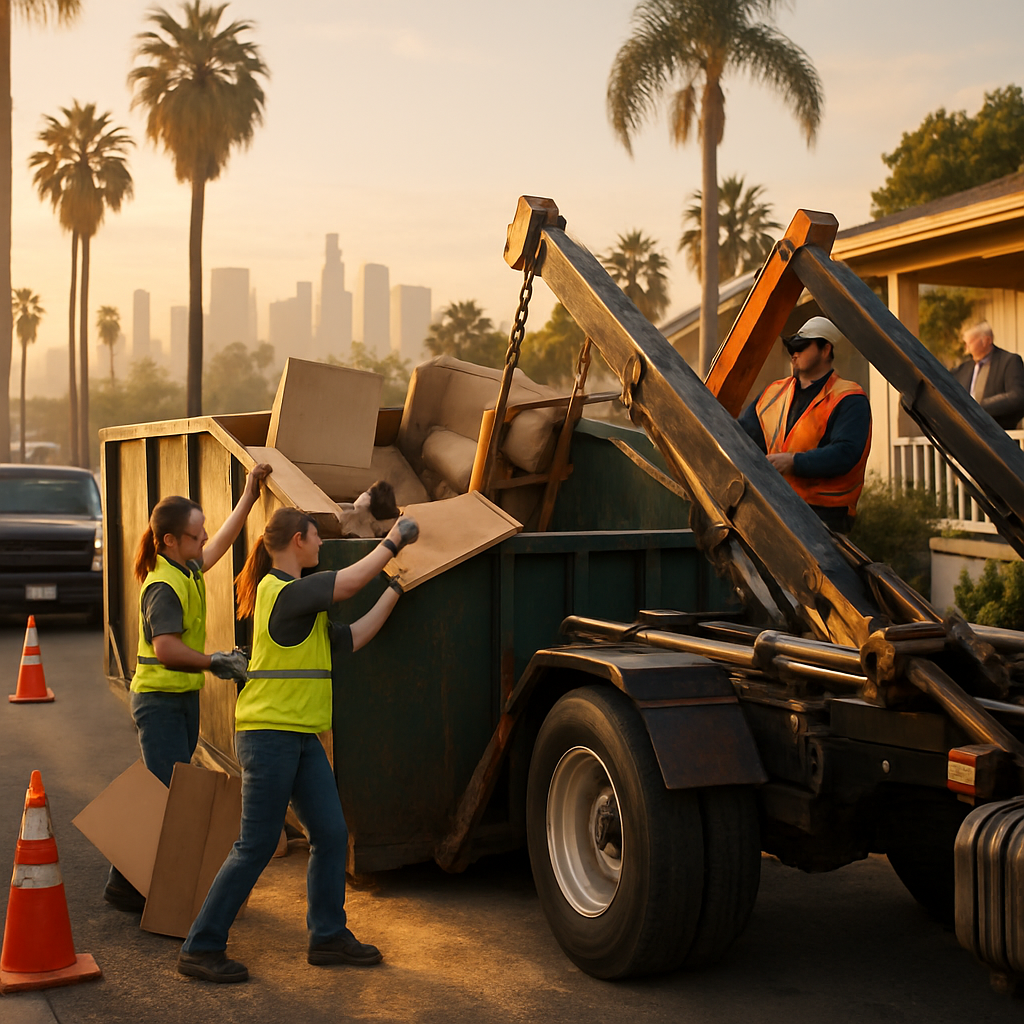
The first time I heard the clatter of a roll-off dumpster at dawn, I thought it was thunder. But the sky over Echo Park was clear, and the sound was metal on asphalt—an orchestra of hinges, gravel, and diesel. Mateo, the driver, stepped down from his cab with a grin, coffee steaming from a paper cup, and called, “You sure you want to watch? This thing’s got a mind of its own.” I followed him into a morning that smelled of sawdust, ocean salt, and a city that never stops reworking itself.
Setting the Scene: A City of Renovations
Greater Los Angeles is a patchwork of neighborhoods renovating and reinventing themselves. In Pasadena a craftsman house sheds layers of wallpaper; in Venice a tiny studio expands into a light-drenched loft; in Long Beach a family clears out thirty years of memories to make room for a new baby. Each project needs a temporary, efficient place for waste to go—a rolling box that arrives with a rumble and leaves with a locked lid. For homeowners like Claire in Silver Lake and builders like Ramon in Burbank, the dumpster is both a tool and a character in their story.
Characters: Mateo, Claire, and the City
Mateo grew up in Inglewood and learned to drive anything with wheels before he could legally drive on the freeway. “It’s about respect,” he told me, patting the dumpster like a thoroughbred. Claire, a schoolteacher renovating her Pasadena bungalow, stood barefoot in her yard, waiting for the hollow echo that signals an empty lot becoming a clean slate. The city—the many Los Angeles city agencies, neighborhood councils, and sometimes cranky HOA boards—loomed like a chorus: approving permits, setting rules, and keeping the streets from turning into impromptu landfill.
Rising Action: When Plans Meet Reality
We started with an easy job in Glendale: a 20-yard dumpster placed in a driveway, humming the kind of music you hear when a plan goes right. But not every day unfolds so kindly. Later that week, Mateo had to navigate narrow Venice alleyways for a boutique renovation, weaving the truck between palm trees and bicycles. In Santa Monica a neighbor called the city because a dumpster was parked on the street without a permit; the fine threatened to swallow a chunk of the contractor’s margin. “You learn the rules the hard way,” Ramon muttered as he negotiated an emergency LADOT permit online.
Sensory details stick with you. In Malibu the air smelled of damp cedar and the Pacific as we loaded old cabinets; in Compton the sound of a child laughing echoed from a yard as a couch disappeared into metal. Each pick-up, each placement had its own texture: gravel crunching, the hydraulic hiss as the dumpster rolled off, the metallic clang when a door swung closed. It was work, yes, but it was also choreography—timed, precise, and occasionally improvisational.
Key Insights Woven into the Story
Along the way, Mateo taught me the practicalities that keep projects moving in a sprawling metro like Los Angeles. Roll-off dumpsters commonly come in sizes from 10 to 40 cubic yards. A 10-yard container is perfect for small home cleanouts in Hollywood or Burbank; 20- and 30-yard options suit most home renovations in Torrance or Pasadena; 40-yard dumpsters serve major construction near downtown LA or industrial zones around San Pedro. Weight matters: companies price by volume and tonnage, and overweight loads incur additional fees. That old concrete patio slab might look small, but its weight will surprise you.
Placement is governed by more than convenience. If a driveway won’t fit a dumpster, you need a permit to place it on the street. In Los Angeles that often means a permit from LADOT; other cities like Long Beach or Glendale have their own rules and fees. Mateo’s advice: “Call the company and ask—good haulers know the permit process.” He explained that a misplaced dumpster can lead to a ticket, a tow, or a neighborly complaint that turns a calm morning into a bureaucratic skirmish.
Not everything belongs in a dumpster. Hazardous materials—paint, solvents, automotive batteries, asbestos—require special handling and cannot be mixed with household trash. Mateo pointed to a faded paint can and said, “That one goes to a hazardous waste facility, not in my truck.” Many cities, including those in LA County, offer household hazardous waste drop-off days or facilities. And for items that still have life—furniture, appliances, fixtures—donation and reuse are better paths. Habitat for Humanity ReStore locations in Long Beach and Glendale, as well as local charities in Inglewood and Santa Monica, accept many reusable items, reducing landfill burden and helping neighbors in need.
Dialogue and Decision: Navigating Neighborhood Rules
On a humid afternoon in Torrance, Claire and I debated the best dumpster size. “I don’t want to overpay,” she said, brow furrowed. “But I also don’t want to run out of space mid-demo.” Mateo squinted at the piles of drywall and cabinetry. “Go one size up if you can. Running out is the worst. You’ll pay for another drop-off and lose precious time.” He offered a tip: schedule deliveries for early mornings to avoid traffic and to give contractors a full day of work without waiting for placement.
There are also community expectations to respect. In Venice and Santa Monica, flanked by beaches and bike lanes, aesthetics and access are important. Covering dumpsters with tarp to reduce dust, placing cones and reflective signs for night visibility, and timing noisy pickups to avoid early mornings in quiet neighborhoods are small courtesies that prevent complaints. “It’s not just about dumpsters,” Mateo said. “It’s about being a good neighbor while you clear space for something new.”
Educational Threads: Sustainability and Cost-saving Tips
Behind every dumpster is a choice: landfill or salvage, waste or reuse. California’s waste policies push for more recycling and organics diversion, so separating materials can save money and the planet. Wood, metal, and concrete often have recycling pathways; sorting them before the dumpster arrives reduces tipping fees. For example, metal salvaged in a downtown LA renovation might fetch a small rebate, and old ceramic tiles crushed into aggregate can be recycled in some facilities. Mateo took used lumber to a yard in South Los Angeles that repurposes construction-grade wood, and Claire brought gently used kitchen cabinets to a Glendale nonprofit that retrofits them for low-income housing projects.
To control costs, plan accurately: choose the right size, estimate weight (heavy materials like dirt and concrete increase fees), and time the rental to avoid extra days. Many dumpsters are rented on a weekly basis; extensions are possible but usually add to the bill. Communication with your hauler matters—clear pickup windows and precise addresses prevent wasted trips and extra charges.
Climax: A Last-Minute Crisis in Santa Monica
Our rising tension peaked on a project near Ocean Avenue. A boutique hotel renovation in Santa Monica was on a tight deadline when a permit hiccup threatened to halt work. The city’s permit had been filed late, and the neighborhood council had flagged parking concerns. The contractor’s foreman paced the site like a caged animal. “We lose a week, we lose a chunk of our calendar,” she said, voice tight. Mateo called in favors—he knew a permit expeditor who could secure a temporary loading zone permit by the end of the day, and volunteers from the crew helped move materials onto the property to reduce street blocking. It was a community scramble: workers, small business owners, and neighbors cooperating to keep the renovation alive.
The dumpster, once placed, became a visible symbol of progress. Locals stopped by, asked about timelines, and reassured the foreman that they supported the renovation if it meant a future storefront or a café reopening. In a city where every square foot of curb matters, cooperation and communication can be the difference between a project stalled and a project finished on time.
Resolution: The Quiet After the Clamor
When the last load went in, the sound shifted: the clank of metal became the sigh of a neighborhood letting go. Claire watched as the dumpster’s hydraulic arm lifted and tilted, the container sliding upward like a mechanical tide, then finally being hauled away. “It feels lighter already,” she whispered, stepping onto the driveway that now smelled of lemon-scented cleaner and fresh air. In Long Beach, a family arranged for a final pick-up before a baby arrived; in Glendale, a contractor finished a courtyard that would host summer dinners. Mateo wiped his hands, hopped into the cab, and drove off toward the next sunrise and the next job.
Takeaway: What to Remember and What to Do
Dumpsters are more than loud metal boxes—they’re part of the urban lifecycle. In Greater Los Angeles they facilitate renewal across neighborhoods from Hollywood to Malibu, from Inglewood to Pasadena. Remember these practical points: choose the right size; check local permit requirements (LADOT in Los Angeles, municipal offices in Glendale, Long Beach, Santa Monica, etc.); never mix hazardous waste with general debris; consider donation and recycling first; and communicate with neighbors to avoid conflicts. Lean on experienced haulers who know the city’s rhythms; their knowledge of permits, placement, and recycling pathways will save time and money.
As the sun set over the Pacific, turning the sky into a smear of tangerine and lavender, I thought of those small, noisy boxes waiting behind locked gates and on curbside lots—silent machines of transformation. They carry the physical detritus of projects and the emotional detritus of change: old couches from divorce settlements, boxes of memories from a deceased parent’s house in Burbank, a kitchen gutted for a fresh start in Pasadena. Each removal is a little story of letting go and making space for what’s next. Mateo waved from a distance, the truck receding like a black whale against the city lights, and for a brief moment the whole of Los Angeles felt like a workshop humming toward tomorrow.