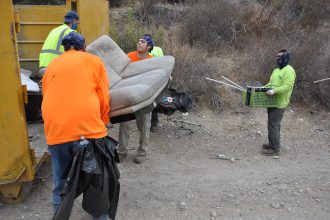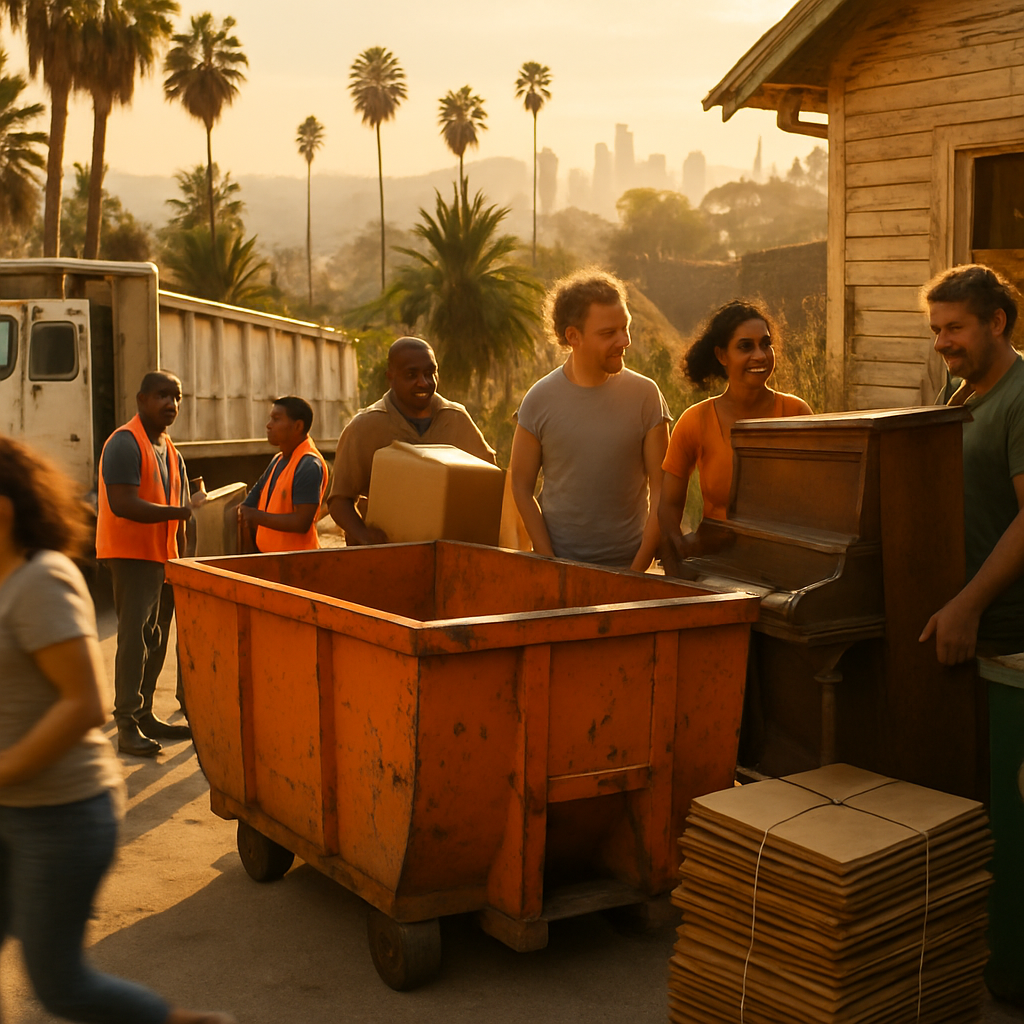
The first morning I met Ana, the dumpster sat like an island in the middle of her Silver Lake driveway, its steel lips catching the sunlight like a promise. She touched the cold rim, inhaled a mix of wet cardboard, lemon-scented cleaning spray, and a faint trace of old perfume, and said, ‘I don’t even know where to start.’ That smell — memory and dust, lemon and rust — was the beginning of a week that would carry us from the palms of Beverly Hills to the salt spray of Santa Monica and back into the narrow lanes of Highland Park, teaching us more about trash, trust, and the city of Los Angeles than either of us expected.
Setup: A House, a Family, and a Map of the City
Ana’s grandmother had lived in that two-story bungalow for forty years. After the funeral, the family decided to sell, but first they needed the house cleared. The list was long: furniture with stories carved into its joints, boxes of yellowed photographs, a broken upright piano that had held more conversations than any person, and a backyard greenhouse full of tattered pots. We needed dumpsters — not just one — and a plan that respected permits, neighbors, and the fact that some things deserved a second life.
‘We called the first company and they wanted to leave the container on the street in front of the house,’ Ana said, voice tight. ‘Who does that without asking the neighbors? Who knows about street cleaning?’ She had a point. In Los Angeles, a roll-off dumpster in front of a home can mean more than convenience: it means obtaining a permit from the city, posting a temporary no-parking sign, and sometimes hiring a traffic control person — especially in busy corridors like Sunset Boulevard or near the narrow stretches of Echo Park Avenue.
Rising Action: A Week of Dumps, Deals, and Discoveries
Our first call was to a local hauler with a fleet of orange trucks and a reputation for being prompt. The dispatcher, a woman named Maria from a company based in Culver City, sounded both professional and empathetic. ‘We can drop a 15-yard and a 6-yard on Tuesday morning,’ she said. ‘We handle permits in West Hollywood and Beverly Hills — you won’t have to chase them.’ That phone call felt like a lifeline. By Tuesday, the driveway held two dumpsters: one for heavy construction debris and one for household items destined either for donation or recycling.
Loading began like a choreography. Ana’s cousin, Mateo, lifted the piano’s final piece while I held the door open and felt the wood’s splintered edge bite into the skin of my palm. We worked from sunrise to noon, the air warming into the dry, citrus-scented heat LA is famous for. The streets filled with the city’s soundtrack: the distant rumble of the 101, a skateboard clacking down a nearby alley in Silver Lake, and the occasional shout from a neighbor asking what time the truck would come back.
‘Take the lamp to Goodwill, don’t just toss it,’ whispered Ana, as if the lamp could hear. We separated salvageable from unsalvageable, packed cardboard into neat bundles, and started to wonder about the things that could not be simply placed in a dumpster: old batteries, paint cans, fluorescent bulbs, and that stack of documents with social security numbers in them. In LA County, such materials must be handled differently — hazardous waste facilities, e-waste drop-offs, or scheduled pick-ups are the rules.
The first complication arrived when the 15-yard container topped out faster than expected. The piano had been heavier than anyone remembered, and there were hidden layers of tile and plaster from years of DIY renovations. ‘We underquoted the weight,’ admitted the driver in a flat, tired voice as he flipped through the manifest. Extra tonnage cost more, and that was when Ana’s jaw tightened. Choices had to be made: keep digging through sentimental clutter or pay more and finish quickly. We negotiated: donate what we could, compress the rest, and drive the last load all the way to a transfer station in Long Beach to meet a contractor removing debris from a home in Pasadena the next day.
Key Insights: Practical Lessons from Streets and Sidewalks
Between loading and hauling, we learned the city’s rules the way you learn the names of neighborhood storefronts — by encountering them. Here are the lessons that kept us moving and saved Ana time and money:
– Dumpster sizes: 10-, 15-, 20-, and 30-yard containers are the common roll-offs. For a single-family home cleanout in Los Angeles, a 15-yard is often the sweet spot. For major renovations or construction sites in Inglewood or Downtown LA, a 30-yard may be necessary.
– Permits and placement: If the dumpster sits on public property — a curb cut, street, or city parking lane in Santa Monica, Beverly Hills, or Glendale — you need a permit. Permit timelines vary; some cities can issue a temporary curb permit in 24 to 48 hours, others require longer. In neighborhoods with narrow streets, like Pasadena’s historic districts, companies may need to coordinate with parking enforcement to avoid tickets and towing.
– Weight vs. volume: Many haulers price by weight and by size. A pile of broken concrete or tile will hit weight limits fast. For heavy materials, discuss weight overage rates up front. Our truck driver taught us to stack lighter materials (cardboard, old furniture) strategically and to avoid sending soil or yard waste in construction dumpsters when separate green waste containers would be cheaper.
– Recycling and diversion: Los Angeles has aggressive waste diversion goals. Recyclable metal, usable furniture, and appliances often get pulled from loads and sent to local salvage yards or donation centers in Long Beach or Culver City. Electronic waste and household hazardous waste have dedicated drop-off days and centers across the county; using them reduces landfill fees and is, frankly, better for the planet.
– Timing and traffic: LA lives by rush hour. Scheduling pick-ups early in the morning reduces time on the road and avoids residential traffic restrictions. If you need same-day service in West Los Angeles or Burbank for a film set cleanout, call in the morning and confirm staging room with the hauler.
Resolution: Old Things Moving Toward New Places
On the fourth day, we drove a truckload of furniture to a Habitat ReStore in Pasadena and a van of gently used clothes to a thrift shop in Long Beach. The piano was taken by a man who ran lessons in Highland Park; he promised to refurbish it for a new generation of students. For Ana, watching objects leave was both heartbreaking and cathartic. ‘It’s like the house is breathing out,’ she said. ‘You can almost hear it.’ The final load, a compacted mound of shingles and drywall, went to a transfer station where the crew separated metal and recyclable wood; the remainder went to a proper landfill as required. We signed manifests, took photographs for the estate, and closed the account with the hauler.
Throughout, communication made the difference. A hauler who texts ETAs, an operator who knows Los Angeles permit offices, and a crew that shows up with the right-sized equipment — these are the small things that make a large task manageable. We met municipal clerks in Burbank who explained permit windows; we learned which neighborhoods demanded additional flaggers; and we found that some disposal centers offered off-hours access for contractors working overnight shoots in Hollywood.
Takeaway: What to Remember and Do
If you’re facing a cleanout or renovation in the Greater Los Angeles Area, here are the practical steps to take, stitched together from our week on the ground:
– Call multiple haulers and get itemized quotes that separate size, weight, and permit fees. Ask about diversion practices and whether they work with donation centers.
– Decide where the dumpster will sit. If it will take a parking space, budget for a city permit and flagger if required. Check specific rules for Santa Monica, Beverly Hills, West Hollywood, and Pasadena because they differ.
– Sort early: separate hazardous materials, electronics, and anything that might be donated. Schedule hazardous waste drop-offs and e-waste recycling in advance to avoid contamination of your load.
– Think about timing: early morning drops avoid traffic and ease parking hassles. For film sets and commercial jobs in Burbank or Culver City, coordinate with property managers about staging and security.
– Choose a hauler experienced in Los Angeles logistics. Knowledge of local transfer stations, recycling centers, and permit offices reduces surprises and hidden charges.
On the last afternoon, we stood on Ana’s front steps as the sun slid toward the Pacific. A seagull circled above, its cry lost beneath the distant hum of I-10. The emptied rooms echoed in a way that felt like potential rather than absence. Ana leaned against the railing, closed her eyes, and for a moment all the city sounds — a passing bus in Echo Park, a dog barking in Silver Lake, the faint music from a neighbor’s radio — braided into something gentle.
‘I thought this would feel awful the whole time,’ she said. ‘But it’s lighter, somehow. The stuff was heavy, but we learned how to move it right.’ The trucks that had ferried our loads were tiny against the vastness of Los Angeles, yet they traced a quiet map: from a driveway in Silver Lake to the donation centers of Long Beach, the permit offices of West Hollywood, the recycling yard in Inglewood, and the salt-sprayed edge of Santa Monica where the ocean promised renewal.
As we closed the gate, the neighborhood’s shadows lengthened and an orange truck idled, ready to head to its next site. In the rearview mirror, the silhouette of the dumpster gleamed one last time — not as an end, but as the beginning of a new story for a house, for Ana, and for the city that keeps remaking itself by moving its castoffs toward new uses, new lives, and new sunlight.