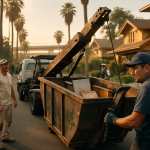
On a sweltering June morning in Echo Park, the street smelled of hot asphalt, coffee, and pine sawdust. A bright yellow roll-off sat like a foreign ship at the curb, its metal sides flecked with old paint and postage-stamp stickers from other neighborhoods. Maria cupped her hand to her forehead and squinted at the driver as he climbed down from the cab. “You sure this will fit?” she asked. He smiled, wiped grease from his hands, and said, “Don’t worry. I’ve set dumpsters in Santa Monica townhomes and in the alleys of Long Beach. We’ll make it work.”
Setting the Scene
Los Angeles is a city of collisions—of cultures, of architectures, and of lives stacked vertically and sprawled horizontally. From the salt-kissed avenues of Santa Monica to the industrial piers of Long Beach, a renovation can mean anything from a single kitchen gut to hauling away the detritus of a full teardown in Pasadena. Maria’s project lay somewhere in between: a Victorian bungalow with squeaky floorboards, a stubborn tile backsplash, and a backyard that had become a tangle of broken pavers and overgrown hibiscus.
She’d hired Luis, a contractor from Glendale who wore a sun-bleached Dodgers cap and had a laugh that sounded like a garage door. He had recommended a 20-yard dumpster: large enough for drywall and old cabinetry, but small enough to sit comfortably in front of her home without obstructing the block’s rhythm. “Twenty will do it for a demo like this,” he said. “If we start throwing out old concrete and a bathtub, we might upsize.”
Rising Tension: Rules, Neighbors, and the City
On arrival, the first tension wasn’t the size of the dumpster but its location. The driver eyed the curb. “You placing it on the street?” he asked. Maria nodded. She’d imagined the garage fitting a box like a second skin. But Los Angeles Department of Transportation regulations have muscle: street-placed dumpsters often require a permit, and the rules change from one city to another. “In Santa Monica,” the driver said, “they’re picky about blocking parking by the beach. In Long Beach, they care about truck access to the pier. In parts of Glendale and Pasadena, HOA rules can be tougher than the city.”
Mrs. Alvarez next door peered over the hedge, frowning. “You’re going to need that permit, miá,” she said in a voice that was equal parts concern and curiosity. “They ticket here in Echo Park. Remember when they towed Jorge’s trailer?”
Maria felt the corridor of options narrow. She had ordered the dumpster online in a flurry one evening while sorting through contractor quotes. The company’s site had been efficient: choose size, pick a day, pay a deposit. She hadn’t clicked through the fine print that explains permit exceptions, weight limits, and prohibited materials—things that would push a small renovation into a bureaucratic thicket.
Key Insights: What Every Angeleno Should Know About Dumpster Removal
As the morning heat climbed, Luis and the driver, Mike, began work, and the conversation opened into a practical clinic. “There’s a few things people don’t realize,” Mike said, as he adjusted the chains that would lower the dumpster. “First: sizes. We usually stock 10-, 15-, 20-, 30-, and 40-yard boxes. Ten-yard is great for a small garage cleanout; 20 covers a standard kitchen or bath demo; 30 and 40 are for big house teardowns or roofing. Pick too small and you pay for a second haul; pick too big and you’re paying for air.”
He rattled off costs in a way that made the numbers tactile: “Standard delivery and a week’s rental, think of a base rate plus per-ton tipping. In LA County, the tipping fees at landfills or transfer stations add up, and if you go over the weight allowance, you’ll get dinged.”
They addressed permits. “If you put the dumpster on private property, like your driveway, it’s usually okay without a permit,” Luis said, tapping his phone. “But if it rests on the street, you need an LADOT street-use permit in the unincorporated parts, or a city-specific permit in Santa Monica, Long Beach, Burbank, Glendale, Pasadena, and so on. Some cities require overnight reflective cones or a police detail for big blocks of time.”
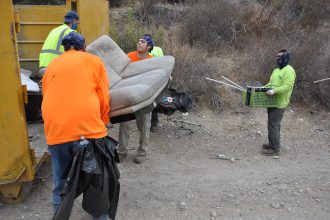
Waste sorting became a moral lesson. “We try to recycle as much as possible,” Mike said, pointing to a strip of old baseboard. “Wood goes to reuse or green waste if untreated; metal is pulled out and sold to salvage; gypsum drywall sometimes heads to recycling processors. But mattresses, tires, paint cans, and hazardous materials like solvents don’t belong in the roll-off. Electronic waste has to go to e-waste centers.” He rattled off places: the city’s Household Hazardous Waste Events, the Long Beach sustainability center, the HHW drop-offs in Glendale’s yard. “Better to separate upfront. It saves money and headaches.”
They spoke about donation and salvage, and Maria’s hands grew warmer at the idea of a local nonprofit taking a pristine sink or a vintage light fixture. “Habitat for Humanity ReStore and local salvage yards will pick up if there’s good stuff,” Luis said. “That old clawfoot tub? Might be worth a call.”
Scene: The Neighborhood Reacts
Across the street, a family from Silver Lake wheeled out a stroller. A skateboard clipped the sidewalk. A gull wheeled overhead, the cry like a punctuation mark. Passersby slowed, as if time itself were curious about the dumpster’s presence. A teenager poked a finger at a flake of rust and said, “Imagine taking a selfie on that thing.”
Later, during the first haul, a short argument broke out. Mrs. Alvarez wanted the dumpster closer to the curb to keep the driveway accessible for her visiting aunt. Luis negotiated, bending like a craftsman, until everyone found a comfortable compromise. “It’s not just metal and trash,” Maria realized. “It’s a temporary object that reshapes how the block breathes.”’
Practicalities Woven into Story
The work unfolded in layers. They removed cabinets and watched as a chorus of screwdrivers and crowbars sang. The smell of old grease and dust mingled with jasmine from a neighbor’s shrub. When the crew hauled out a stack of obsolete 1990s electronics, Mike insisted they be set aside. “E-waste can leak metals and chemicals into the landfill,” he said. “We drop stuff like that at city recycling centers or the monthly HHW events in L.A. County.”’
On day three, Maria received a call: the contractor had found asbestos in a small patch of old vinyl flooring near the back door. The sun seemed to tilt. “That’s a different dance,” Luis said quietly, the way one might announce an abrupt change of music. Asbestos and other hazardous materials require licensed abatement and cannot be tossed into a regular dumpster. The crew halted everything while an abatement team secured the area with plastic sheeting and negative pressure equipment. It was an expensive detour, but it was safer. “People try to save a few bucks,” Luis said, “and it costs them more when the city fines them or they hire someone to re-do everything.”
Resolution: Clean Streets and Considerate Choices
By the end of the week, the dumpster was half-empty for the final pickup. The neighborhood had adapted to its presence; kids had learned the safe route around it, and Mrs. Alvarez’s aunt had parked without incident. Mike returned with a wink, and they rolled the container onto the truck like a reluctant suitcase. “See you next time,” he said. Maria shook his hand, feeling the grease that linted his palm and the gratitude that somehow felt like a small fee for dignity returned.
The abatement had set the project back, but it had taught Maria a lesson she hadn’t anticipated: responsible disposal is both practical and ethical. She had recycled wood, donated a sink, separated e-waste, and engaged a licensed abatement crew. The city had not issued a single ticket. The final bill carried some unexpected line items, but the peace that settled over the bungalow felt worth it.
Takeaway: What to Remember Before You Call for a Dumpster
From Venice to Burbank, from Downtown’s alleyways to the wide boulevards of Pasadena, the rules and rhythms of dumpster removal vary. Before you call:
1. Measure the job and choose the right size: 10-40 yards depending on scope. Think volume, not just weight.
2. Check placement: street vs. driveway. Street placement often requires a city permit; private property usually does not.
3. Separate hazardous items: paint, solvents, asbestos, tires, and electronics have specific disposal paths. Use HHW centers, e-waste drop-offs, or licensed abatement for asbestos.
4. Recycle and donate: salvage metal, wood, and reusable fixtures. Contact local ReStores or salvage yards before you toss.
5. Know your costs: base rental + tipping fees + overage charges for weight. Ask about pickup schedules, rental periods, and whether the company handles permits.
6. Communicate with neighbors and the city: a heads-up can prevent complaints and help coordinate parking or safety cones.
That evening, as Maria sat on the bungalow’s new back steps with a cup of tea cooling in her hands, the neighborhood hummed with the ordinary music of a Los Angeles summer. A train sighed in the distance near Long Beach, a plane traced a silver line over Culver City, and somewhere in Silver Lake a dog barked with theatrical timing. The house already felt lighter—not just free of tile and plaster, but tidy in the way of things done correctly. When Maria closed her eyes, she could still picture the dumpster’s flaking paint and the way the light had struck the driver’s face. She smiled, knowing she had learned how to invite even a temporary, hulking piece of metal into a neighborhood without leaving a scar.
Weeks later, when the project wrapped and the last nail was found, the front stoop looked as if it had been exhaled into being. A stranger passing by paused, admired the refurbished façade, and said, “Beautiful work.” Maria answered, thinking of the dumpster and Mike, the permit, the abatement team, and Luis’s calm expertise: “Thank you. It was a village.”
Outside, the palm trees along the block leaned as if to listen. The city carried on in its mixed, marvelous cadence, and somewhere between Santa Monica’s ocean breeze and the heat haze of Downtown Los Angeles, a dumpster became more than a container—it became an instrument of care for a home and for the city it sits within.