On a rainy Tuesday in late March, Maya stood in the middle of her century-old kitchen with a sledgehammer in one hand and a phone in the other. She had planned a six-week gut renovation to open up the floor plan, replace failing wiring, and finally get a functioning pantry. By day four she already had a mountain of plaster, old cabinets, ceramic tile, and a battered refrigerator that had been leaking for years. Her contractor, Marco, squinted at the heap and said bluntly, “We need a dumpster by tomorrow or we’ll lose a day of work.” Maya typed “dumpster rental near me” into her phone and started comparing options. She thought a small bin would do. She was wrong.
Why that Tuesday mattered: the practical lesson behind the opening story
Maya’s situation is a familiar one to anyone who has remodeled a home, run a construction crew, or managed a major cleanout. Momentum on a job depends on logistics. A missed delivery, an overfilled bin, or an unplanned fee can add days and hundreds of dollars to the budget. I’ve been in that spot—on site at 7 a.m., watching crews idle because a dumpster wasn’t properly sized, permitted, or placed. That perspective informs everything in this guide: you’re not just renting metal; you’re buying time, safety, and predictability.
How dumpster rental works
Step-by-step: booking to pickup
Dumpsters are surprisingly simple in design but can have complex logistics behind them. Here’s the typical workflow you’ll encounter:
- Assessment: A homeowner, contractor, or site manager defines the scope—what will be thrown away, how long the dumpster is needed, and where it can sit.
- Quote and booking: You request quotes by size, weight allowance, and rental duration. Companies will often quote a flat rate that includes delivery, pickup, and a per-ton disposal fee, or a rate that separates those items.
- Permit and site planning: If the dumpster is going on public property (street, alley), a permit is usually required. This is handled either by the renter or the rental company depending on local regulations and the company’s service model.
- Delivery: The roll off dumpster is delivered and positioned by a truck. Preparation includes measuring overhead wires, the driveway width, and ground conditions.
- Usage and monitoring: You fill the dumpster. Weight and prohibited items are monitored to avoid extra charges or safety hazards.
- Pickup and disposal: The rental company hauls the dumpster to a transfer station, landfill, or recycling center, and final disposal fees are calculated.
Roll off dumpster vs. other dumpster types
When people search “roll off dumpster” they mean the open-top rectangular bins that a truck drops off and later hauls away. These are perfect for construction waste removal and large cleanouts because they accommodate bulky, heavy materials and allow easy loading by hand or machine. Other dumpster types include compactors (for ongoing waste from businesses) and hooked-lift containers often used in industrial settings. For residential renovations and most commercial projects, a roll off dumpster is the right tool.
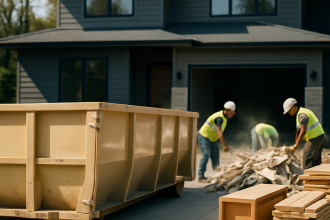
[Image: dumpster at renovation site]
Choosing the right dumpster size
Size is the question I get asked most. Pick too small and you pay for a second dumpster or face delays. Pick too large and you’re wasting money and space. Dumpster sizes are usually described in cubic yards. Here’s how to think about them.
Common dumpster sizes and what they hold
- 10-yard dumpster: Think small remodels, one-room cleanouts, or garage cleanups. Dimensions are compact—useful where driveway space is tight.
- 15-yard dumpster: Good for medium remodels, replacing siding on a small house, or clearing out a small townhouse.
- 20-yard dumpster: The most popular size for major home remodel projects—kitchen and two bathrooms, or a small tear-off roof job.
- 30-yard dumpster: Ideal for larger renovations, major landscaping projects, or small construction jobs.
- 40-yard dumpster: For commercial jobs, large-scale demolition, or full-home gut renovations.
Real-world scenario 1: Marco and Maya’s miscalculation (and its fix)
Timeline: Day 1–6 of the renovation.
Decision: Marco ordered a 15-yard dumpster because the driveway was narrow and the homeowner insisted on a small footprint.
Problem: By day four the bin was already half full because tile, cabinetry, and drywall pack more densely than expected. The crew kept working, stacking trash around the bin, blocking the path.
Solution: The crew called the rental company and upgraded to a 30-yard roll off dumpster. They moved the 15-yard closer to the curb, emptied the overflow into the new bin, and kept the timeline. The upgrade cost more, but the avoided day of lost productivity saved more than the fee.
How to estimate volume realistically
Don’t guess based on what a single contractor says. Walk the site and think in cubic yards. A rule of thumb that works: one cubic yard equals a stack about 3 ft x 3 ft x 3 ft. A kitchen demolition with cabinets, countertop, flooring and appliances often fills 20–30 cubic yards. Roofing tear-offs are measured differently because shingles are lightweight but voluminous; a 2,000–3,000 sq ft roof can require a 30- to 40-yard dumpster.
Tip: Plan for the unexpected
Always budget for 10–15% extra volume and weight. Hidden layers of flooring, water-damaged framing, or unexpected bulk will push you over. It’s cheaper to overestimate by one size than to schedule an extra delivery during a tight project.
Common mistakes people make
I’ve seen the same mistakes at small residential jobs and large construction sites. Avoiding them keeps projects on budget and on time.
Mistake 1: Choosing solely on price
Many customers ask for “cheap dumpster rental” and book the lowest bidder. Low price often means low service—surprise fees, poor truck placement, or lack of local disposal options. Price matters, but consider what’s included: delivery, permit handling, weight allowance, and disposal types (landfill vs. transfer vs. recycling).
Mistake 2: Forgetting the permit
One contractor I know ordered a roll off dumpster for a Monday delivery and didn’t get a street permit. The city ticketed the job and required moving the bin off the public right-of-way. Two days of delay, doubled truck fees, and a fine. Get the permit early; many rental companies will handle it for you if you authorize them to do so.
Mistake 3: Overfilling or illegal items
Overfilled dumpsters are unsafe to transport and often flagged at the weigh station. People also toss prohibited items—paint cans, asbestos siding, oil, batteries. The rental company can refuse pickup or charge steep handling fees. Read the list of prohibited materials before you start loading.
Mistake 4: Poor placement planning
Accurate site planning avoids damage. Trucks need clearance to back up and lower the dumpster. Sticky clay, soft grass, or a new driveway can be damaged if you don’t prepare protective boards or a staging area. I’ve seen trucks need to deliver from the street and set the bin further from the house because of low-hanging wires—making the crew cart loads farther than necessary.
Hidden costs and how to avoid them
Understanding the cost structure is where expertise pays off. A flat rate can hide surcharges, and cheap initial bids often reveal extras. Here’s what to watch.
Common hidden fees
- Overweight fees: If you exceed the weight allowance (usually measured in tons), you’ll pay extra per ton. Heavy materials include concrete, dirt, brick, and tile.
- Hazardous material fees: Items like asbestos, fluorescent tubes, certain adhesives, and contaminated soils often require special disposal.
- Extended rental fees: Most quotes cover a standard rental period (7–10 days). Extensions can multiply daily or weekly rates.
- Pickup and re-delivery: If a bin is filled incorrectly or the site needs an extra drop-off, you pay per truck visit.
- City permit and inspection charges: These are often billed to the renter when the rental company handles the permit process on their behalf.
Real-world scenario 2: The underbid landscaping job
Timeline: Pre-bid, week 1, week 3.
Decision: A landscaper bid a backyard renovation low to win the contract and factored in “one 20-yard dumpster” without considering the large volume of soil and rootballs.
Problem: By week 3 the dumpster was full and overweight because compost and soil count heavy. The rental company charged a per-ton surcharge that wiped out the landscaper’s slim margin.
Solution: The landscaper started separating soil into a separate hauling plan and rented a 30-yard dumpster specifically for green waste and large rootballs. They added this as a line item in future bids. Moral: Know the density of the materials you’ll discard.
How to avoid surprise fees
- Ask for a detailed written quote that itemizes disposal, delivery, pickup, and per-ton charges.
- Clarify weight limits and typical weight per material type—concrete and brick are heavy; carpet and drywall are light.
- Segregate materials on site: keep clean wood, metals, and recyclable materials separate where feasible to reduce landfill charges.
- Confirm permit responsibility and timing in writing.
Safety and legal considerations
Dumpsters are useful but can be dangerous if improperly handled. Safety protects workers, the public, and your budget.
On-site safety practices
- Even loading: Distribute weight evenly. Heavy items should be placed low and centered to prevent tipping during pickup.
- Don’t climb in: Never allow crew members to climb inside a dumpster to rearrange loads. Slips and falling debris are common causes of injury.
- Protective gear: Use gloves, goggles, and boots. When cutting materials near the bin, watch for falling shards and sparks.
- Fire prevention: Never place hot ash, charcoal, or smoldering materials in a dumpster. Fires during transport are costly and dangerous.
Legal compliance and permits
Municipal regulations vary. A few critical points:
- Right-of-way placement: If the bin sits on a public street, your city likely requires a permit and possibly traffic control measures.
- Environmental regulations: Certain materials require special handling—lead-based paint chips, asbestos, and contaminated soils are regulated.
- Noise and timing: Cities may restrict delivery or pickup hours, so plan around local ordinances to avoid citations.
Insurance and liability
Ask the rental company for proof of insurance and ask about their liability for damage to paved surfaces or private property. In many cases, the renter assumes responsibility for surface damage from truck or bin placement. Protect your driveway and reduce risk with plywood or the company’s delivery pads.
What can and cannot be thrown away
Knowing what’s allowed keeps you from hefty fees and illegal disposal. Transparency up front prevents headaches later.
Commonly allowed items
- Typical construction debris: drywall, wood, roofing shingles, siding, brick (confirm weight)
- Household demolition waste: cabinets, countertops, carpet, flooring
- Non-hazardous yard waste: branches, brush, and general green waste (confirm local rules)
- Appliances and metal: many facilities accept appliances, sometimes for an additional fee or recycling credit
Items usually prohibited or restricted
- Hazardous waste: paint thinners, pesticides, solvents, automotive fluids
- Asbestos-containing materials: special handling and licensed abatement required
- Electronics (e-waste): many jurisdictions require e-waste to be processed separately
- Batteries, tires, propane tanks, fluorescent bulbs
- Biological waste: medical or biohazardous materials
Real-world scenario 3: The contaminated basement
Timeline: Discovery, testing, remediation (3 weeks).
Decision: During a basement cleanout an old homeowner uncovered stained insulation and suspected mold, plus several drums of unknown liquid.
Problem: The rental company refused pickup citing hazardous materials and contamination. The homeowner faced potential environmental violations.
Solution: The homeowner hired an environmental consultant, had the drums tested, and arranged for licensed hazardous waste disposal. The family used DailyDumpster.com’s guidance to separate non-contaminated items into a standard roll off dumpster while the hazardous items went to a licensed facility. The project took longer and cost more, but it was done legally and safely.
Practical advice from the field
I’ve worked with homeowners, general contractors, and municipal crews. Here are specific, actionable tips to make your dumpster rental painless and efficient.
Tip 1: Take photos before you call
Photograph the area where the dumpster will go, overhead clearances, driveway condition, and the material you’ll discard. Email these to the rental company for a more accurate quote and to confirm there are no surprises on delivery day.
Tip 2: Schedule delivery and pickup around your project milestones
Plan delivery for a day before you start demolition so you have room to work. Schedule pickup the day after major demolition ends. If you have a tight timeline, include pickup windows in your rental agreement to avoid extended rental fees.
Tip 3: Separate materials where practical
If you can segregate recyclables (metal, clean wood, cardboard) you’ll often reduce disposal costs. Some rental companies offer split-roll-off options or multiple smaller bins for separation.
Tip 4: Communicate with neighbors
Dumpsters can block sightlines, parking, and access. Let neighbors know when the dumpster will be on site and how long it will stay. Small gestures—like ensuring the dumpster doesn’t block a neighbor’s garage—go a long way.
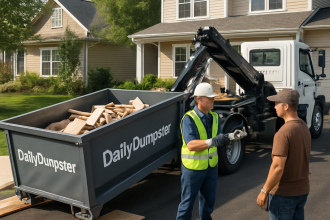
[Image: roll off dumpster truck]
How to shop smart: comparing providers
When you search for “dumpster rental near me” you’ll get a range of options from national chains to local haulers. Here’s how to compare them efficiently:
Questions to ask
- What is included in the quoted price? (delivery, pickup, disposal, weight allowance)
- How does the company handle overages and prohibited items?
- Will they handle permits and street closures?
- What are the delivery and pickup timelines and windows?
- Do they recycle? Where does my waste end up?
Local vs. national providers
Local companies often know municipal permit processes and transfer station options better. National chains may offer standardized pricing and broader coverage. I recommend getting at least three quotes—one from a local hauler, one from a regional provider, and one from a national firm. Compare apples to apples on services included, not just sticker price.
Real-world scenario 4: The small business with big cleanup
Timeline: End-of-lease, 2 weeks.
Decision: A coffee shop tenant needed to gut the space for their landlord before lease end. They picked the cheapest available dumpster to save money.
Problem: The bin filled quickly, and the landlord required proof that the interior mold-affected drywall was disposed of correctly. The inexpensive hauler had mixed materials and could not provide the documentation needed for the landlord.
Solution: The shop owner contacted a full-service company recommended by their contractor, booked a proper 20-yard roll off dumpster with a disposal manifest, and arranged pickup within the lease timeline. Paying a little more for documentation and reliability kept their security deposit intact and saved legal hassle.
Final considerations: timelines, payment, and sustainability
Plan around project milestones, pay attention to payment terms (many companies require a deposit or full payment at booking), and think about the sustainability of your disposal plan. Ask about recycling rates and whether materials can be diverted from the landfill. Concrete, metal, and clean wood are frequently recyclable; separating them can reduce both cost and environmental impact.
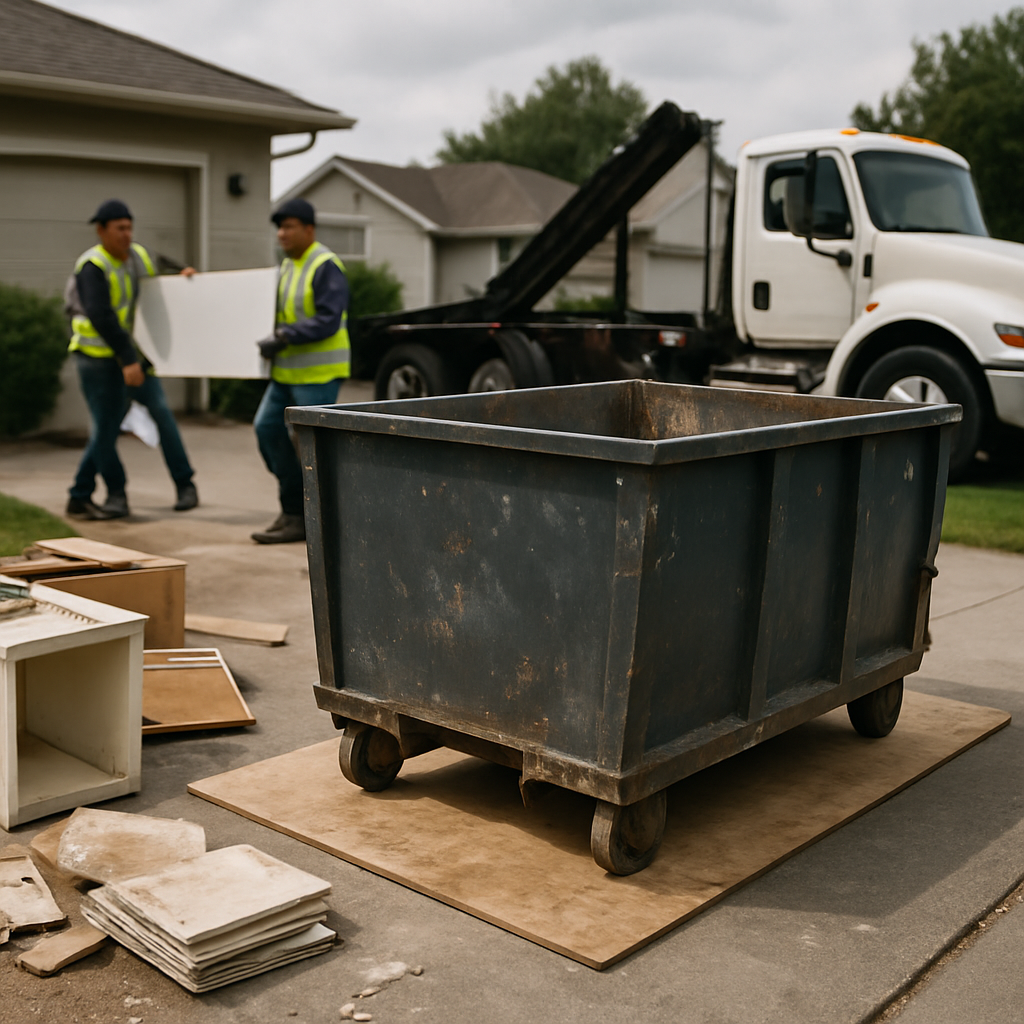
[Image: residential cleanout project]
Renting the right dumpster is as much a logistical decision as it is a purchasing one. The difference between a smooth project and a stressed one often comes down to preparation: accurate volume estimates, clear communication with your rental provider, and sensible site planning. Whether you’re searching for “dumpster rental near me,” hunting for a “cheap dumpster rental” option that actually includes permits and weight allowances, or need a specialized roll off dumpster for construction waste removal, take the time to compare quotes, ask the right questions, and plan for contingencies. If you’re ready to get a precise quote and compare local options quickly and reliably, visit DailyDumpster.com to request a quote and get your project moving on schedule and on budget.