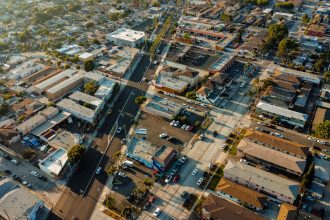
The dumpster arrived like an unexpected guest: loud, diesel-breathed, and larger than anyone in our Silver Lake bungalow had imagined. It settled with a metallic sigh in front of Rosa’s house, scraping the curb and sending a small plume of dust toward the jasmine hedge. I remember the first cough of the truck, the smell of hot rubber and oil, the clink of a stray nail against steel — and the sudden realization that a simple remodel would become a small urban drama stretching from Santa Monica’s beaches to the foothills of Pasadena.
Setup
Rosa had bought the bungalow on a narrow street where backyard jacarandas shadowed a line of mailboxes. She wanted a new kitchen, a reclaimed-wood breakfast bar from a salvage yard in Long Beach, and a chance to finally open the garage that had been a dumping ground for ten years. “We’ll be rid of the junk in a week,” she said on the phone, optimism packed into every syllable. I pictured the tidy, Instagram-ready reveal she planned. What I didn’t picture were the challenges that come with moving two decades of life into a metal container on a Los Angeles street.
We weren’t alone in this. On any given block in Greater Los Angeles — from the palm-lined avenues of Beverly Hills to the artsy hills of Echo Park, to the coastal lanes of Torrance — someone is remodeling, downsizing, or cleaning out. Dumpster removal isn’t just a logistics problem; it’s a civic choreography involving neighbors, city regulations, truck drivers, and the smell of sawdust on a summer breeze.
Rising Action
The first complication arrived in the form of a ticket. “You need a permit to place a bin on public property,” the letterhead said, courtesy of LADOT. We learned that the curb in front of a house is city jurisdiction, not private real estate. Miguel, the roll-off operator from a local company out of Glendale, explained it with the blunt efficiency of someone who has seen every possible blocking mistake. “If you put it on the street without a permit, the city will fine you or tow it — and they don’t negotiate much,” he told us, wiping his hands on a work rag.
So Rosa marched down to City Hall in Los Angeles, clutching a folder, and emerged with a permit that read like a menu: size limits, placement rules, and hours of operation. The permit covered Silver Lake, but it was different in other parts of town. In Santa Monica, proximity to the ocean meant stricter stormwater controls; in Malibu narrow roads and coastal restrictions could force the dumpster onto private property; in Pasadena historic-district rules required more paperwork. “Every city is its own animal,” said the inspector who chatted with Rosa while he stamped the permit. “West Hollywood likes everything neat. Long Beach is usually easier, but they have weight limits at some transfer stations.”
Then there was the street itself. Our cul-de-sac was charming — and impractical. The truck’s 40-foot roll-off bed needed room to lower the dumpster. Miguel scouted the block, tracing lines on the asphalt with his boot. “If the truck can’t get in, it can’t set it down. If it sets it down and you can’t get out, that’s your problem.” His shrug was more sympathetic than it sounded.
Neighbors voiced concerns, too. Mr. Chen from Pasadena — no, that’s wrong, Mr. Chen lived next door and had once been a theater technician in Pasadena — peered over his fence. “Will this be leaving a mess?” he asked. The question carried the fear of a shared responsibility: dust in a pool, nails under tires, a rat taking up residence in a pile of old drywall. There was also a tension between urgency (Rosa had booked contractors who would wait) and compliance (we needed to keep permits visible and refuse hazardous waste).
Key Insights
It turned out the dumpster itself had lessons to teach us. Miguel explained sizes as if he were describing shoes: “Ten-yard for small cleanouts, 15 and 20-yard for most residential remodels, 30 and 40 for big additions or eviction cleanouts.” He pointed out that a 20-yard bin is about the size of a small truck bed laid flat — it swallows kitchen cabinets whole but doesn’t tolerate heavy gravel without hitting weight limits.
Local rules matter. In Los Angeles proper, placing a bin on the street typically requires a permit from LADOT; in Long Beach and Torrance the requirements vary. HOA and historic-district rules in Beverly Hills and Pasadena can add another layer of approvals. Most cities restrict placement near intersections, fire hydrants, or bus stops, and they require reflectors or cones for nighttime visibility. Miguel also warned us about items they couldn’t accept: solvents, paints with wet contents, asbestos, certain e-waste, and tires. “If you put hazardous stuff in, we can’t haul it. You’ll pay for the removal and the cleanup.”
Cost factors surfaced like small pebbles on a road. Rental price depends on size, number of days, weight, and how far the company must travel across LA traffic. There are overage charges for exceeding weight limits, often calculated per ton. “We include a ton in the price for the smaller bins, but if you load it with concrete or soil, that ton goes quick,” Miguel said, pointing at a pile of demolition debris. Scheduling matters, too; weekend deliveries can be pricier and you’ll want a buffer for contractor delays.
Then came the environmental angle. Recycling centers in LA County accept wood, metal, and some construction materials. Many dumpster companies offer separated bins for green waste, and some will divert concrete and brick to aggregate recyclers in Long Beach. We learned that proper separation not only reduces landfill fees but also supports local regulations pushing for more reuse. “You’d be amazed how much you can salvage,” Miguel said. “Old beams make great shelves. People love that reclaimed look in Echo Park and Culver City.”
Practical prep was crucial. We laid plywood on the driveway to protect the surface from gouges. Contractors were told to remove nails and stack lumber neatly. We labeled hazardous items — paint cans, aerosol sprays — and took them to an Earth Day drop-off in Santa Monica. Safety rules were posted on the permit and on bright tape across the dumpster rim: no climbing, no kids playing, and keep the lid closed during wind advisories to prevent debris from turning the block into a confetti storm.
Resolution
On pickup day, the sky was a cobalt Los Angeles blue. The crew arrived from Burbank with a different Miguel — we learned it’s a popular name — and two trucks. They were efficient, moving with the practiced calm of people who had lifted more trash than most of us had thoughts. The smaller 15-yard dumpster they brought fit perfectly across the driveway when the city wouldn’t allow curb placement; they used a long cable to pull it up and set it on plywood to protect the asphalt. Mr. Chen brought over a wheelbarrow and a grin, and the street felt less like a battlefield and more like a neighborhood event.
When the dumpster tipped back onto the truck at the end, it looked smaller than in our imagination, but it was heavy with ten years of living: a cracked rocking chair, a stack of outdated tiles, an ancient patio umbrella, the barbecue that would not die. The crew sorted on the fly, setting aside metal and clean wood for a recycler in Long Beach, and taking old electronics separately to a certified e-waste center. They lifted a stack of reclaimed bricks and handed them to Rosa’s neighbor — “You can make a planter with those,” he said. The small acts of reuse felt like stitches closing a long-open seam in the block.
We paid the bill, which included the permit fee, extra weight for a load of concrete, and a small surcharge for a Friday pickup in Hollywood-adjacent traffic. It wasn’t painless, but it was predictable. We had a receipt, a stamped permit, and a cleaner garage. The contractor showed up the next Monday with a new sink and the appetite to build. The jasmine hedges smelled sweeter that week without the dust of decades being stirred up every day.
Takeaway
By the time the last nail was swept and the final contractor’s boot stepped off the porch, a pattern had emerged: a successful dumpster removal in Greater Los Angeles is as much about planning as it is about horsepower. Know the size you need, get your permits early, separate recyclables and hazardous materials, protect your driveway, and communicate with neighbors. Choose a company that understands LA’s neighborhoods — they’ll know whether your narrow Silver Lake street needs a smaller bin, whether Santa Monica rules require special stormwater protections, or whether a permit in Pasadena’s historic district is going to take extra time.
Rosa’s kitchen reveal was quieter than any social media story might suggest: it was the sound of a cupboard door closing and a knife tapping on a new counter, the smell of citrus cleanser and coffee. She hung a small salvaged beam over the breakfast nook, and the reclaimed wood held a story of its own. When I left that afternoon, the sunset painted the Griffith Observatory and the Hollywood sign with a soft gold, and the driveway — now empty and protected by the plywood that had done its duty — looked like a blank page. We had moved possessions, regulations, and neighborhood feelings through a small, noisy passage, and on the other side was a quieter, cleaner place to live.
In Los Angeles, where every street has its own personality and every permit has a stamp, a dumpster is more than a metal box: it’s a small civic crossroads. Plan for it, respect the rules, and it will do more than remove old things — it will make room for new light to fall on an old neighborhood.