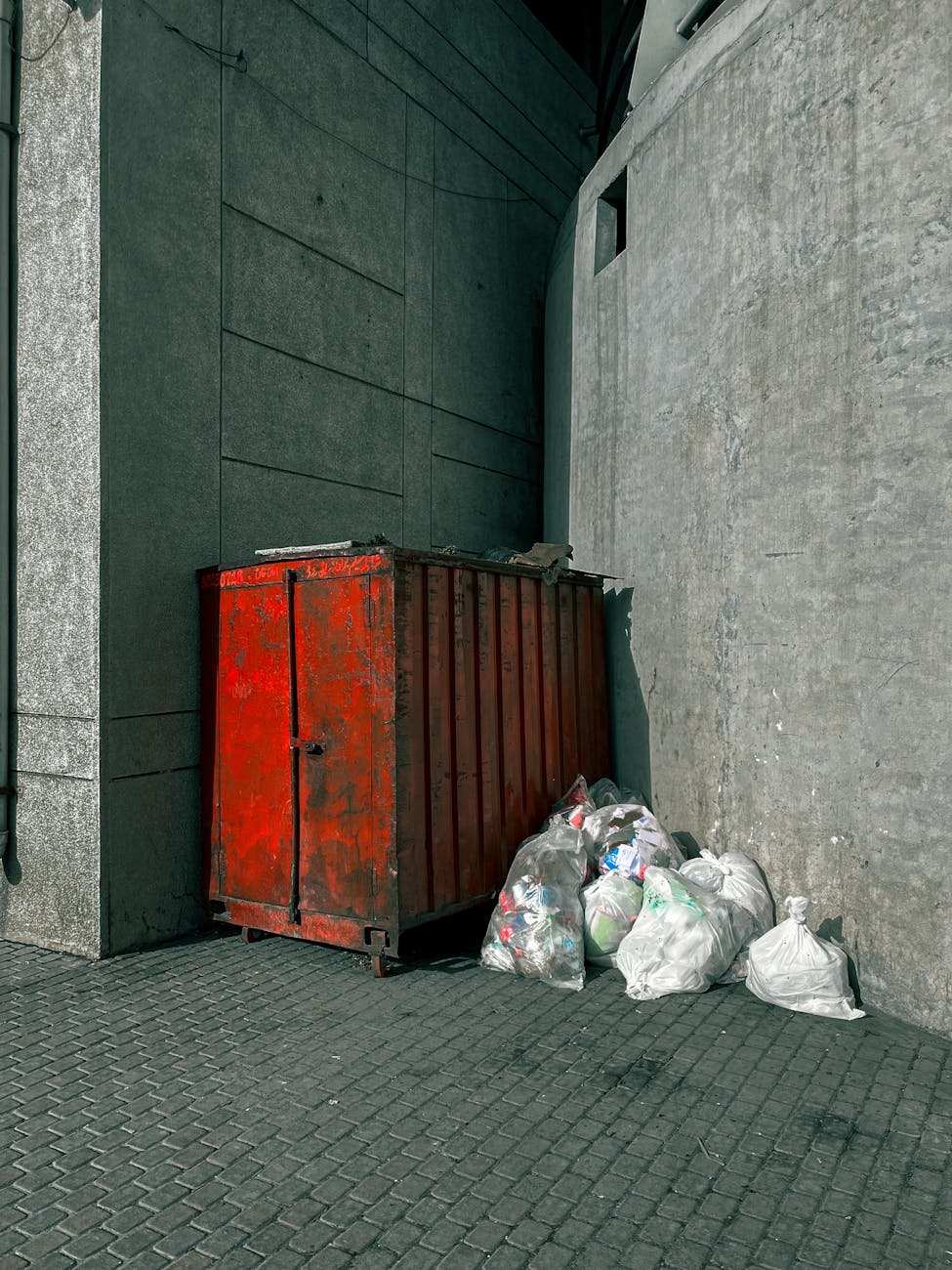
The first time Maria saw the pile in her backyard she laughed — then she cried. Old tiles glinting like broken teeth, a green sofa that had seen too many birthdays, the ghostly smell of paint and coffee-stained carpet. The house in Echo Park was supposed to be a quick flip, a weekend of sweat and music and then a new life for the craftsman bungalow. Instead it felt like a small landfill, humming under the June sun with the freeway’s distant roar from the 101 and the sweet ocean breeze that slips over the hills from Santa Monica. “How do we even begin?” she asked, running a hand through dust that found her eyelashes like fine sand.
Setup: A Neighborhood, a Project, and a Deadline
Maria had a deadline and a budget. Her contractor, Andre from Glendale, had two men and a truck, but no place to put the mountain of debris. “We need a roll-off, stat,” Andre told her, tapping his phone and squinting at the bright map where Seattle looked like a faraway country and Long Beach was a little blue dot on the coast. The plan was simple: demo the kitchen, refinish the floors, paint the exterior a bright, honest white. But beyond the aesthetics was the logistics of removal — where to put a dumpster in a city with narrow streets, historical districts, and neighbors who took pride in their curb appeal.
On the ride over from Burbank the boys joked about concrete and their favorite tacos, but when they pulled up to Maria’s house in Echo Park the mood tightened. A neighbor from a Victorian across the street poked out a window and asked, politely sharp, “Are you getting a permit for that?” In Los Angeles, or any close-knit community like Culver City or Pasadena, certain questions are always practical and sometimes political. Permits, parking, noise, and the environment all entwine.
Rising Action: Permits, Traffic, and Sundown
Andre called several companies — a national brand with glossy trucks, a local family-owned outfit in Torrance, and a boutique service in Silver Lake that promised same-day delivery. The national company quoted a neat number, but with the calendar flipped to busy season and a week packed with Hollywood shoots and construction across the Valley, the earliest was three days out. The Silver Lake crew could come in the afternoon, but their truck would need a Street Use Permit to sit on the curb: Los Angeles, like Santa Monica and Beverly Hills, often requires permits to occupy public parking spaces with a roll-off container. “You don’t want to get a ticket on day one,” Andre said. “And if you’re on a narrow street like this, neighbors get touchy.”
There was more to worry about than a parking ticket. The dumpster companies asked about contents. Hazardous materials like paints, batteries, and asbestos-laden tile are prohibited from standard dumpsters in most municipal transfer stations — they need special handling. “We can’t take those old fluorescent tubes or the cans of solvent in the garage unless we schedule a hazardous pickup,” Maria learned, the top of her excitement pinched by practicality. Inglewood’s rules, she discovered after a quick online search, were particular about oversized debris left on the curb, while Long Beach transfer sites offered separate disposal and recycling options for clean concrete and metal.
Traffic conspired. By the time the two-yard roll-off container from the Silver Lake company arrived, the afternoon light had softened into orange, but the truck’s engine roared like a neighborhood animal waking up. The dumpster thunked onto the street with a metallic sigh, the smell of diesel briefly cutting through the sweetness of jacaranda blossoms. A man with a reflective vest handed Maria a paper copy of the permit and said, “We’ll take care of everything you can’t legally dump. If you have electronics, we can route them to a certified recycler in Anaheim. Metal? We separate it and take it to a yard in Long Beach for scrapping. Keep those paint cans to one side. We’ll handle the rest.” His voice was a lesson and a comfort.
Key Insights: Dumpster Dimensions, Diversion, and Dollars
Between the crunch of demolition and the slow sweep of cleanup, Maria learned practical lessons that any homeowner or contractor in Greater Los Angeles should know. A few of the most useful were:
– Sizes matter: Roll-off dumpsters commonly come in 10, 15, 20, 30, and 40 cubic yards. A kitchen and bath demo typically fits in a 20- or 30-yard container; a whole-house clear-out often needs a 30 to 40. Andre shook his head at small containers for big jobs. “You’re paying for time and trips,” he said. “Better to get the right size up front.”
– Weight, not just volume: Dumpster companies set weight limits and charge overage fees by the ton. Concrete, bricks, and dirt are heavy; they can eat into limits faster than a pile of plywood. Choose a concrete-specific dumpster or separate the heavy stuff to avoid surprise bills.
– Permits and placement: If the dumpster sits on public property — the street or sidewalk — most cities from Glendale to Beverly Hills require a permit. Private driveways can house the container without a permit, but watch for driveway damage and curb cuts. Apply early: some municipalities need several business days to review a permit application.
– Prohibited items and special handling: Tires, batteries, refrigerators (due to refrigerant), and hazardous chemicals can’t go into a standard dumpster. Electronics and mattresses may need special recycling. Many local haulers partner with certified recycling centers in Long Beach, Anaheim, or Torrance to divert materials from the landfill.
– Green choices: Los Angeles County and cities like Santa Monica incentivize recycling and diversion. Some dumpster providers offer sorting options, charging a bit more for a dumpster that will be sorted at the yard to separate wood, metal, and gypsum for recycling. It’s good for the planet and often for the wallet if material has scrap value.
A Moment of Tension: The Neighbor and the Noise
On day three an elderly neighbor across the street, Mrs. Alvarez, knocked on Maria’s door. She held a garden trowel like a scepter. “My grandson can’t sleep with all that banging,” she said, not unkindly. “And my car is blocked sometimes.” Maria invited her inside for tea, the two of them sitting in a living room that’s halfway painted and halfway a storage graveyard. “We have a permit,” Maria reassured her, showing the glossy paper that felt like a tiny, bureaucratic talisman. “We start early and finish early, and we’ll make sure the street is clear by night.” Sometimes human connection solves what a ticket never could: the willingness to be considerate in a community where everyone is trying to make room for life to be better.
Resolution: The Last Load and the Sunset
Weeks passed in a montage of sanding dust, the acrid tang of primer, the satisfying swing of a new door closing. The final day of the dumpster was a small ceremony. Andre and his team arrived at dawn, tummies full of coffee from a Burbank diner, and began the systematic work of hauling the last of the rubble into the truck bed. “Good as new,” one of them said, wiping his hands on his pants. The dumpster’s sides had scored stories into them: a child’s scribble, a sticker from a previous job, a smear of plaster that glittered like cheap silver in the morning light. When the truck pulled away, the street seemed to exhale.
Maria walked the curb after the debris was gone. The smell of cement and paint had faded; what remained was the clean scent of cut grass and distant ocean, and the city — Los Angeles, the city of neighborhoods and deadlines and improbable makeovers — hummed along the horizon. In the distance, beyond the palms, the Hollywood Hills etched a jagged line against a sky that promised a soft evening. She thought of the lessons learned: check the permit rules for Culver City or Pasadena, know your dumpster sizes, ask about weight fees, and always, always ask where the junk will end up.
Takeaway: What to Remember and Do
If you find yourself staring at a pile and wondering how to begin, remember Maria’s story. Start with a plan. Estimate the volume and type of debris. Call local companies in Los Angeles, Long Beach, Torrance, and Santa Monica and compare quotes, not just on price but on services: permits, recycling, and handling of hazardous items. Ask for written estimates that explain weight limits, overage fees, and what items are prohibited. Schedule permits early if you plan to place a dumpster on the street, and be mindful of neighbors — a note, a cup of coffee, or an early finish time goes a long way.
Think green where you can: separate metal, concrete, and clean wood for recycling. Partner with companies that have diversion programs and connections to local transfer stations and recycling yards. For special materials like electronics or old mattresses, ask for a certified recycler — many haulers in the Greater Los Angeles area have preferred facilities in Anaheim or Long Beach that ensure responsible disposal.
And finally, remember the human side. Renovation and removal are messy not just in the physical sense but emotionally. You’re altering a space that holds memories and neighbors who hold routines. A little communication, a permit filed in time, and a trustworthy team can turn chaos into a clean slate.
That evening Maria stood on her porch as the sky softened into violet. The street was clear, the last of the dust settling into corners like confetti. Andre waved from his truck as he rolled away toward the 5 Freeway, the city opening like a map in dimming light. Maria felt a small, fierce satisfaction — not from the dumpster’s departure alone but from the ritual of it: the planning, the concessions, the work, the community that hummed around it. When the moon lifted above the hills, pale and steady as a borrowed spotlight, the bungalow looked like it belonged to the future. The mess had been removed, but the story — the learning, the neighbors, the smell of paint — would sit with her for longer, a memory turned tidy and true.