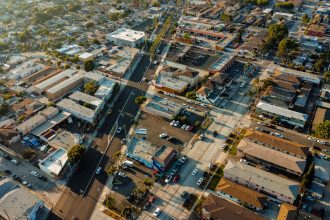
The first time I followed a dumpster truck through Los Angeles, it felt like tagging along on a small urban ritual—one that both announces endings and quietly makes room for beginnings. We rolled past the neon of downtown, crept through the tree-lined calm of Pasadena, and smelled the ocean just once when the truck turned toward Santa Monica. The air was a mosaic of diesel, citrus from a neighbor’s garden, and the faint, tangy residue of a long-ago barbecue. In the back of the truck, beneath a heap of shattered drywall and a mattress that had seen better decades, a postcard from a Venice thrift store fluttered like evidence of every life these items once lived.
Setting the Scene: Who Shows Up When a City Declutters
There are characters in every cleanup. On a humid June morning in Echo Park, Marta, a homeowner with paint on her forearms, met us at the curb. ‘We need this gone before my mother’s memorial,’ she said, eyes fixed on the bulging pile. Across town in Burbank, Luis, a contractor, was already directing traffic with a practiced hand as we lowered a 20-yard roll-off into a tight alley. ‘You can’t imagine the calls I get after storms,’ he laughed, shaking his head at the memory of soggy sheetrock and sodden insulation.
Each job has a rhythm: a short safety briefing, the staccato clank of metal against metal, the thud of old furniture finding a last resting place. Drivers move with the quiet competence of people who have mapped the city’s arteries—dodging school buses on Sunset Boulevard, timing drop-offs to avoid rush hour on the 405, knowing which neighborhoods will ask for a permit if the dumpster sits on the street overnight. If Los Angeles were a body, dumpster crews would be its circulatory system, clearing blockages and keeping life, slow and steady, flowing.
Rising Action: Weather, Permits, and Unexpected Finds
Not every job goes as planned. On a rain-softened morning in Wilmington, a driver’s boots sank into mud as the crane arm hesitated above a misloaded container. In Bel Air, a homeowner called in a panic when an heirloom chest broke during a lift. We learned to adapt: bring extra tarps for sudden showers near the coast, wedge boards under narrow wheels in Silver Lake, and always carry a generator for sites where the only power is a sleepy sun.
But there are surprises too—small joys folded into the debris. Once, in Long Beach, a child’s watercolor painting emerged from a stack of ancient schoolbooks. The mother, who’d forgotten she had been saving her son’s art, laughed through tears when she saw it. ‘Keep that one,’ the driver said, handing it over like a benediction. ‘Not everything needs to go.’ Moments like that remind you that waste isn’t just material; it’s memory in disguise.
Key Insights Woven into the Story
Through the work, practical lessons emerged. Here are the ones that stuck, phrased as if someone were whispering them over the din of a city pickup:
‘Size matters.’ Not every driveway can swallow a 40-yard monster. In neighborhoods like Beverly Hills and Malibu, tight cul-de-sacs and aesthetic rules often mean smaller dumpsters—10- or 15-yard bins that still pack a punch. Home renovations in Culver City or Torrance commonly use 20-yard containers; large commercial demolitions in Downtown Los Angeles or near the Port of Los Angeles lean toward 30- or 40-yard dumpsters.
‘Permits are not optional.’ Certain cities—Los Angeles, Santa Monica, and West Hollywood among them—require curb placement permits and sometimes traffic control plans for street-side dumpsters. A permit protects your project from fines and ensures crews work safely amid pedestrian and vehicle traffic. Scheduling the permit ahead of time is often the difference between a smooth morning and a ticketed headache.
‘Know what’s banned.’ Paint, tires, batteries, and electronic waste need special handling. You can’t just toss them into a roll-off and call it a day. Local transfer stations and dedicated e-waste events—sometimes run by municipal programs in Pasadena or Glendale—accept hazardous materials. And if you have a few appliances or an old refrigerator, there’s a specific protocol for freon removal.
‘Recycling isn’t optional—it’s smart business.’ Many disposal services now offer diversion plans: separating metal, concrete, wood, and green waste on-site increases recycling rates and cuts tipping fees. In places like Santa Monica and Manhattan Beach, where environmental ordinances are strict, recycling can even be a contractual requirement for certain permits.
Dialogue: Voices from the Field
‘You learn to read a neighborhood,’ the lead driver, Ramon, told me as we idled on a quiet street in Echo Park. ‘Some blocks prefer punctual, quiet crews. Some want someone who works late because the homeowners aren’t home during the day.’
‘And timing?’ I asked.
‘Timing is everything,’ he said. ‘Venice at sunrise is easy—fewer cars and a breeze until the tourists wake up. But Beverly Hills at lunch? Don’t even think about it. You plan, you call, you get the permits, and if the city’s going to make you wait, you accommodate.’
Scene: The Heartbeat of a Neighborhood Cleanup
On a crisp morning, we staged a teardown in Highland Park. The producer overseeing the renovation—Caleb, who’d grown up in the area—wanted the old house cleared before a family reunion. Neighbors poured coffee from a thermos and watched as workers carried out decades of accumulated life: a yellowing record player, a stack of classified ads clippings, a carton of postcards stamped in a decade that smelled like mothballs and sun‑warmed paper.
‘It’s more than just junk,’ said a neighbor who had lived two doors down for thirty years. ‘It’s our story. But sometimes stories get heavy.’ She handed the crew cookies as a small thank-you, and for a moment the street felt like a village square where a communal weight was being lifted.
Practical Tips Hidden in the Story
As we moved from job to job, practical advice naturally seeped into the narration. If you’re planning a dumpster drop in Greater Los Angeles:
- Measure the spot and the driveway gate. Allow for truck turning radius on narrow streets in Glendale or Burbank.
- Ask about per-ton versus flat-rate pricing. Renovation debris often includes heavy materials like concrete or tile that can spike charges if you only quote a flat rate without a weight estimate.
- Separate recyclables and donations. Habitat for Humanity ReStores and local Goodwill branches in Los Angeles and Long Beach will often accept gently used items, saving you money and helping the community.
- Schedule drop-off and pick-up around city rules—many municipalities don’t allow dumpsters to block sidewalks or curb cuts without permits and signage.
- Prepare for weather. Coastal fog can soak cardboard and boxes in Venice; bring tarps to protect your load and keep loose items from blowing into gutters.
Climax: The Night Before the Big Pickup
The most tense day was a Friday in West Hollywood, when a condo association hired us for an eviction cleanup. The unit was a small, cluttered nest of belongings accumulated over a lifetime. The manager worried about neighbors’ reactions and the legalities of disposing certain items. We worked beneath a neon sign, as a street musician played distant sax on the corner. The crew moved with the care of people handling someone else’s life—folding a photograph into a paper towel, setting aside prescription bottles to be handled per the city’s hazardous waste guidelines.
When the last load left at dusk, the street felt unusually quiet. A resident stopped to shake hands with the lead driver. ‘You did more than clear that apartment,’ she said. ‘You made space for people to move forward.’
Resolution: What Happens After the Truck Leaves
Dumpsters don’t just disappear when the truck drives off; they circulate. Crews deliver to transfer stations and recycling centers, where concrete is crushed, metal is sorted, and wood is sent to be mulched. The act of removal is also an act of stewardship—the choice to sort, donate, and recycle determines whether a city’s waste becomes a landfill statistic or a resource reclaimed.
By the time we finished the week—dropping a compact dumpster in Malibu where homeowners were trimming back a garden, lifting a 30-yard behemoth from a demolition site near the port—the city seemed tidier, not because of a single dumpster, but because each removal had been thoughtful. The postcard in the back of the truck that had fluttered all week was finally reunited with a nervous homeowner in Santa Monica; she pinned it to her fridge like a reminder that some things are worth keeping.
Takeaway: What to Remember
If you remember nothing else from these streets and trucks, hold on to three truths: first, proper planning prevents expensive surprises—get permits, measure driveways, and choose the right size. Second, waste handling in Los Angeles is local—rules vary from city to city, and respecting those differences saves time and money. Third, disposal is an opportunity to be intentional—donate what’s usable, recycle what can be reclaimed, and treat every item as if it once belonged to someone who loved it.
As we parked for the final time and watched the Los Angeles skyline glow under the late sun, Ramon said nothing. He just looked toward the west where the light brushed the palm trees like a benediction. The last thing left in the alley was a small painted stool, rescued from a pile at the last minute and set gently against a wall. Someone might take it. Someone might sit there and watch the city move. Either way, the street had space to breathe again—an ordinary miracle the city performs every day, one dumpster at a time.
The image of the small stool, still warm from the day, framed by the distant neon and the silhouette of a palm, stayed with me. The city had been cleared, but it had also been given back, a little lighter and ready for whatever came next.