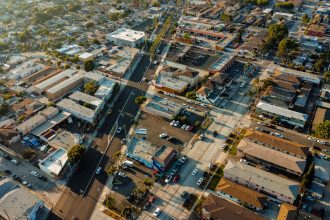
The sun had barely warmed the asphalt when the first neighbor walked out in slippers, cupping a coffee and squinting at the hulking metal box parked in front of 8th Street. ‘Did someone start a construction site overnight?’ she asked, half amused, half annoyed. The dumpster sat like an uninvited guest on the curb—paint peeled along its edges, a smear of sawdust at the lip, and a faint smell of diesel that mixed oddly with the sea breeze drifting in from Santa Monica a few miles west.
Setup: A Remodel, a Deadline, and a Neighborhood
It was supposed to be a simple kitchen remodel for Marina in Venice. New counters, better ventilation, and a reclaimed-wood island that would look perfect against the soft light of her narrow house. Yet in Los Angeles nothing is ever quite simple. The contractor, Jamal, called the week before and said they needed a 20-yard roll-off dumpster. ‘We clear a ton of debris in three days,’ he said. ‘Boards, cabinets, tile—throw it in and we’ll haul it away.’ The house sat on a quiet block where palm trees cast long fingers over cracked sidewalks and dog walkers exchanged polite nods. Marina imagined the clean sweep: out with the old, in with the new. She did not imagine the maze of permits, neighbors, and parking placards that would follow.
Across town in Pasadena, a historic bungalow renovation required a different approach. Mr. Chen, the homeowner, was more used to careful restoration than brute-force demolition. He wanted a smaller, 10-yard roll-off placed in his driveway so the old lattice and century-old molding could be salvaged and catalogued. On the other side of the city line, in Inglewood, a landlord juggling evictions and repairs needed a quick 30-yard dumpster to clear months of hoarded debris from a multi-unit property. Each situation required the same piece of equipment, but with wildly different permits, placements, and expectations.
Rising Action: Logistics, Conflict, and the Smell of Sawdust
What followed felt like a short, local drama. Jamal’s truck arrived before sunrise with a low rumble, metal clanking against metal. He parked, the driver hopped out, and the dumpster slid into place with a metallic sigh. A neighbor from down the block—Mrs. Alvarez—appeared at her gate. ‘You need a permit for that,’ she said bluntly. ‘The City will ticket you.’ Jamal rubbed his temple. ‘I called the city this morning, but they said as long as it’s not blocking the fire hydrant or the driveway we should be fine.’ It wasn’t that simple.
City rules change block by block. In downtown Los Angeles or Hollywood, you might need a Department of Transportation street permit to keep a roll-off on public property more than a day or two. In Santa Monica, those rules tighten near the beach and pedestrian zones, and you might need a coastal zone clearance. In Pasadena, historical commission approvals can be part of the equation. Long Beach has its own set of ordinances around curbside storage and commercial waste. The deeper Jamal dug into scheduling and permit fees, the more his headache grew: parking placards, temporary no-parking signs, neighbor notifications, and sometimes a bonding requirement if the dumpster could mar public sidewalks.
Meanwhile, the dumpster became a magnet. Neighbors complained about the odor until someone pointed out a pile of damp drywall and a leaking paint can. ‘Who put the paint in there?’ Marina demanded. Jamal sighed. ‘We accidentally threw a can in the wrong bin. Hazardous waste like paints, oils, batteries, and asbestos can’t go in a regular roll-off. It can cause fines and a whole legal mess.’ The stench was a clue: not all trash is equal.
Key Insights: What I Learned on the Curb
By the time the second week rolled around, I had learned more about dumpster removal in Greater Los Angeles than I’d ever expected. Here are the essentials, woven into the story of Marina and Mr. Chen but useful whether you’re in Burbank, Culver City, Torrance, or West Hollywood.
Choose the right size: Roll-off dumpsters come in standard sizes—10, 15, 20, 30, 40 yards. A 10-yard unit fits small cleanouts and tight driveways in Glendale or Hollywood, while a 30-yard workhorse suits major remodels in neighborhoods like Echo Park or Silver Lake. Jamal almost ordered a 30 for Marina, but the alley behind her Venice home was too narrow; they downsized to a 20 and made space for the truck to maneuver.
Know the rules for placement: If the container sits on city property (the curb, the street), you likely need a permit and sometimes temporary signage. Parking placards or ‘no parking’ signs are common in Los Angeles neighborhoods to reserve the curb space. In Santa Monica and beaches like Venice, there are sunset-to-sunrise restrictions and stricter pedestrian access rules. Jamal had to coordinate a morning delivery before a farmer’s market packed the street.
Separate materials and avoid hazardous waste: Construction debris, wood, metal, and concrete are usually acceptable, though concrete and dirt often carry weight fees. Appliances, electronics, tires, solvents, asbestos, and paint are typically prohibited unless handled via special services. Mr. Chen’s salvage plan in Pasadena paid off because they separated salvageable trim and antique hardware before demolition, reducing landfill costs and keeping the historic character intact.
Understand pricing: Pricing can be flat-rate or weight-based. Many LA companies quote a base price that includes delivery, three to seven days of rental, and an estimated tonnage. Extra days, overweight loads, and prohibited items can trigger fees. Rampant street parking and narrow alleys in neighborhoods like West Hollywood can add logistical surcharges because drivers need special equipment or additional labor to access the site.
Check local recycling and donation options: Los Angeles has robust recycling programs and nonprofit outlets. Metal scraps can fetch a bit of money at a local yard; doors and appliances in good condition can be donated to ReStore or Habitat; usable lumber often gets reused in smaller projects. Jamal called a local salvage group to pick up cabinets from Marina’s kitchen; she felt better knowing less went to the landfill.
Timing matters: Weekdays are easier for permits and for drivers to find curb space. Seasonal surges happen after storms, during wildfire cleanup, and after holidays. In Torrance and Inglewood, for instance, cleanup crews are busier post-storm, and tipping fees at local facilities can spike.
Resolution: The Last Load and a Quiet Street
The last morning was humid and bright. Jamal’s crew moved in like a practiced ballet. They stacked wood neatly, set aside metallic scraps for the recycler, and labeled a corner of the dumpster with a note: ‘Paint cans and oils collected separately.’ A local hazardous-waste pickup arrived to remove the offending canisters, and Marina watched as a salvage group hauled the old island away for a new life in a coffee shop in Culver City.
‘We tried to keep it neat,’ Jamal said, wiping sawdust off his forearms. ‘If you’re organized, you save money and headaches. Call for the right permits, don’t overfill it, and think about recycling.’ The truck backing up, straps unspooling, the freight of renovation slid into the city, bound for the regional transfer station. For a moment the street looked untouched, save for a faint, satisfying pile of sawdust that glittered in the sun like confetti.
Across town, Mr. Chen’s driveway held one last wooden banister cradled like a rescued artifact, and the Pasadena Historical Commission inspector gave a nod of approval when she came by to see the salvaged crown molding. In Long Beach, a landlord breathed easier as the final mattress and torn vinyl were removed from a dilapidated unit, making way for new tenants to move in without stepping over years of neglect.
Takeaway: What to Remember and What to Do
Dumpster removal in Greater Los Angeles is more than a truck and a container. It’s a choreography of permits, timetables, and local rules; it’s about making space—literally and figuratively—for something new. Remember these practical steps when you find yourself scheduling a dumpster:
– Match the dumpster size to your job and access constraints. A wrong size can cost time and money. 10–20 yards for small residential projects, 30–40 for large renovations or full-home clearouts.
– Ask whether the dumpster will sit on private property (driveway) or public property (curb). If it’s the latter, get the right street permit and post temporary no-parking signs if necessary.
– Never mix hazardous materials into a standard roll-off. Set aside paints, solvents, asbestos, electronics, and tires for specialist disposal.
– Separate recyclables and donate what you can. Salvage reduces landfill fees and often helps local nonprofits.
– Ask for a clear quote that outlines rental days, weight limits, and fees for overage or prohibited items. Clarify who is responsible for permits and parking placards.
– Consider timing and traffic logistics—narrow alleys in Venice, peak hours in Hollywood, or busy beachfront weekends in Santa Monica will affect delivery and pickup.
Months later, when I walked by Marina’s house, the kitchen gleamed. The reclaimed island fit perfectly and smelled faintly of the sawmill that supplied it. The street outside was ordinary again—kids on bicycles, a mail carrier ringing a gate—but when I looked down the block, the ghost of that dumpster remained in my memory: a rectangle of painted metal that had catalyzed change, sparked arguments, taught neighbors about city permits, and ultimately made space for new light to enter an old house.
Jamal’s truck disappeared into afternoon traffic, tires whispering over palm-lined asphalt, the city taking in another load—wood to be recycled, metal to be melted down, unwanted things to be transformed or buried. For a brief moment the late sun hit the side of the truck and turned the metal into a bronze silhouette, like an old ship slipping away from the dock. The block exhaled. Work had been done, rules had been followed, and the neighborhood was, surprisingly, a little cleaner and a little wiser for it.