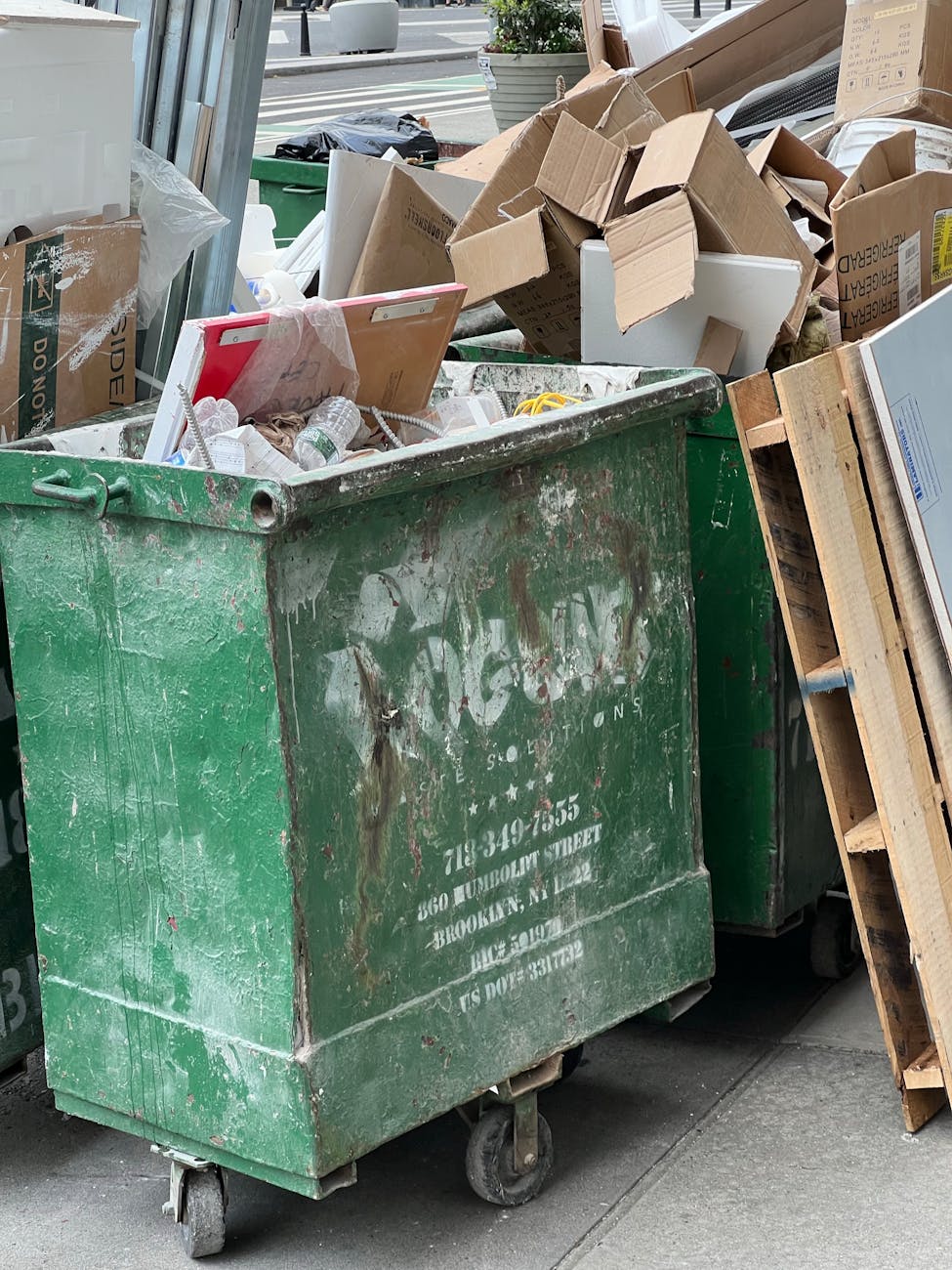
The first time Maria watched the crew roll a hulking dumpster into the narrow alley behind her Craftsman in Echo Park, she thought of it as an ugly metal visitor — loud, blunt, and out of place under the jacaranda trees. By sunset the same box felt like an honest ally. It swallowed decades of paint cans, a sagging sofa that smelled of rain, and the brittle remnants of a porch that had sagged with family dinners and late-night laughter. The air tasted like sawdust and salt — the distant Pacific on the Santa Monica horizon and the grit of the 405 — and Maria breathed, for the first time in months, a little lighter.
Setup: Who Shows Up, and Why
It was 7:30 on a Tuesday morning when Luis from a local roll-off company called to say he’d be there in twenty minutes. He parked with the cab facing north on Sunset Boulevard to avoid the school pick-up crush, folded out the ramps, and spoke to Maria in the easy cadence of someone who’d navigated every kind of Los Angeles yard and alley.
‘We’ll need room to swing the truck,’ he said, eyeing the narrow lane between Maria’s bungalow and the neighbor’s fence. ‘If the city wants the container on the curb, you’ll need a placement permit. If it’s in the driveway, no permit, but check the driveway slope and access.’ His voice carried a practiced warmth, the kind of calm that comes from dozens of similar starts in Burbank, Pasadena, and Glendale.
Across town, in Long Beach, a construction foreman named Ava was ordering a 20-yard dumpster for a kitchen remodel in Belmont Shore. In Torrance, a community group prepared a neighborhood cleanup near a strip of pothole-lined streets, arranging for multiple 10-yard containers for mattresses and green waste. Each client had a different problem, a different smell in the air — paint thinner, rot, ocean salt, motor oil — but all were asking the same central question: how do you remove the old to make way for the new without getting fined, overcharged, or leaving the city with another illegal dump site?
Rising Action: Complications on the Ground
If you imagine dumpster removal as a simple drop-in and haul-away, Los Angeles will correct you. There are alleys that resemble canyon passages behind Hollywood flats, cobblestone service lanes in Beverly Hills, and driveways where a whole roll-off truck can’t swing without invoking neighborly disputes. Maria watched as Luis measured twice, muttered about the car that always parks too close, and radioed his dispatcher to shift the truck another ten feet. The sentinel seagulls over Santa Monica watched, unconcerned.
Permits surfaced like small skirmishes. ‘The city requires a street permit for anything that sits in the public right-of-way,’ Luis explained while securing the container’s chains. ‘Santa Monica and West Hollywood have their own additional rules. Some parts of downtown L.A. are strict about hours, and in places like Culver City, you might need traffic control if you’re blocking a lane.’ His fingers flitted through the paperwork in the glovebox like a musician counting beats.
Then there was the question of what’s allowed. ‘No hazardous waste in a regular dumpster,’ Luis said. ‘Not paint thinner, not asbestos, no old fluorescent bulbs. E-waste needs special handling. Concrete and dirt can cost extra because of weight.’ Maria nodded, picturing the heavy concrete slabs from her small patio renovation — the ones she’d planned to toss without thinking. Each slab felt suddenly like a small budgetary cliff.
Key Insights: What the Story Teaches About Dumpster Removal
From Echo Park to Pasadena, the practicalities repeat: size matters, placement matters, contents matter, and timing matters. Here are the lessons Maria learned as her house transformed day by day.
Size and type: Dumpsters — often called roll-off containers — come in sizes from about 10 to 40 cubic yards. A 10-yard is like a bulky closet cleanout for single-room decluttering, while 20 to 30 yards handle kitchen remodels or garage clear-outs. Commercial demolition projects often need 30 or 40-yard units. ‘We pick based on volume and type of debris,’ Luis said. ‘You don’t want a half-full 40-yard sitting in your lane, and you don’t want an overflow 10-yard that causes illegal dumping in Venice or Hollywood.’
Permits and placement: For placement on a public street or sidewalk, most Greater Los Angeles cities require a container placement permit. Costs and lead times vary: some cities issue permits online in a day; others require physical forms or traffic control plans if a lane is blocked. Maria remembered the permit sticker like a passport for her alley-bound visitor. ‘Call early,’ Luis advised. ‘Two weeks before busy seasons, you might wait longer.’ He mentioned how Santa Monica sometimes requires a traffic management plan if the container affects beach-bound weekend flows.
Weight and tipping fees: Dumpsters are charged not only by rental days but also by tonnage when taken to transfer stations. Concrete, dirt, and brick are heavy and can spike costs quickly. ‘If you’ve got old pavers or tile, be prepared,’ Luis warned. ‘We estimate, but the final ticket at the dump might surprise you.’ The team often separated heavy materials into separate containers or suggested local recycling facilities that accept concrete at lower rates.
Recycling and regulations: Los Angeles pushes diversion — separating green waste, metals, and clean wood for recycling. Some cities enforce C&D (construction and demolition) waste diversion requirements; others offer reduced fees if you guarantee a certain percentage of recyclables. Maria felt unexpectedly proud when Luis pointed out the pile of copper and aluminum she thought worthless; it had resale value and wouldn’t add to her tipping fees.
Hazardous and special items: Old paint, solvents, asbestos, batteries, and electronics need handling through special programs. LA Sanitation and many county-run centers offer household hazardous waste drop-off events. Mattress disposal often carries extra fees; e-waste is recycled differently. ‘If you throw the wrong stuff in, it’s not just a fee — you could be fined for illegal disposal,’ Luis added. He’d seen the enforcement trucks in downtown L.A. and the signage in Glendale reminding residents to dispose responsibly.
Access and timing: Narrow alleys in Silver Lake and North Hollywood can mean the difference between a smooth drop-off and a neighborly standoff. If the truck can’t reach the driveway, companies may place the dumpster curbside with a permit. Weekend drops feel convenient but often cost more during peak season near beaches and markets. ‘We try to schedule early mornings to avoid rush-hour closures — especially around the Coliseum or near Dodger Stadium on game days,’ Luis said. Planning, it turned out, reduced stress more than any single physical muscle.
Resolution: The Cleanout and the Quiet After
By the third day, the dumpster was full. It groaned with the soft thud of boxed memories and the raspy whisper of shredded metal. Maria walked the perimeter, picking up a photograph half-tucked in a pile of crumbling books — a wedding photo from a sun-struck Santa Monica pier — and set it gently on the porch. It felt like closing a chapter rather than discarding it.
When the crew returned to haul the container away, neighbors peered from behind curtains and front stoops. Inglewood kids pressed faces to chain-link fences. Luis waved the truck’s lights, pulled the lever, and the dumpster rose as if bowing to the street. The clattering of chains and the truck’s diesel heart reverberated down the block. By the time the dumpster was gone, the alley smelled different — cleaner, less congested. Maria stepped into the quiet and felt the space of potential: a new porch, a pared-down living room, and a garden that would take better shape under a clearer sky.
Takeaway: What to Remember and Do
There is no single right way to remove waste in a city as varied as Greater Los Angeles, but there are good practices that stitch safety, cost-efficiency, and responsibility together. Plan early, size accurately, and ask about permits early in the scheduling stage. Separate materials where you can: metals, clean wood, and green waste often reduce fees and keep more out of landfills. Never put hazardous materials in a standard dumpster; instead, locate a city or county drop-off. Check for neighborhood-specific rules — Beverly Hills, Santa Monica, and West Hollywood may have their own addenda. If access is tight, expect creativity: short-haul arrangements, smaller containers, or multiple drops may be safer and ultimately cheaper than an ill-fitting 40-yard box.
As the sun slipped behind the hills and cast a warm orange over Maria’s freshly cleared yard, she heard a child laugh from across the alley and a woman calling a dog back down a walkway toward a bungalow in Hollywood. Luis closed his truck and handed her a business card with grease on one corner. ‘When you’re ready for the porch demo, call me,’ he said. ‘We’ll figure the rest out.’ Maria folded the card into her pocket and looked at the empty space where a bulky past had once sat. The jacaranda leaves trembled. For a few minutes, the city felt quieter, poised like a held breath waiting for the next thoughtful exhale of change.