The rumble of a diesel engine carved through the early morning fog as the roll-off truck turned down Sunset Boulevard. Maria tightened her cardigan and watched the driver size up her cracked driveway, the familiar Los Angeles skyline folding behind him like a backdrop on a stage. “We can fit a 20-yard, but you’ll need a permit for curb placement,” he said, tapping a clipboard. Maria realized then that clearing out a lifetime of clutter was going to be more complicated — and more liberating — than she’d imagined.
Setup: A City of Houses, Studios, and Piles
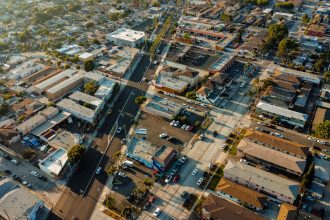
Across the Greater Los Angeles Area, from the bungalow-lined blocks of Echo Park to the modern townhomes of Culver City, there’s a ritual that marks renovation, grief, or renewal: the clanging arrival of a dumpster. For some, it’s the end of a remodel in Glendale or a roof tear-off in Torrance. For others, it’s the aftermath of an estate sale in Pasadena or the weekly haul after a community clean-up on the Long Beach waterfront. Los Angeles is both sprawling and intimate — its neighborhoods are distinct, but each shares the same rules of thumb about space: driveways are precious, permits are necessary, and traffic will always be a factor.
Marco, a contractor based in Burbank, has learned to navigate those rules the hard way. “You wouldn’t believe the calls I get at midnight,” he laughed, recalling a Thanksgiving-weekend emergency when a client in Hollywood needed a dumpster for a last-minute set strike. “In LA, people’s schedules are different — we’re all working odd hours. You plan for the beach breeze and the golden hour, but sometimes you have to plan for rush hour and a last-minute permit.”
Rising Action: The Logistics That Turn Simple Plans Into Little Adventures
To book a dumpster in Greater LA is to step into a choreography of details. Where will the truck park? Is the driveway wide enough? Are there overhead power lines? Do you need a city permit to occupy the street with a large bin? Asked like a series of trivialities, these questions suddenly matter. In Santa Monica, city ordinances and coastal aesthetics mean you must be especially mindful of placement and spill containment. Inglewood, recently bustling with event traffic, demands careful timing around stadium events. A single misstep — an unauthorized placement or a missed pickup — can ripple through neighbors’ days.
One afternoon in South Pasadena, Elena, a homeowner with three generations under one roof, described the sensory jumble of a clean-out. “There was the smell of old boxes, the dust like a soft blanket, and this chorus of creaks every time someone found something unexpected. I felt both guilty and relieved.” When the 30-yard dumpster finally arrived, the neighborhood watched as furniture, framed photos, and a stubborn upright piano made their slow, noisy descent into the maw of the bin. “It sounded like thunder,” Elena said. “But also like a promise.”
Key Insights Weaved Through the Story
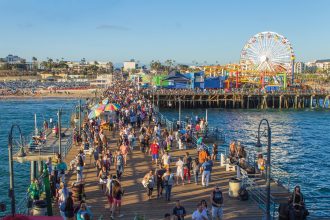
Between anecdotes, certain practical truths become clear. First: size matters. Dumpsters come in common sizes — 10, 15, 20, 30, and 40 cubic yards — and choosing the right one prevents overage fees and saves space. A bathroom remodel in Glendale might only need a 10- or 15-yard bin; a roof tear-off in Torrance often requires 30 yards or more. Second: permits are local. The City of Los Angeles Department of Public Works generally requires a permit for street placement; Culver City and Pasadena have their own forms and lead times. If you want the truck to sit on a curb near the Santa Monica pier or outside a busy Culver City studio, you’ll likely need to apply in advance.
Third: the type of debris influences both cost and legality. Construction debris, mixed household junk, green waste, and hazardous materials — such as paints, batteries, or electronics — are handled differently. “We had a customer in Long Beach who tried to toss old car batteries into the bin,” Marco recalled with a shake of his head. “Not only is that illegal, it’s dangerous. Those items need special drop-off, and in L.A. we have designated e-waste and hazardous waste collection sites for a reason.”
Fourth: recycling and landfill fees matter. Some haulers separate materials on-site for recycling. In Los Angeles, where landfill space and environmental regulations are pressing issues, diverting materials to recycling centers can reduce costs and environmental impact. A commercial demo in Burbank might have a separate charge for asphalt and concrete, while green waste from a neighborhood garden cleanup in Pasadena can often be composted.
Scene: The Delivery
On a humid June morning in North Hollywood, Ramon, the driver, eased a mahogany dumpster down an apartment block’s alley. The air tasted faintly of exhaust and cut grass. A flock of pigeons scattered when the first load of plaster struck the steel with a wet thunk. “Mind your feet!” someone called as a couch swung over the rim. Neighbors watched from windows, some sipping coffee, some snapping photos. Ramon placed the bin with a practiced eye — just off the driveway, aligned with the street permit sticker that Elena had secured two days earlier.
“You guys going to recycle any of that?” a neighbor asked. “We try to keep metal out for the scrappers.” Ramon nodded. “We separate what we can, and we drop loads at transfer stations and recycling yards. But you’d be surprised: a little organization before you toss makes a huge difference.” He told the story of a Santa Monica beach cleanup last spring where volunteers sorted wood, plastic, and glass as the tide shimmered in the background. “People felt better being part of the solution,” he said.
Balancing Cost with Convenience
In Greater LA, price ranges vary: a small 10-yard dumpster for a one-day pickup might start around a few hundred dollars, while larger 30- or 40-yard bins for multi-day construction projects can reach into the thousands when factoring weight, landfill fees, and taxes. Distance from the hauler’s base impacts cost; a company based in Burbank will charge differently for a Torrance delivery than one in Inglewood. “We try to be transparent,” Marco insisted. “Flat fee, plus per-ton charges — and we tell people upfront about prohibited items.” Good haulers will also note local hours for noise and street access. You don’t want a giant bin blocking traffic during a farmers’ market on Abbot Kinney.
Rising Tension: When Things Don’t Go As Planned
Not everything goes smoothly in this city of perpetual motion. One Sunday in Hollywood Hills, a 20-yard bin arrived at the tail-end of a holiday party clean-out, and neighbors complained about late-night noise and blocked street parking. In Glendale, a homeowner misjudged the weight of tile removed from a kitchen floor and exceeded the bin’s limit, triggering a hefty overage fee when the scale at the transfer station told the tale. These moments are where planning and local knowledge pay off.
And then there are the emotional surprises. In Pasadena, when the estate clean-out began, a family discovered a trunk of unsent letters. “We stopped for an hour,” Elena said softly. “We read and cried and laughed. Nobody expected to unearth that. The dumpster wasn’t just a receptacle; it was a container of memory and a catalyst for conversation.” Those pauses — the moments between tosses — are part of what makes dumpster removal in Los Angeles more than a logistical exercise. It becomes a social and psychological act.
Resolution: The Final Haul
After three days of steady loading in Culver City, the dumpster sat full and humming under the late-afternoon sun. Workers wiped sweat from their brows and shared a cold bottle of water. Marco checked the inventory, Ramon logged the weights, and Maria walked the perimeter, feeling the cool of newly swept concrete beneath her shoes. The truck’s engine idled like a meditative drum. As it backed down the street and the metallic scent of leftover nails and sawdust drifted in the wake, Maria felt the streets open up — a small piece of her life made room for something else: a new painting on an empty wall, a dance class she’d been putting off, a bench on the patio.
Back in Long Beach, volunteers at a beach cleanup loaded a smaller, community-sized dumpster with tangled nets, plastic fragments, and an old surfboard. They paused when a child found a glass bottle with a weathered label. Someone started telling a story about a childhood wave and a summer that had stretched forever. The dumpster had become, briefly, a storyteller’s prop, a place where discarded objects made space for new dialogues.
Takeaway: What to Remember and Do
If you’re planning a dumpster removal in Greater Los Angeles, consider this practical checklist spun from days on dusty driveways and evenings watching trucks vanish into sunsets: choose the right size, check local permit requirements, separate hazardous materials and electronics for special disposal, ask about recycling options, confirm pickup windows to avoid late fees, and pick a hauler with transparent pricing. But beyond the checklist, remember the intangible side: clearing out is a kind of caretaking — of space, memory, and neighborly peace.
In the end, the story of a dumpster delivery is as much about people as it is about debris. It’s about a contractor who knows a city’s shortcuts, a driver who can place a heavy bin like a sculptor balancing a block of stone, a homeowner who feels a house breathe a little easier, and a neighborhood that briefly gathers around the simple, noisy act of making room. Los Angeles, with its palm-lined streets and sun-baked alleys, teaches patience and planning — and the occasional surprise of finding something precious inside what you thought you’d throw away.
When the last truck in our stories rolled away, tires whispering on warm asphalt, the city exhaled. The skyline gleamed — a collection of stories stacked and resolved — and beneath it, a dozen freshly cleared driveways waited for new lives to unfold.