The first sound was a metallic cough, like a small drumbeat under the roar of the 405. Maria stepped out from behind the plastic sheets that had been taped to her kitchen doorway for three weeks and squinted into the morning. A long, olive-green dumpster sat in the middle of her Silver Lake driveway like a beached animal, its sides streaked with dried paint and the ghost of a sticker that read ‘PALOS VERDES WASTE CO’. The sun caught the edges of a smashed lamp and a pile of pale, chalky tile. Her contractor, Luis, was already talking to the driver, his hands moving in quick, anxious motions.
Setup: Why One Dumpster Mattered
In the days leading up to that moment Maria had juggled three things: a toddler who refused to nap, a permit application she did not understand, and an upstairs bathroom that had decided to drop its century-old bones into the 21st century. She had chosen Silver Lake for its older houses and steep hills, and for weeks the house had smelled like lavender dust and concrete dust mixed with the sweetness of her daughter Carmen’s juice boxes. But nothing prepared her for the logistics of getting rid of what they were tearing out.
‘We need a 20-yard,’ Luis had told her. ‘Not too big for the driveway, but big enough for the tiles and the vanity. And we’ll need it on the curb tomorrow morning so the crew can work.’ She nodded, which is what people do when they are trying to make too many things fit into too little time.
The dumpster company was a family operation based in Carson, with a dispatcher in downtown Los Angeles and drivers who knew the side streets of Burbank better than their GPS. Jamal, who ran the dispatch, promised they could be there by eight. ‘We know the routes,’ he said. ‘From Compton to Malibu, we move junk and keep things tidy.’ His voice on the phone had been calm like a man who has solved problems at 6 a.m. for years.
Rising Action: Streets, Permits, and the Unexpected
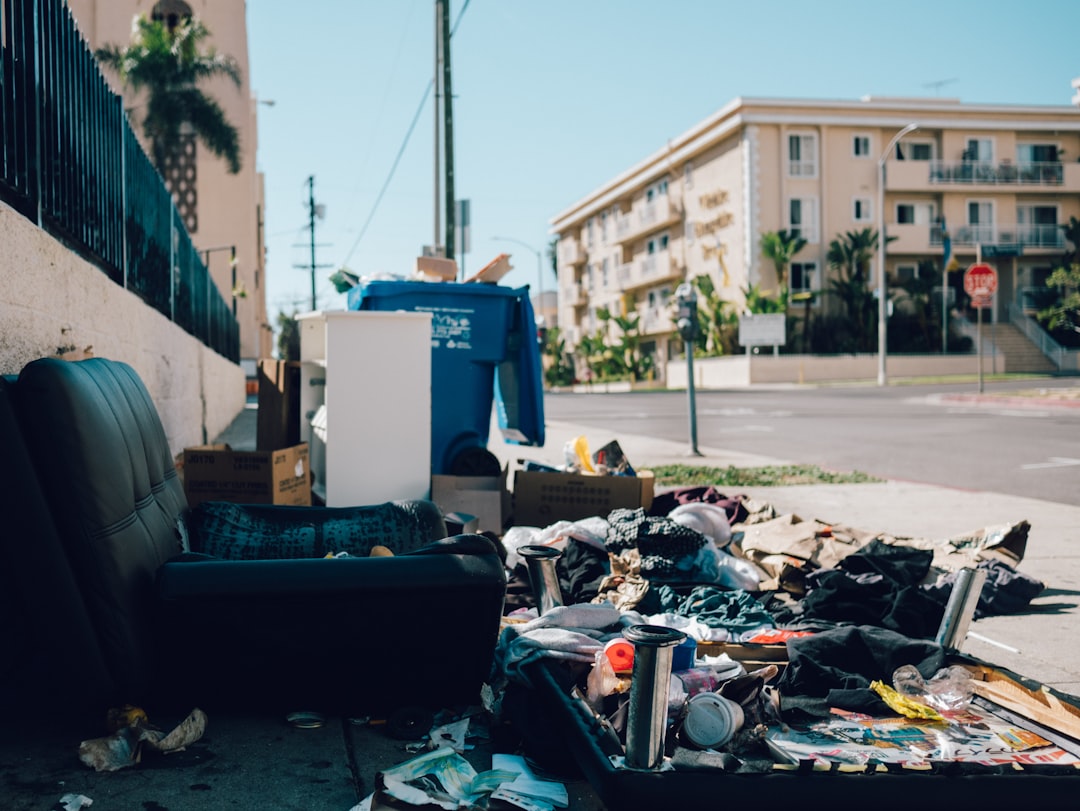
The next morning the city showed up in fragments: a parking permit online that required a different upload, a neighbor in Culver City who complained about noise, and an elderly woman in Hancock Park who wanted the recycling separated because her son worked at a transfer station in San Pedro and she had strong opinions about cardboard. At nine, the driveway still held more demolition than the dumpster could swallow. The tiles had come off in heavy slabs, the plaster in long, dusty sheets; the old bathtub, heavy with rust, did not want to be lifted.
‘We can take tile, we can take porcelain tubs, but if you have old paint or solvents, keep them separate,’ Miguel, the driver, told Maria, running a gloved hand along the dented rim of the dumpster. His jeans were speckled with grit and the smell of diesel clung to his jacket. He had driven through Torrance traffic the night before and parked in Echo Park overnight because that lane was cheaper. He knew where to find a back alley wide enough for an eighteen-foot truck and how to nudge a load so it would balance.
At noon a city inspector texted that any dumpster placed on the street in front of a house in West Hollywood required a temporary curb permit and a reflective cone at each corner. Maria had not imagined a cone could command such power, but the cone felt like a small sovereign in the kingdom of Los Angeles rules. ‘We can take care of the permit,’ Jamal said. ‘There is usually a fee, and it depends on whether you block a travel lane.’ Maria felt the cost as a tiny sting in the jaw of her renovation budget.
Then a new problem arrived like a gust of wind: when they tried to load a stack of ceramic floor tiles, Miguel’s eyes widened. ‘This is heavier than we thought,’ he said. He handed Maria a crumpled estimate. If the load exceeded the weight limit for the 20-yard roll-off, they would either have to upgrade to a 30-yard dumpster or pay an overage fee at the transfer station outside Long Beach. The idea of paying another surcharge felt like losing an extra key in an already messy house.
Key Insights: What I Learned About Dumpsters in L.A.
As the day moved toward a late, orange afternoon the story of Maria’s dumpster became a lesson in the city’s choreography. Jamal and Miguel explained things in short, practical sentences that were easy to remember: different sizes matter; permits matter; not everything can go into a dumpster.
They described dumpster sizes like cataloged beasts. A 10-yard is often called a small roll-off, good for garage cleanouts or attic trash — a fit for a Burbank apartment cleanout or a Pasadena yard sale spill. A 20-yard, the one Maria had chosen, is a middleweight, popular for kitchen remodels in Culver City and bathroom renovations in Glendale. A 30- or 40-yard is the big workhorse for construction sites in Hollywood or beach house gut jobs in Malibu.
‘Weight is the silent thief of a job,’ Jamal said, leaning against the truck as the sun made the palm trees long. ‘Tile, concrete, dirt — those add up fast. If you add too much, the transfer station will charge you for every extra pound.’ He named transfer stations near San Pedro and Long Beach as common destinations for heavier loads, and mentioned that Sunshine Canyon is used by some routes in the San Fernando Valley for municipal waste.
They also taught Maria about what’s prohibited: asbestos (which often hides in older roofs and pipe insulation), fluorescent bulbs with mercury, certain chemicals, and large electronics with hazardous components should never go in a standard roll-off. For items like a mattress, there were sometimes separate rules or fees. Donation, they said, was often an overlooked option — Goodwill, ReStores in Pasadena, and specialized recycling centers in Downey or Carson could take gently used appliances and furniture, saving landfill space and giving the items a second life.
Accessibility was another practical note. ‘If the truck can’t get within a certain distance, or if there are low-hanging power lines in Beverly Hills or a narrow alley in Silver Lake, we’ll have to stage the dumpster somewhere else,’ Miguel said. That usually meant a longer carry and sometimes a permit from the city where the dumpster was parked. In Los Angeles, where streets are often a tight puzzle of old plans and new developments, these little rules make or break a day’s schedule.
Rising Action Continued: Negotiations and Community
Neighbors started to notice. A woman from across the street in Echo Park brought over coffee and asked about the renovation. ‘You know, when my sister did a remodel in Santa Monica they recycled most of the wood,’ she said, her voice curling around the steam of the coffee like a friendly vine. A teenage boy on his skateboard asked about the truck’s hydraulics. Carmen, Maria’s toddler, found a small blue rubber duck somewhere in the rubble and presented it to Miguel like a peace offering. ‘Keep it,’ he said, smiling. ‘We see many things on the road. We like a good duck.’ The little moments threaded a human softness through the hard angles of demolition waste.
At four, the city clerk finally processed the curb permit for the temporary placement on Los Feliz Boulevard. It arrived as an email with a tiny, bureaucratic seal that felt like permission to breathe. Jamal called that afternoon: ‘We can pick it up tomorrow. We will take the load to a transfer station, recycle the metal, and send the rest where it needs to go.’ There was a professionalism in his voice that reminded Maria that in a city of millions, there were systems built to deal with the mess.
Resolution: Loading, Lifting, Letting Go
The next morning the sun rose slow and gold over the cacti on the neighbor’s porch. Miguel and his crew arrived with straps and a forklift, the engine growling like a benevolent animal. They loaded the last pieces — the old vanity, the heavy tub, boxes of broken tiles that made a sound like dry thunder. Maria stood at the threshold and watched the house release its old parts one by one. ‘It’s like giving the house a haircut,’ Luis joked. Maria laughed, and for a moment the worry that had latched onto her chest loosened.
When the dumpster lifted and the truck pulled away, the street seemed to inhale. Carmen waved until the truck turned the corner toward Long Beach, tiny fingers curled around the blue duck. Across town, Jamal’s dispatcher logged the load and the crew’s destination. The items that could be salvaged were already on track for donation; the metals would be separated and recycled. The tiles heavy with mortar would go to a processing facility that could reclaim crushed aggregate for future use. It was not a perfect cycle, but it was a better one than heaping everything into a hole and pretending the city was forever.
Takeaway: What to Remember and Do
By the time the sun slid behind the skyscrapers of downtown Los Angeles Maria realized she had learned more than how to rent a dumpster. She had learned to plan: estimate the volume and weight, check local permits, separate hazardous materials, and call donation centers before throwing everything away. She had learned to ask for a detailed quote that included potential overage fees and to ask whether the company recycles or takes loads to designated transfer stations. She had learned the names of nearby cities that mattered in waste logistics — Long Beach for heavy loads, San Pedro for certain transfers, Pasadena for donations, and Santa Monica for tricky coastal rules.
‘In Los Angeles, the difference between a smooth job and a headache is often a phone call,’ Jamal had said. ‘Ask the questions. Know your streets. And if there is something you think might be hazardous, ask. We will tell you.’ Maria filed that sentence away like a receipt she might need to cash later.
That evening she opened the back French doors, and the house smelled like clean plaster and lemon-scented cleaner. The driveway, for the first time in weeks, looked like a driveway again. She could see across to a neighbor’s orange tree and, in the distance, the blue wash of the Pacific if she squinted and knew where to look. The city hummed with its usual mix of sirens and distant music from a porch in Echo Park. Somewhere between Compton and Malibu, a crane tipped another load and the day continued. But in front of her house the world felt lighter.
When Maria tucked Carmen into bed she told her a small story about the duck and the truck and the men who drove far to take away old things so new things could begin. ‘They put things on trucks and the trucks take them where they belong,’ she said, and Carmen, who had been awake for much of the project’s noise, drifted toward sleep as if the sound of the city’s disposal was a lullaby.
The dumpster had been more than a container; it had been a passage. It taught Maria about the hidden geography of a city that stretches from the cliffs of Malibu to the industrial stretches of Carson, from the beaches of Long Beach to the hills of Glendale. It taught her that throwing things away is not the end of a thing’s life, but often the start of another route.
As dusk bled into night, the last image that stayed with Maria was simple: the empty driveway, a single blue rubber duck on the step like proof that the day’s small salvations matter, and beyond, the glitter of lights on the LA basin, patient and pulsing as ever.