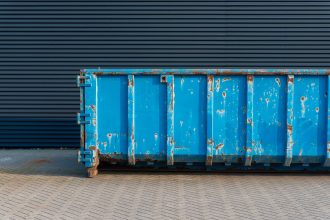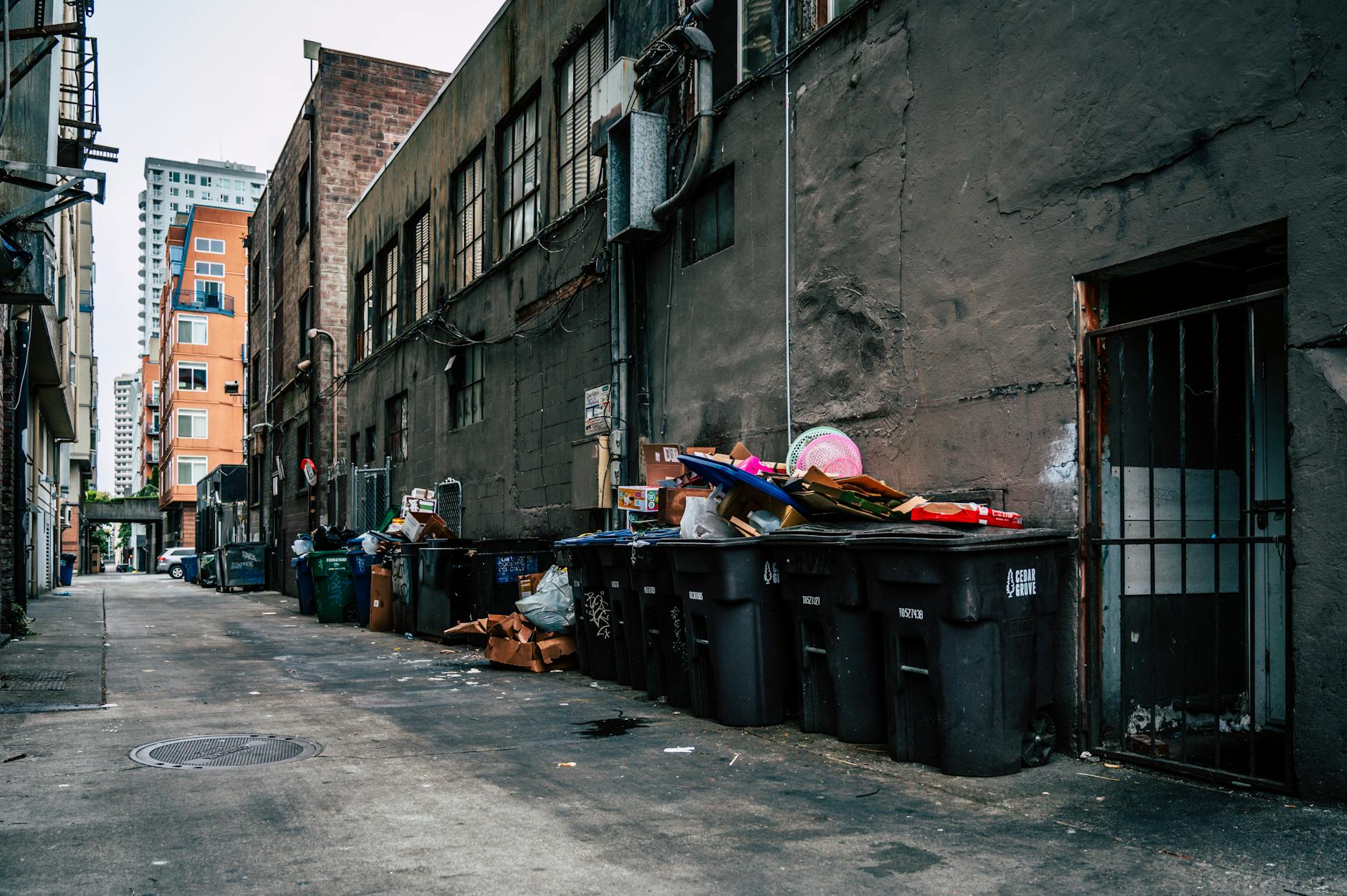
At dawn in Echo Park, the city smelled like coffee and eucalyptus; a rented roll-off hummed like a sleeping machine on the curb, its metal skin warm under the first California light. Maria stood on her front porch, hands deep in the pocket of a thrifted denim jacket, watching a contractor named Jamal lift the lid and toss an old piano bench inside. “If we fill it by noon, we can clear the alley before rush hour,” he said, wiping sweat from his brow. In the distance, a dog barked, a bus hissed, and the skyline of downtown Los Angeles caught fire with gold.
Hook: The Dumpster That Changed a Block
No one expects a dumpster to change their life. Yet, parked between a palm tree and a city meter, that green container became the hinge on which a family’s summer turned. Maria had inherited a three-story Craftsman in Echo Park after her aunt’s passing. The house was a museum of decades: stacks of magazines, boxes of framed photos, a sun-faded recliner that smelled like cigarettes and vanilla. She could have called a moving service, but the house needed more than moving—it needed clearing: decades of stuff, an attic full of memories, a backyard of forgotten tools, and a basement that sat damp and stubbornly full.
Setup: The Cast and the City
Jamal was a contractor who had run dumpsters all over the Greater Los Angeles Area: from the beachside alleys of Santa Monica to the steep driveways of Silver Lake and the industrial strips of Vernon. He knew how the city worked—how to fit a 20-yard box on a narrow Culver City street without blocking the flow of cars, when to ask for a permit from LADOT, and how to talk to a parking enforcement officer so a fine never materialized. Maria was learning fast, watching how his hands moved, how he estimated the weight of a load by eye and a practiced flick of a wrist.
Neighbors gathered. Mrs. Alvarez from next door brought empanadas and said, “I remember when this street used to have laundry on the lines and kids playing hopscotch.” Down the block, a young artist from Silver Lake peered over a fence, sketchbook forgotten, intrigued by the choreography of work. The dumpster was more than a receptacle; it was a stage where the neighborhood’s past and future collided.
Rising Action: Problems Appear Like Traffic
The plan seemed simple: rent a 20-yard dumpster for a week, load it with household junk, haul it to a transfer station, and be done. But Los Angeles is good at complicating simple things. The first problem came when the city’s street-sweeper schedule conflicted with the placement day. “We need a parking permit for this block between 7 a.m. and 5 p.m.,” Jamal explained after a phone call with the city. The next hiccup arrived in the form of an old paint can discovered under a pile of yellowed newspapers. “This looks like it could be hazardous,” he said, holding it up. Paint, old batteries, fluorescent tubes—these items couldn’t just ride with the couch cushions to the landfill.
Then the alley. The plan had been to place the dumpster behind the house, but the alley was narrower than the map suggested, lined with low-hanging tree branches and a vintage Chevrolet that belonged to the neighbor, who refused to move it. Negotiations over the car turned into a small town hall. Voices rose, then settled into laughter as Mrs. Alvarez offered to ferry the car to her garage for the day. In Los Angeles, logistics often require diplomacy.
Key Insights: Dumpster 101, Hidden Between the Boards
Between the sweat and the banter, Maria learned the rules of engagement. Jamal taught her with the patience of a teacher and the bluntness of someone who’s seen thousands of truck beds. “Pick the right size first,” he said, leaning on the dumpster’s lip. “10-yard for a garage cleanout, 20 yard for most house projects, 30 for large renovations or a whole-house clearout. Don’t guess—you’ll pay to upgrade.” He explained weight limits: concrete and tile eat space and multiply weight; a yard of concrete can topple a scale and a budget. He mentioned tipping fees at transfer stations and that some items—like mattresses and electronics—often carried additional costs or needed special recycling routes in Los Angeles.
Permits were another lesson. For curb placement in many parts of LA, you needed a permit from the Department of Transportation. In beach cities like Santa Monica and Long Beach, additional coastal rules sometimes applied. Narrow streets in Silver Lake or Hollywood Hills sometimes required smaller containers or driveway placement. If a container blocked a fire hydrant or bus lane, the fine could be immediate and public. Good companies handled permits; bad ones left customers with the bill and the ticket.
Environmental considerations threaded through the conversation. “This city doesn’t want you burying it,” Jamal said, nodding toward the house, meaning landfill-bound waste. “Sort what you can—metal, wood, green waste, electronics. Donate usable furniture—there’s a line of places from Pasadena to Compton that take what they can sell. Recycle the rest.” Maria took notes, picturing a map in her head: donations heading to Harbor Gateway thrift shops, old appliances picked up for scrap in Vernon, paint taken to a household hazardous waste drop-off in Glendale. Each choice nudged the burden of disposal toward a more responsible category.
Scene: Sensory Lessons in a Busy Street
Loading the dumpster was noisy poetry. Metal scraped as a vintage dresser slid in; a bird fluttered from a jacaranda branch; the smell of frying empanadas mixed with hot rubber from the truck’s tires. A neighbor said, “You can almost hear the history leaving,” and Maria felt it—like a pressure lifting off the house. There was also sorrow. In the basement they found a box of letters tied with a pink ribbon. Maria sat on the steps, hands shaking, eyes wet. “She would’ve wanted this,” she murmured, and placed the letters gently on top of the box labeled ‘KEEP.’ That single action turned a chore into an act of care.
Problem Solved: When Things Go Off the Rails
Midweek, a complication: the dumpster was half-full and the contractor’s scale at the transfer station told them they were over the weight limit. The surcharge was steep. Jamal called around. Another truck could swap the container for a fresh one, but that would cost time and money. Instead, they sorted the load on-site—heavy tiles, concrete chunks, and packed dirt were separated and loaded into a smaller rented dump trailer for a dedicated trip. Lighter items and recyclables were consolidated and set aside for donation or recycling. It was tedious, sweaty work, but it saved Maria hundreds of dollars and the headache of two extra hauls through LA’s traffic.
They also discovered a cracked can of old pesticide. Jamal, pragmatic and calm, put on gloves and sealed the can in a labeled plastic bin. The next morning he drove it to a household hazardous waste collection in Culver City. “You can’t just throw this in with the rest,” he said. “One mistake and it could contaminate a whole load.” These small acts felt like stewardship—an acknowledgment that disposing of stuff in LA was a public duty, not just a private convenience.
Resolution: The Quiet After the Storm
By the time the last box left the porch, the block felt altered. There was space where there had been clutter, light where there had been shadow. The dumpster left with a final clank, and the truck’s diesel breath lingered in the air. Maria walked into the house and ran her hand along the banister, feeling the grain of the wood as if finding a new language. The letters were carefully placed in a drawer. The piano bench, surprisingly, had been salvaged by Jamal’s crew and promised to a neighbor who had always wanted to learn. “It’s going to a good home,” Jamal said, and Maria felt her shoulders lower a degree.
Neighbors reappeared: people who had watched the work all week came by to compliment the transformation. Mrs. Alvarez hugged Maria and said, “You gave us a story this week.” The artist returned the sketchbook and had drawn the dumpster under the jacaranda, sunlight scattering across the metal. The sketch was handed to Maria as a keepsake—proof that even the messy process of clearing can create art.
Takeaway: What to Remember and Do
Dumpster removal in Greater Los Angeles is part logistics, part community choreography, and part environmental responsibility. If you’re facing a cleanout, remember these practical takeaways that Maria learned the hard way but with help: choose the right size for your project; ask about weight limits and tipping fees; check local permit requirements (especially in neighborhoods like West Hollywood, Santa Monica, and downtown LA); separate hazardous materials and dispose of them properly; donate usable items to local charities across Los Angeles; tarp and secure loads to prevent littering; and consider off-peak pickup times to avoid fines and traffic headaches.
But beyond the practical, remember the softer lessons: clearouts are emotional work as much as physical. Leave room for memory, for salvage, and for neighbors to help. Accept the occasional inconvenience as part of living in a city that is always in motion. When you do it well, the city becomes kinder—a clean curb, a clear alley, a reclaimed porch—small changes that ripple into bright mornings and quieter nights.
On the last day, Maria sat on her porch as the sun slid down behind the Wilshire skyline, turning the glass towers into mirrors of fire. The street was clear. The dumpster was gone. In its place, a handful of chairs and a pot of rosemary where the crew had swept up. A breeze carried the smell of the ocean from Santa Monica and a faint scent of eucalyptus from the hills. Maria turned the key in the front door, paused, and looked back at the empty curb one last time. For a moment she could almost hear the metal of that dumpster sing—a short, practical song about chores done and rooms made ready for new life.