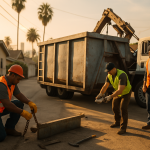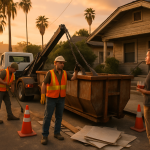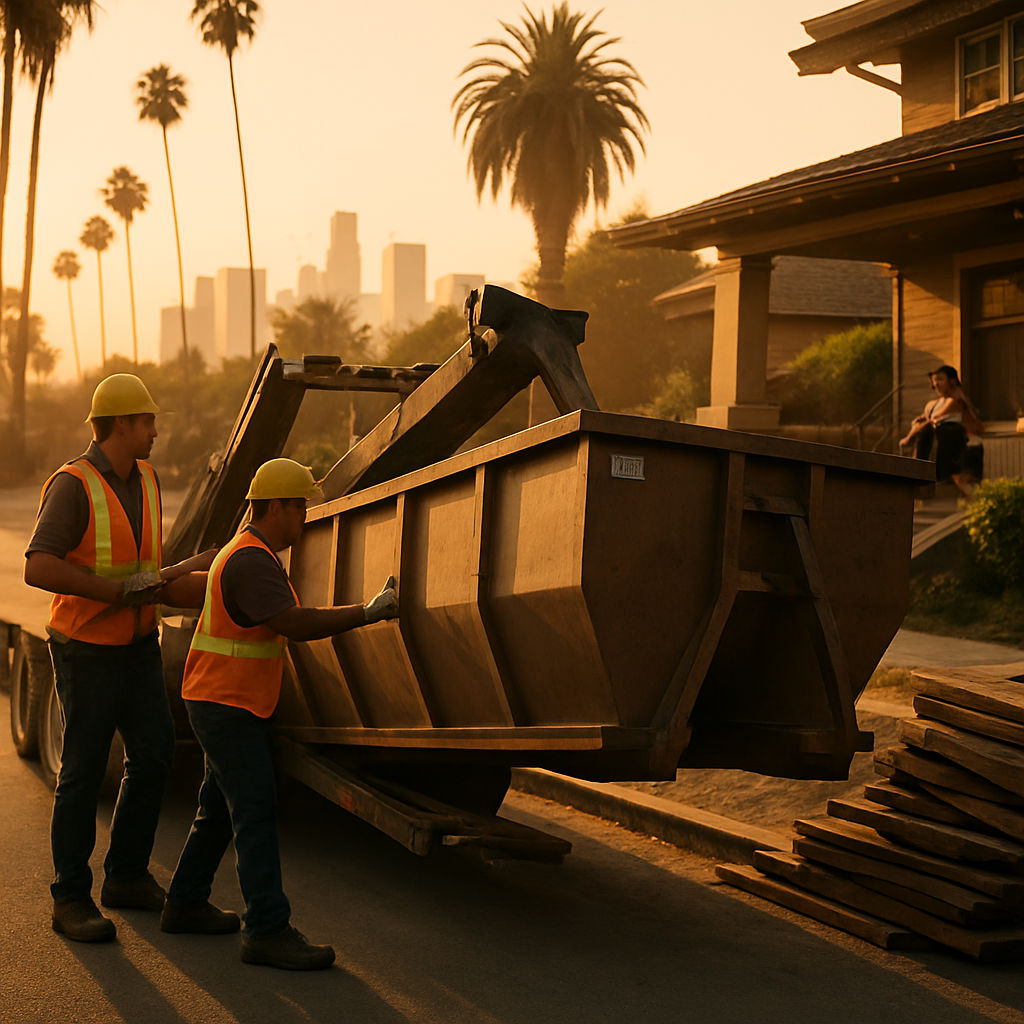
The first time Maya heard the rumble, she thought a movie crew had rolled into the block. It was a late-September morning in Echo Park: jasmine on the stoop, the smell of freshly brewed coffee, and the distant whoosh of the 101. But the sound that filled the street was deeper—metal on metal, the hiss of hydraulics, and a low diesel thrum as a roll-off dumpster truck eased between two parked cars like a slow-moving shark. It arrived with more presence than Maya expected, and with it came the strange, intimate business of clearing away a life.
Setup: Why a Dumpster, and Why Now?
Maya had lived in a narrow Craftsman three blocks from Dodger Stadium for seven years. Her kitchen had been a symphony of mismatched cabinets, slow drains, and the stubborn counter that had belonged to the house since the 1940s. When she decided to remodel, the contractor said two words that made her stomach lurch: ‘volume and velocity.’ That meant hundreds of pounds of tile, drywall, cabinetry, and the old porcelain sink that had seen a hundred breakfasts.
‘You need a dumpster,’ Javier told her, wiping his hands on his work pants. Javier had grown up in Boyle Heights and owned a small hauling business that did everything from garage cleanouts in Burbank to condo projects in Silver Lake. He could tell when a client was trying to plan the whole job in her head and forget that the city and its rules lived alongside the job site.
‘How big?’ Maya asked, picturing a black box taking up half her driveway.
‘Depends,’ Javier said. ‘A 10-yard for a small remodel, 20 to 30 for most kitchens. If you gut two rooms or do a whole house, you jump to a 40.’ He gestured with his chin toward the street. ‘And remember—where we put it matters. In LA some streets are no-go without a permit.’ He tapped his phone and scrolled through pictures of narrow alleys in Silver Lake where a truck couldn’t swing a dumpster without folding in the mirrors.
Rising Action: Permits, Placement, and the People Next Door
Getting the dumpster on the property in Los Angeles can be as political as getting a new crosswalk. On Maya’s block the issues were parking, permit stickers, and the neighbor two doors down who took her driveway’s shadow as turf. The permit process itself was a lesson in municipal humility. For a curbside placement in the City of Los Angeles, you needed a street use permit from the Department of Transportation—often called a DOT permit—if the container took up a parking lane. In Santa Monica or Beverly Hills, the same idea applied but with different phone numbers and online forms.
‘Call the city,’ Javier said. ‘Every municipality is slightly different. Culver City will ask for a site plan. Long Beach wants measured distances from intersections. Pasadena sometimes wants an engineer’s stamp if it’s blocking emergency access.’ His voice had the cadence of someone narrating old maps; the list of rules came out like a long, familiar litany.
On the Tuesday they scheduled delivery, Maya stood at her gate while Javier and his crew navigated the truck down Allesandro Street. The sunlight slanted between Victorian porches, turning dust motes into tiny planets. A couple walking their dog slowed; the man tipped his hat and said, ‘You doing the remodel, Maya?’
‘Trying to,’ she said, and laughed—part nervous, part incredulous. They slid the dumpster onto the curb, chains clinking like pocket change. A yellow city sticker snapped into place on the rim. For a moment it looked like an art installation: a big gray rectangle under a palm tree, the Dodgers radio murmuring from a neighbor’s window.
Key Insights: Choosing the Right Dumpster and Managing Waste
By the time contractors started tearing down cabinets, Maya had learned to listen. She learned that dumpsters come in sizes from about 10 to 40 cubic yards—common sizes are 10, 15, 20, 30, and 40 yards—and that not every company delivers the same thing. Roll-off dumpsters (the kind that get rolled on and off trucks) are standard for renovations and large cleanouts, while front-load dumpsters are common for businesses in places like Koreatown and downtown LA.
‘Watch the weight,’ Javier advised one afternoon as they lifted plaster slabs into the bin. ‘A 20-yard filled with tile will hit weight limits fast. Tipping fees at the transfer station start adding up once you go over the truck’s allowance. We estimate loads so people aren’t surprised by overage charges.’ He pointed at the laminated sheet on his clipboard. ‘Also—no hazardous materials, no electronics tossed in unless we’re doing e-waste pickup. Paint, solvents, asbestos, tires, and batteries all need special handling.’ His gaze was gentle but firm; waste management was a craft, and it had rules.
The rules in Greater Los Angeles also include recycling mandates and new organic waste regulations. California’s effort to reduce landfill methane meant that certain organic materials from commercial generators, and increasingly from large renovation projects, needed diverting. That changed how contractors separated green waste, drywall, and untreated wood from mixed debris. Maya watched as a pile of old lumber was stacked neatly to be sent to a yard that would chip and reuse it, and a family of squeaky-clean tiles was boxed for donation.
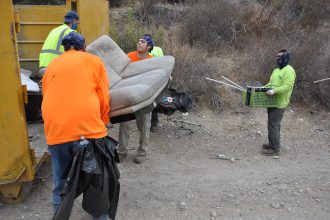
‘Donations make a difference,’ Javier said one evening as the sun slipped behind the hills in Silver Lake. ‘We drop usable fixtures at Habitat ReStore, appliances to the local salvage, and call for a bulky item pickup when a city program is available. In Inglewood and Carson, the cities will sometimes pick up certain items for free. You’d be amazed what someone will take off your hands.’ He smiled at a memory of a grandmother’s china that had become someone’s prize find in a thrift shop in Long Beach.
Key Insights Continued: Finding the Right Company and Understanding Costs
Choosing a dumpster company in Los Angeles is like choosing a tour guide for the city’s hidden rules: experience mattered. Maya learned to vet companies on a few criteria—licenses and insurance, transparent pricing (including weight limits and tipping fees), availability of permits, willingness to provide disposal receipts, and a locality that knew the neighborhoods. A company that had done jobs in West Hollywood and Compton might better understand the permit differences between a narrow residential alley and a commercial loading zone.
Costs vary. A small 10-yard bin for a short-term project could be affordable; a larger 30 or 40-yard bin that sat for days, required multiple hauls, or contained heavy materials would climb quickly. There were also hidden fees: rental extension fees if the timeline slipped, overage fees for weight, and fees for city-required street permits if the job required traffic control. Maya learned to ask for a written estimate that listed all of these. Javier recommended asking about environmental practices: were materials separated for recycling? Did the company use licensed facilities like the Sunshine Canyon Landfill transfer stations or other county-approved transfer facilities for disposal?
Rising Action Continued: Neighborhood Resistance and a Midnight Call
Not everything went smoothly. On day four, Maya got a knock. Mrs. Alvarez from across the street stood on her stoop, arms crossed, binoculars of community complaint at the ready. ‘I run a home daycare,’ she said. ‘That dumpster blocks my morning pickup.’ The neighborhood association called the city, and by noon a polite parking enforcement officer appeared to check the permit. Maya felt the old panic rise: would she have to move the dumpster, delay the project, or pay fines?
Late that night, there was also a different kind of emergency: a burst pipe in the upstairs bathroom. Water and drywall in a sticky catastrophe. Javier arrived at midnight with a flashlight and a quiet professionalism that anchored the house. ‘We’ll tarp the debris, and I can call for an extra pickup in the morning,’ he said. He spoke like someone who had seen too many midnight bathrooms to be surprised, and for Maya it was an immense relief to find someone who treated waste as an urgent work of care.
Resolution: Clean Streets, Giving Back, and the Dumpster’s Last Ride
The last day of the job felt cinematic. The city inspector signed off on the permit release, the contractor installed a gleaming farmhouse sink that caught the light like a small lighthouse, and volunteers from a local Goodwill drove by to take a neatly stacked pile of gently used chairs. Maya walked the site with Javier as he closed the dumpster’s rear door for the final time. The air smelled of sawdust and lemon cleaner, and beyond the houses, downtown Los Angeles shimmered like a constellation.
‘We recycle what we can,’ Javier said, loading last-minute bags into the truck. ‘All metals go to scrap yards. Concrete and dirt go to construction recycling centers. That tile? Back in service somewhere. The cabinetry? Someone’s workshop will turn that into a beautiful shelf.’ His face was lit by the truck’s taillights and a small grin that suggested he’d done this dance hundreds of times.
When the roll-off truck pulled away, the sound was less intrusive than when it had arrived—a soft mechanical sigh that felt like a curtain falling. The empty driveway looked larger, an open invitation. Maya stood in the doorway and watched the dumpster shrink in the mirror of the truck until it disappeared into the boulevard traffic flowing toward the 2 and the 101, toward Burbank and Glendale, toward the ports and beaches beyond.
Takeaway: What to Remember When You Need a Dumpster in Greater Los Angeles
If you take one thing away from Maya’s story, let it be this: dumpster removal in Greater Los Angeles is a practical choreography between people, rules, and resources. Start by choosing the right size and service—10 to 40-yard roll-offs are the common range. Call your city: whether you’re in Los Angeles, Santa Monica, Beverly Hills, Long Beach, Pasadena, Torrance, or Inglewood, ask about street or curb permits, allowable placement, and any required traffic control. Ask your hauler about tipping fees, weight limits, and disposal receipts; reputable companies will be transparent and insured.
Plan for diversion: separate metal, concrete, green waste, and possible donations. Avoid tossing hazardous materials like paints, solvents, asbestos, tires, and batteries into the bin. If you have appliances or electronics, look for e-waste pick-up options or scheduled city bulky-item services. And when the unexpected happens—permitting glitches, neighbor complaints, midnight emergencies—find a hauler who treats your project like a neighborhood matter, with respect for rules and an eye for recycling.
In the end, the dumpster is more than a receptacle: it’s a temporary staging ground where a past life is sorted, where old things are separated into what will return to the planet as recycled material, what will be given to a neighbor or charity in Long Beach or Torrance, and what will quietly become someone else’s raw material. For Maya, the dumpster’s last rattle down the street was a soft punctuation mark. Her kitchen hummed with new appliances, and beyond the window, palm trees stood against an LA sky turning lavender. She could hear children playing somewhere in Echo Park and, for the first time in weeks, she could breathe.
As the truck’s taillights disappeared into the evening, Maya poured a cup of coffee, set it on the new counter, and watched the neighborhood settle. The heavy metal box had left behind a lighter house. The city kept on—its rules, its hum—but for a small while, everything felt clear and intentionally placed. That is the quiet victory dumpster removal brings: not just cleared space, but the chance to start again with cleaner lines and a clearer conscience. The street was normal again, except that the air now carried the scent of fresh paint and possibilities, and the memory of chains and diesel had been transformed into the small, luminous fact of a new sink catching the sunset.