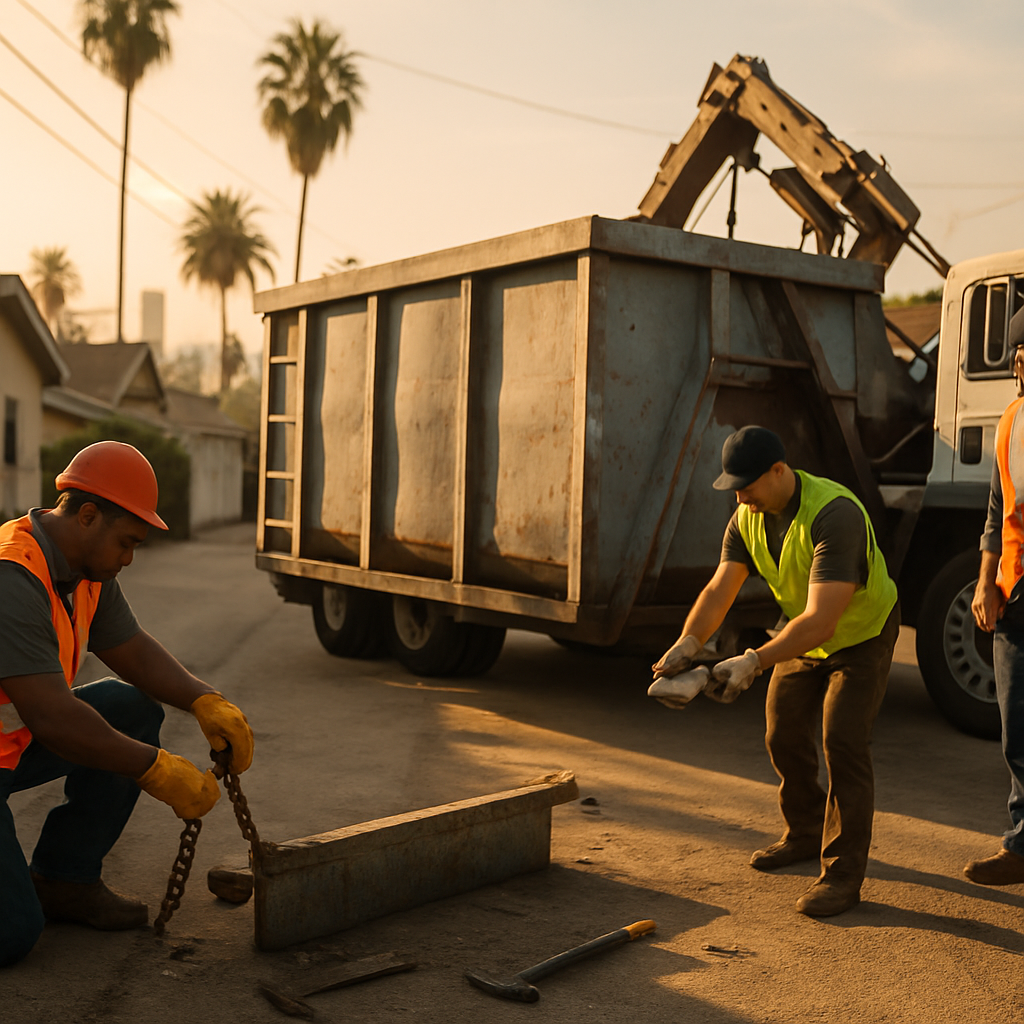
The first time I watched a roll-off dumpster arrive in my neighborhood, it felt like watching a ship dock. The driver eased the truck down the narrow alley behind my Echo Park bungalow, metal groaning, diesel scent mixing with freshly brewed coffee from a nearby kitchen. Neighbors peeked out windows like sailors catching sight of a returning vessel. For some, it was a practical chore. For others, a small ceremony: the visible closing of a chapter marked by piles of drywall, the tired couch from the living room, boxes of forgotten college years. “That thing changes everything,” Mrs. Alvarez across the street said, folding her hands around a mug as the dumpster’s lid clanked shut. “You see all that junk go, you feel lighter.”
Setup: Why a Dumpster Matters in the City of Angels
Greater Los Angeles is a tapestry of neighborhoods that demand different approaches to cleaning up: Santa Monica’s salty breeze, the steep driveways of Hollywood Hills, the tight carriageways in Pasadena, the industrial edges of Vernon, and the wide boulevards of Long Beach. In these places, a dumpster isn’t just a receptacle; it’s a logistical solution, a local ordinance puzzle, and sometimes a point of neighborhood contention. My story begins with a young contractor named Jamal, a homeowner named Elena in Glendale, and an estate manager named Priya handling a townhouse in Culver City. They each had a different reason to summon the same kind of machine.
Elena had three weeks to clear a garage that had turned into a storage crypt over two decades. Jamal needed space at a Santa Monica renovation site where every hour of street parking cost money. Priya faced a sentimental task in Pasadena: cleaning a late relative’s home, sorting antiques for donation in between teacups and yellowing photo albums. They called different companies, but in every one of these calls the same practical questions followed: What size do I need? Do I need a permit? How soon can you drop it off? Where will it go?
Rising Action: The Small Details That Make a Big Mess
On delivery day in Burbank, a dumpster truck negotiated the narrow cul-de-sac like a tour bus, careful and precise. The driver, Marco, hopped down and surveyed the block. “We try to place it so you can close your driveway, but also so we don’t block fire access,” he told Jamal. His voice had the kind of calm that comes from years of navigating LA’s idiosyncrasies—parking enforcement, morning rush hour, and the occasional blocked alleyway festival.
There was a moment of friction in North Hollywood when a permit issue arose. Jamal had arranged for a curbside placement, but LADOT needed proof the crew wouldn’t impede bus routes. The inspector’s phone call rattled through like a small storm: “Curb placement requires a permit for anything over 24 hours in that zone,” she said, and Jamal felt the clock start to tick faster. Permit rules vary by city. In Los Angeles, the Department of Transportation may require special permits for dumpsters in the public right-of-way; in smaller jurisdictions like Torrance or Inglewood, local codes might differ. The moral: always check with your city before the truck arrives.
Meanwhile, in Venice, where the ocean breeze carries a lifetime of stories and a faint smell of seaweed, a beach cleanup crew filled a 20-yard dumpster with sun-faded umbrellas and splintered picnic tables. They labeled piles—”metal,” “wood,” “general trash”—because recycling and diversion matter. Los Angeles County sends much of its waste through transfer stations and material recovery facilities; every item diverted to donation or recycling is one less ton headed for a landfill. “Don’t toss paint or batteries,” Priya warned an assistant as they sorted through boxes in Pasadena. “We have to handle hazardous materials differently.”
Key Insights: Practical Knowledge Woven Through Stories
Size matters. A 10- to 15-yard dumpster suits small cleanouts—garden debris from a Torrance backyard, a kitchen cabinet demolition in West Hollywood. For major remodels in the San Fernando Valley or estate clearouts in Pasadena, 30- to 40-yard units are common. Weight limits are another hidden charge; concrete, dirt, and tile push weight quickly and can trigger overage fees. Ask the company about weight allowances and tipping fees up front.
Permits and placement are local puzzles. In Los Angeles, curb placement often requires a permit from LADOT, especially if the bin sits on a public street longer than allowed. Culver City and Glendale have their own rules: sometimes an on-site dumpster can be placed within a private driveway or setback without a permit, but alleys and streets may need written permission. If you’re hosting a block party in Santa Monica or staging a film shoot in Burbank, coordinate permits weeks in advance—the city’s event calendars and street closure windows fill fast.
What goes in and what doesn’t? Companies will accept most construction debris, furniture, and general household junk, but hazardous materials like oil, solvents, pesticides, and lead-based paints require special handling. Electronics may be accepted for recycling but often need separate e-waste services. Many LA-based haulers partner with donation centers—Goodwill, Salvation Army, Habitat for Humanity ReStore, and local thrift stores—to redirect gently used items. “We try to donate what we can,” Marco said, loading a stack of gently used chairs destined for a Pasadena nonprofit. “It feels better than the dumpster.”
Timing and communication minimize stress. Same-day drop-offs are possible in more flexible markets, but weekdays and mornings are usually ideal. Coordinate with your hauler so the truck arrives during permitted hours, and plan for pickup windows rather than exact minutes. If you live in a gated community in Long Beach or a narrow street in Echo Park, inform the dispatcher—some trucks need a clear 12 to 15 feet for safe placement.
Applying the Lessons: Real Choices on Real Streets
Elena decided on a mid-sized 20-yard dumpster for her garage purge in Glendale. She labeled boxes for donations and left a stack for Habitat for Humanity. When the truck rolled in at dawn, neighbors followed the process like a ritual. “We kept the photos and the china,” she told Jamal as they loaded the last boxes. It felt ceremonial: deciding which objects were anchors to keep and which were ballast to cast off.
Jamal, working near Santa Monica, chose a sealed roll-off unit with a lockable lid—important for a location with foot traffic and curious passersby. He scheduled two pickups: one halfway through demolition and another at project close. This staggered approach kept the site tidy and avoided the tipping of heavy debris all at once, which can dangerously compress loads and create instability when the truck lifts the bin.
Priya took a slower, more deliberate route in Pasadena. For the estate cleanout, she hired a company that provided itemized sorting: keep, donate, recycle, and hazardous. She arranged for a smaller 15-yard dumpster for non-donatable items and a separate pickup for large, intact furniture destined for a local charity. “It was about honoring the past,” she said. “We didn’t rush.”
Resolution: The Day the Alley Felt Different
The last pickup was a quiet, satisfying affair in Echo Park. The dumpster’s empty interior glinted in the late afternoon light like a newly polished stage. Marco and his crew secured the straps, lifted, and the bin slid onto the truck bed with a finality that felt like closing a book. The street, which had been a landscape of broken plaster and sagging sofas, was suddenly ordinary again: bicycles leaned against fences, the neighbor’s rosemary bush filled the air with piney scent, and a child chased a soccer ball down the sidewalk.
Neighbors lingered in pockets: a quick smile, a wave, a shared glance that said, “We did it.” Elena opened her garage to reveal a clean concrete floor and a stack of labeled boxes waiting for donation pickup. Jamal walked the empty lot behind his site, envisioning framing and new drywall. Priya sat on a porch step in Pasadena, holding a small porcelain cup she couldn’t bear to part with, and felt the relief that comes when large tasks become manageable.
Takeaway: What to Remember Before You Rent
In a city as sprawling and varied as Greater Los Angeles, dumpster removal is as much about people and place as it is about hauling. Keep a mental checklist: choose the right size, confirm weight limits, ask about what can’t go in the bin, secure necessary permits for street placement, and schedule pickups in advance. Consider donation and recycling options—many items have second lives—and factor in the logistics of your specific neighborhood, whether that’s a Venice alley or a hillside lane in Hollywood.
When Marco closed the truck’s rear gate for the last time, he said, “It’s not just trash we take. Sometimes we take a bit of the heavy feeling with it.” He was right. The dumpsters that cross Los Angeles daily do more than move debris; they make room for new beginnings—new renovations in Glendale, new small businesses in Culver City, fresh starts on quiet streets in Burbank. The next time a truck pulls up outside your house, you might hear the same tinny clank and feel an urge to sort, to choose, to let go.
On that warm afternoon, standing by the empty alley where the dumpster had been, Mrs. Alvarez sipped her coffee and offered a final thought as the sun slid toward the mountains. “It’s funny,” she said, “how much lighter the whole block feels when the junk is gone.” The image of the empty, shining alley lingered—the kind of ordinary beauty that turns a messy, complicated task into a powerful, tidy ending. It was, in the end, a small ceremony for a neighborhood that never stops changing.