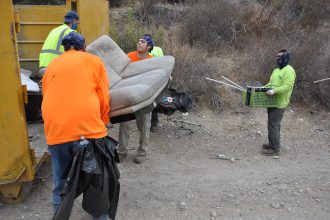
The first time I saw a dumpster as a protagonist it was parked beneath a string of orange lights on a narrow Burbank street, reflecting the late afternoon sun like a hulking, honest promontory of reality. Neighbors paused on their stoops, a dog barked, and a woman from the duplex waved a half-empty cup of coffee at the crew as if to say, “We’ve all been here.” That small metal box held the messy end of someone’s dream: drywall dust, a grandfather’s old bookcase, a pile of wine-stained carpet. What none of us expected was how fast something so utilitarian could change the rhythm of a neighborhood.
Setup: The Project and the People
It began in Highland Park, on a tree-lined block where jasmine scented the air and the afternoon light painted the Spanish-style tiles gold. Maria, a contractor with a laugh that fills a room, told me she needed a 20-yard dumpster for a full gut-and-rehab on a craftsman home near Eagle Rock. “We work fast,” she said, “but the cleanup slows everything down if we don’t plan.” She called three local roll-off providers from her phone—one in Glendale, one based in Long Beach, and a smaller family business from El Sereno. Each company gave a different timeline and price, and each asked an important question: Where are you placing it?”
Down the block, an elderly couple in Santa Monica were preparing a single-car driveway for a 10-yard bin to hold a lifetime of accumulated photo albums and a leaning stack of patio furniture. Around the corner in Culver City, a boutique studio wanted a 30-yard container for a major set teardown. Different people, different scales, same essential dance between logistics and emotion.
Rising Action: A City of Rules, Salted with Stories
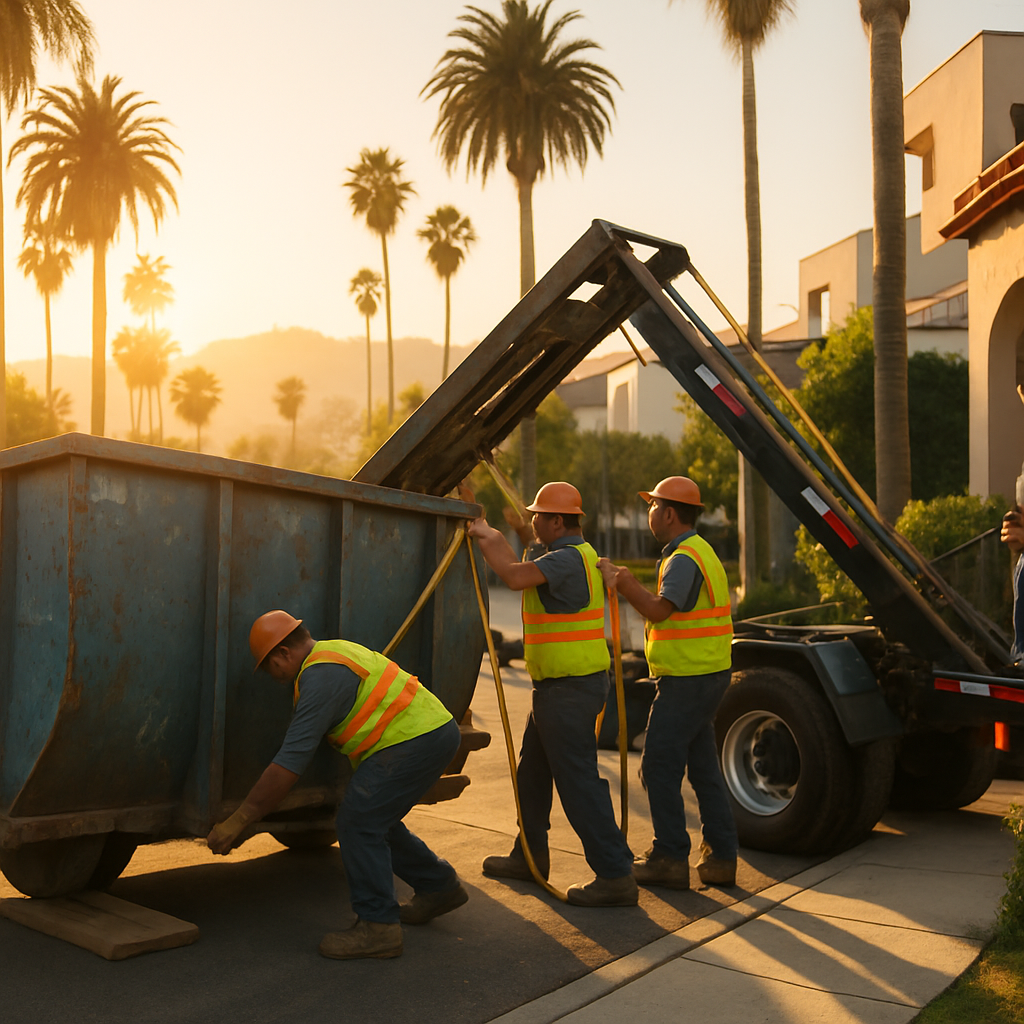
We learned quickly that in Los Angeles, a dumpster is not just a object you rent; it becomes part of the street, subject to ordinances, sympathetic neighbors, and the weather. On a hot June morning in Echo Park, the crew arrived with a sleek roll-off truck. The driver, Ramon, set wooden cribbing beneath the bin’s metal feet to protect the driveway’s pavers. “You’d be surprised how often that’s overlooked,” he said, wiping sweat from his brow. “Little things like a planked buffer and good placement save headaches—and claims.”
Every city in Greater Los Angeles has its own flavor of regulations. In the City of Los Angeles, placing a dumpster on the street often requires a Department of Transportation permit; in Pasadena you may need a permit for curbside placement during certain hours; in Inglewood or Torrance you’ll find different filing requirements and special holiday restrictions. The crew taught us a practical ritual: check the city website, call the local public works or transportation office, and ask about red curb restrictions, parking meters, and the length of the permit you need. If you’re in Malibu or West Hollywood, aesthetics and neighborhood preservation committees can add nuances to the process.
Key Insights: Practical Knowledge Hidden in Everyday Scenes
As the project unfolded, knowledge came as stories. Maria told of a job in North Hollywood where a homeowner tried to cram a hot tub into a 15-yard container and got dinged for overweight fees at the transfer station. “You can’t just eyeball it,” she warned, “measure twice, order the right size once.” Typical roll-off sizes run roughly 10, 15, 20, 30, and 40 cubic yards. A 10-yard bin handles small garage cleanouts, while 20 to 30 yards is common for full remodels. If you’re unsure, rental companies often ask about the amount and type of debris: is it mostly light materials like cardboard and drywall, or heavier things like concrete and soil? That distinction affects weight limits and costs.
Costs, like weather, shift with conditions. On the coast near Santa Monica and Long Beach, equipment fees, permit fees, and landfill costs can jack up a quote. A helpful baseline is to expect a rental that bundles delivery, pickup, a set number of days (usually 7-10), and disposal fees. Additional days, overweight charges, or special pickups for hazardous materials—think old paint cans, asbestos, batteries, and electronics—can add to the invoice. “Never put hazardous waste in a dumpster,” said an operator from Rancho Cucamonga who handled large commercial hauls. “You’ll both break the law and create a safety hazard. Instead, contact the county’s hazardous waste program or an e-waste recycler in Long Beach or downtown LA.”
Recycling and donation were constant threads in every conversation. In Glendale, a crew made a quick detour to a thrift store drop-off after spotting a stack of usable kitchen cabinets. On another afternoon in Venice, salvagers rescued vintage doors from a haul bound for the landfill. In Greater Los Angeles, donation centers and specialized recyclers—metal recyclers in Vernon or mattress recyclers in Torrance—are lifelines for diverting usable material. Asking your rental company whether they separate loads for recycling or partner with donation centers can reduce environmental impact and sometimes save money.
Scene: A Night, a Permit, and a Conversation on Broadway
One late evening in downtown Los Angeles, permit paperwork hummed beneath a streetlamp as Maria argued a minor point with the DOT clerk over the phone. Around us, the city exhaled—vendors packed up tents in the flower district, and a bartender in Little Tokyo lit a cigarette. “We need it through Monday,” she said, tracing the edge of a permit form with her thumb. “We’ve got drywall to finish and the cabinet guys come Tuesday.” The clerk asked about the curb lane and overlapping events. “Simple if you plan ahead,” he said. “But a lot of people call last minute.”
Planning ahead means more than forms. It means placing plywood to protect driveways, scheduling drop-off early in the week to avoid weekend parking conflicts in neighborhoods like Silver Lake or Brentwood, and letting your neighbors know—”We’re redoing the kitchen; it’ll be noisy but we’ll keep it tidy,”—a small act that smooths friction. “We had one guy who left the dumpster overflowing,” a neighbor in Glendale complained. “He didn’t tarp it and trash blew down the block. That’s how community trust frays.”
Resolution: The Day the Dumpster Left
The final pickup across multiple stories felt ceremonial. In Long Beach, a truck lifted a 30-yard bin threaded with ropes like a levitated sculpture, the gears hissing as the cassette retracted. In Pasadena, a 10-yard bin with a bouquet of broken teacups and a stack of childhood drawings slid onto the back of a smaller roll-off. Ramon and his team worked with the choreographed precision of musicians—straps tightened, a final sweep, signatures exchanged. Neighbors watched, some snapping pictures, others leaning on their fences with an ingrained Los Angeles curiosity. When the truck rolled away from the Highland Park site, the air smelled of cut wood and oil, and in its wake came an unexpected quiet.
Maria stood in the sun with a dustpan in hand, smiling. “It’s clean now,” she said. “You always forget how much lighter a place feels without the clutter.” The homeowner in Santa Monica hugged a box of albums as the dumpster left—sentiment and debris disentangled, each going its own way.
Takeaway: What to Remember and Do
Dumpster removal in Greater Los Angeles is equal parts logistics, local law, and neighborhood diplomacy. If you’re planning a project, remember these practical steps: measure your waste and choose a size (10–40 yards); ask your rental company about weight limits and what’s prohibited; check with your city—Los Angeles, Pasadena, Glendale, Burbank, Inglewood, Torrance, Santa Monica, Malibu—for permits when placing a bin on public property; protect your driveway with boards; schedule pickups to avoid local parking conflicts; and separate hazardous materials from regular waste, using county or city hazardous waste programs for safe disposal.
But beyond the checklists, there’s a human element. A properly placed dumpster can be a community neighbor; a neglected one becomes an eyesore. Communicate with your neighbors, plan your placement with thoughtfulness, and consider donating usable items to local thrift stores or salvage shops in North Hollywood or Venice. These choices don’t just save money—they keep a neighborhood’s stories intact.
As the last roll-off truck turned down a palm-lined street, the sun dipped low behind the Hollywood Hills, and the city exhaled into twilight. The crews had left no trace but a clean driveway and a silence that felt full—of possibility and of work completed. In Los Angeles, where change is constant, the dumpster was a punctuation mark: a brief, loud act of transformation that, when handled thoughtfully, let people turn a page and start the next chapter with space to breathe.