Have you ever driven down Sunset Boulevard or along the ocean-swept streets of Venice and noticed a hulking metal box parked on the curb, its open mouth spilling old cabinets, drywall, or a mattress? That dumpster is more than junk — it’s the end of a messy chapter and the beginning of something new. For Maria in Echo Park, the sight of one outside her home felt like a promise: a promise that the chaos of a long-delayed kitchen remodel could become a clean slate.
Setup: Morning in Echo Park
The heat of an early Los Angeles morning wrapped the neighborhood in a warm hush. Maria stood on her front porch, coffee cooling in her hand, listening to the distant clack of a skateboard on the boulevard and the faint hum of traffic from the 101. “We need a 20-yard, right?” she asked Luis, the contractor from Burbank, who had his phone open to a rental app. “Probably a 15 will do if we separate the tile and wood,” he replied, squinting against the sun. They talked about logistics: driveway access, the narrow street, and whether the Santa Monica city inspectors would require a permit if the dumpster had to sit on the curb during their permit window.
Rising Action: Permits, Parking, and the Smell of Sawdust
Arranging dumpster removal in Greater Los Angeles often starts like this — a tangle of decisions that can feel overwhelming. In Pasadena, homeowners faced strict curb regulations; in Long Beach, parking often dictated where a dumpster could be dropped. “You’d be surprised how many people don’t realize they need a street permit,” Luis said as they walked toward the alley to visualize placement. He mimed the lane with his hands, imagining the truck backing up and the metallic clank as the dumpster hit the pavement.
As the crew from a local Glendale hauler arrived, the air filled with the gritty perfume of sawdust, old paint, and diesel. Tom, the driver, lowered his visor and called out, “Make sure nothing hazardous gets in — no paint cans, no tires, and definitely no asbestos materials unless it’s handled by a licensed team.” His voice carried the authority borne of years threading trucks between palm trees and apartment complexes in West Hollywood and San Fernando Valley neighborhoods.
Key Insights: How Dumpster Removal Works in LA
Between the dialogue and the day’s work, useful lessons emerged naturally. First, size matters: 10-, 20-, and 30-yard roll-off dumpsters are common for residential projects, while commercial sites may need larger containers. Weight affects cost — concrete or tile can add steep overage fees — so separating heavy materials is a smart money-saver. Second, municipalities differ: Culver City might require a permit for curb placement, and Beverly Hills enforces stricter parking rules than neighborhoods like Echo Park or Silver Lake. Third, hazardous materials are off-limits; paints, solvents, electronics, and certain construction materials need special handling or drop-off at certified centers.
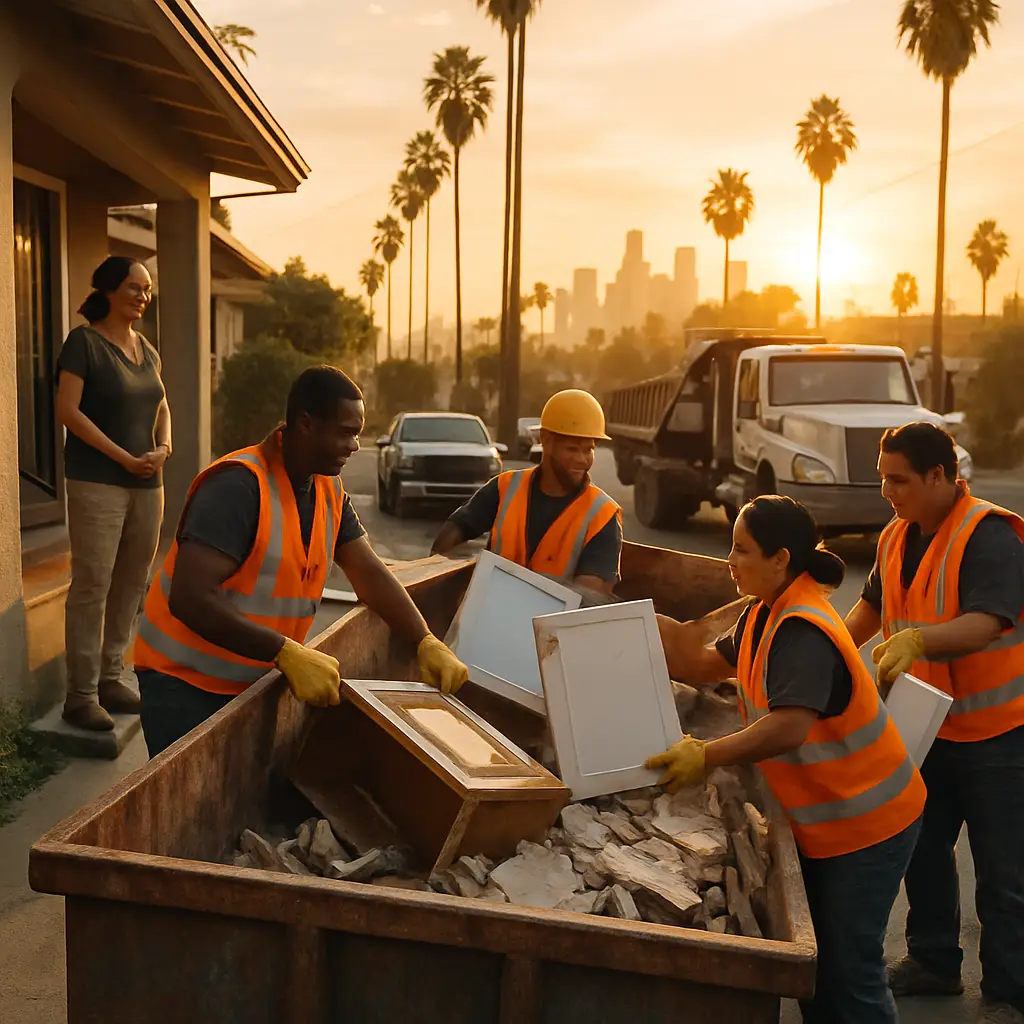
They also learned to think beyond disposal. Luis suggested donations: the old cabinet doors and still-usable fixtures could find new life at a local Habitat for Humanity ReStore or through donation pick-up in Torrance or Manhattan Beach. Recycling was another win — metals and clean wood often get sorted at transfer stations in Carson or Long Beach, diverting waste from landfills and sometimes lowering disposal costs.
Resolution: The Day the Curb Cleared
The truck returned at golden hour, its paint glowing against the fading sky. Neighbors leaned on their fences, watching as men in reflective vests moved methodically, the dumpster filled with the history of a home: busted tile that had survived two decades of family breakfasts, drywall scribbled with pencil marks where plan lines once danced. Maria stayed back, palms tucked into her pockets, the tension in her shoulders loosening with every clang.
When the crew hooked the container and hauled it away, the street exhaled. For a moment the only sounds were a distant hawk and the soft chime of bicycle bells. Where chaos had sat there was now a cleared patch of driveway bathed in sunset. “Feels like we can breathe again,” Maria whispered, and Luis laughed — a short, satisfied sound. No ribbon was cut; no grand ceremony was necessary. The house had gained room to move, and Maria had regained a kind of lightness.
Takeaway
If you’re planning a clean-out or remodel in Greater Los Angeles, remember these steps: choose the right dumpster size, check local permit rules (especially in Santa Monica, Beverly Hills, and other strict municipalities), separate heavy or recyclable materials, and never put hazardous waste in a standard roll-off. Call multiple haulers, ask about weight and overage fees, and consider donations for items still in good condition. The practical details make the emotional payoff possible — the calm after the storm when a project shifts from chaos to possibility.
On the last page of this small story, the image that stays is simple: a quiet street in Los Angeles at dusk, palms silhouetted against a purple sky, an empty driveway waiting like a blank canvas. The dumpster is gone, but the room it left behind holds the soft promise of new beginnings — a painted wall, a small herb garden by the kitchen window, and the ease of space finally reclaimed.