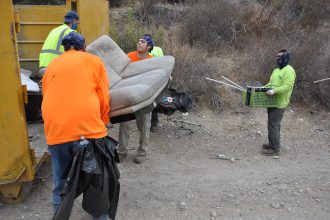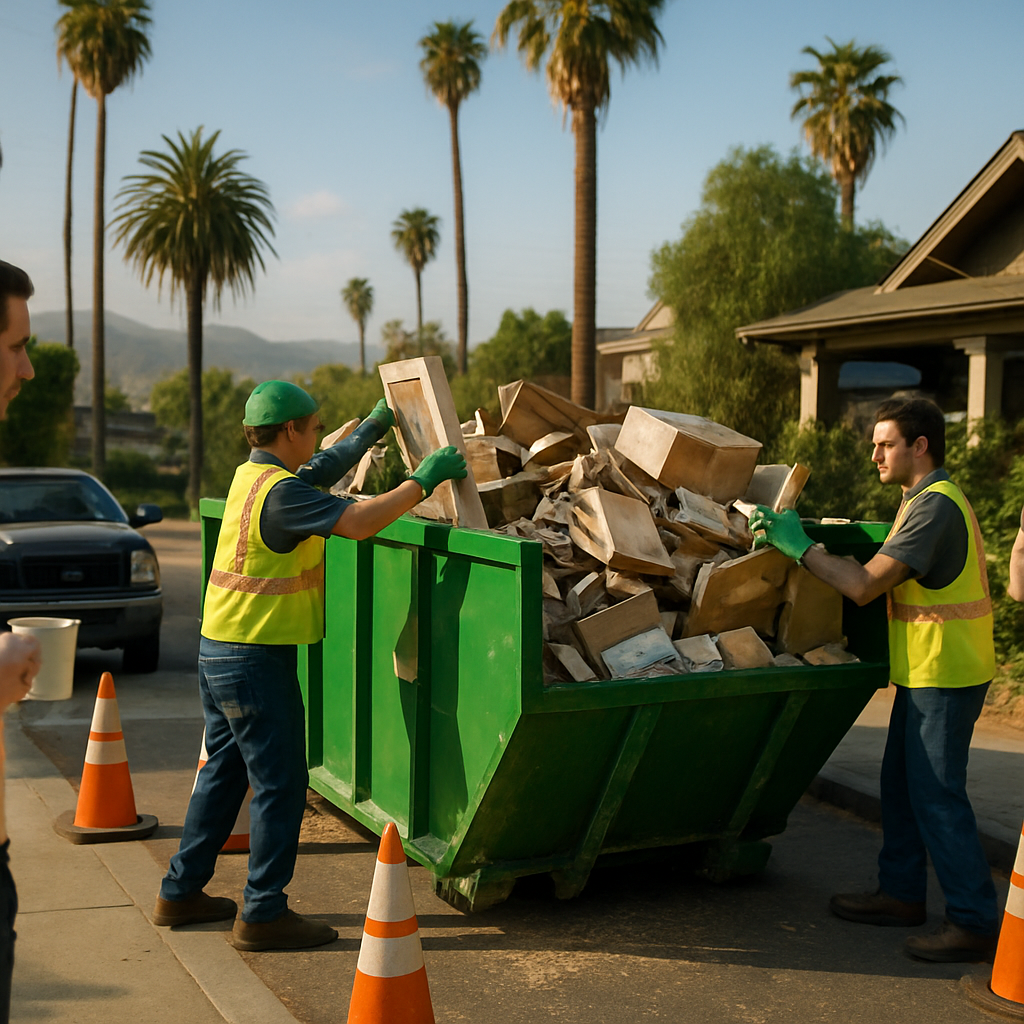
On a golden Tuesday in June, with the Pacific breeze carrying the faint smell of salt and fast food, a green roll-off dumpster sat like a patient island at the curb outside a craftsman house in Echo Park. It was full to the brim with plaster dust, a mattress with a stubborn stain, broken tiles that glinted like tiny moons, and a fern that had given up on life. Cars hummed along Sunset Boulevard, a skateboard clattered past, and a neighbor, coffee in hand, watched as two men in bright vests balanced a doorframe across their shoulders and laughed as if the whole block were staging a neighborhood play.
A Morning Under California Light
The scene felt particularly Los Angeles: sun-bleached shingles, the distant rumble of a Metro train in Highland Park, and a seagull cry faintly borrowed from months-old beach days. But this was not a movie set. This was a home remodel in midtown Los Angeles, a kitchen coming down and a life being rearranged. Maria, who had lived in the house for twelve years, kept glancing at the pile in the dumpster and then at her phone—nearly 9:00 a.m., the scheduled pickup time.
“If that truck doesn’t come by noon, Jamal’s crew will have nowhere to put the demo,” she muttered, more to herself than anyone else. She had booked a roll-off dumpster through a local company that promised pickup anywhere from Downtown LA to Culver City and even deliveries down the 405 to Torrance and Long Beach. Yet, as any Angeleno knows, promises on paper are often tested by traffic, permits, and the whims of the city.
Meet the People and the Problem
Jamal arrived on his motorcycle—helmet tucked under his arm—smiling the way someone might smile when a dice roll favored them. “Traffic was a beast on the 110,” he said. “But I found a gap by the flower shop in Boyle Heights. Let’s do this.” He had been hauling dumpsters for seven years, bouncing between construction sites in Pasadena, estates in Beverly Hills, and backyard cleanouts in Inglewood. The van behind him carried permit forms, bungee cords, and a laminated list: “Residential vs. Commercial, Permit Required?”
Maria introduced Jamal to her contractor, Luis. “We need this hauled away today. The city inspector is coming tomorrow morning,” she said, the edges of anxiety visible in the set of her jaw. The inspector mattered because Los Angeles requires certain permits for dumpsters placed on public property—curbs and streets—especially in historic neighborhoods like Pasadena and Eagle Rock. “If it’s on our driveway, no permit, but on the street? That’s a different ticket altogether,” Jamal explained as he paced and checked his clipboard.
The Tension Builds
The rising action in this small drama came in the form of a neighbor’s complaint. Mrs. Delgado from across the street emerged in her garden hat, squinting. “You can’t leave that thing there all week,” she said, hands on her hips, voice carrying the authority of someone who’d lived long enough to see houses come and go. “The city might tow it, or we’ll get a fine.” Maria’s heart sank. She had scheduled a 3-day drop-off because the crew was going to demo the back wall over two weekends. Now, with a potential fine, urgency crystallized.
Jamal pulled out his phone and called a dispatcher who sounded like she had a traffic map permanently in her head. “We can move the pickup up to noon, but you’ll need a curb permit if it stays past 48 hours and it’s on public property. Also, separate concrete and green waste—those go to different transfer stations. Oh, and avoid mattresses in regular hauls; those are special.” The litany of local rules—transfer station addresses, tips about the Sunshine Canyon Landfill near Sylmar, and where to drop off bulky items in Santa Monica—felt like a map to the city’s waste arteries.
Lessons from the Dumpster
Between the clank of metal and the rustle of packing paper, Maria learned the logistics of dumpster removal that many homeowners only discover by accident. First, size matters: 10-yard dumpsters were perfect for tight Culver City alleyways and small cleanouts; 20-yard and 30-yard were standard for whole-house remodels in Silver Lake; and 40-yard boxes were reserved for heavy commercial jobs along the Harbor Freeway. Jamal explained, “If you guess too small, you’ll be paying for extra hauls. Too big, and you’re paying for unused space. I always tell people to look at the piles—how heavy are they? Dirt and concrete change everything.””)
Second, permits and placement are a dance with municipal codes. In Los Angeles, placing a dumpster on a public street typically requires a temporary obstruction permit. Culver City and Santa Monica have additional coastal or historical considerations—Santa Monica, for example, fiercely regulates anything that could affect stormwater or beach runoff. To prevent surprises, Jamal recommended speaking to both the hauler and the city: “We can often file the permit quickly if someone in the office has the info, but that won’t help if the HOA says no.”
Third, sorting saves money and the planet. The crew separated reusable items and donation-worthy pieces. A neighbor offered to take a dresser that had been sanded down to a new life. “We took two truckloads to the Habitat for Humanity ReStore in Long Beach,” Luis said. “It’s about reducing tipping fees and, honestly, pride. Nothing good should go straight to a landfill if it can be reused.” He talked about local options for hazardous waste pickups in Glendale and Anaheim, where paint cans, solvents, and old electronics are processed differently.
How We Solved It
As the clock ticked toward noon, Jamal radioed his dispatcher and managed to reschedule the hauling slot. Maria paid for a 7-day rental but negotiated an earlier pickup and a permit filing through Jamal’s company, which had a permit specialist who knew the LA Department of Transportation’s quirks. They added padding to protect the sidewalk and posted reflective cones at dusk to prevent the very real risk of a cyclist clipping the corner.
Neighbors pitched in. Mrs. Delgado softened after a young man from the crew offered to help prune her oleander in exchange for cold lemonade. The mattress was tagged for special disposal, the concrete went to a recycling facility near Vernon, and the wood was stacked neatly for a neighbor who burned wood in a legal outdoor fireplace in Ventura (seasonal rules permitting). By midafternoon, the crew had hauled away the dumpster in a thunder of hydraulics and diesel. The street smelled faintly of sawdust and sunscreen, the air washed clean as if by a small domestic storm.
Along the way, Maria discovered that a transparent contract—clearly listing what the hauler accepted, fees for overages, and the expected pickup date—was worth its weight in peace. “I kept thinking I’d be dealing with hidden costs,” she said afterward, stroking the rim of her coffee cup with a thumb still flecked with tile dust. “Instead, it felt like everyone knew their part. The city, the hauler, the crew—like gears in a machine that actually fit.”
What to Remember
From Santa Monica to San Pedro, and from Burbank’s studio lots to the quiet rows of houses in Torrance, dumpster removal is more than hauling trash. It’s a choreography of planning, permits, and people. If you schedule a dumpster in the Greater Los Angeles area, remember these practical beats: choose the right size for your project; ask about local permits if the box will sit on the street; separate hazardous materials and recyclables; consider donation and reuse before tossing; confirm pickup windows; and always read the fine print about overage fees and prohibited items.
It’s also about the small, human moments—Mrs. Delgado’s shift from scowling to smiling, Jamal’s weathered hands finding the perfect place to set the dumpster so the crew could work without obstructing emergency access, and Maria’s exhale when the last screed of drywall hopped into the back of the truck. Angela, the dispatcher, later emailed Maria a simple receipt and a short note: “Thanks for keeping it tidy—your crew was great. We try to keep LA clean, one job at a time.” That felt like a benediction.
As the neighborhood returned to its usual rhythm—delivery trucks backing up, kids on scooters, a lawn sprinkler blinking like a tiny radar—Maria stood on her porch and watched the empty street where an island of junk had been. In Los Angeles, where reinvention is practically civic duty, getting rid of the old is the necessary precursor to making room for the new. The dumpster had been a messy, noisy instrument of change, and when it rolled away, it took dust and old things with it and left space for a new counter, new laughter, and a kitchen that would smell of garlic and citrus the first night it was used.
The sun lowered behind the hills, and the light turned that exact amber that makes everything look cinematic. Maria locked her front gate, glanced at the neighbor’s propped-open window where someone was playing an acoustic song, and felt a small, honest relief—the kind that follows a good plan executed well. If you find yourself needing a dumpster in this sprawl of beaches, freeways, and neighborhoods, remember that it’s not just about a box on a truck: it’s about people, permits, and the little civic rituals that keep a city moving forward. And sometimes, it’s about lemonade for a weary crew and the perfect, sunlit sweep of a newly cleared curb.