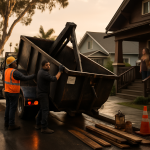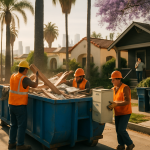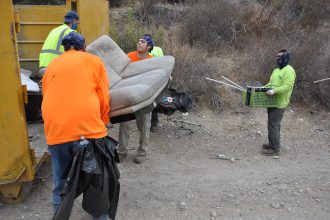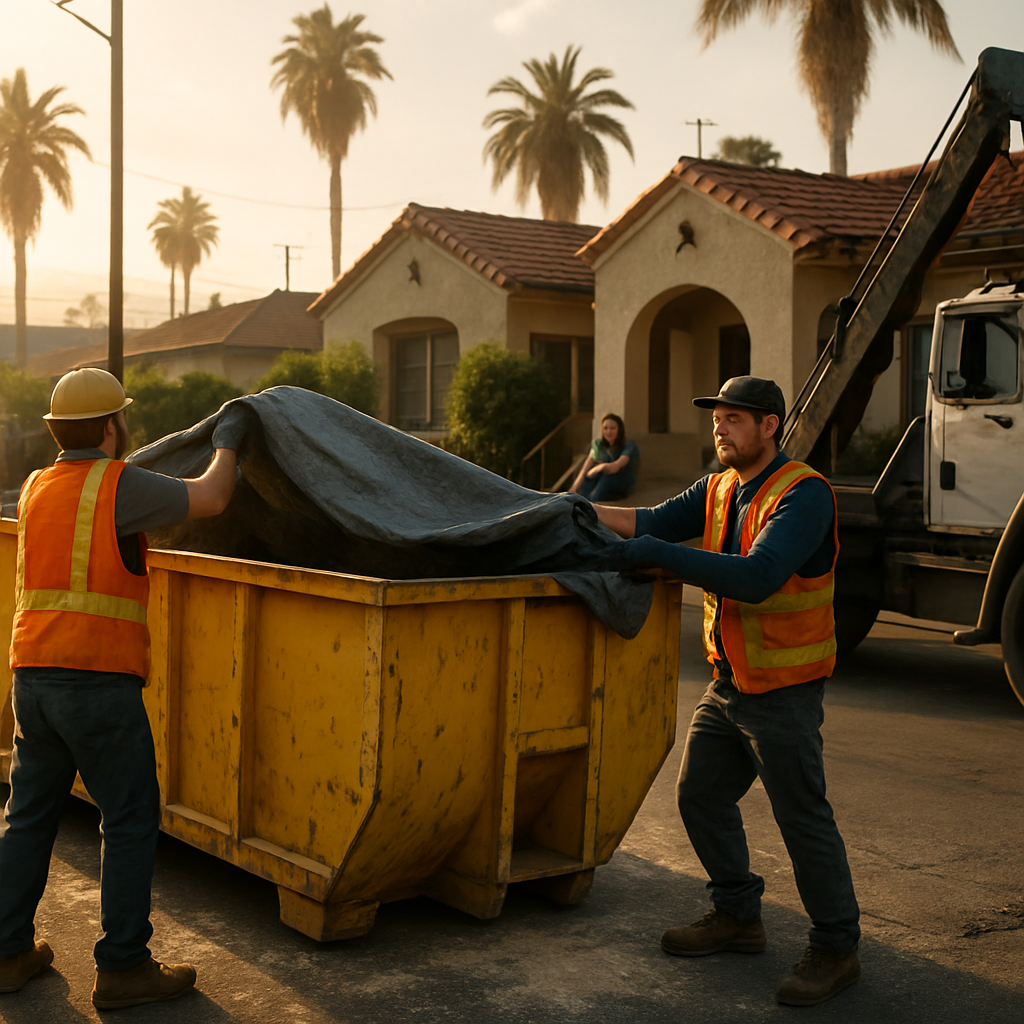
The rumble of the roll-off truck felt like a heartbeat returning to life — metallic, steady, a deep thud that traveled down the cracked asphalt of my little Culver City alley. I stood on the back stoop of a Spanish bungalow, the scent of sawdust and jasmine mixing with a faint ocean breeze drifting in from Santa Monica. Across the street, Mrs. Alvarez from down the block held a paper cup of coffee and watched the workers sling a tarp over an emerald green dumpster as if it were a sleeping beast to be tamed.
Setup: People, Place, and a Mountain of Junk
My name is Maria, and I’m the contractor hired to transform a run-down Hollywood craftsman into a light-filled rental. The house had been left untouched for a decade: stained carpets, broken cabinets stacked like dominoes, and a backyard that had become a small forest of forgotten lumber and rusted appliances. The homeowner, Daniel, had the key in his pocket but admitted, “I’m not emotionally ready to look at everything that’s in there.” He asked me the practical question I hear most: “What do I do with all this stuff?”
In Los Angeles, a city that inhales reinvention and exhales memories, the answer was simple but logistics-heavy: call for a dumpster. Yet the simplicity masks a complicated orchestration. We needed a 20-yard roll-off for demolition debris, a permit from the City of Los Angeles for the curb space, coordination with an eco-conscious disposal company in Long Beach for recyclable material, and a plan for e-waste and hazardous items that couldn’t go into the bin. The story that day was not just about moving junk; it was about navigating neighborhoods — from echoing alleys of North Hollywood to the narrow lanes of Venice — and respecting local rules and communities while doing it.
Rising Action: Permits, Parking, and the Perfect Drop-Off
The phone felt hot when I called the city permit office. “You need an obstruction permit if the dumpster is on the street,” the clerk said, a little sympathy in her voice. That meant submitting a site sketch, paying a fee, and allowing three business days unless you wanted to pay for expedited service. “Is there any way to put it on the driveway?” I asked. “If it fits and you own the property, that’s easiest,” she replied. Easy, like most things in LA, was relative.
On delivery day, the truck’s brakes sighed as it backed into our block between a Tesla charging station and a faded mural. A young driver named Keon hopped down and handed me a laminated permit checklist. “If you overload it, we have to weigh it and charge extra,” he warned, his breath fogging in the cool morning. He smelled faintly of coffee and orange citrus. “We also can’t take paints, pesticides, or batteries in this one. Those go to a special facility in Burbank or Glendale depending on the pick-up schedule.”
Neighbors popped their heads out of windows, drawn to the motion. Mr. Chen from the corner duplex walked over, his cane tapping in a rhythm. “Been meaning to get rid of that old wardrobe since my wife passed,” he said, his voice small. “It’s full of memories, but it’s time.” He handed me a key and asked, “Could you ask them not to crush the wood? We made it together.” A dumpster isn’t impersonal when the items within carry stories; each hinge and screw carried an echo of someone’s life.
Key Insights: The Rules, the Sizes, and the Smarter Way to Clear Out
As the crew began to hoist and toss, I realized that telling this story meant sharing what I learned in the choreography of removal. First, choose the right size: 10-yard for light yard work and small remodels, 15- to 20-yard for full room guttings, and 30- to 40-yard containers for large construction projects. In older neighborhoods like Pasadena or Beverly Hills, driveways and street widths can constrain placement, so measure first. In Venice, where streets are narrower and parking permits are tight, a smaller dumpster or multiple scheduled hauls might be necessary.
Permits are another invisible muscle. Los Angeles Department of Transportation permits are essential when the bin encroaches on public sidewalks or traffic lanes. Some cities, like Long Beach and Torrance, have their own rules and timelines. Always check local municipal requirements — a misstep can lead to fines and delays. If the project is near a historical district or an HOA, you’ll likely need prior approval; I once had to move a container two blocks because a homeowner association in West Hollywood objected to the sightline.
Waste separation matters. Wood, concrete, metals, and cardboard should be separated when possible. Inglewood has excellent recycling programs for construction debris, while the Port of San Pedro area often channels recyclable metals into local smelters. Hazardous materials — paints, solvents, fluorescent tubes, and certain batteries — belong at designated drop-off centers in Burbank or county transfer stations, not in the dumpster. E-waste is a different beast altogether; there are specific e-waste recycling locations that prevent toxins from leaching into groundwater.
Costs vary. Base pricing includes the rental, delivery, and pick-up. Weight overages are billed per ton; bulky but light items like furniture can occupy space and push you to a larger size but won’t hit weight caps the way rubble will. Ask providers about load limits and tipping fees. Pro tip: If you’re clearing out for a renovation in Malibu after a brush fire, expect different handling rules for charred materials and possible air-quality considerations during pickup.
Rising Tension: Weather, Wildlife, and the Unexpected
By noon, the sun had climbed higher, turning the asphalt into a warm plate. The crew worked in a rhythm of swings and thuds, punctuated by the clink of glass and the rustle of old magazines. Suddenly, a loud clang stopped everyone. A raccoon, rescued from the dumpster by a flurry of shoe taps and a surprised squeal, darted back behind a hedge. “That little thief almost took a lamp shade to his grave,” Keon joked, but the mood stayed tempered; in LA, wildlife threads through city life in unexpected ways.
We discovered a cooler box full of moldy paperwork and, beneath it, a small stack of brittle photographs. Daniel’s face went quiet when he recognized an old high-school portrait. “I forgot those were there,” he said. For a heartbeat, the project shifted from demolition to delicate unearthing. I set the photographs aside, calling out to the team to slow down, and felt the gravity of stewardship — we weren’t just removing items; we were preserving memories and making choices about what to carry forward.
Resolution: Clean Streets, Lighter Hearts
By late afternoon, the dumpster brimmed but did not overflow. Keon stood with his hands on his hips and called the office for the scheduled pick-up. “We’ll be back tomorrow for the concrete, and we can have a separate truck come for the metal scraps to a recycling center in Long Beach,” he said. He rolled his shoulders, dust motes catching in the sun like a small constellation.
Neighbors gathered in small clusters, voices soft with curiosity and relief. Mr. Chen waved a gratitude-laced hand. “Feels like the whole block can breathe now,” he said. Mrs. Alvarez nodded, eyes glistening. “And the alley won’t be a hiding place for old troubles anymore.” Daniel found himself laughing amid the clatter, the lightness physical as if the house had exhaled with him. “We couldn’t have done this without you,” he said, voice steady. “I didn’t realize how stuck I felt until it was gone.”
We handled hazardous waste responsibly: paints were sealed and scheduled for a drop-off in Glendale, old batteries were boxed for e-waste recycling, and a pile of gently used furniture was earmarked for donation to a shelter in San Pedro. The crew tarped the bin, ensuring debris wouldn’t scatter into a passing breeze, and secured it before dusk.
Takeaway: What to Remember and Do
If you’re planning dumpster removal in Greater Los Angeles, remember these practical and moral touchstones. Measure twice — choose the right size for your needs. Check local permits from the City of Los Angeles or your specific municipality; each city from Burbank to Torrance has nuanced rules. Separate recyclable materials where possible and never put hazardous waste in a standard roll-off. Communicate with neighbors and your crew; a little notice and courtesy prevents conflict and fosters goodwill. And when in doubt, ask your dumpster provider about weight limits, prohibited items, and drop-off routes — many LA-area companies have partnerships with Long Beach recycling centers and specialized disposal services in Glendale or San Pedro.
Most of all, remember the human element. Clearing out a space is often tangled with memory, grief, and hope. A dumpster can be a tool of transformation: it clears the physical and, sometimes, catalyzes emotional change. By the time the truck left — lights blinking like an airplane taxiing into the night — the neighborhood felt different. The driveway had more light; the air seemed to move easier.
I stayed until the sun sank low enough to set the palm silhouettes on fire. The dumpster, now empty, sat like a closed book ready to be read again another day. Daniel stood beside me, hands in his pockets, watching the sky burn orange over Santa Monica and the rooftop antennas of Hollywood. “Feels like we started something bigger than a remodel,” he murmured.
As the last rays slipped behind the hills, the alley exhaled with us. The scent of jasmine returned, colder now, carrying with it the faint metallic memory of a day’s work done correctly — permits filed, items sorted, neighbors considered, and the city kept moving, one thoughtful haul at a time. The truck’s taillights blinked away into the evening, and for a moment the street was simply still, clean, and quietly hopeful.
Keon’s truck became a dot on the boulevard, then nothing. We closed the gate and listened to the hush. Somewhere in the distance, the Pacific’s breath hit the shore, and the neighborhood finally felt like it could begin again.