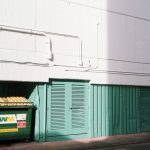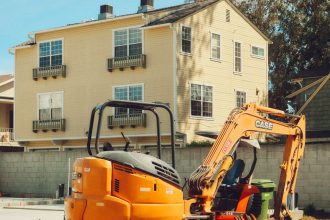
By seven a.m. the mattress leaned like an exhausted island against the garage door, and the driveway smelled of sawdust, coffee, and diesel. A roll-off dumpster sat in the center of the chaos, its steel sides already nicked from a week of demolition. I had imagined a neat contractor van and a handful of quiet men; what arrived instead felt like the beginning of a small city project unfolding on our block in Echo Park.
The Morning the Driveway Became a Construction Site
When I called the dumpster company three afternoons earlier, I pictured a polite exchange: choose a size, pick a date, sign a paper. Instead, the voice on the phone—calm, practical—asked a string of questions that revealed an entire ecosystem I hadn’t known existed. ‘What type of debris?’ the operator asked. ‘Is it going to sit on the street?’ she inquired. ‘Do you need same-day drop-off?’ Those questions felt like a map being drawn, and by sunrise I was standing in the middle of a neighborhood that suddenly had a film-set energy.
Setting the Scene: Neighborhoods and Nuances Across Greater Los Angeles
Greater Los Angeles is a stitched quilt of neighborhoods that each come with their own rules, rhythms, and smells. In Santa Monica, the wind carries the tang of salt and a strict green-waste policy; in Pasadena, historic districts require permits with an extra layer of scrutiny; in Long Beach and the South Bay, narrow streets and beachside HOA rules can complicate placement. Even in nearby Burbank and Glendale, where small contractors move quickly for TV and film jobs, parking permits and protected tree ordinances can throw a wrench into plans.
On our block, a mix of renters and homeowners peered from porches. A neighbor from Culver City shouted over the hum of the truck, ‘You know you gotta get a permit if it’s on the curb, right?’ I hadn’t known. The question hung like the smell of fresh-cut lumber: unavoidable and suddenly urgent.
Rising Tension: Permits, People, and the Clock
The dumpster drivers worked like choreography. One clipped straps with a metallic snap, another secured a tarp while a third tapped a tablet to record the delivery. Yet even as the crew moved efficiently, tension rose. A delivery scheduled for one day arrived late because of morning traffic on the 101. A neighbor complained about blocked sight lines for backing out. The homeowner, Maria from Highland Park, paced with a stack of invoices and a contractor’s list that kept growing.
‘We can do a 20-yard,’ Javier, the foreman, told her, wiping sweat from his brow under the Los Angeles sun. ‘But if you’re doing tile, concrete, or dirt, you might hit the weight limit. You don’t want surprise overage fees when the truck goes to the transfer station.’ His voice was matter-of-fact; the advice felt like an apprenticeship in how dumpsters actually work.
Key Insights: What I Learned About Dumpster Removal in Greater Los Angeles
As wood was stacked and drywall stripped, I realized the project was teaching me practical lessons. Here are the essentials that rose out of the noise and the clatter:
– Sizes and uses: Dumpsters typically come in sizes like 10, 20, 30, and 40 cubic yards. A small kitchen remodel might manage with a 10-yard. Whole-house cleanouts or major renovations often need 20 to 30 yards. For heavier materials like concrete, contractors suggest larger units but warn about weight limits.
– Permits and placement: If the dumpster sits on the street, many cities require a permit and often a traffic control plan. In Los Angeles, the Bureau of Street Services or local public works usually handles curb permits; in Santa Monica and Beverly Hills, the process involves their city departments. Permit fees, placement rules, and the time a dumpster can remain on the street vary by municipality.
– What you can and cannot toss: Hazardous items—paint cans, solvents, asbestos, batteries—need special handling. Many local haulers partner with recycling centers and hazardous waste facilities to divert materials. For instance, green waste in Redondo Beach or Torrance often has specific sorting requirements to qualify for composting.
– Weight, tipping fees, and transfer stations: Dumpster rentals commonly include a weight allowance. Going over triggers per-ton tipping fees at transfer stations. For heavy landscape debris, masonry, or soil, savvy homeowners budget for extra tonnage or request a specialized unit.
Dialogue Over Debris: Conversations That Changed the Plan
‘We thought a 10-yard would do it,’ Maria admitted, lifting a hand to shield her eyes from the sun. ‘Then the contractor said there was more tile than he expected.’
‘No problem,’ Javier said, consulting a dusty clipboard. ‘We can swap it out, but there will be an extra haul fee. Or we can add a second drop. Also, you might want to separate the metal; we get better recycling rates and it could lower tipping.’ He pointed toward a small pile of copper pipe gleaming like a metallic serpent in the morning light.
Neighbors offered advice with the casual intimacy of people who share streets and barbecues: ‘Call the city if you think you need a permit,’ said Rosa from down the block in Echo Park. ‘And label the boxes by room. It helps the crew move faster and keeps the recycling cleaner.’ The collective wisdom felt like a community handbook on dumpster etiquette.
Choosing the Right Dumpster: Practical Questions to Ask
Between sips of coffee and the rhythmic sound of the packer truck, I learned which questions matter most when renting a dumpster in LA County:
– Where will it be placed, driveway or street? If street, who gets the permit?
– What materials will be loaded? Are there hazardous items?
– What is the project timeline? Do you need temporary on-site storage or multiple drop-offs?
– Are there weight limits and what are the overage fees?
– Does the company recycle? Do they separate concrete, metal, and green waste?
The answers decide cost and logistics. In Venice, where space is tight and aesthetics matter, a compact 10-yard placed discreetly in a driveway might be preferred. In a Torrance remodel, with wide driveways and heavy debris, a larger unit with an increased weight allowance makes sense.
How the Crew Turned Chaos into Order
By noon the dumpster was beginning to look less like a foreign object and more like a tool shaped to a neighborhood’s needs. The crew moved with a rhythm—loading, strapping, sweeping. A young worker named Marcus paused to wipe his hands on a rag and said, ‘People think it’s just throwing things away. There’s a lot of thinking behind what we do. We try to salvage what we can, keep the streets safe, and make sure it ends up where it’s supposed to.’
That afternoon, a delivery truck from a recycling facility came to haul off metal. Another vehicle took the green waste to a composting operation. Watching the flow of materials—wood, metal, cardboard, salvaged doors—felt like watching a small local economy at work, where every item had a potential second life.
The Evening Settlement: Small Triumphs
As shadows from the palm trees lengthened and the skyline beyond Echo Park moved toward dusk, the last tile was carried out and the dumpster door closed with a satisfying thud. Maria sat on the front steps with her contractor and the foreman, comparing notes and laughing at the day’s surprises. ‘I thought it would be harder,’ she said, rubbing her forearm where a splinter had been wrestled free. ‘But everyone kept things moving.’ Her relief was tangible—less a dramatic reveal and more a slow easing, like a city finally breathing after rush hour.
A Final Load, a Final Image
Walking back to my car, I passed the dumpster lit by street lamps and the glow from living rooms. The sawdust had settled into a thin halo. The mattress was gone. The neighbors had resumed their evening routines: someone watered plants, a couple walked their dog toward the glow of a café in Silver Lake. The dumpster, now a muted rectangle, looked almost anonymous—a temporary fixture in an urban life that rearranges itself constantly.
Takeaway: What to Remember Before You Call
If you are planning a renovation, a cleanout, or a community cleanup in Greater Los Angeles, remember these touchstones: pick the right size for the job; check local permit rules for street placement; separate recyclables and hazardous items; budget for weight overages; and choose a company that knows the neighborhoods from Malibu to Compton. The practical steps will save money and headaches; the human touches—clear communication, respectful placement, and recycling where possible—make the project part of the neighborhood rather than an imposition on it.
When the crew left our street, the air had the faint, almost sweet smell of sawdust and rain that sometimes follows a storm. Maria waved from her doorway as the truck turned toward the 110, and the street, for a moment, felt restored to its ordinary, slightly imperfect self. The dumpster had done its work: not glamorous, but essential. It had been a small, public act of clearing space—literal and figurative—for what comes next.
At dusk the last image I carried was simple: a metal rectangle under a Los Angeles sky, palm silhouettes against a band of pink, and the quiet knowledge that, in this city of relentless reinvention, even the most mundane objects can pave the way for new beginnings.